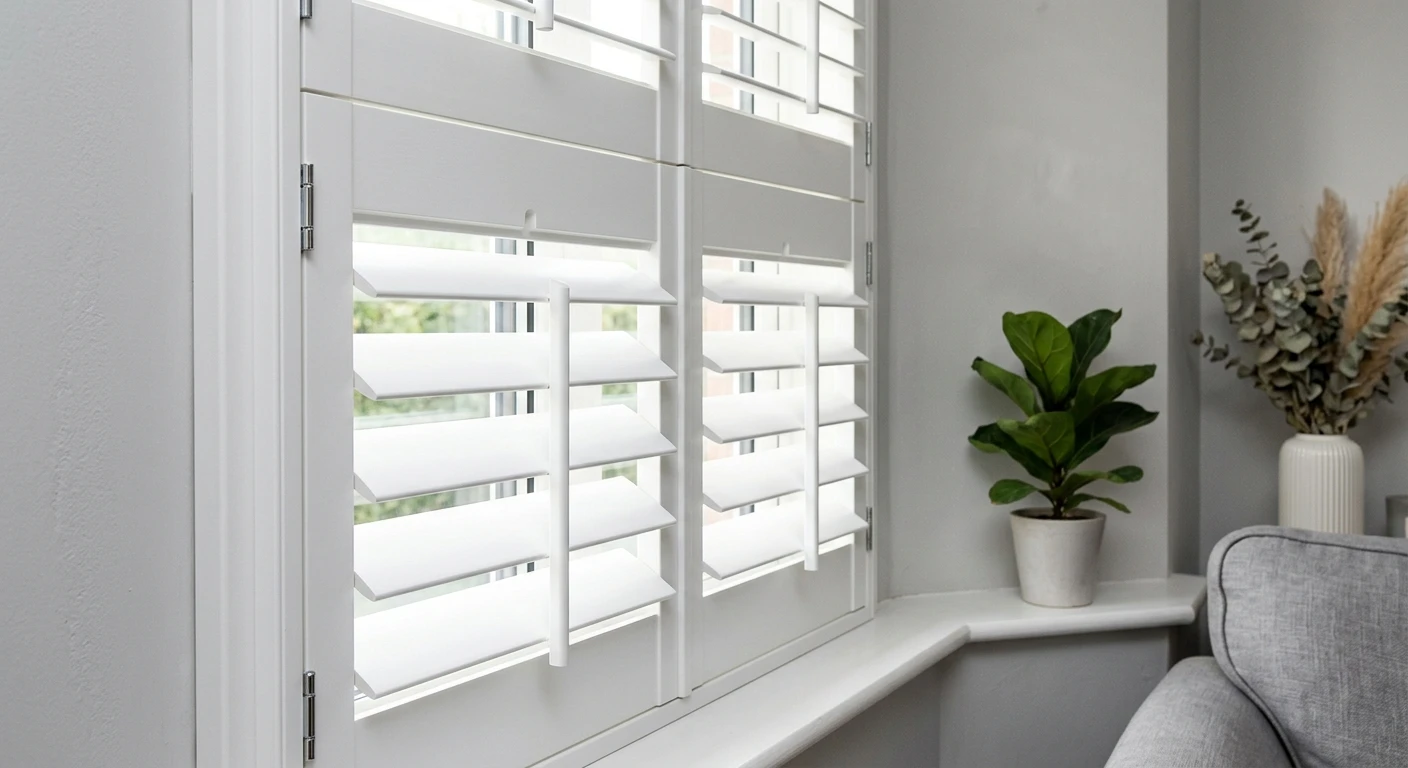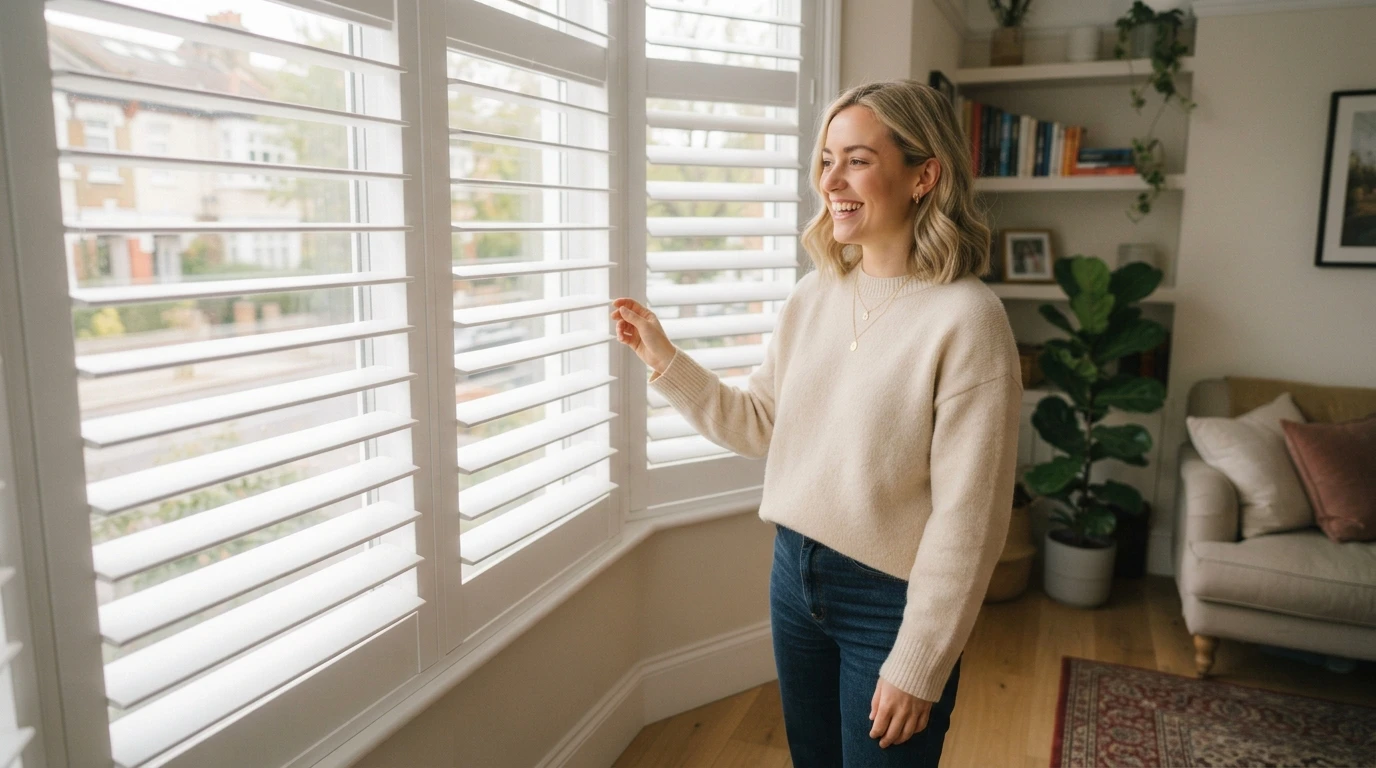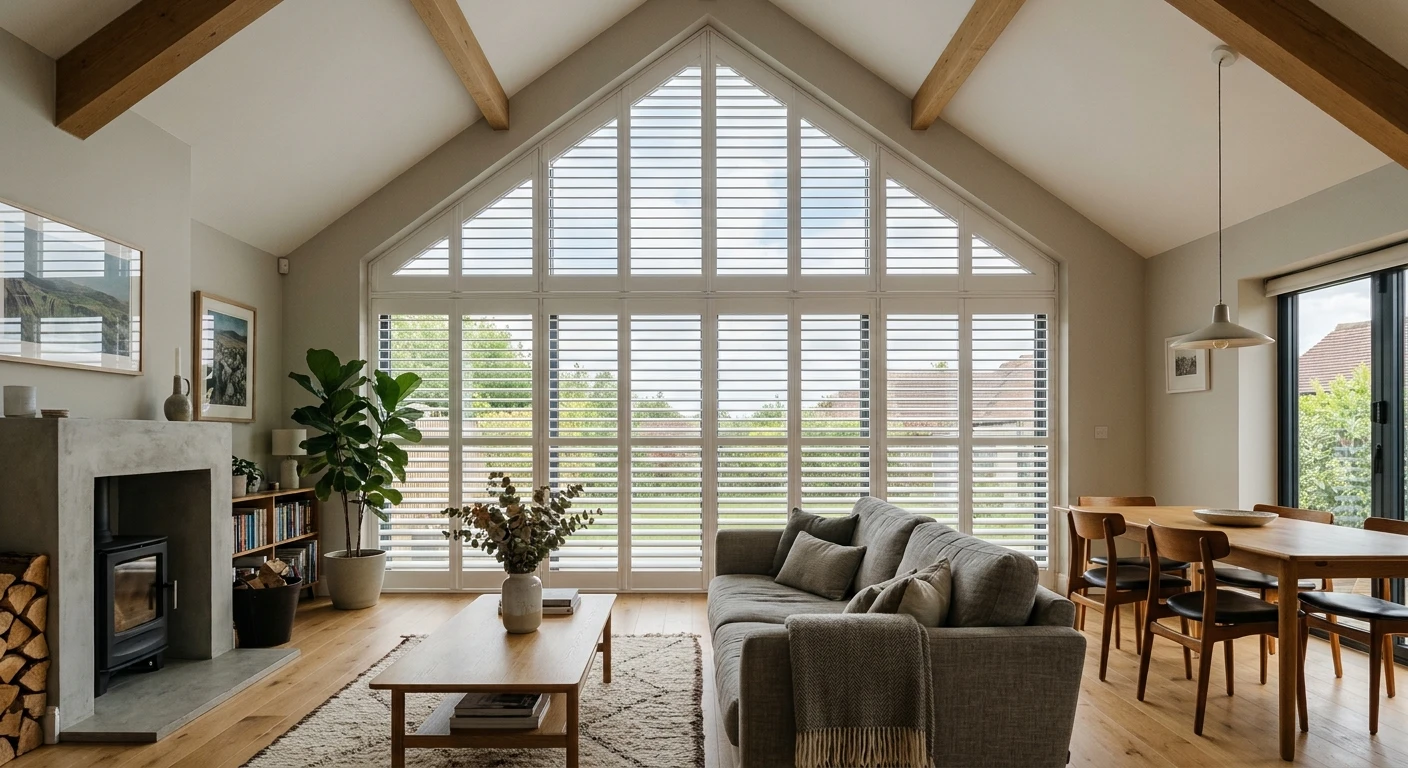
Large windows can make a real difference to a room, bringing in natural light, opening up views and creating a feeling of space. However, finding the right window covering can be more challenging when dealing with particularly wide openings, tall windows or unusual shapes.
Plantation shutters can provide a neat, fitted finish for many large windows, with options to suit different proportions and interior styles. However, they are not the only solution, and blinds or curtains may be more suitable in some situations. The best choice depends on the size and shape of your windows, your budget and how you want to manage light and privacy.
Why choose shutters for large windows?
Shutters can be an appealing choice for large windows because they create a structured, tailored appearance that complements both traditional and contemporary interiors. Made to measure designs can be fitted to suit the dimensions of the opening, helping the window covering feel like an integral part of the room.
Where adjustable louvres are included, shutters offer flexibility over natural light and privacy. The panels can also be opened to provide access to the window, depending on the design and installation. Unlike curtains, which introduce fabric and folds into the room, shutters have a more defined appearance and can sit neatly within or around the window opening.
However, larger shutters need careful planning. Panel dimensions, weight, fixing arrangements and the space available for opening the panels can all affect which designs are practical. It is important to consider these factors rather than assuming that every shutter style will work equally well on a particularly large window.
Choosing shutters for wide windows
Wide windows can present a particular challenge because the shutter panels need to span a larger opening without becoming unwieldy or looking out of proportion. In many cases, the solution is to divide the window into several panels, creating a balanced arrangement that can be opened and closed as needed.
The number and width of panels will depend on the window dimensions, the shutter design and the manufacturer’s specifications. Although fewer, wider panels may appear simpler, they can become heavy and difficult to operate if they exceed suitable dimensions. Using more panels can make the installation easier to manage while maintaining a consistent appearance across the window.
It is also worth considering how the panels will open into the room. Wide windows may be positioned behind furniture or close to doors and walkways, so there needs to be enough space for the shutters to operate comfortably.
For very wide openings, tracked shutters may be another option. Rather than swinging out on conventional hinges, the panels slide along a track, making it possible to move them aside when access or a more open view is needed.
Shutters for tall and unusually shaped windows
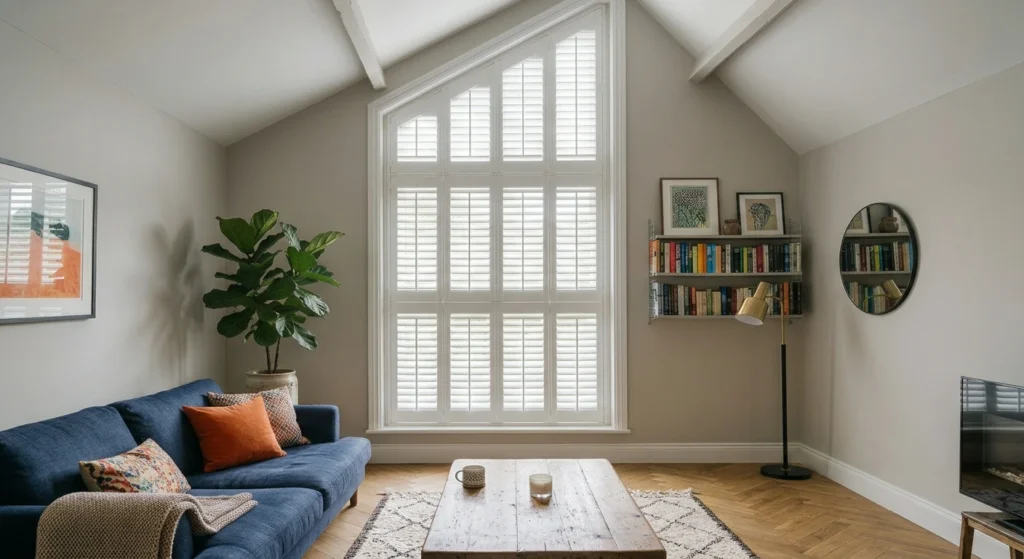
Tall windows can make a striking architectural feature, particularly in period properties, rooms with high ceilings and modern homes with floor to ceiling glazing. Shutters can provide a coordinated finish across these larger expanses of glass, although the panel layout needs to be carefully considered to suit the height and proportions of the window.
Depending on the dimensions, the shutters may be divided into separate sections to make them easier to operate. This can also create a more balanced appearance than using a single, very tall panel. For floor to ceiling windows, it is important to consider access, the weight of the panels and whether the chosen arrangement allows the window and any doors to be used conveniently.
Some large windows also have unusual shapes, such as arched tops, angled sides or sloping frames. Made to measure special shape shutters can be designed to follow these contours, helping preserve the character of the window rather than covering it with a standard rectangular design. The options available will depend on the shape and construction of the opening, and some designs may require fixed sections or a combination of different panel types.
Are tracked shutters suitable for large openings?
Tracked shutters are worth considering when covering particularly wide windows, patio doors or larger openings where conventional hinged panels may not be the most practical arrangement.
The panels are mounted on a track system, allowing them to slide across the opening and move aside when you want to access the doors or enjoy a clearer view. This can be especially useful where there is limited room for panels to swing into the living space.
However, tracked shutters are not automatically the best option for every wide window. A window that is wide but does not need frequent access may work perfectly well with conventional hinged panels. The right choice depends on the opening’s dimensions, the available space, how often the panels need to move and the overall look you want to achieve.
Shutters, blinds or curtains for large windows?
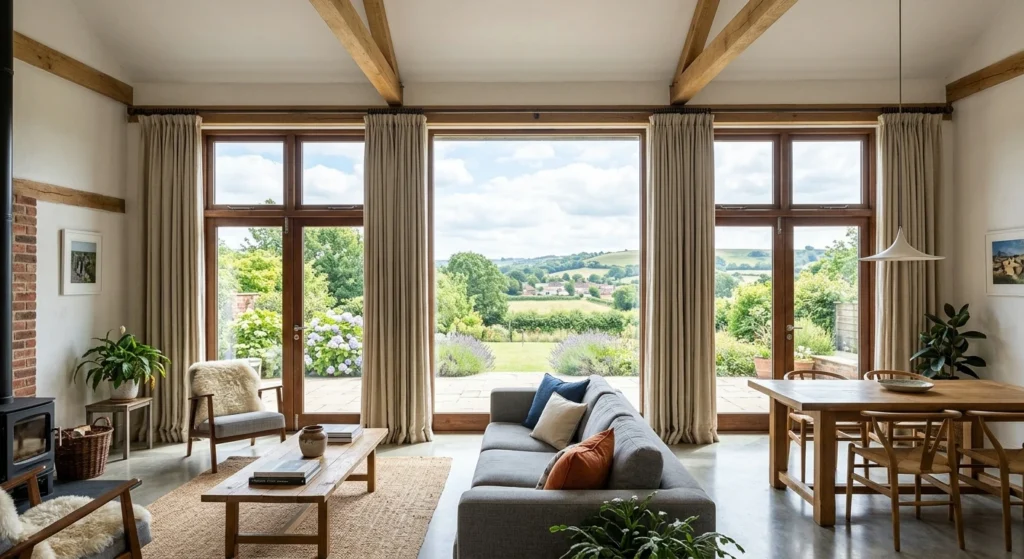
Although shutters can work well on large windows, it is worth comparing them with blinds and curtains before making a decision. Each has advantages, and the most suitable option will depend on your priorities.
Shutters
Shutters offer a fitted, structured appearance and can provide flexible control over light and privacy when they include adjustable louvres. They can also become a lasting feature of the room, with a design that complements a wide range of interiors.
The main consideration is cost. Made to measure shutters generally require a greater initial investment than many standard blinds or curtains, particularly when covering several large windows or openings with complex shapes.
Blinds
Blinds can be a more cost effective way to cover large, tall or wide windows, with a wide choice of styles, materials and operating systems. Roller blinds, vertical blinds and other designs can be particularly practical for larger expanses of glass, depending on the window and the level of light control required.
Some blinds can also be motorised, which may be useful for high windows that are difficult to reach. However, the suitability, operating mechanism and cost will vary by product, and very large blinds may have their own limitations regarding weight, dimensions and operation.
Curtains
Curtains can be a straightforward and sometimes more affordable solution for wide windows, particularly when a single pair can cover a broad opening. They can create a softer, more decorative appearance and are available in a wide range of fabrics, colours and linings.
Depending on the fabric and lining, curtains can also help reduce incoming light and provide a greater sense of privacy when closed. However, they need enough wall space to stack back neatly, and heavy curtains across very wide windows may require suitable tracks, poles and fixings.
Ultimately, there is no single best solution for every large window. Shutters may suit homeowners looking for a tailored, long term fitting, while blinds or curtains may offer a more affordable or practical alternative for particular windows.
Choosing materials, louvres and finishes
If you decide that shutters are the right choice, the material, louvre size and finish will all influence the final result. Large windows can make these details particularly noticeable, so it is worth considering the overall proportions as well as the practical requirements.
Wider louvres can create a more open, contemporary appearance, while smaller louvres may suit a more traditional look. However, the most suitable size will depend on the shutter design and the dimensions of the panels.
The material also matters, particularly when larger panels are involved. Different products vary in weight, construction and maximum recommended dimensions, so check that the chosen shutters are suitable for the size of your windows.
When it comes to colour, white and off white remain versatile choices, but darker shades, natural wood finishes and other painted colours can create a more distinctive feature. Consider how the shutters will complement the room and look from outside the property, particularly when several large windows are visible across the same elevation.
Measuring, fitting and cost considerations
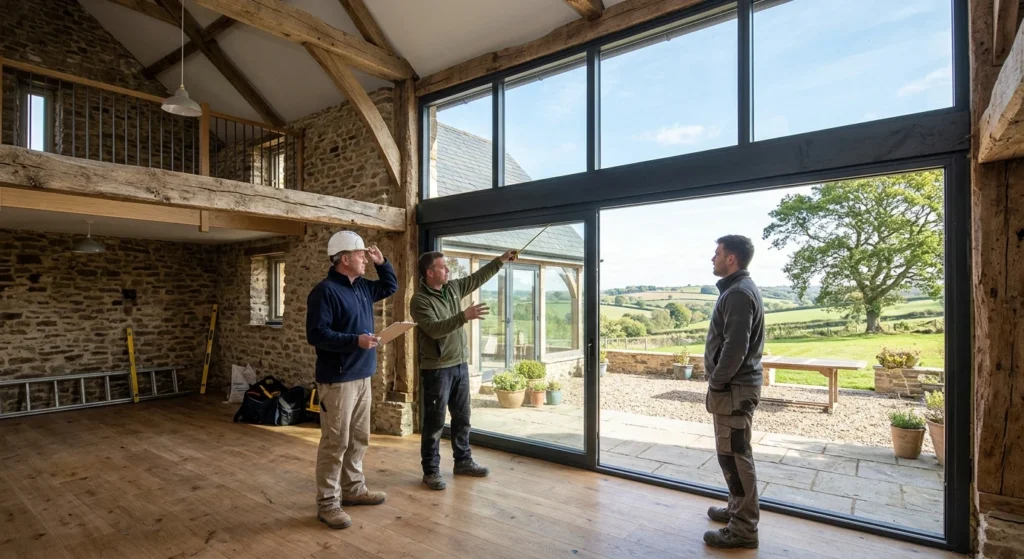
Accurate measuring and appropriate installation are especially important for large windows. The dimensions of the opening, the condition of the surrounding frame, the available fixing space and any nearby handles or obstructions can all influence the design.
Larger panels can be heavier, placing greater demands on hinges, fixings and the surrounding structure. For tall windows, floor to ceiling glazing or particularly wide openings, it is worth discussing the installation with an experienced shutter professional before choosing a final configuration.
Cost is another important consideration. Larger windows generally require more material, while complex shapes, additional panels and specialist track systems can add to the overall price. The final cost will also depend on the material, finish, measuring requirements and installation method.
If you are comparing shutters with blinds or curtains, consider the full cost of covering the window rather than just the price per square metre. The number of panels, operating mechanisms, tracks and installation requirements can all affect the final figure.
Finding the right shutters for your windows
Shutters can be an attractive and practical solution for large and wide windows, but the best design depends on the proportions of the opening and how you want to use the space. Multiple hinged panels may work well across a wide window, tracked shutters can suit certain larger openings, and made to measure designs can accommodate some tall, arched or angled windows.
It is also worth comparing shutters with blinds and curtains, particularly if budget, ease of operation or covering a very wide expanse of glass is your main concern. Each option has its own strengths, and shutters will not necessarily be the most suitable choice for every window.
By considering the window’s dimensions, the available space, your preferred appearance and the level of light and privacy you need, you can choose a covering that works well for both your home and your budget.