
Hardwood Shutters
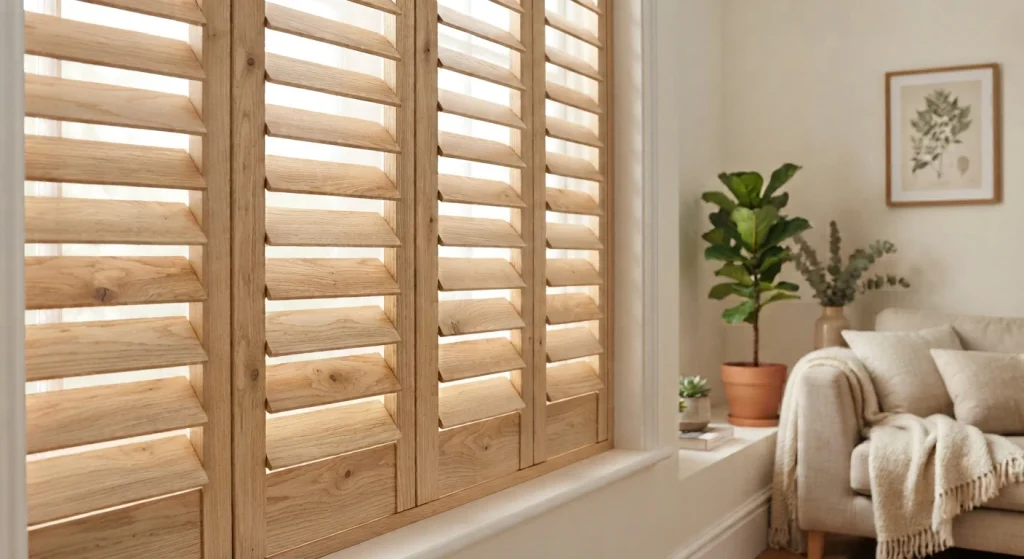
Natural timber with its own character
Hardwood is available in a variety of species, each with its own grain, colour, density and characteristics. These natural differences contribute to the appearance and feel of the finished shutter, while the choice of paint or stain can either conceal or enhance the underlying wood.
✓ Hardwood pros
- Natural grain and character.
- Strong and durable material.
- Wide range of timber species and appearances.
- Can be painted or stained.
- Suitable for a variety of shutter styles and room settings.
✕ Hardwood cons
- Natural variations mean the finish may not be completely uniform.
- Can be more expensive than some engineered materials.
- Timber can respond to changes in moisture and humidity.
- Weight can be a consideration on larger panels.
- The characteristics vary between different hardwood species.
Hardwood shutters, fully explained…
Hardwood shutters are made from natural timber sourced from trees that generally grow more slowly than softwoods, producing a denser and often more robust material. A number of different hardwood species can be used for shutters, with each having its own appearance and physical characteristics.
Natural variation in hardwood
One of the main features of hardwood is the natural variation within the material. Grain patterns, colour and texture can differ between species and even between individual pieces of wood. This means that stained hardwood shutters can retain a distinctive natural appearance, while painted finishes can provide a more consistent surface.
Different hardwood species
The choice of hardwood can affect the characteristics of the finished shutter. Different species vary in density, weight, strength and grain structure, so the term hardwood does not describe one single type of material. When comparing shutters, it can therefore be useful to find out which species of timber is being used rather than simply comparing them as hardwood products.
Styles, finishes and configurations
Hardwood can be used for a wide range of shutter configurations, including full height, tier-on-tier, café style and solid panel shutters. It can also be finished in different ways, with painting and staining offering two quite different appearances. A stain allows more of the natural grain to remain visible, while paint largely covers the underlying wood.
How hardwood responds to moisture and humidity
As a natural material, hardwood can respond to changes in its surrounding environment. Changes in humidity and moisture can cause wood to expand or contract to some degree, which is one reason the suitability of a particular hardwood and finish should be considered in relation to the room where the shutters will be installed.
Strength and weight
Hardwood is also relatively strong, making it suitable for shutter panels and louvres that need to withstand regular opening, closing and adjustment. However, the weight of a shutter can increase with the size of the panel and the density of the wood, so larger windows may require particular consideration when choosing the construction and configuration.
How much do hardwood shutters cost?
The cost of hardwood shutters can vary considerably depending on the species, construction, finish, size and supplier. They can be a more expensive option than some engineered or synthetic materials, but the comparison depends on the particular products being considered.
Overall, hardwood shutters offer the natural characteristics of real timber, including visible grain, variation and a choice of different wood species. They can be painted or stained and used across many different shutter styles, but the characteristics of the particular hardwood should be considered alongside the room, window and intended finish.