
MDF Shutters
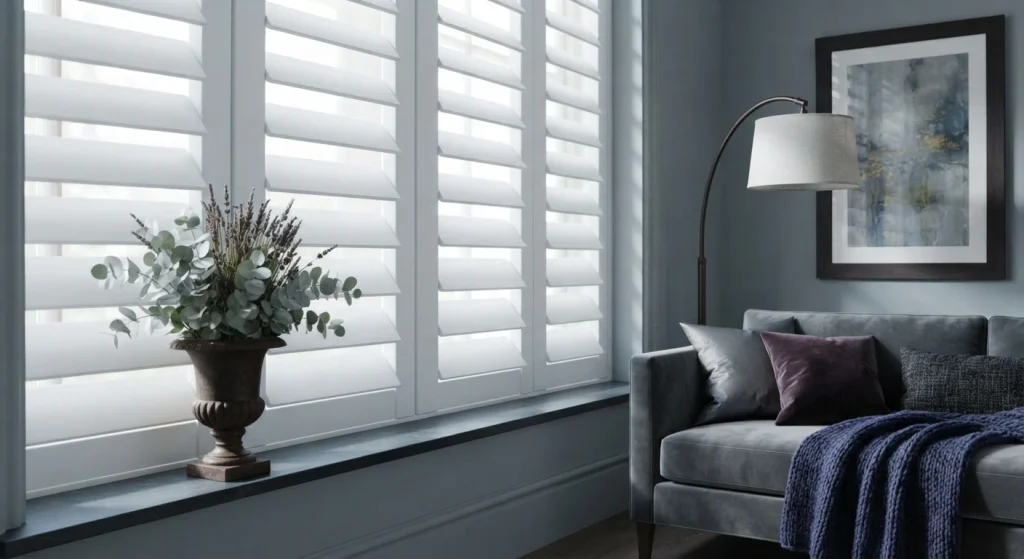
A consistent, engineered material
MDF is an engineered wood product made from compressed wood fibres, creating a dense and consistent material with a smooth surface. It is commonly used for painted shutters and can provide a uniform appearance across larger panels.
✓ MDF pros
- Consistent and uniform surface.
- Smooth base for painted finishes.
- Can be a more cost effective option.
- Consistent appearance across larger panels.
- Available in a range of shutter styles and configurations.
✕ MDF cons
- Does not have the natural grain of hardwood.
- Generally more suited to painted finishes.
- Can be heavier than some alternative materials.
- Moisture resistance depends on the specific MDF and construction.
- Less natural variation and character than real timber
MDF shutters, fully explained…
MDF, or medium density fibreboard, is an engineered wood product made by combining wood fibres with resin and compressing them under heat and pressure. The result is a dense, consistent material with a relatively smooth surface.
A consistent appearance
Unlike natural timber, the material does not have a natural grain pattern or the same variation between individual pieces. This gives it a more uniform appearance, which can be particularly useful for painted shutters where a consistent surface is preferred.
Smooth surfaces for painted finishes
The smooth surface also makes it well suited to painted finishes. Paint can be applied across the panels, louvres and frames to create a consistent colour, without the natural grain and variation that would remain visible on stained hardwood.
Shutter configurations and panel size
This type of construction can be used for different shutter configurations and is available in a range of designs. Its consistent structure can also make it suitable for larger shutter panels, although the overall weight will depend on the thickness, size and construction of the individual shutter.
A potentially more cost effective option
One of the reasons this material is used for shutters is that it can provide a more cost effective option than some natural timber products. The final price will still depend on factors such as the shutter size, configuration, finish, construction and supplier, so it should not automatically be assumed to be the least expensive option.
Moisture and humidity
Moisture is an important consideration when choosing this type of shutter. Standard MDF is not designed for prolonged exposure to moisture, while some products may use moisture resistant versions or additional coatings and construction methods. The manufacturer’s specification should therefore be checked before using it in kitchens, bathrooms or other areas where humidity or splashes may be an issue.
MDF compared with natural timber
Because it is an engineered material, it does not offer the same natural characteristics as hardwood. There is no visible timber grain and less natural variation between panels, which may be an advantage if you prefer a clean and consistent painted appearance, but less suitable if you specifically want the character of natural wood.
Overall, MDF offers a consistent and practical material for shutters, particularly where a smooth painted finish is wanted. Its engineered construction, uniform appearance and potential cost advantage make it an option worth comparing with hardwood and synthetic materials, while the specific product specification should be considered for larger panels and moisture prone rooms.