
Window Shutters
Windows come in many different shapes, sizes and opening styles, and these characteristics can affect how shutters are designed and fitted. From traditional sash windows and bay windows to modern casement and tilt & turn windows, shutters can be adapted to suit a wide range of window types.
Below is an overview of some of the most common windows where shutters are used, with individual guides explaining the practical considerations and options for each.
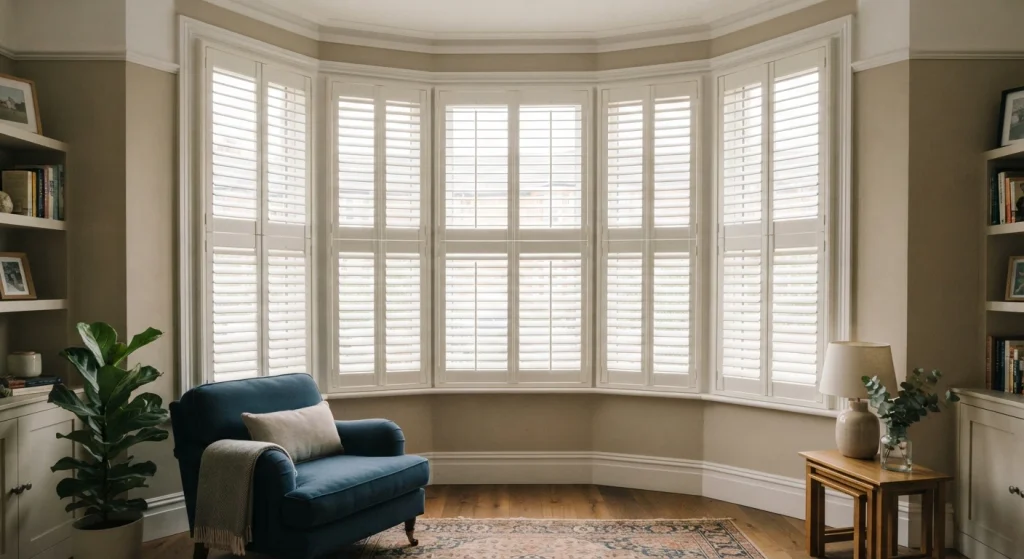
Bay Windows
Bay windows are made up of multiple sections that project out from the main wall, creating a wider window area with angled sections. Shutters can be designed across the individual sections to follow the shape of the bay, although the angles, available space and position of the window can all affect the design and fitting.
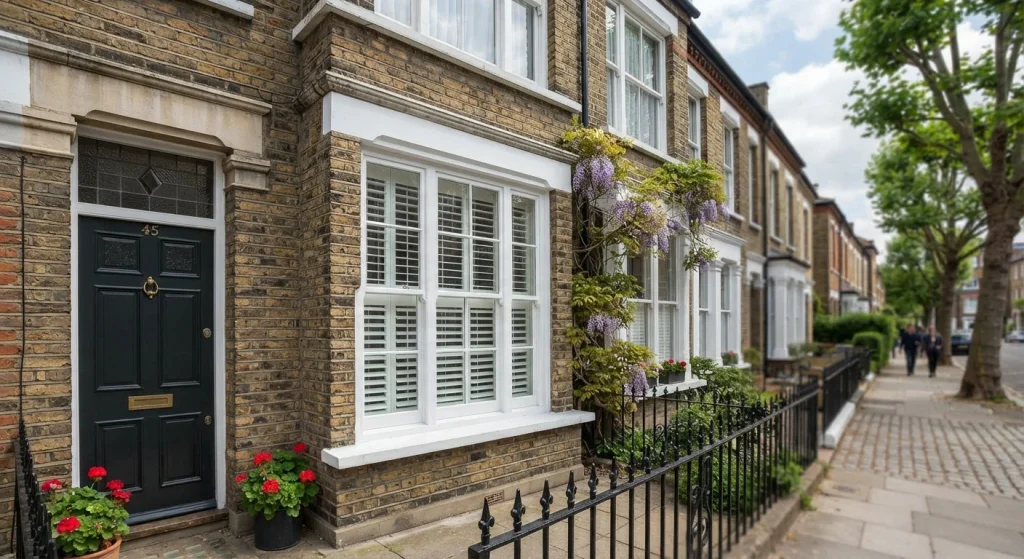
Sash Windows
Sash windows use one or more movable panels that slide vertically within the frame. Shutters can be designed around the existing window while allowing the sashes to continue operating, although the available space, window proportions and position of the frame all need to be considered when planning the installation.
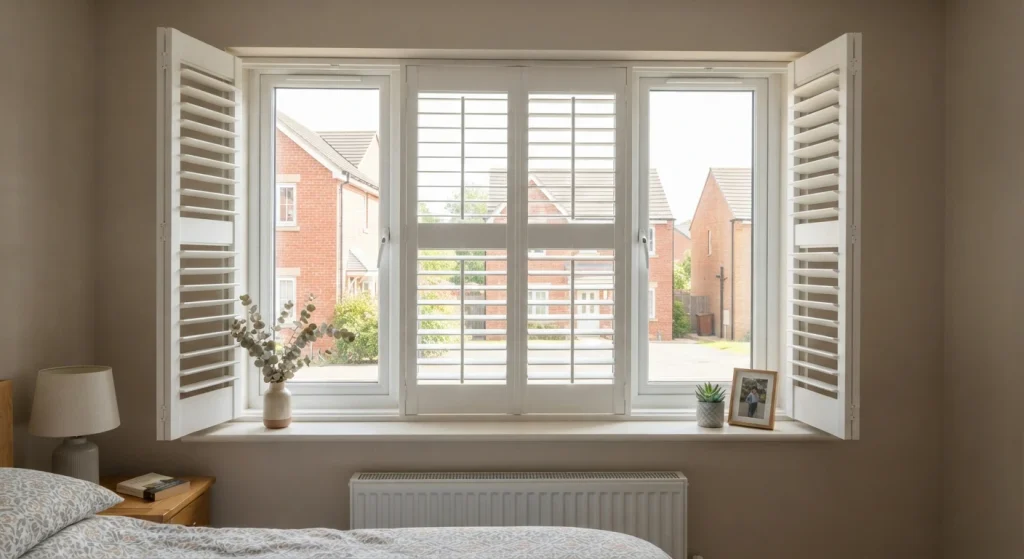
Casement Windows
Casement windows are attached to hinges and open outwards, making the position of the window handles, hinges and surrounding frame important when fitting shutters. The available space around the window can affect how the shutter panels are positioned and opened, particularly where the window opens into a narrow reveal.
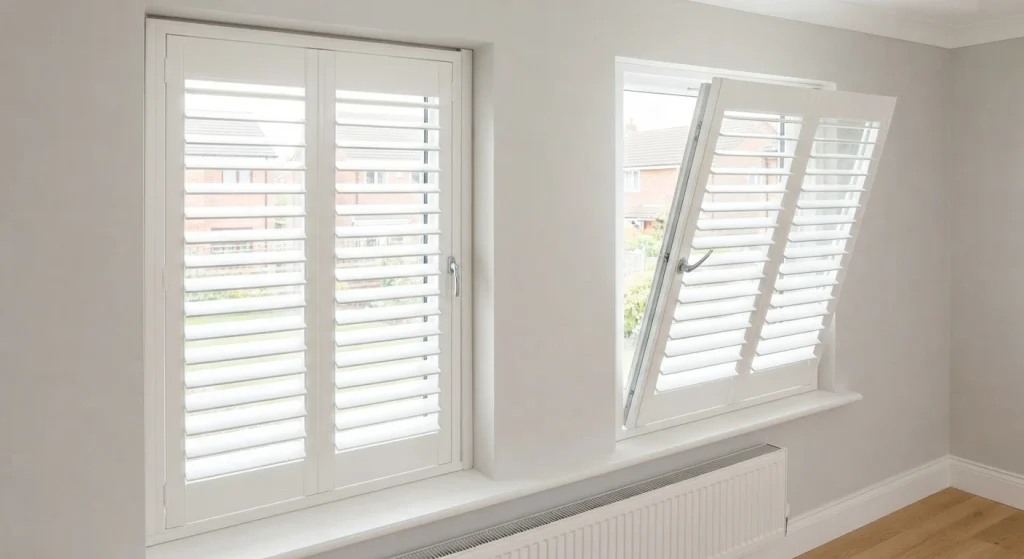
Tilt & Turn Windows
Tilt & turn windows can operate in two different ways, tilting inwards for ventilation or turning inwards to open the window more fully. This movement means the shutter design needs to allow sufficient clearance for the window and its hardware, with the fixing method and position of the shutter frame also worth considering.
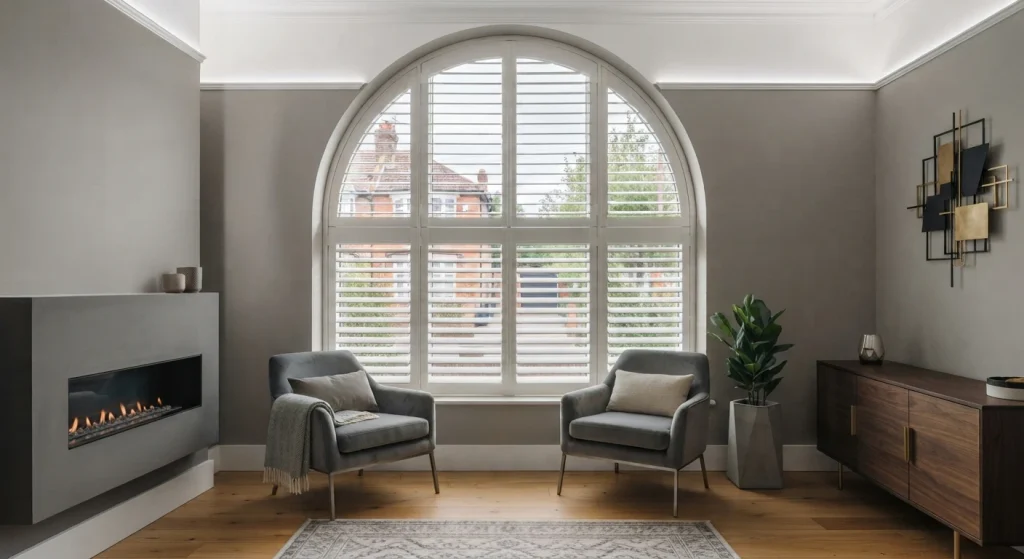
Arched Windows
Arched windows have a curved section that requires the shutter to be designed specifically around the shape of the opening. The construction can vary depending on the shape and dimensions of the arch, with different combinations of movable and fixed sections possible depending on the individual window.
Window shutters, fully explained…
One of the advantages of shutters is the range of different windows they can be designed to suit. Whether you have a standard casement window, a traditional sash window, a large bay or a more unusual shaped opening, shutters can often be made to work around the individual characteristics of the window.
Designed around different windows
Unlike some window coverings that are limited by the shape or way a window opens, shutters can be designed in different configurations to suit the space available. The panels, frames and louvres can be adapted to work with different window proportions, while specialist designs can be used for some curved, angled or unusually shaped openings.
Bay and unusual windows
Bay windows are a good example of how shutters can be tailored to an individual window. Rather than treating the bay as one large opening, separate shutter panels can be fitted across the different sections, following the angles of the window.
Shutters can also be designed for windows that are less straightforward, including arched, unusually tall or wide openings. Depending on the window, the design may use a combination of movable and fixed sections to follow its shape.
Windows that open differently
The way a window opens is another important consideration. Sash windows, casement windows and tilt & turn windows each have their own requirements, but the shutter can be designed with the way the window operates in mind. Clearance around handles, frames and opening sections can all affect the final design.
Choosing the right configuration
The shutter configuration can also be adapted to the window and how you want to use it. You may want full coverage across a large window, more flexibility between different sections, or privacy across only part of the opening. The choice of materials, finishes and colours provides further ways to tailor the finished shutters to the room.
A wide range of possibilities
This flexibility means shutters are not limited to one particular type of window or property. They can be used in modern homes with large areas of glazing just as they can in traditional properties with sash windows, bays and other architectural features.
The most suitable solution will always depend on the individual window. Its shape, size, opening mechanism, surrounding space and the way you want to use the room will all influence the final design. For unusual or specialist windows, it is particularly important to check what can be manufactured and how the shutters will operate before ordering.