Shutters by Room
Shutters can be used throughout the home, but the practical considerations can vary depending on the room. Privacy, natural light, moisture, ventilation and how the space is used can all influence the type of shutter and material that may be suitable.
Below is an overview of the main rooms where shutters are commonly used. Each guide looks at the particular considerations for that room, along with the shutter options and features worth thinking about.
Living room shutters
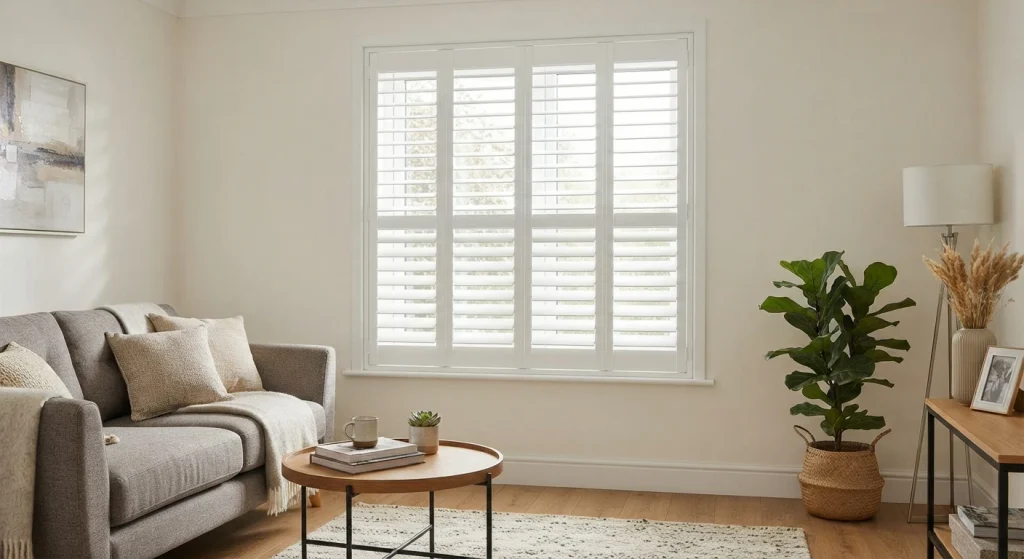
Living rooms can benefit from plantation shutters in a variety of configurations, depending on the size and shape of the windows, the amount of natural light you want to retain and the level of privacy required. The right choice can also complement the room’s layout, interior style and how the space is used throughout the day.
Bedroom shutters
Bedrooms often require a balance between privacy, natural light and the ability to create a darker room. Different shutter styles and louvre configurations offer varying levels of control, while the choice of material and finish can also affect the overall appearance.
Kitchen shutters
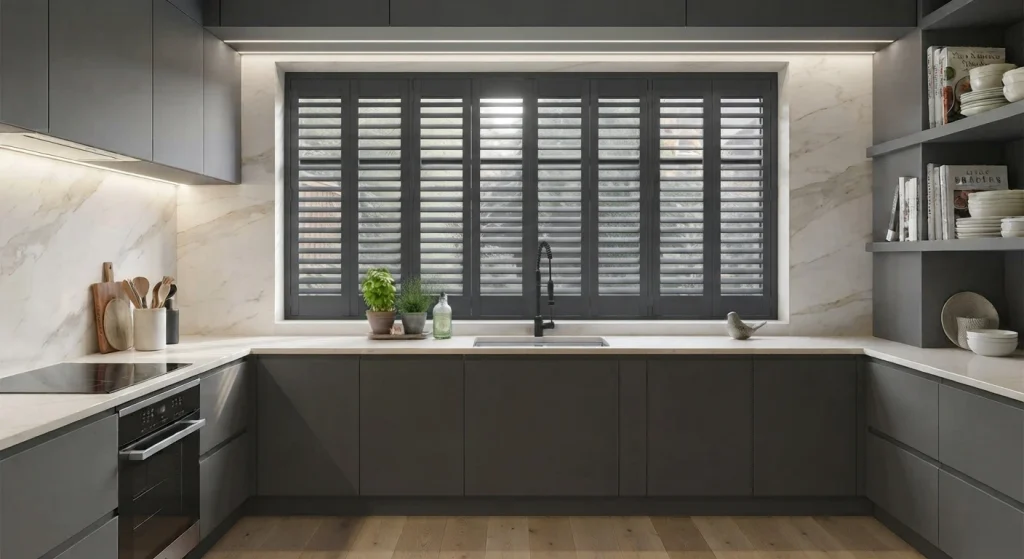
Kitchens can have different requirements from other rooms, particularly where shutters are close to sinks, cooking areas or sources of moisture. Material choice, cleaning and ventilation are therefore worth considering alongside the style and appearance of the shutters.
Bathroom shutters
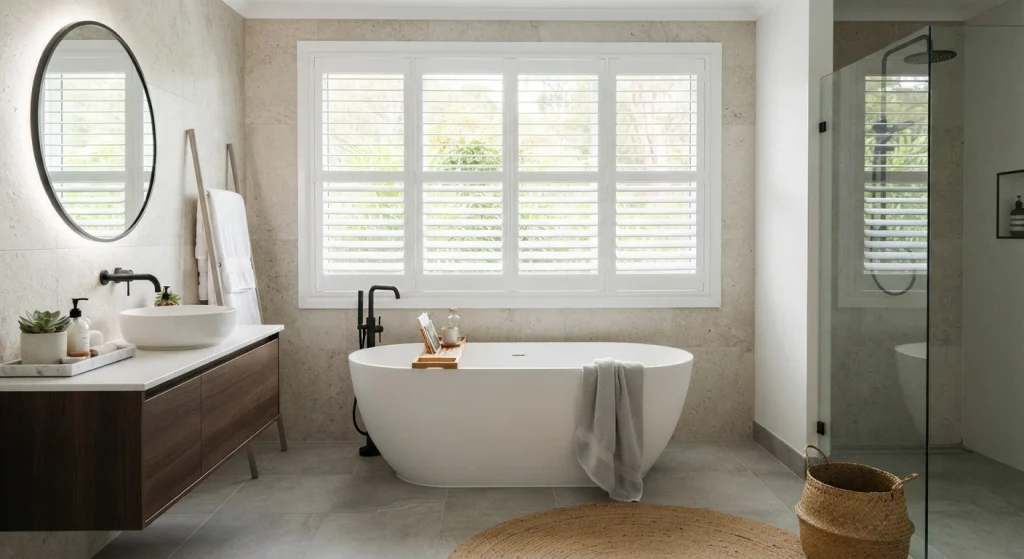
Bathrooms are exposed to higher levels of moisture and humidity, making material selection an important consideration. Moisture resistant shutter options can be considered alongside factors such as privacy, ventilation and the size and position of the window.
Dining room shutters
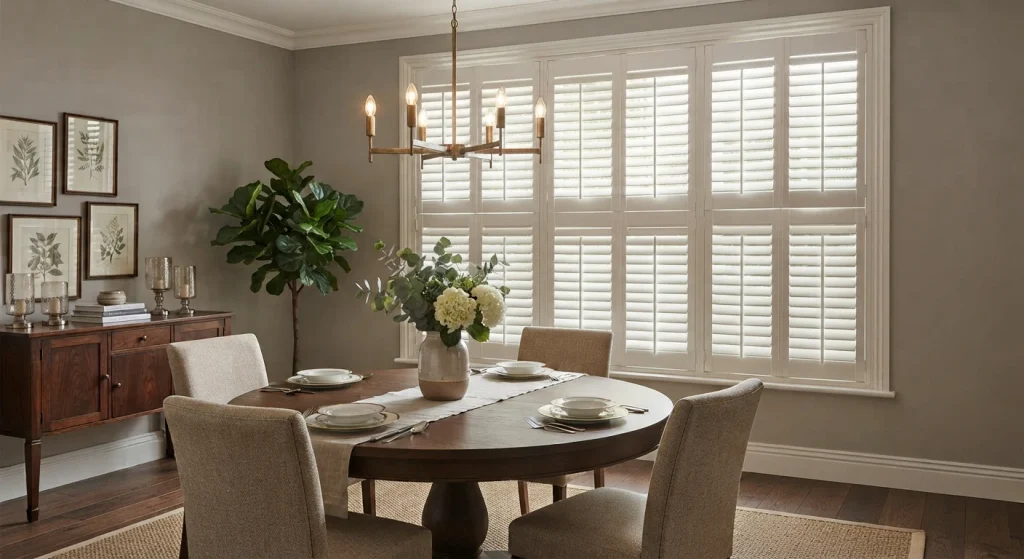
Dining rooms can benefit from shutters that help create the right atmosphere for everyday meals and special occasions. Adjustable louvres allow natural light to be managed throughout the day, while providing privacy during family dinners or evening entertaining. The choice of finish and configuration can also complement the dining table, furniture and overall style of the room.
Other rooms to consider
Plantation shutters can also work well in a variety of other rooms and spaces throughout the home. From hallways and loft conversions to home offices and garden rooms, each space can present different considerations when it comes to light control, privacy, window shape and suitability.
The guides below explore some of these other areas of the home and the factors worth considering when choosing shutters.
Hallway & landing shutters
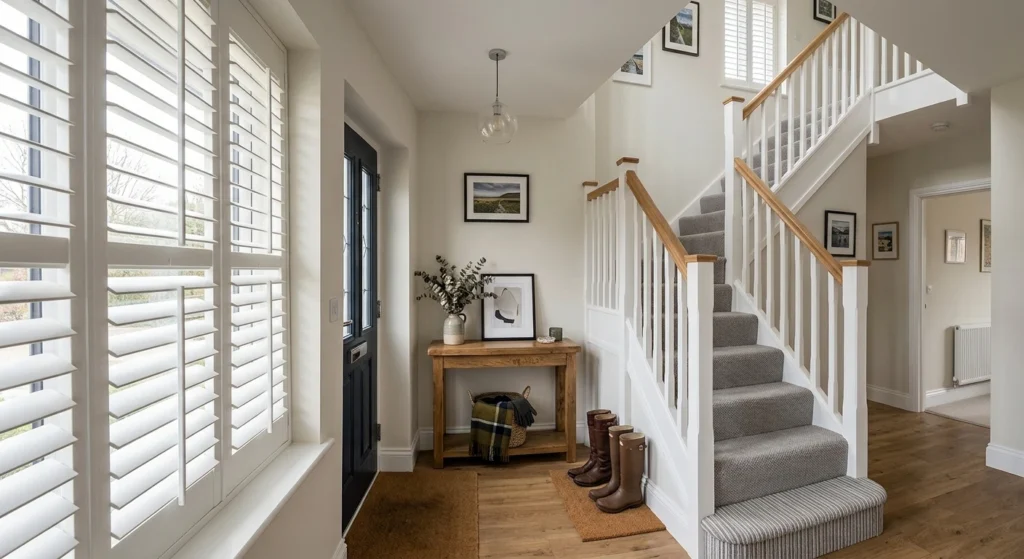
Hallways and landings often feature windows that bring natural light into the centre of a home while overlooking neighbouring properties or the street. Shutters can provide privacy while still allowing daylight to filter through, making them a practical option for entrance halls, stairwells and upper landings. Window height, shape and accessibility can also influence the most suitable shutter design.
Conservatory shutters
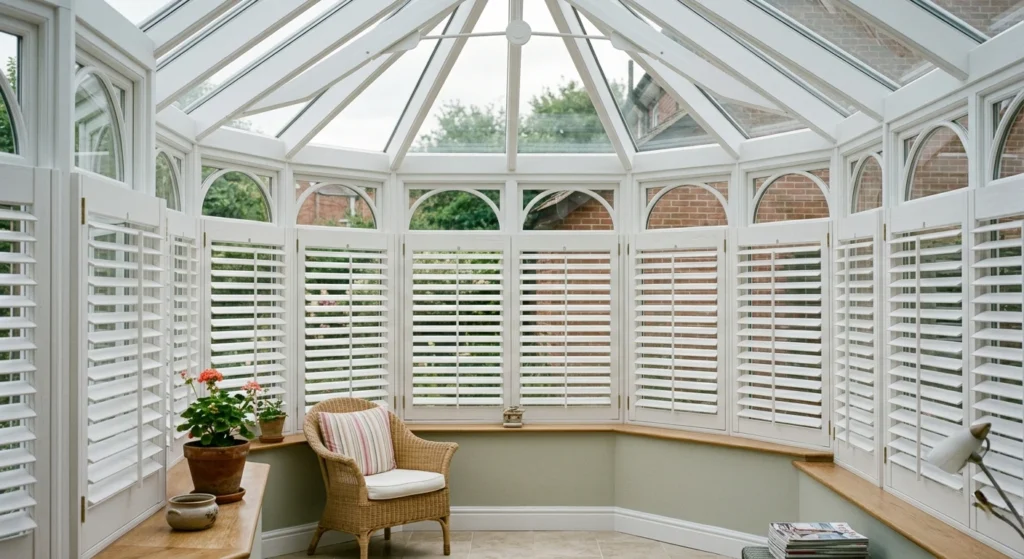
Conservatories can have large areas of glazing that makes controlling sunlight, glare and privacy more challenging. Shutters offer an adjustable way to manage incoming light while creating a consistent finish throughout the space. The type of glazing, exposure to sunlight and potential temperature changes are all worth considering when choosing a suitable shutter material and configuration.
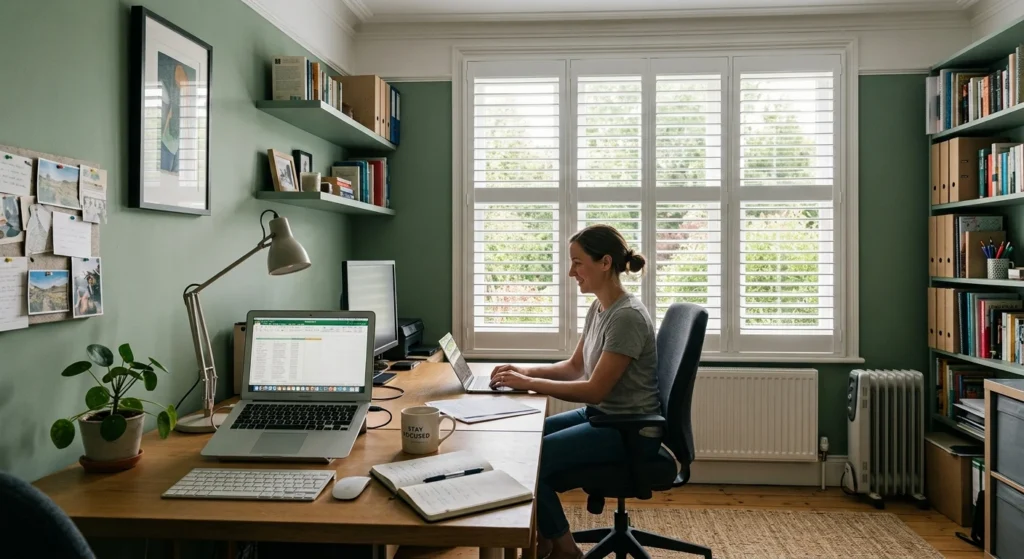
Home office & study shutters
Home offices and studies can benefit from a balance between natural light and reduced glare on computer screens. Plantation shutters allow the amount and direction of incoming daylight to be adjusted throughout the day, while also providing privacy when needed. Louvre size, window orientation and the layout of the workspace can all influence which shutter options work best.
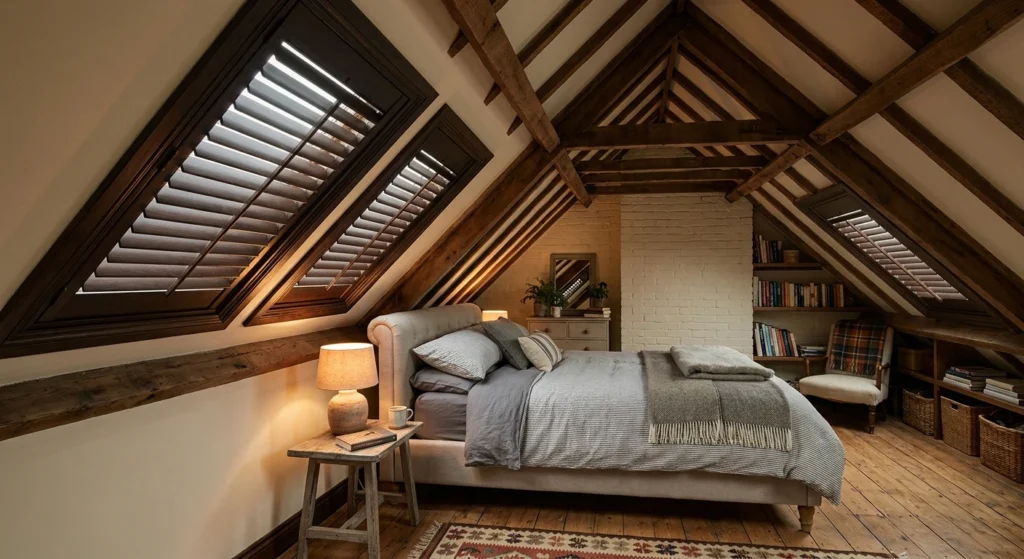
Loft conversion & attic shutters
Loft conversions and attic rooms can feature dormer windows, roof windows, sloping ceilings and other unusual architectural details. These features can affect the types of shutters that are suitable and how they can be fitted. The shape and position of the window, available space and access for operating the shutters are important considerations when exploring the options for loft spaces.
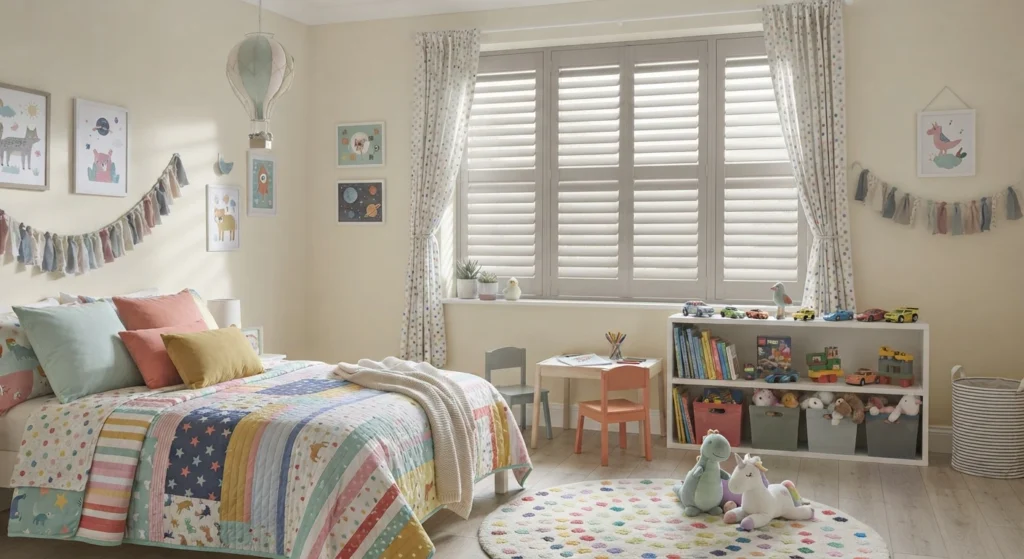
Children’s bedroom shutters
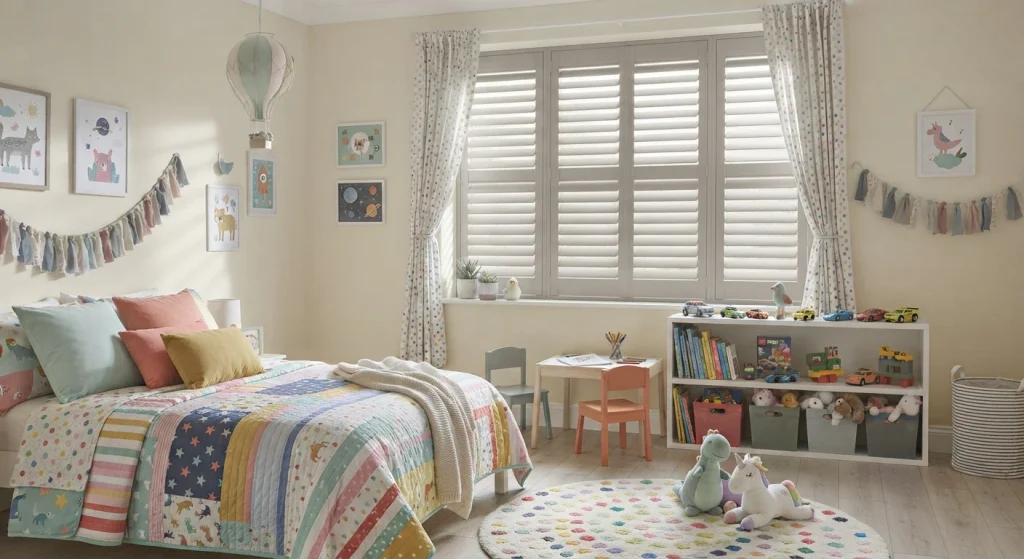
Children’s bedrooms and nurseries require a combination of privacy, light control and a practical finish that complements the rest of the room. Plantation shutters offer adjustable louvres to help manage daylight, with a range of colours and finishes to suit different interiors. For babies and newborns, creating a darker sleeping environment may also be a consideration, alongside choosing suitable window coverings and keeping cords and other hazards out of reach.
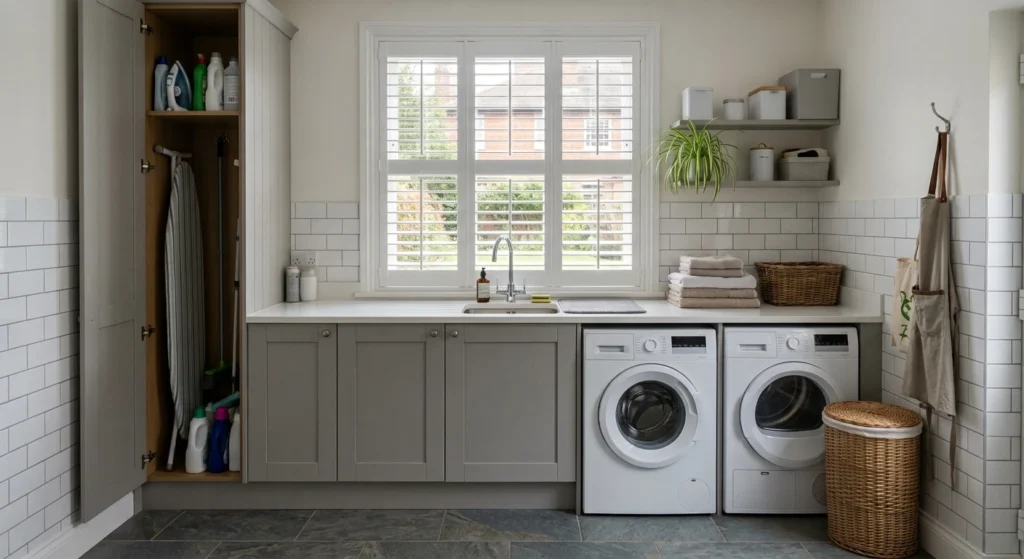
Utility room shutters
Utility rooms are functional spaces where practicality and ease of maintenance can be particularly important. Shutters can provide privacy and adjustable light control without the need for fabric window coverings. Where the room is exposed to humidity, splashes or changes in temperature, the choice of material and its suitability for the environment should be considered carefully.
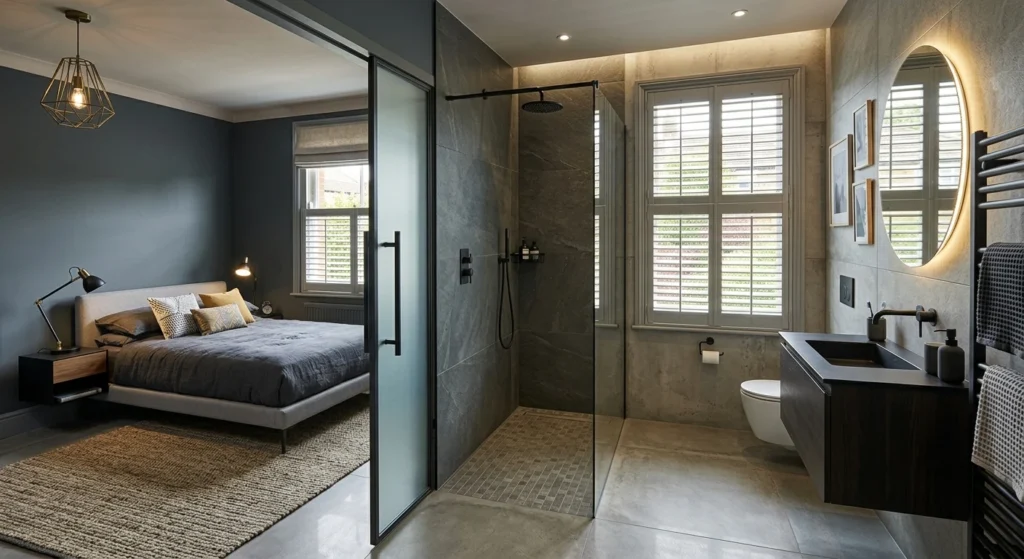
En suite shutters
En suites often have smaller windows where privacy is a priority, particularly when overlooking neighbouring properties. Plantation shutters allow the louvres to be adjusted to manage visibility and natural light. As en suites can experience increased humidity and condensation, choosing a shutter material suitable for the conditions is an important part of the decision.
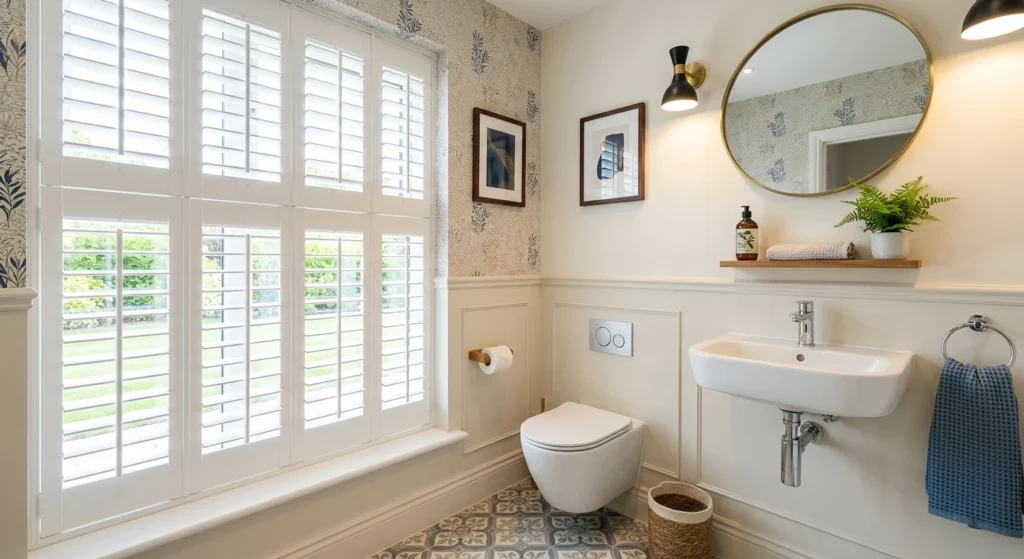
Toilet & cloakroom shutters
Window shutters can be a practical choice for downstairs toilets and cloakrooms, where privacy is often a priority but natural light is still welcome. Their made to measure design can suit smaller windows, while adjustable louvres allow light and privacy to be balanced throughout the day. In rooms where moisture and condensation are a concern, it is important to choose a shutter material specifically suited to those conditions.
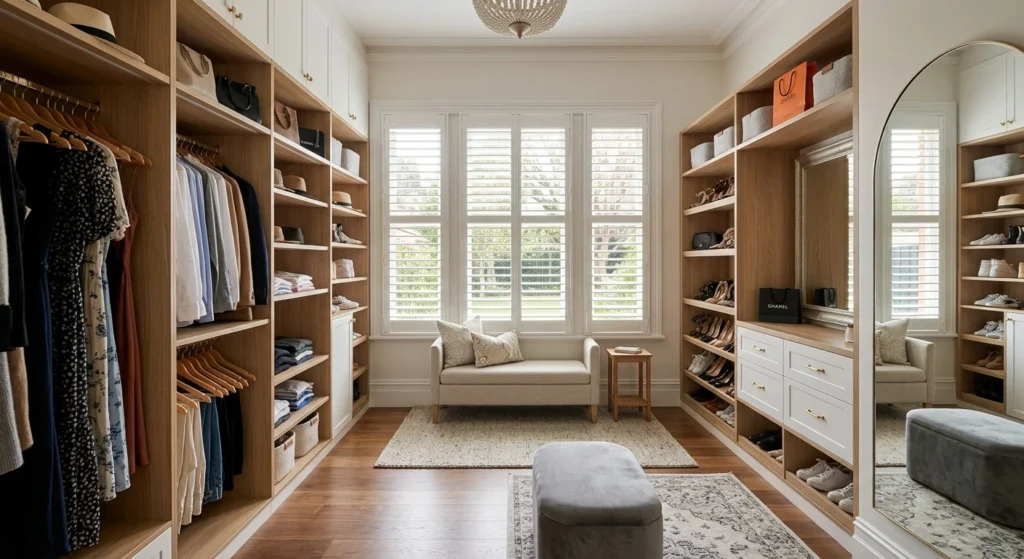
Dressing room & walk-in wardrobe shutters
Dressing rooms and walk-in wardrobes can benefit from plantation shutters that complement fitted storage, dressing tables and other interior features. Adjustable louvres allow natural light to be managed while providing privacy where required. The position of the window, available wall space and the overall design of the room can help determine the most suitable shutter style.
Garden room shutters
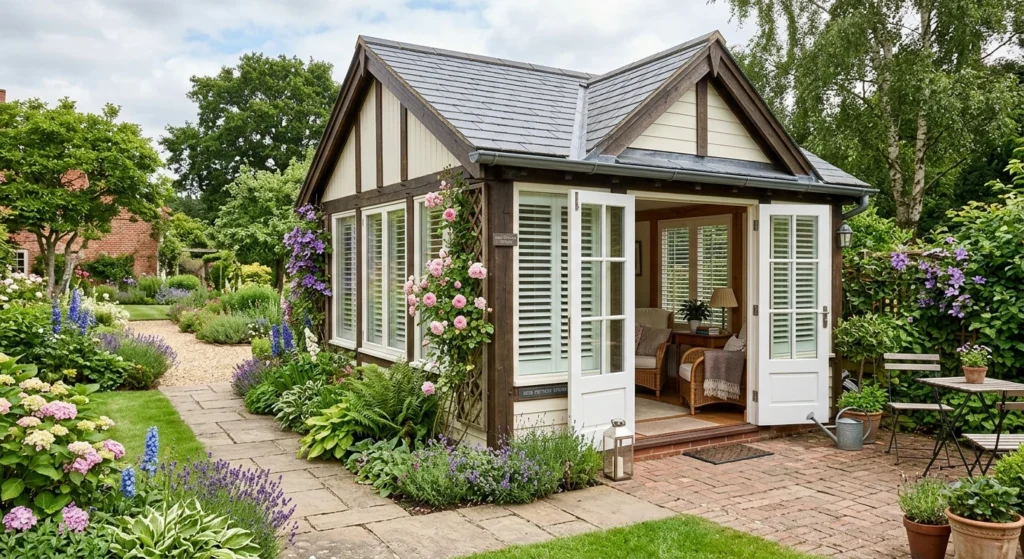
Garden rooms, studios and garden offices often feature generous glazing to make the most of views and natural daylight. Shutters can help manage glare and privacy while complementing the room’s interior design. The amount of direct sunlight, the type of glazing and any seasonal temperature changes are worth considering when deciding whether shutters are suitable for the space.