
Stained Shutters
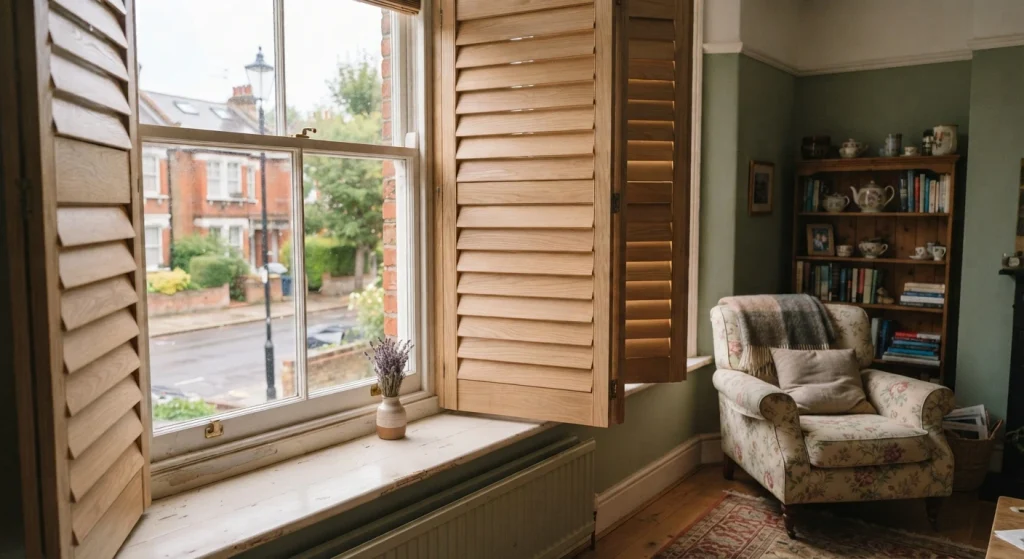
A natural finish that highlights the beauty of timber
Stained shutters allow the natural grain and character of the timber to remain visible, creating a more natural and varied appearance than a painted finish.
Available in a range of shades, stained finishes can be used to enhance the colour and texture of the underlying timber.
✓ Stained finish pros
- Natural timber grain remains visible.
- Each shutter can have its own subtle variation.
- Available in a range of natural shades.
- Complements other timber features.
- Creates a warmer, more natural appearance.
✕ Stained finish cons
- Less uniform than a painted finish.
- Final colour depends on the timber underneath.
- Natural variations may not suit every interior.
- Colour can change with prolonged exposure to sunlight.
- More limited choice because of some materials and products.
Stained shutters, fully explained…
A stained finish is designed to enhance the natural appearance of wood rather than cover it. The stain works with the surface of the material, allowing the grain, texture and natural variations to remain visible. This gives stained shutters a more natural appearance than a painted finish.
How the timber affects the finished colour
The final appearance can vary depending on the type of wood used. Different hardwoods have their own grain patterns, colours and characteristics, and these can remain visible through the stain. Even shutters made from the same species can have some natural variation, so a stained finish will not always look completely uniform.
Stains are available in a range of shades, from lighter natural tones through to deeper browns and other colours. The depth and appearance of the finished colour will also depend on the material underneath, as the natural characteristics of the wood continue to influence the final result.
How stained shutters look in a room
Because the grain remains visible, stained shutters can work particularly well where you want the window covering to form part of the natural character of the room. They can complement other features such as timber flooring, furniture, doors or exposed woodwork, although the stain does not necessarily need to match other wood exactly.
The finish itself can also affect how the surface looks. Different stains and protective coatings can produce variations in colour, sheen and overall appearance, so it is worth looking at samples before choosing a particular finish. The options available will depend on the shutter material and supplier.
How the finish changes over time
Like any natural wood product, stained shutters can show some variation over time. Their appearance can be affected by factors such as exposure to sunlight, moisture and general use. Cleaning and maintenance should follow the manufacturer’s recommendations, particularly in rooms where the shutters may be exposed to higher levels of humidity.
Choosing the right timber for a stained finish
Stained finishes are most commonly associated with natural wood shutters, as the purpose of the finish is to work with the characteristics of the material beneath it. This makes the choice of shutter material particularly important when comparing stained options, as the same stain can look quite different on different woods.
Overall, a stained finish is worth considering if you want the natural characteristics of wood to remain visible. Rather than creating a completely uniform surface like paint, staining allows the grain, colour and natural variation of the underlying material to become part of the finished appearance.