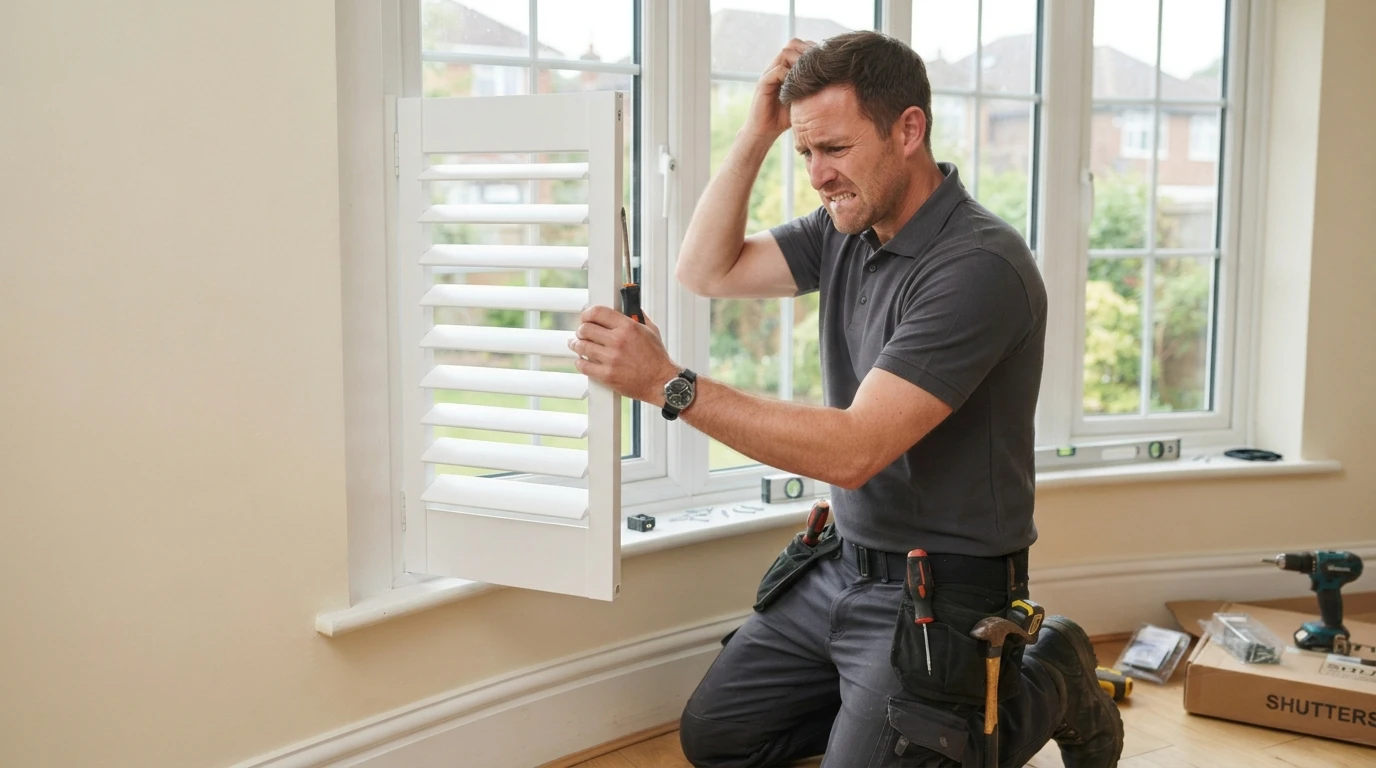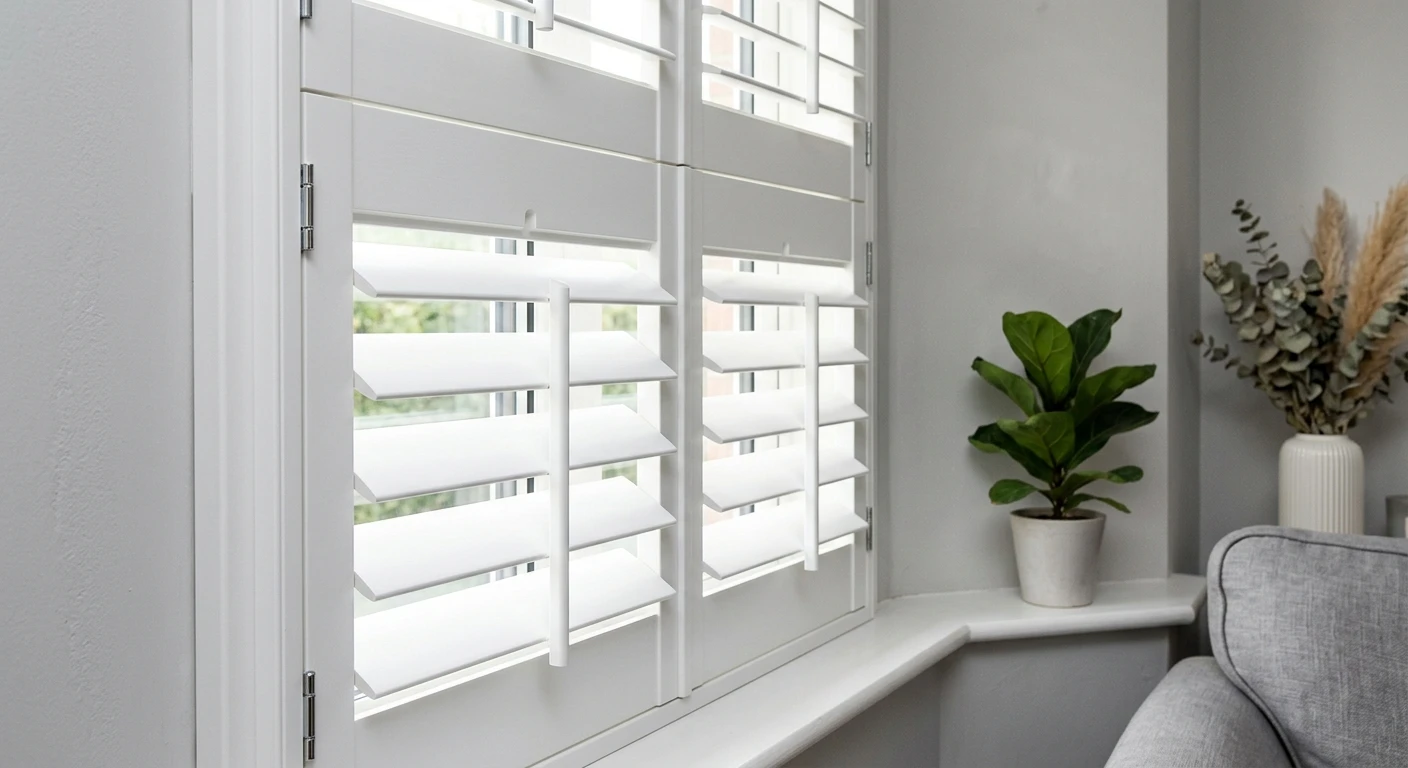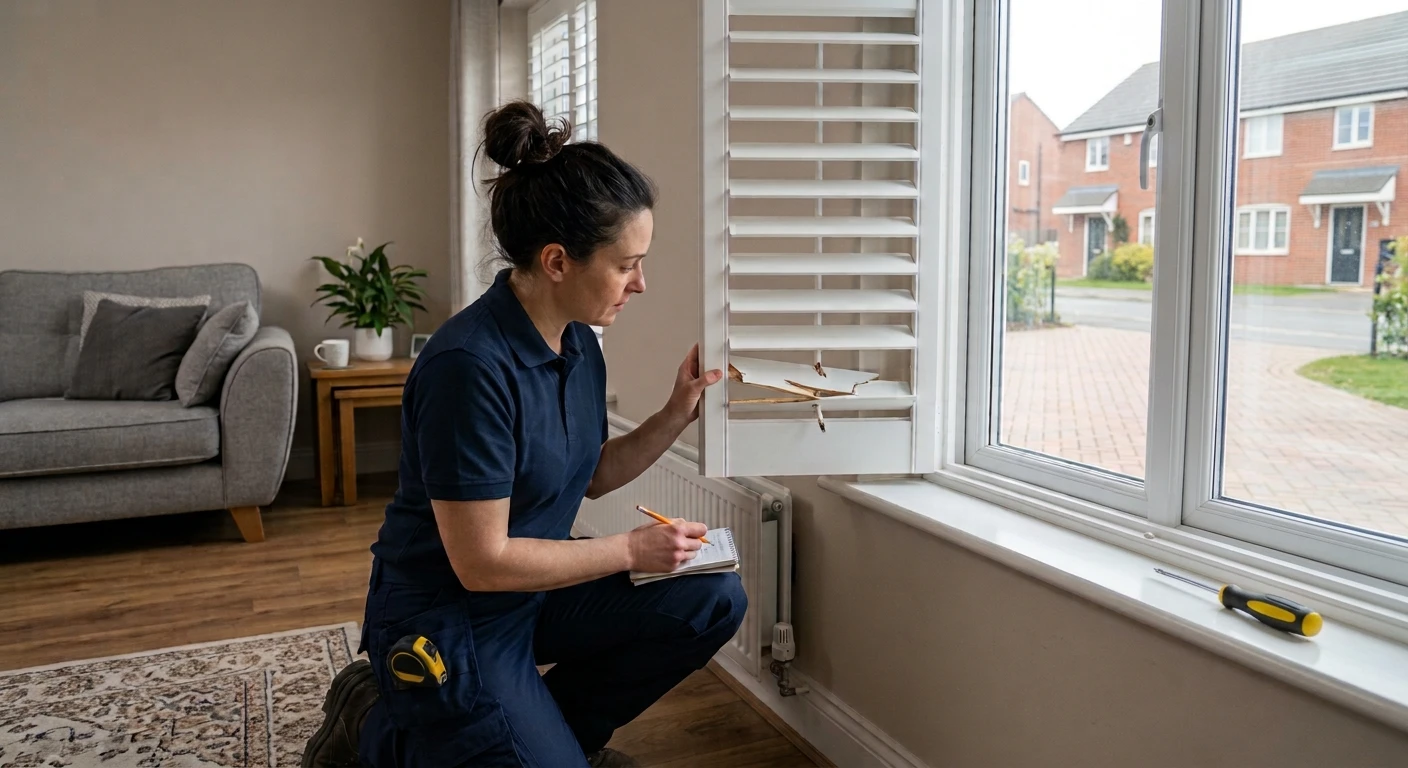
Window shutters are designed to be a durable, long lasting feature of your home, but like any fitted fixture, they can develop problems over time. Hinges may loosen, panels can become misaligned, and everyday use can leave small chips, scratches and scuff marks on the finish.
The good news is that not every problem requires a professional repair or a complete replacement. Many minor issues can be dealt with by a competent homeowner using basic DIY skills, while more substantial damage may need specialist attention. Understanding the type of problem, the material your shutters are made from and the extent of the damage will help you decide on the most suitable approach.
Can window shutters be repaired?
In many cases, yes. The extent to which shutters can be repaired depends on their construction, the cause of the problem and whether suitable replacement parts are available.
Some issues are relatively straightforward. Tightening an accessible loose screw, touching up a small chip in the paintwork or cleaning away surface marks may be enough to improve the appearance or operation of your shutters. Other problems, such as broken components, badly misaligned panels or damage to the frame, can be more complicated.
The material also matters. Solid wood shutters may allow certain repairs that are unsuitable for coated MDF or synthetic materials. Before using fillers, sanding surfaces or applying paint, check that the method and products are appropriate for the particular shutter.
It is also worth establishing whether the problem has developed through normal use or was present from the outset. If shutters have never fitted or operated correctly, the issue may relate to the original measuring or installation rather than wear and tear.
Common shutter problems and how they can be fixed
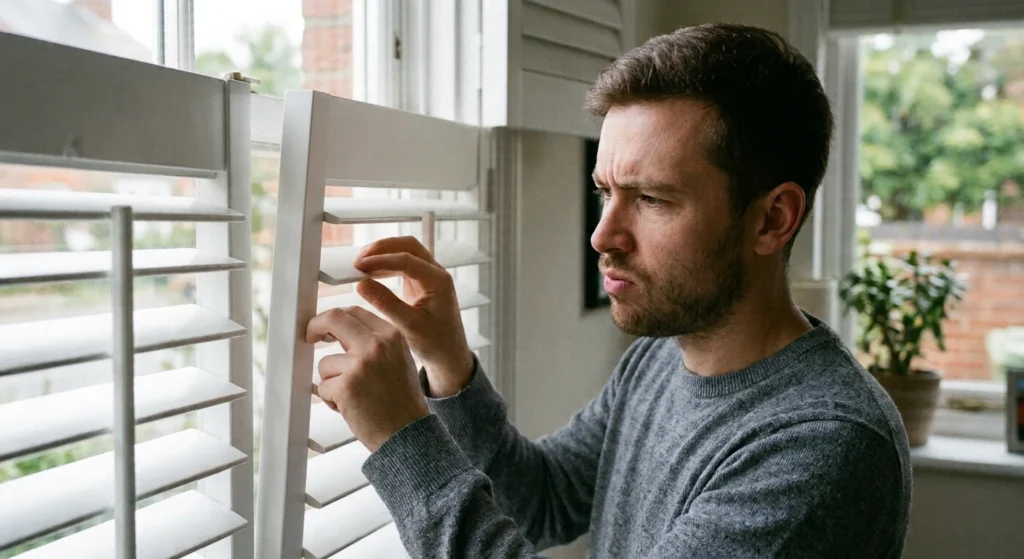
Shutter problems range from minor cosmetic marks to faults that affect how the panels fit and operate. Some can be addressed at home, while others require a more involved repair.
Loose screws and fixings
Screws and fixings can loosen over time, particularly around hinges and other moving components. Where a screw is accessible and the surrounding material is in good condition, carefully adjusting and tightening it may be all that is needed.
Avoid overtightening screws, as this can damage the material or strip the fixing point. If a screw will not hold securely, the surrounding hole is damaged or the frame itself feels loose, further investigation may be needed rather than simply tightening it again.
Misaligned panels and fitting problems
Panels that rub against their frames, sit unevenly or fail to close properly may have an alignment problem. Sometimes, a minor adjustment to a hinge or fixing can resolve the issue.
However, alignment problems can have several causes. Loose fixings, changes in the surrounding frame, warped components or an installation that was not quite right in the first place can all affect how shutters sit and operate.
If the shutters have never fitted properly, there are uneven gaps or several panels are affected, it is worth contacting the original installer or another shutter professional. Repeatedly adjusting hinges without identifying the cause may not solve the problem and could make the alignment worse.
Loose or damaged louvres
Louvres can occasionally become loose, damaged or difficult to adjust. The repair will depend on how the shutter is constructed and the type of mechanism used to move the louvres.
A minor issue may be straightforward to resolve if the design allows it, but a broken louvre, damaged connector or faulty adjustment mechanism may require a replacement component. Take care not to force stiff or stuck louvres, as this could cause further damage.
Not all shutters have adjustable louvres, so the appropriate repair will depend on the particular panel design.
Chips, scratches and scuffed paintwork
Small chips and scratches are among the most common cosmetic problems, particularly around panel edges, handles and other areas that experience regular contact.
Scuff marks may simply need cleaning with a product recommended for the shutter material, while minor chips in painted surfaces can often be touched up without repainting the entire panel. A tiny amount of closely matched paint, applied with a fine artist’s brush or even the tip of a cocktail stick for particularly small chips, can help cover the exposed area neatly. Much like touching up a stone chip on a car, the aim is to keep the repair as precise as possible without disturbing the surrounding finish.
These small jobs are often manageable for a competent DIYer without specialist tools. Although the result may not be perfect, a careful repair can make the damage less noticeable and help keep the shutters looking well cared for.
Getting the best results from touch ups
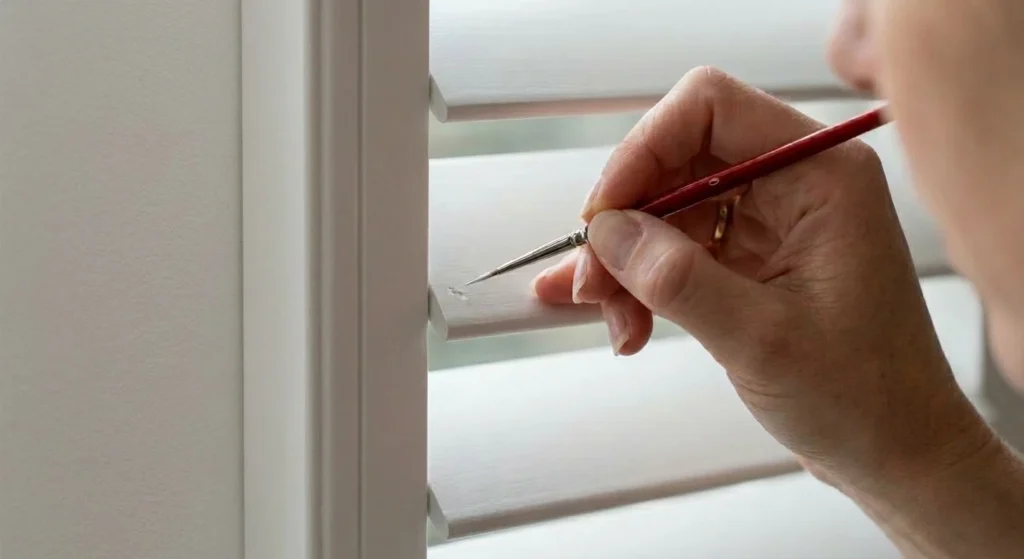
Before attempting a touch up, make sure the paint is suitable for the shutter material and existing finish. Test it on a discreet area if possible, as differences in colour, sheen and texture can affect the final result. Avoid sanding or using fillers on coated MDF or synthetic shutters unless the manufacturer confirms that this is appropriate.
If the paint is peeling across a larger area, the underlying material is damaged or moisture is causing the problem, a simple touch up is unlikely to provide a lasting solution. In these cases, it is important to address the underlying cause rather than simply covering the visible damage.
Can damaged or worn shutters be restored?
Restoration can be a good option when shutters have become tired or marked but remain structurally sound. Rather than replacing the entire installation, it may be possible to improve the finish, repair selected components or refresh the appearance of the existing panels.
Wooden shutters can sometimes be sanded, filled, repainted or refinished, depending on their construction and condition. Minor surface damage may be relatively easy to address, while extensive splitting, warping or deterioration can require more substantial work.
Other materials need a different approach. Painted MDF shutters, for example, may have a coated surface that should not be treated in the same way as solid timber. Faux wood, PVC and ABS shutters also vary in their finishes and construction, and sanding or using unsuitable paints and fillers could damage them.
Before attempting a restoration, identify the material and check the manufacturer’s recommendations. If the shutters are still covered by a warranty, review its terms before carrying out any work yourself.
It is also important to distinguish cosmetic wear from structural damage. Improving the appearance of a panel will not necessarily resolve a problem with its strength, shape or ability to close correctly.
Repairing shutters in kitchens and bathrooms
Kitchens and bathrooms can expose shutters to higher levels of moisture and condensation, so the condition of the material and finish deserves particular attention.
Peeling paint, swelling, distortion or deterioration around joints and edges may indicate that moisture is affecting the shutters. A small surface mark might be repairable, but if the underlying material has swollen or warped, a cosmetic touch up is unlikely to provide a lasting solution.
If moisture is the cause, consider whether ventilation needs improving or whether the shutter material is suitable for the room. Water resistant shutters can be a practical choice in these environments, but suitability depends on the specific product and the conditions it is designed to withstand.
Where there is significant distortion or deterioration, seek advice before attempting repairs. Addressing the cause early may help prevent further damage.
Can shutters be repaired without removing them?
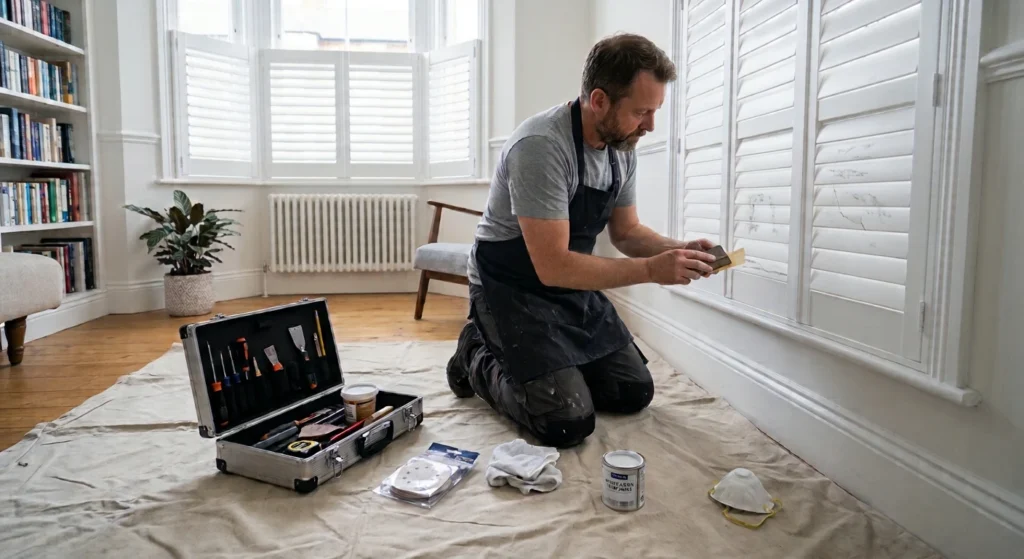
Many minor repairs can be carried out while shutters remain in place. Tightening accessible screws, cleaning the surfaces and touching up small areas of paintwork may not require any removal at all.
More extensive work can be different. Replacing certain components, restoring larger areas of paintwork or correcting a fitting problem may require the panels or frames to be removed. This can introduce additional work, particularly if the installation is complex or the surrounding plasterwork is fragile.
If removal is necessary, take care when handling the panels and keep track of any fixings or components. If you are unsure how the shutters are assembled or how to remove them safely, ask the original installer or another shutter professional for advice.
When is replacement the better option?
Although many shutter problems can be repaired, there are situations where replacement may be the more practical choice.
Extensive damage, badly warped panels, deteriorated frames or components that are no longer available can make repairs difficult or uneconomical. If several parts need attention, the combined cost of labour and replacement components may also approach the cost of a new installation.
The availability of matching parts is particularly relevant with older shutters. Even if a replacement component can be sourced, matching the original colour, finish or design may be difficult.
Before deciding, compare the likely repair cost with the cost of replacement and consider the overall condition of the shutters. If most of the installation remains sound and the problem is isolated, repairing it may be worthwhile. If the shutters have widespread damage or no longer meet your needs, replacement may make more sense.
When to call a shutter professional
Many minor shutter repairs are within the capabilities of a competent DIYer, particularly simple tasks such as tightening accessible screws, cleaning suitable surfaces and touching up small areas of cosmetic damage.
Professional help is advisable when the problem affects the structure, fitting or operation of the shutters. This includes badly misaligned panels, damaged frames, broken mechanisms, significant warping and problems that persist after basic checks. An experienced installer may also be able to identify whether the fault stems from the original installation or from changes that have occurred over time.
If possible, contact the original installer first, especially if the shutters are still under warranty. They may be familiar with the product and able to source compatible parts. If that is not an option, another shutter specialist may be able to assess the damage and recommend a suitable repair.
There is no need to call someone out for every minor mark, but equally, it is worth recognising when an attempted DIY repair could cause more damage than it fixes.
Giving your shutters a new lease of life
Shutters do not necessarily need to be replaced simply because they have developed a few marks or minor faults. Loose screws, small chips, scratches and other everyday wear can often be addressed with straightforward maintenance or a careful DIY repair.
More substantial problems may require replacement parts, professional restoration or a new installation, but identifying the cause and assessing the condition of the shutters will help you make an informed decision.
With sensible care and the right approach to repairs, many shutters can continue to look good and work effectively for years. Whether you carry out a small touch up yourself or seek professional advice for a more complex problem, the aim is to preserve the shutters where practical and avoid replacing them unnecessarily.