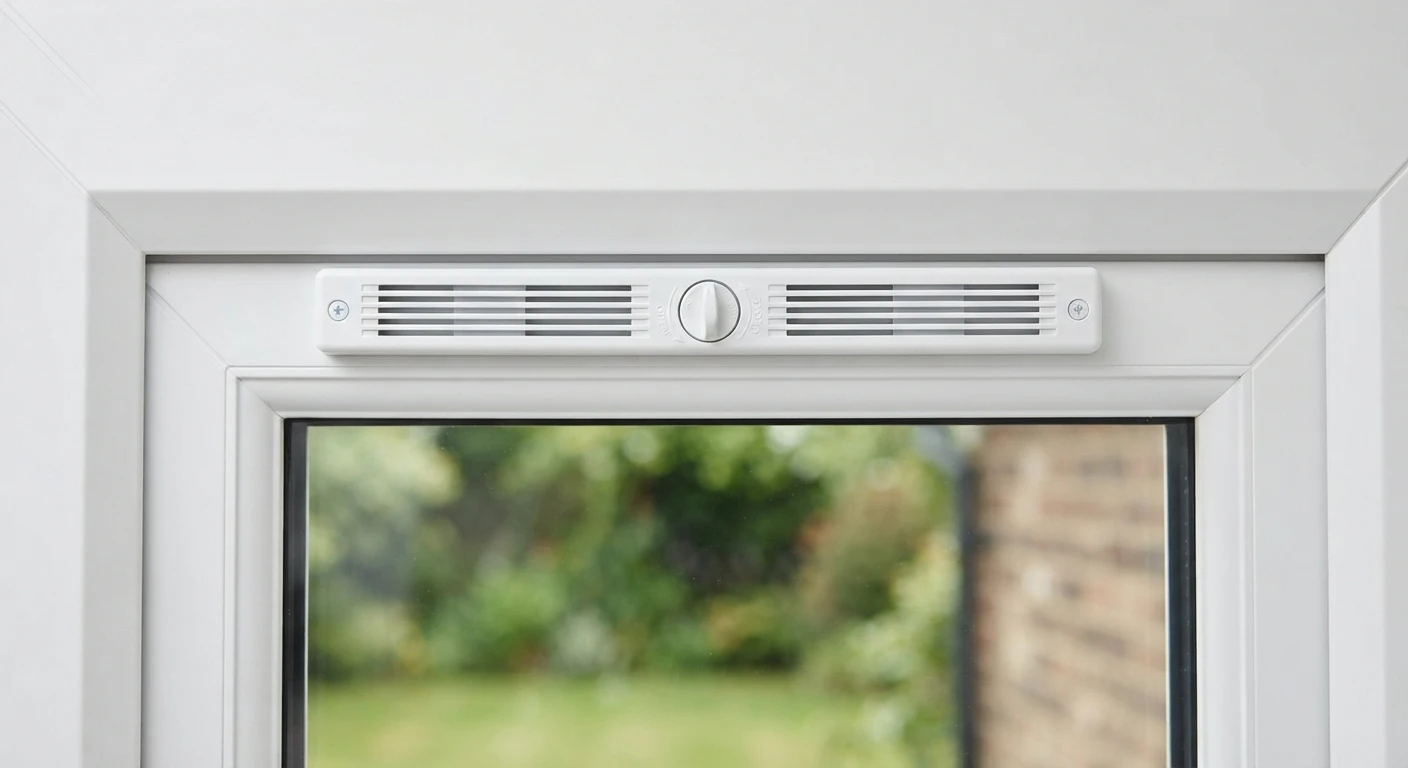
When you look at window shutters, you might notice small magnets, catches or latches keeping the panels closed. But not every shutter needs one.
The way shutters are constructed and fitted can sometimes provide enough resistance to keep the panels in position without any additional closure. In other situations, a magnetic catch or another type of latch can be useful, particularly where you want the panels to stay firmly closed.
So, how do window shutters actually stay closed, and when might you want something more than the hinges and panels themselves?
Do all window shutters need a catch?
No. Depending on the shutter design, panel size, hinges and frame, a shutter panel can sometimes stay closed without a separate catch or latch.
The hinges provide support and movement, while the way the panel sits within the frame can help keep it in position. The material used can also make a difference, as some shutters are considerably heavier than others. Some installations may therefore work perfectly well without magnets or other mechanical closures.
Whether this is suitable depends on the particular shutter system and how the panels are designed to operate. A supplier may recommend a closure mechanism where the size, weight or intended use of the shutters makes one worthwhile.
Why add a closure?
There are various reasons you might want a more positive way of keeping your shutters closed.
Sometimes it’s simply about convenience. A magnetic catch can hold the panel neatly against the frame and give you a reassuring click when the shutters close.
In other situations, you may want to prevent the panels from opening too easily. This could be useful in a bathroom, for example, where you don’t want the shutters swinging open while you’re in the bath or shower, or in a child’s room where the panels might otherwise become something to constantly push and pull. It could even be as simple as preventing a panel from opening accidentally when someone brushes past it.
Larger or heavier panels can also benefit from a more secure closure, particularly if the shutters are frequently opened and closed or are fitted in a position where they may be subject to movement.
The right choice depends on the installation rather than there being one closure system that is best for every shutter.
Magnetic catches
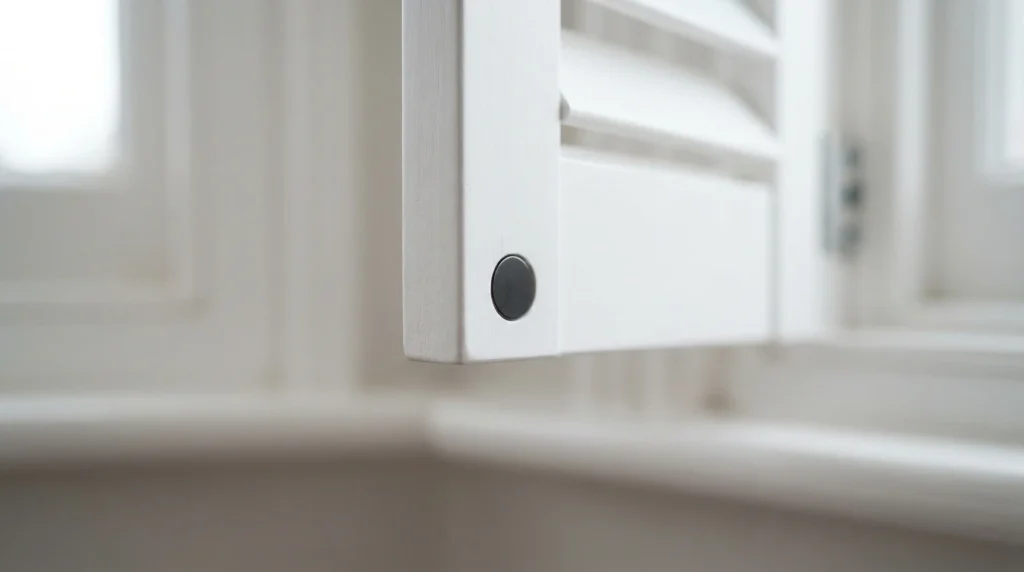
Magnetic catches are probably the closure you’ll come across most often.
A small magnet is fitted into the shutter panel or frame, with a corresponding metal plate or magnet positioned on the other side. When the panel is pushed closed, the two attract and hold it in place.
One advantage is that the mechanism can often be concealed within the shutter, leaving very little visible hardware. This suits the clean appearance that many people want from window shutters.
Magnetic catches can also make the shutters easy to operate. You simply pull the panel open when you want to and push it back into place when you’re finished.
Some systems use more visible magnetic catches or strike plates instead. These aren’t necessarily better or worse, the choice can come down to the shutter design, the size of the panel and the appearance you prefer.
Mechanical catches and latches
Magnets aren’t the only way to keep a shutter panel closed.
Some shutters use mechanical catches or latches that physically hold the panel in position. These provide a more definite closure than simply relying on magnetic pull or the resistance of the hinges.
Some catches and latches can also provide an additional level of resistance if someone tries to push the shutter panels open from outside. While they shouldn’t be treated as a security feature in their own right, a more positive locking mechanism may help slow down an opportunistic intruder, particularly when shutters are fitted over accessible ground floor windows.
They can be useful where shutters are particularly large, frequently used or likely to be moved around. The exact type of catch available will depend on the shutter system, so it’s worth discussing this with the supplier if you have a particular requirement.
There are also more traditional looking catches and hook style closures that can suit certain shutter designs. These tend to be more visible, so they become part of the overall appearance as well as serving a practical purpose.
What about larger shutter panels?
The size and weight of a shutter panel can influence the type of closure that’s appropriate.
Small window shutters may be perfectly happy sitting closed with the hinges and frame providing enough resistance. A much larger panel, on the other hand, has more weight and can potentially move more easily.
This doesn’t automatically mean that large shutters need magnets or latches. The panel construction, hinges and frame all play a part, and different shutter systems are designed in different ways.
If you’re fitting particularly wide or tall panels, it’s therefore worth asking what closure system the supplier recommends and why.
Do closures matter in different rooms?
The room itself can sometimes influence what you want from your shutters.
In a quiet bedroom, for example, you may simply want the shutters to sit neatly closed. In a bathroom, you might prefer a closure that keeps the panels firmly in position rather than allowing them to swing open unexpectedly.
The same applies in busy areas of the home. Shutters fitted beside a doorway or in a room where people regularly walk past the windows may benefit from a more positive closure if you don’t want the panels moving whenever they’re knocked or brushed against.
It’s not necessarily about needing a stronger closure. It’s about thinking about how the shutters will actually be used.
Can the closure be hidden?
Yes, and this is one reason magnetic catches are popular.
Some closure mechanisms can be built into the shutter frame or panel edge, making them barely noticeable when the shutters are closed. This allows the clean appearance of the shutters to remain the main feature rather than having visible hardware on the front.
The trade off is that concealed mechanisms can sometimes be more difficult to access, repair or replace if they develop a fault. With visible catches and latches, the mechanism is generally easier to reach, which can make future maintenance more straightforward.
Other catches and latches are deliberately visible. This can be perfectly appropriate, particularly where a more traditional appearance is wanted or where easy access to the mechanism is useful.
If the appearance of the hardware matters to you, it’s worth asking to see examples of the proposed closure before ordering.
Is one type of closure better than another?
Not necessarily.
A concealed magnetic catch may be ideal if you want a simple, unobtrusive closure. A mechanical latch might make more sense where a firmer physical hold is needed, while some installations may not need a separate closure at all.
The shutter material, panel size, configuration, room and how often the shutters will be used can all influence the decision.
It’s also worth remembering that the closure is only one part of the overall construction. Good hinges, a suitable frame and well made panels are all important to how the shutters operate.
A small detail worth considering
Closures aren’t something you necessarily think about when choosing window shutters. After all, they’re a relatively small part of the overall installation.
But they can make a difference to how the shutters feel in everyday use. You might prefer the simple action of a magnetic catch, the firmer hold of a mechanical latch, or the uncluttered appearance of shutters that don’t need a separate closure at all.
The important thing is that the closure suits the shutters and the way you intend to use them. There isn’t a single solution that’s right for every window, and sometimes the best choice is simply the one that you barely notice at all.