Choosing the right material is one of the most important decisions when buying plantation shutters. With several different materials and constructions available, it can be difficult to know which is likely to give you the best result.
But what actually is the best material for plantation shutters? The answer isn’t quite as straightforward as you might think.
The right choice can depend on where the shutters are going, the size of the windows, how the room is used and what matters most to you. A material that works particularly well in a living room may not be the best choice for a bathroom, while large windows and frequently used doors can bring their own considerations.
There are also differences in appearance, strength, weight, moisture resistance, durability and price. Understanding how the main materials compare will help you decide which is best suited to your home.
Hardwood shutters
Natural hardwood remains a popular choice for plantation shutters, particularly among homeowners who appreciate the appearance and character of real timber.
One of the main attractions of hardwood is its natural grain. Depending on the species, timber can have distinctive patterns, colours and textures that give each shutter its own character. Hardwood can also be painted in a wide range of colours or stained to bring out the natural grain, making it a versatile choice for different interiors.
However, not all hardwood shutters are the same. Different timber species have different characteristics, including their density, weight, strength and stability. The quality of the timber and the way the shutters are constructed can also make a considerable difference.
Premium and more affordable hardwoods
Some hardwood shutters are made using carefully selected, relatively lightweight and stable timber, while more affordable ranges may use less expensive species or grades of wood.
Premium hardwood can be an excellent choice where appearance and natural timber quality are priorities. It can also be particularly attractive on feature windows, period properties and larger installations where a stained wood finish is desired.
More affordable hardwood shutters can offer the appeal of real timber at a lower price. However, it’s worth paying attention to the type and quality of wood being used. Timber that is less stable or more prone to movement may be more susceptible to changes in shape over time, particularly where temperature and humidity fluctuate.
Where hardwood works well: Living rooms, bedrooms and other areas where the natural appearance of timber is an important consideration. It can also be a good choice for feature windows and interiors where you want the shutters to have a more individual, natural finish.
Engineered wood shutters
Engineered wood shutters are often marketed as MDF or composite shutters, although the exact materials and construction can vary between manufacturers.
Rather than being made entirely from solid timber, these shutters use manufactured wood based materials, sometimes combined with timber components or other reinforcing materials. MDF is one of the most common materials used, although not every engineered or composite shutter has the same construction.
One of the main advantages of engineered wood is consistency. Manufactured materials can provide a uniform surface and predictable finish, while the construction can be designed to provide good strength and stability.
They are often available in a range of painted finishes, making them a popular alternative to natural hardwood for homeowners who prefer a smooth, consistent appearance.
Engineered wood shutters can also offer a good balance between price and performance. However, weight is worth considering. Some products can be relatively heavy, which may influence the size of panels that can be used and the hardware needed to support them.
It’s also important to check the manufacturer’s guidance on moisture exposure. Although some engineered shutters have protective coatings, this doesn’t automatically make them suitable for every wet or humid environment.
Where engineered wood works well: Living rooms, bedrooms and many other everyday spaces where a consistent painted finish and a balance between cost and durability are priorities. MDF can be a particularly practical choice for standard sized windows, but its weight can become a limitation on larger installations. Very wide panels or large expanses of glazing may require narrower panel configurations, additional support or a lighter material to achieve a suitable result.
Faux wood shutters
Faux wood shutters are designed to offer the appearance of traditional wooden shutters while using alternative materials.
The term can cover a variety of products, so it’s worth looking beyond the name to understand how a particular shutter is made. Many are manufactured using PVC based materials, often with a rigid aluminium core to provide additional strength and help maintain the shape of the panels.
This type of construction combines a wood effect exterior with a reinforcing structure inside. The precise specification varies between manufacturers, so it’s important not to assume that all faux wood shutters have the same composition or performance.
One of their main attractions is their suitability for areas where moisture resistance is important. Depending on the product, they can offer a practical alternative to natural timber in rooms where occasional splashes, humidity or condensation may be a concern.
They can also be a good option for homeowners who like the clean, painted appearance of shutters but don’t necessarily want natural wood grain.
However, the appearance and feel can differ from genuine timber. If you particularly like the natural character of hardwood or want a stained finish that shows the grain, faux wood may not provide the same result.
Where faux wood works well: Kitchens, bathrooms and other areas where moisture resistance and easy maintenance are important. They can also be worth considering for everyday family spaces, although the weight, construction and maximum panel sizes should always be checked.
PVC and ABS shutters
PVC and ABS are two different types of plastic used in shutter manufacturing. They are sometimes grouped together, but they shouldn’t be treated as interchangeable materials.
PVC (polyvinyl chloride) shutters can be made in different ways, with variations in their construction, thickness and reinforcement. Some products are designed to provide a relatively lightweight and moisture resistant shutter, while others may use additional internal support.
ABS (acrylonitrile butadiene styrene) is another plastic used for shutters. It is known for its impact resistance and is often used in products designed for areas where moisture is a particular consideration.
Both materials can offer practical advantages, particularly where exposure to moisture makes natural timber or certain engineered wood products less suitable. However, their performance depends on the quality and specification of the finished shutter, not simply the name of the plastic.
It’s also worth considering the overall appearance. Some plastic shutters have a more noticeably synthetic finish than painted timber or higher quality faux wood products. If the shutters are going in a prominent living area, this may influence your decision.
One potential consideration with plastic shutters is the possibility of discolouration over time. Some PVC and ABS products can be affected by prolonged exposure to sunlight and UV radiation, which may cause fading or yellowing. The quality and formulation of the material, including any UV resistant additives, can influence how well the original colour is maintained. If you’re considering plastic shutters, it’s worth asking the supplier about their resistance to UV exposure and any guarantees against discolouration.
Where PVC and ABS work well: They can be worth considering in bathrooms, wet rooms and other areas where moisture resistance is a priority. Check the manufacturer’s recommendations carefully, particularly if the shutters will be close to a shower or bath or exposed to regular splashing.
Choosing the right material for your room and windows

Looking at materials in isolation only tells you part of the story. The room, window dimensions and way you use the space can all influence which shutter is most suitable.
Here are some examples of things worth considering.
Bathrooms and kitchens
Bathrooms and kitchens often place greater demands on window coverings than other rooms in the home.
In bathrooms, humidity, condensation and occasional splashes can make moisture resistance particularly important. A suitable faux wood, PVC or ABS shutter may be a practical choice, especially around showers and baths. However, not every product is designed for direct or prolonged water exposure, so always check the manufacturer’s guidance.
Kitchens can also be demanding environments. Shutters may be exposed to steam, cooking splashes and regular cleaning, particularly around sinks and worktops. A durable finish and an easy to clean surface can therefore be just as important as the material itself.
Large and wide windows
Large windows bring different considerations. The size and weight of the shutter panels, the strength of their construction and the hardware supporting them all become more important.
Some materials and shutter constructions are better suited to larger panels than others. A product that works perfectly well on a small bedroom window may not be appropriate for a wide expanse of glazing.
Hardwood and faux wood shutters can both be suitable for larger windows, while engineered wood may also be an option depending on the size and weight of the individual panels. The overall construction, available support and recommended maximum panel dimensions are important considerations. For particularly wide windows or long runs of glazing, using several narrower panels may be more suitable than fewer, wider ones.
Tall windows and glazed doors
Tall windows and glazed doors can also require careful consideration. Longer panels may need additional structural support, and their weight can affect how easily they open and close.
The material is only one part of the decision. Panel design, reinforcing components, hinges and the overall configuration all contribute to how well the installation performs.
For frequently used French doors or other glazed doors, it’s particularly important to choose a construction that can cope with regular operation.
Living rooms and bedrooms
In living rooms and bedrooms, appearance may be a bigger consideration than moisture resistance.
Natural hardwood can be particularly appealing if you want visible grain, a stained finish or the character of real timber. Engineered wood and faux wood can offer a more consistent painted appearance, often at a different price point.
There isn’t necessarily a right or wrong choice. It comes down to the look you prefer, the performance you expect and how much you’re comfortable spending.
Does the material affect the price?
Yes. The material and construction can have a significant influence on the price of plantation shutters, although they aren’t the only factors.
Natural hardwood shutters can vary considerably in cost depending on the timber species, grade and finish. Premium hardwoods are generally more expensive than less costly timber alternatives.
Engineered wood and some plastic based shutters can offer more affordable alternatives, although prices vary considerably depending on their construction and specification. Faux wood shutters, in particular, shouldn’t automatically be assumed to be cheaper than natural hardwood. Their manufacturing location, availability and production lead times can all influence the final price, meaning some faux wood products can cost more than hardwood shutters.
The size of the windows, number of panels, frame design, finish and installation requirements will all affect the final cost.
When comparing quotations, make sure you’re looking at products with a similar specification. Two shutters may look very similar from a distance but have quite different internal construction, materials and hardware.
The material isn’t the only thing that matters
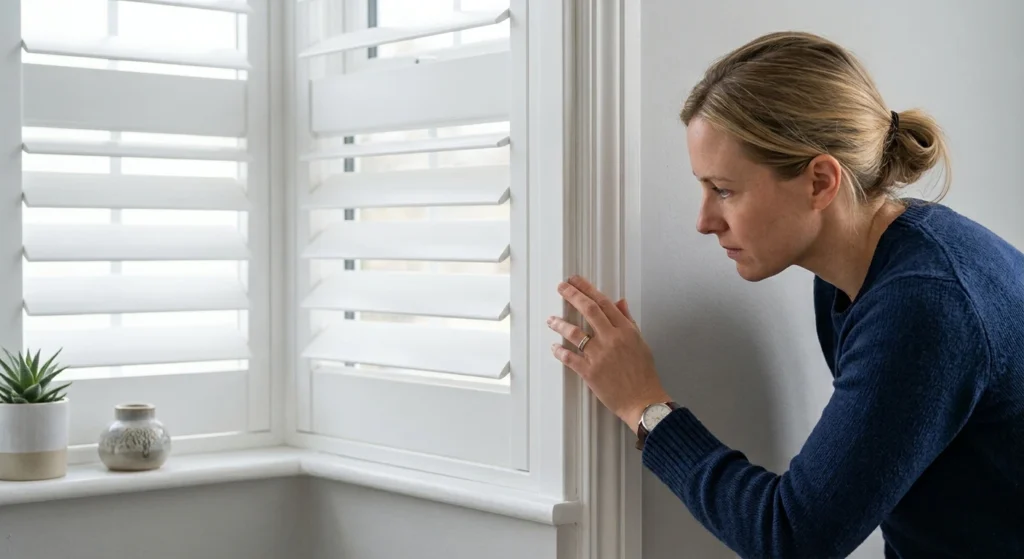
It’s easy to focus on the material when comparing plantation shutters, but the way they are made can be just as important.
Look at the thickness and construction of the panels, the quality of the joints, the finish and the hinges and other components. These details can all influence how sturdy the shutters feel, how well they operate and how they stand up to everyday use.
It’s also worth checking the manufacturer’s guidance on suitable room types, maximum panel sizes and any restrictions on moisture exposure. Some suppliers use their own marketing names for particular shutter materials or constructions, which don’t always make it obvious what the product is actually made from. Don’t be afraid to ask for a clear explanation of the underlying materials and how the shutters are constructed, rather than relying solely on a product name or marketing description.
Ultimately, the material name alone won’t tell you whether a shutter is well made.
So, what is the best material for plantation shutters?
There isn’t one material that comes out on top in every situation. The best choice depends on what you need from your shutters and where they’re going to be fitted.
If you love the appearance of natural timber, hardwood may be the obvious choice. If you want a consistent painted finish and a good balance between cost and performance, engineered wood could be worth considering. Faux wood, PVC and ABS can offer practical alternatives where moisture resistance is particularly important.
For larger windows and doors, the strength, weight and construction of the panels deserve just as much attention as the material itself.
Rather than choosing solely by price or the name given to the material, take time to compare the actual products and their specifications. Think about the room, how the shutters will be used, the appearance you want and how long you expect them to last.
Getting those things right will help you choose a material that is genuinely suited to your home, rather than simply the one that sounds best on paper.