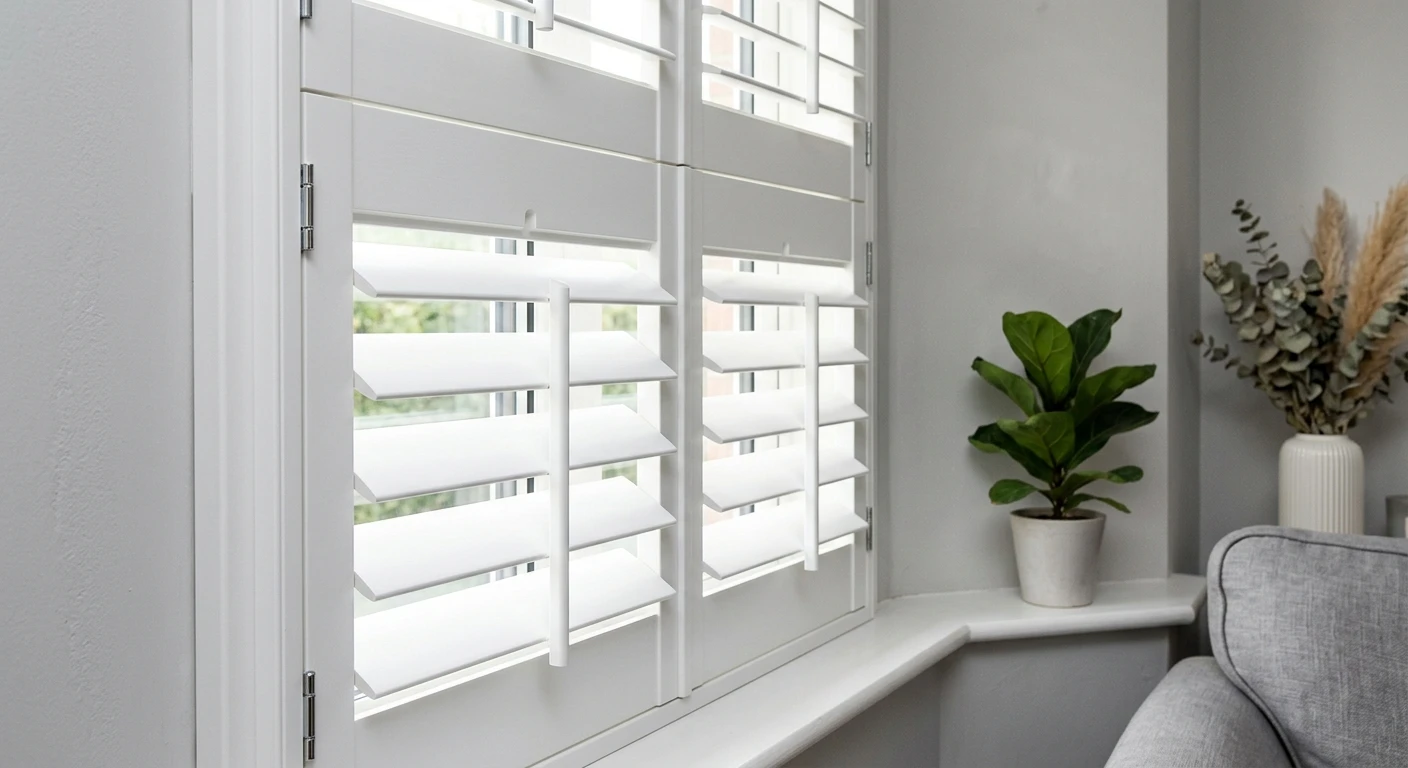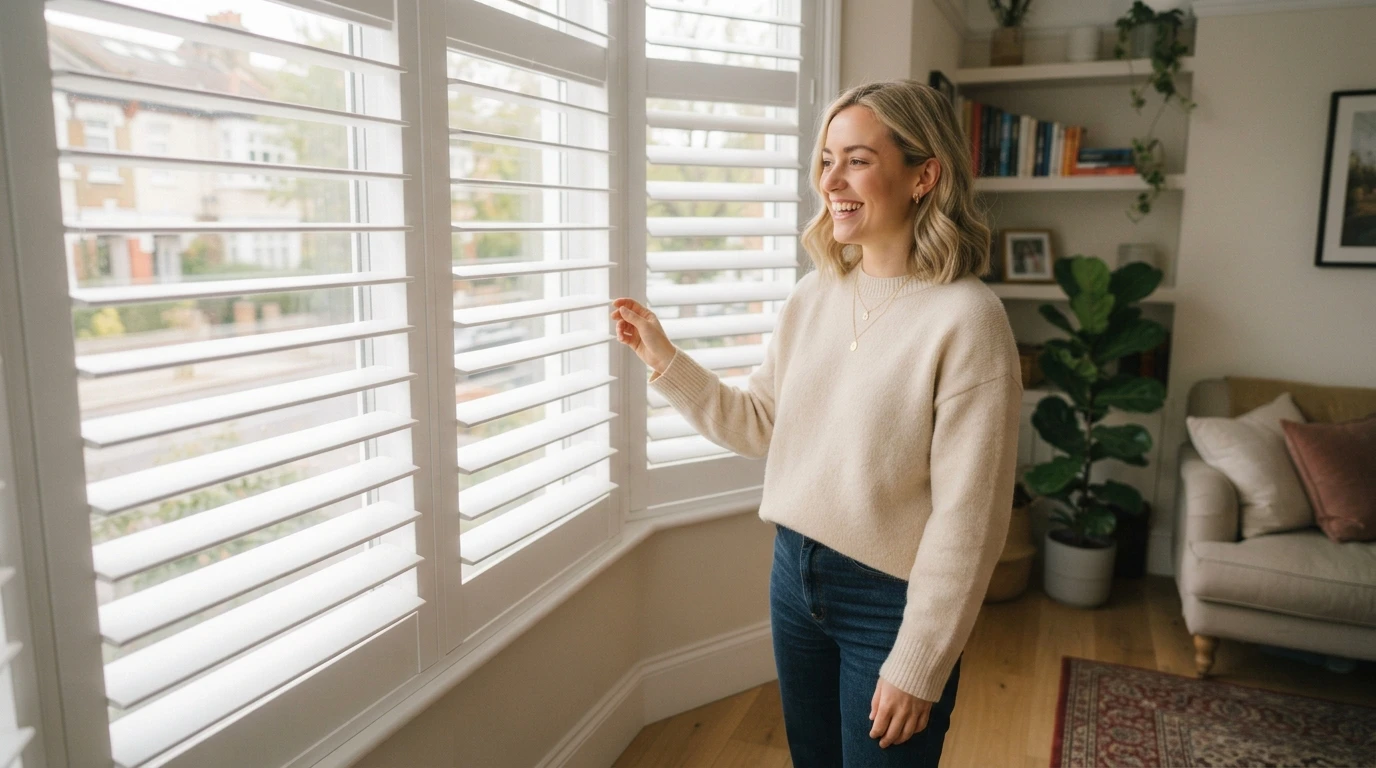
When you picture shutters, you probably imagine rows of horizontal louvres. It’s the familiar design and the one you’ll see in most homes.
But did you know that shutters can also be made with vertical louvres?
They’re much less common, but for the right window they can create a completely different look. And while their appearance is probably the main reason people choose them, there are some practical reasons why vertical louvres can make sense too.
What are vertical louvre shutters?
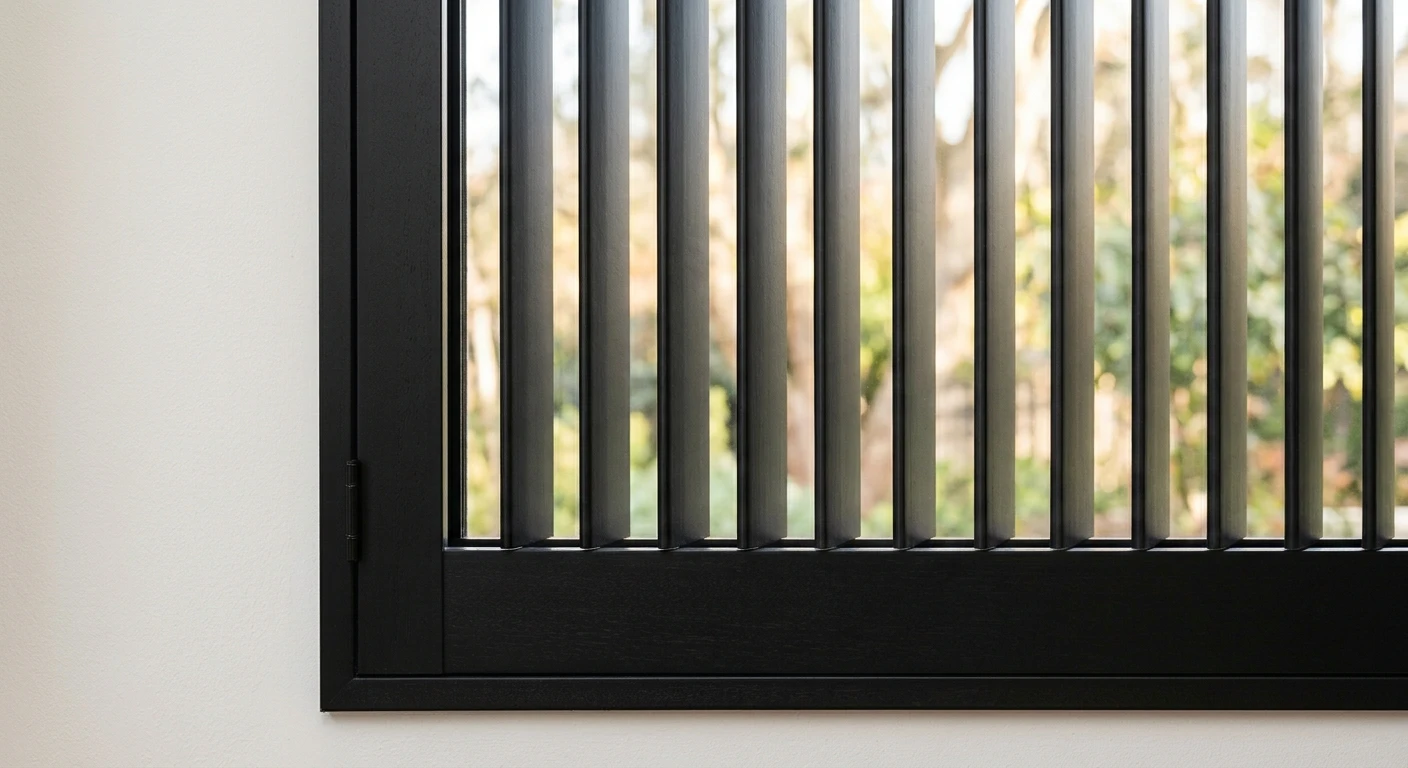
The principle is exactly what you’d expect. Instead of the louvres running horizontally across the shutter panels, they run from top to bottom.
This creates tall, vertical lines across the window rather than the familiar horizontal rows.
Vertical louvres are relatively unusual in domestic shutters, which is partly why they can make such a strong visual statement. They’re particularly interesting on larger areas of glazing, where the vertical lines can work with the proportions of the window rather than breaking it up with horizontal lines.
Why would you choose vertical louvres?
For some people, it’s simply about the appearance.
Vertical louvres have a more contemporary, architectural feel and can look particularly striking in rooms with tall windows, large areas of glass or high ceilings. They can emphasise the height of a window and create a less traditional appearance than standard plantation shutters.
They’re also an option if you want your shutters to become more of a feature rather than simply blend into the window.
That doesn’t mean they only work in modern homes, though. Depending on the material, colour and overall design, vertical louvres can work with a range of interiors.
They can work particularly well on tall windows
The proportions of the window are worth considering when choosing louvre direction.
Horizontal louvres naturally create strong horizontal lines, while vertical louvres draw the eye upwards. On a tall window or a floor to ceiling area of glazing, that can create a particularly balanced appearance.
They can also be an interesting option where you have a large expanse of glass and want something a little different from conventional shutters or blinds.
For very large windows and glazed doors, the direction of the louvres can also influence how the overall covering feels when opened or closed. Larger areas of glazing are often where vertical treatments make the most visual sense.
What about light and privacy?
Vertical louvres can still provide the basic benefits you’d expect from an adjustable shutter. You can change the angle of the louvres to control how much light enters the room, while also managing privacy and the view through the window.
However, the direction of the louvres does change the way the light is filtered. The effect can be quite different from horizontal louvres, particularly when sunlight is coming from the side.
So if you’re considering vertical slats, it’s worth thinking about the direction your windows face and how the sunlight moves across the room. The visual effect is important, but so is how you want the shutters to work at different times of day.
Are vertical louvres better than horizontal ones?
Not really. They’re simply different.
Horizontal louvres remain the more familiar and versatile choice for most conventional windows. They’re available in a wide range of sizes and suit the proportions of most domestic windows.
Vertical louvres are more of a design choice. They can make sense where the proportions of the window suit them, or where you want something less conventional.
That can actually be their biggest attraction. If you’re looking at shutters and want something that doesn’t look like everyone else’s, vertical slats offer another option.
A less familiar shutter style
Vertical louvre shutters aren’t going to be the obvious choice for every window, but that’s part of their appeal.
They offer the same basic combination of adjustable light, privacy and window coverage, while giving the room a noticeably different appearance. On tall windows, large areas of glazing or rooms with strong architectural features, the vertical lines can look particularly effective.
So next time you see window shutters, don’t automatically picture horizontal louvres. Vertical louvres exist too and for the right room, they could be exactly the look you’re after.