Are plantation shutters still in style, or have they become a little stale?
It’s a reasonable question. Shutters have a distinctive appearance, and for a long time they were associated with traditional interiors, period properties and the classic white plantation shutter look.
But look around modern homes today and you’ll see a very different picture. Shutters are being used in contemporary houses, renovated period properties, apartments, kitchens, bathrooms, bedrooms and living spaces. They’re no longer limited to one particular style of home or one particular type of interior.
So, are plantation shutters out of style?
Far from it. In fact, their ability to adapt may be one of the reasons they have lasted so well.
Shutters have been around for a very long time
The idea of using shutters to cover windows is certainly not new. Shutters have been used for centuries, both inside and outside buildings, for practical reasons including privacy, protection, light control and ventilation.
In Britain, internal shutters became an established feature of many period homes. Georgian shutters, for example, were often carefully designed and built into the window reveals, with folding panels that could be closed across the window and sometimes concealed when opened.
Curtains eventually became increasingly important as window coverings, particularly as fabric became more widely available and fashionable. By the Georgian and Victorian periods, elaborate curtains and other fabric treatments could be major features of an interior.
Shutters didn’t disappear, though. They simply became less prominent in many homes.
The rise of the plantation shutter
The plantation shutter style we recognise today has its own history, particularly its association with the southern United States and Caribbean.
Wide louvred timber shutters became associated with plantation architecture, helping to create the distinctive look that is still strongly connected with the term plantation shutters.
That style eventually travelled much further afield. The wide louvres, clean lines and simple panels became increasingly familiar as an interior window covering, including in the UK.
The important thing is that modern plantation shutters aren’t necessarily a faithful reproduction of those historical shutters. Today’s products have evolved considerably.
From traditional timber to almost anything you want
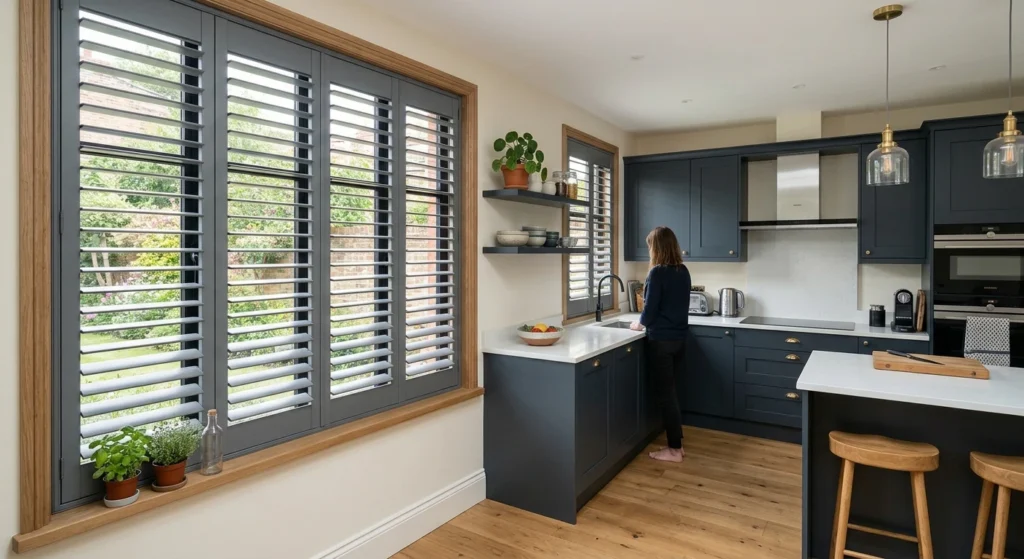
This is probably one of the biggest reasons shutters don’t feel as old fashioned as they once might have done.
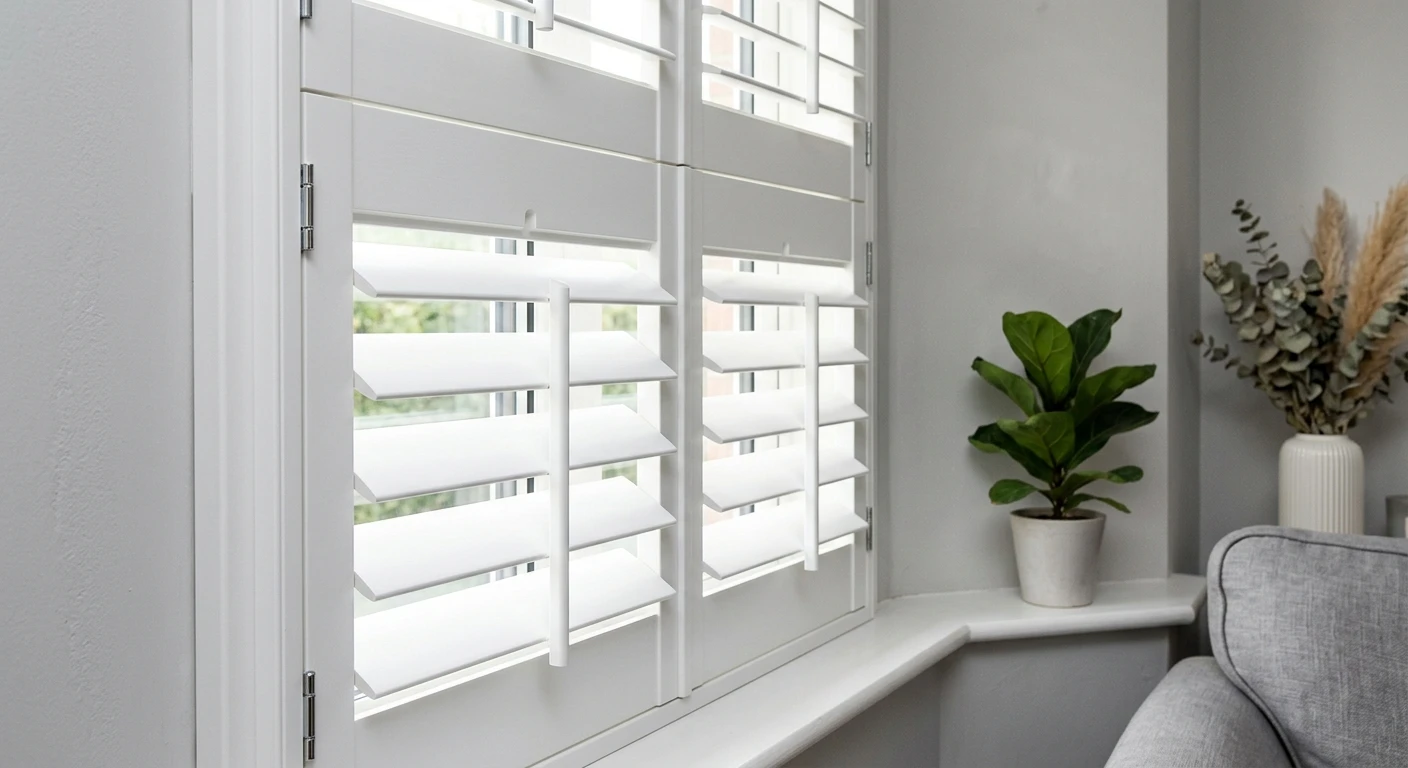
Today’s shutters can be made from natural hardwood, engineered wood such as MDF, composite materials and PVC based products. There are also far more choices when it comes to louvre sizes, panel configurations, frames, finishes and colours.
You don’t have to choose a bright white shutter with traditional looking proportions.
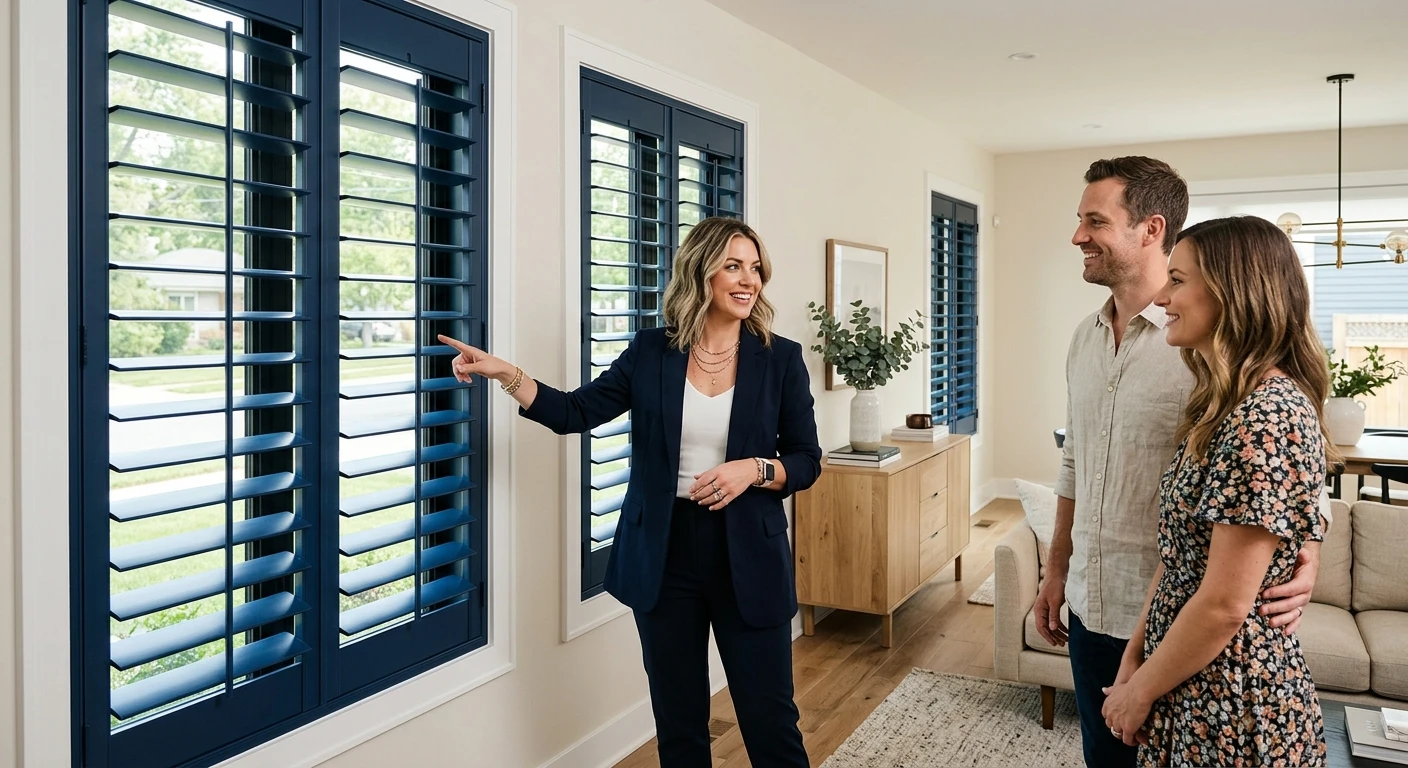
You could choose natural timber with a visible grain, a soft neutral, a deep colour or a shade matched to your existing décor. You can choose wide louvres for a more contemporary appearance, smaller louvres for a more traditional feel, solid panels for a different character, or different configurations depending on the window.
That flexibility makes a big difference.
A shutter can be designed to stand out as a feature, or it can be made to sit quietly within the room.
Shutters can work in modern homes
One of the biggest misconceptions about plantation shutters is that they only really suit traditional properties.
In reality, the clean lines of a shutter can work particularly well with contemporary interiors.
A simple white shutter can look crisp against a modern neutral room. Natural timber can bring warmth to a minimalist space. A darker colour can create a stronger architectural feature, while a soft painted finish can work with more relaxed or traditional interiors.
The same basic shutter idea can therefore produce very different results depending on the material, colour, louvre size and overall design.
That’s quite different from thinking of plantation shutters as one fixed style.
Are shutters timeless?
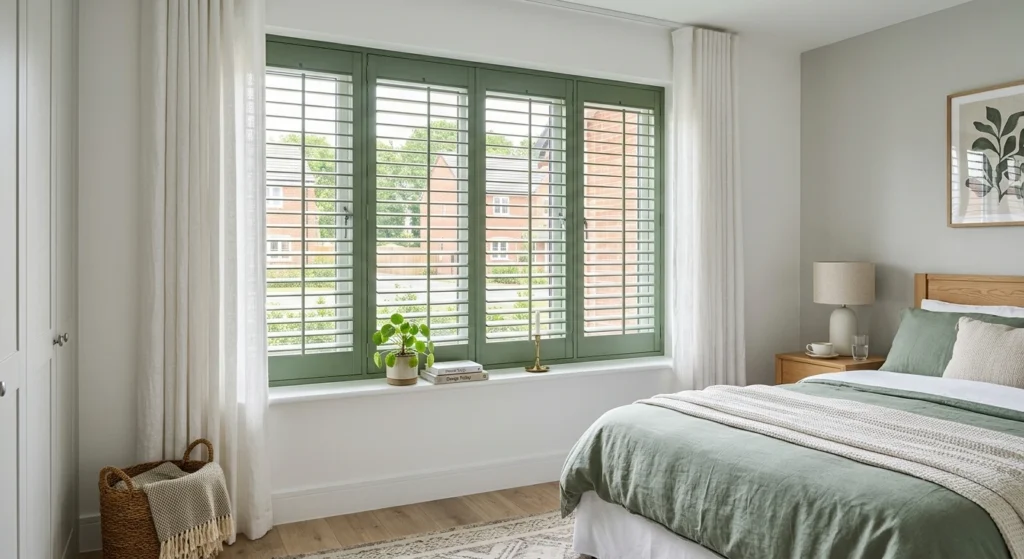
This is where the argument for shutters being timeless becomes quite strong.
Trends come and go. Colours change. Particular curtain styles become fashionable, then disappear. The preferred size of a blind or the latest interior colour palette can change within a few years.
Shutters are different because their basic design has remained recognisable for a very long time.
That doesn’t mean every shutter design will always look fashionable. A particular colour or style can certainly feel more dated than another.
But the underlying idea of a well made shutter fitted neatly to a window is remarkably enduring.
Their simplicity is probably part of the reason. They’re not dependent on a particular pattern or fabric to make them work. Change the colour, material or proportions and the same basic concept can look completely different.
This is why it may be more useful to describe shutters as timeless rather than permanently on trend.
Are curtains and blinds out of style?
Not at all. Curtains and blinds are still widely used, and each has its own advantages. The growing popularity of shutters doesn’t mean that other window coverings have suddenly become outdated.
In fact, many modern interiors use shutters alongside curtains or blinds rather than choosing one or the other.
Curtains can add softness, texture, colour and pattern to a room, while blinds offer a wide range of styles and can be particularly useful where a simple, unobtrusive window covering is preferred.
Shutters have a more structured appearance and can provide a combination of privacy and light control without the fabric or slats associated with curtains and many types of blinds.
Combining shutters with curtains can be particularly effective. The shutters provide everyday privacy and control over light, while curtains add softness and can change the feel of the room when they’re drawn.
Blinds can also be used alongside shutters in situations where additional light control or privacy is needed.
So the rise of plantation shutters isn’t really about curtains and blinds going out of style. It’s more about homeowners having a much wider choice of window coverings and being able to combine different options to suit the room.
Why are shutters becoming popular again?
Part of the current appeal is that homeowners have more choice than ever before.
The old image of the plantation shutter was relatively narrow. Timber, wide louvres, usually white and associated with a particular architectural style.
The modern choice is much broader.
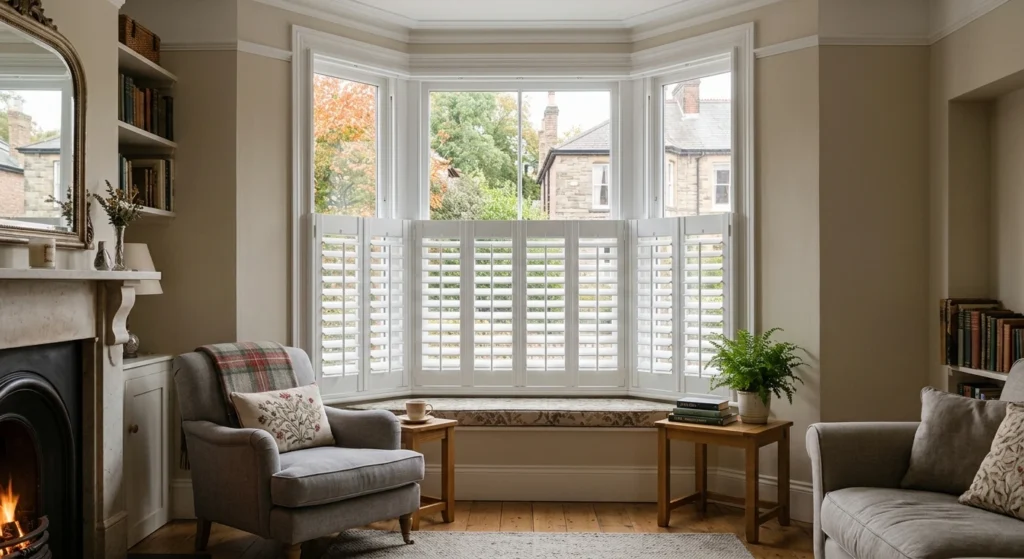
Shutters can now be made to work around different window shapes and sizes, with full height, café, tier-on-tier and solid panel options. There are different louvre sizes, materials, colours and finishes, making it much easier to find something appropriate for the room rather than trying to make the room suit the shutter.
That makes them particularly well suited to modern home renovations, where people often want practical window coverings without adding too much visual clutter.
Are shutters more popular in the UK than elsewhere?
It’s difficult to make a simple comparison because different countries have very different shutter traditions.
The UK has a long history of internal shutters, particularly in period properties. Modern interior shutters have therefore revived and adapted something that already has a place in British architecture.
In the United States, interior shutters have their own long history, with plantation shutters becoming particularly associated with American homes. Historic examples show that both internal and external shutters have been used extensively over the centuries.
Across much of southern Europe, however, external shutters remain an important part of traditional architecture. Climate is one reason. External shading can stop sunlight reaching the glass in the first place, which can be particularly valuable in hot, sunny conditions.
So it’s not really a case of one country being more modern than another. Different shutter traditions have developed in response to different climates, architecture and ways of living.
Are plantation shutters out of style?
The answer depends partly on what you mean by “plantation shutters”.
If you’re imagining only the traditional white, wide louvred shutter, then that particular look may not suit every modern interior.
But if you’re talking about shutters more generally, it’s difficult to argue that they’ve simply gone out of style. Recent interior design coverage continues to debate their place in contemporary homes, but even the more critical views tend to focus on choosing the right proportions, materials and design rather than suggesting shutters themselves have disappeared.
And that’s probably the key point.
Shutters have changed with the times
Today’s shutters are not restricted to the traditional plantation-house look.
They can be modern, traditional, minimalist, colourful, natural, understated or deliberately dramatic. They can suit a period property just as easily as a new build home, depending on how they’re specified.
That flexibility is perhaps why shutters have managed to stay relevant for so long.
They have a long history, but they don’t have to look historical.
And while fashions in interiors will continue to change, a simple, well designed shutter is unlikely to look completely out of place just because the latest colour or curtain trend has changed.
So, are plantation shutters still in style?
Yes – but perhaps the more important point is that modern shutters are no longer defined by a single style.
With the choice of materials, colours, finishes and configurations now available, they can be adapted to suit almost any room or interior. That’s what makes them less of a passing trend and more of a long term window covering option.