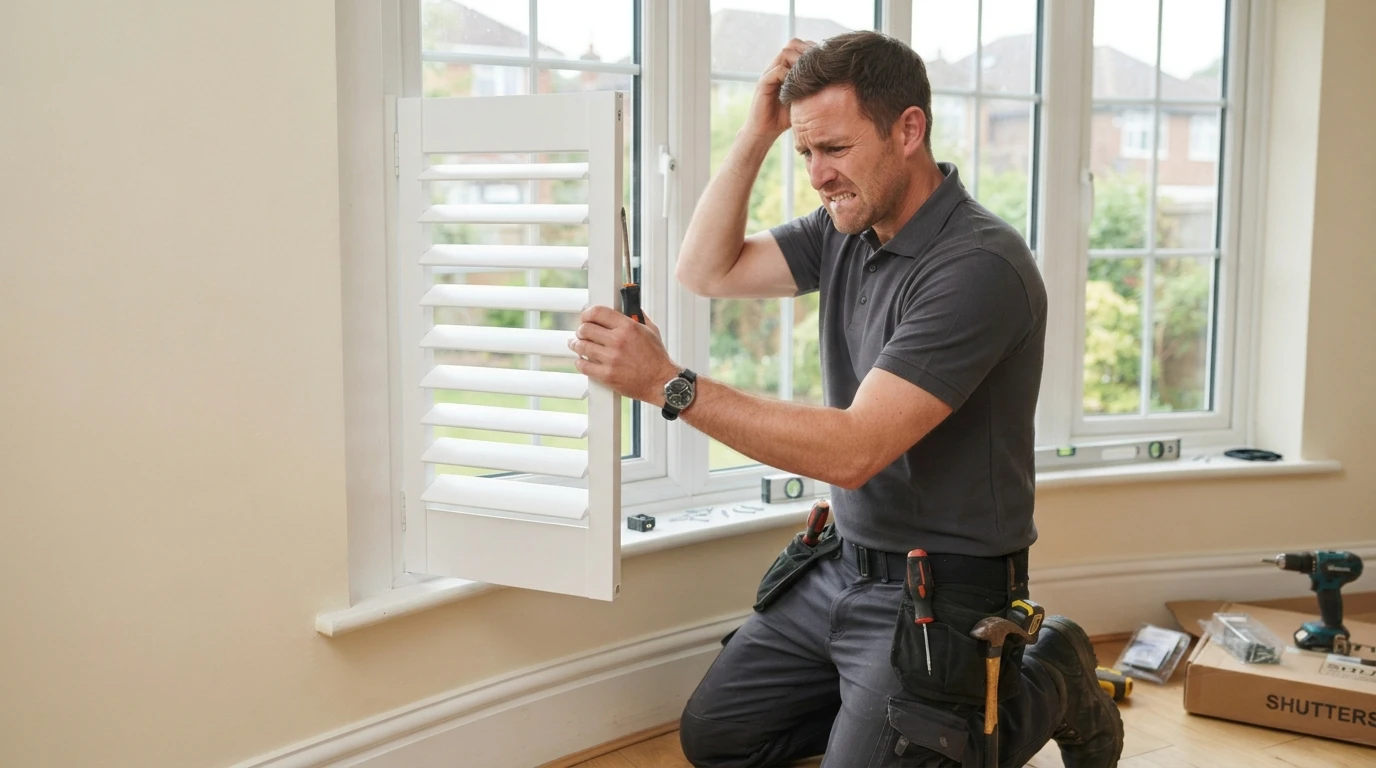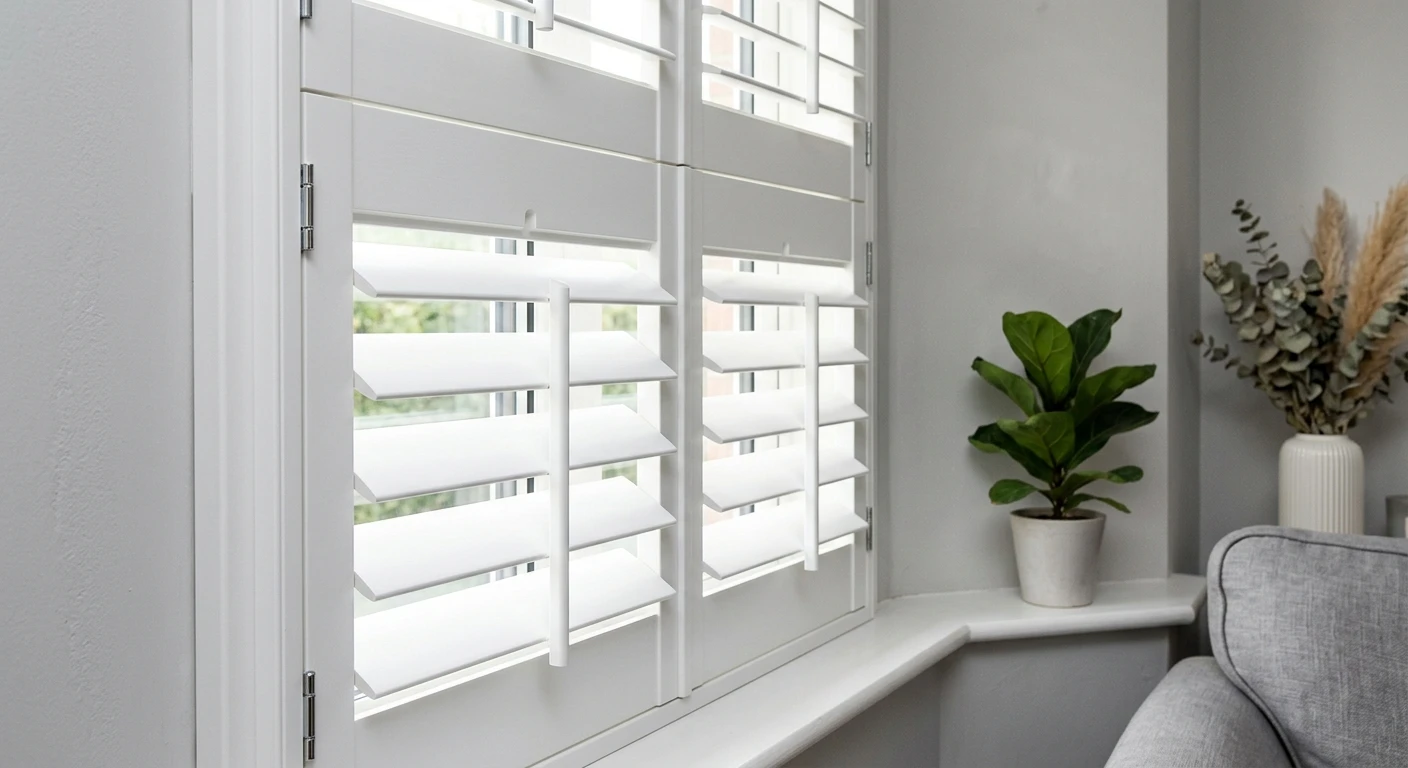
Don’t get me wrong, I’m obviously a huge fan of plantation shutters. In my opinion, they’re one of the best window coverings out there. They look fantastic, they’re practical and they can completely transform the look of a room.
But that doesn’t mean they’re perfect. There are a few disadvantages to buying shutters that I find frustrating, and some are worth knowing about before you spend your hard earned money.
When you’re browsing all the beautiful designs and finishes on offer, it’s easy to get caught up in the excitement and overlook a few of the less appealing aspects. And let’s be honest, the downsides aren’t usually the first things you’ll hear about!
From the price and the wait for them to arrive, to the sheer number of choices and the fact that you can’t easily change your mind once they’re made, there are some genuine drawbacks worth considering before you commit.
So, if you’re thinking about having shutters fitted, here’s my honest take on the things that can really get on your nerves and what I’d consider before taking the plunge.
1. They’re expensive
Let’s start with the obvious one. Window shutters aren’t cheap, particularly if you’re planning to fit them throughout your home.
Even a relatively straightforward window can cost several hundred pounds for professionally supplied and fitted shutters. Add in larger windows, bay windows, unusual shapes or premium materials, and the price can climb quickly. If you’re covering every window in a house, you’re looking at thousands of pounds.
There are cheaper options, including DIY shutters and more affordable materials, but even then, you’re generally making a bigger upfront investment than you would with many standard blinds or curtains.
You can make an argument for their durability and long term appeal, but that doesn’t make the initial bill any easier to swallow and not everyone wants to spend that much on window coverings, however attractive they might be.
My advice is to work out your budget before you get too carried away choosing styles and finishes. Get a realistic idea of the cost across all the windows you want to cover, rather than assuming you’ll be able to do the whole house at a price that suits you.
2. You have to wait for them
One of the frustrating things about buying made to measure shutters is that you can’t usually order them today and have them fitted next week. There’s a process to go through first. Measuring, confirming your design, manufacturing, delivery and finally installation. Depending on the supplier and the type of shutters you choose, that can mean a fairly long wait.
Many shutters are made in China and shipping them to the UK by sea can add to the wait before they arrive. However, not all shutters follow the same route. Some companies manufacture wooden shutters here in the UK, which can mean a shorter wait. For example, UK made hardwood shutters can be manufactured and fitted in as little as four to six weeks, while some faux wood ranges advertise fitting in as little as two weeks.
These are supplier advertised lead times rather than guarantees, and the actual wait will depend on the product, availability and fitting appointments. But it does show that you don’t necessarily have to wait the same length of time for every type of shutter.
My advice? Ask about the expected lead time before you place your order and check whether it covers the whole process, from measuring to installation. If you’re working to a deadline, it’s worth asking about UK made options or an express range, rather than assuming all shutters take months to arrive.
3. It’s hard to change your mind once they’re made
Choosing window shutters involves more decisions than you might expect. You’ll need to think about materials, colours, finishes, louvre sizes, panel arrangements and the way the louvres are adjusted. Even if you’ve already got a good idea of what you want, there’s quite a lot to consider.
The tricky part is that you’re usually making these decisions before you’ve seen the finished product against your own windows. You might look at a sample, browse photographs or visit a showroom, but it’s not always easy to picture exactly how a particular combination will look across an entire room.
A colour that looks perfect on a small sample might feel different when it’s covering a large window. And a style you loved in somebody else’s home might not quite suit your own.
With made to measure designs, you need to get those decisions right before manufacturing begins. Once your shutters have been made to fit your windows, changing the colour, panel configuration or design can be expensive. Depending on the problem, you might be able to make an adjustment, but you can’t simply return them and choose something else as you might with a standard off the shelf product.
Take your time, look at samples in your own home if possible, and ask questions about anything you’re unsure of. It’s much better to spend a little longer deciding than to discover you’ve chosen something you don’t really like after installation.
4. There are so many companies to choose from
Finding a company that sells shutters isn’t difficult. Knowing which one to trust is another matter.
There are national installation companies, independent local businesses, online suppliers and DIY retailers. They all have different products, prices, sales processes and levels of service. Browse a few websites and you might find yourself wondering how you’re supposed to compare them all.
The problem is that products can look remarkably similar in photographs, even when the materials, construction and finish differ. One company might promote a particular range as premium quality, while another offers something that sounds almost identical under a different name.
Price doesn’t make the decision much easier. A cheaper quote might represent good value, or it could reflect differences in the company’s experience, service, installation standards or what’s included in the price. Equally, a more expensive company isn’t automatically the better choice.
I wouldn’t choose a supplier based on price alone, nor would I assume that a polished website or impressive showroom tells you everything you need to know. Look at customer reviews, examples of completed installations, the product specification and what’s included in the quote. Ask about guarantees and what happens if something goes wrong.
It takes a bit of work, but when you’re spending a significant amount of money on a made to measure product, it’s worth knowing who you’re buying from.
5. The choices and terminology can be confusing
Even once you’ve narrowed down your choice of supplier, you can find yourself facing another problem. Understanding exactly what you’re buying.
There are hardwood, MDF and composite options, along with different finishes, louvre sizes, panel configurations and tilt mechanisms. Some of these terms describe genuinely different products, while others can vary between suppliers.
One company might give a particular material or product range its own name, while another uses completely different terminology. That can make it difficult to compare products on a like for like basis.
Then there are the questions about which material is suitable for which room, which louvre size will look right on your windows, and whether you need a particular panel arrangement. If you’re new to shutters, it’s easy to feel that you need to become an expert just to make a sensible purchase.
The important thing is to look beyond the labels. Find out what the product is actually made from, how it’s constructed, what conditions it’s suitable for and what differences you’ll notice in everyday use.
Don’t be afraid to ask a supplier to explain something in plain English. If you’re paying thousands of pounds, you shouldn’t have to guess what you’re getting.
6. Fitting them can leave a lasting mark on your home
Traditional shutter installations generally involve frames and fixings attached to the window recess or surrounding area. That usually means drilling holes, and those holes don’t simply disappear if you decide to remove the shutters later.
You could be left with holes in the frame or wall, damaged paintwork or plasterwork that needs filling and redecorating. Depending on how the panels were installed, removing them may turn into a bigger job than you expected.
There are no drill options available for some windows and products, but they’re not suitable for every situation. If you’re renting, trying to avoid alterations to your windows or simply don’t like the idea of drilling, it’s worth exploring the options before making a decision.
I’d also think about how long you expect to stay in the property and whether you’re comfortable with the shutters becoming a relatively permanent feature.
It’s not necessarily a reason to rule them out, but it’s something you should understand before installation rather than after you’ve decided to take them down.
7. You can’t change them as easily as blinds or curtains
One thing that’s easy to overlook when buying shutters is how committed you are to the look.
Curtains and blinds are relatively easy to change. You can replace them when you redecorate, choose a different colour or simply decide you fancy something new. With shutters, it’s not quite so simple.
They’re a prominent feature of the window, and often of the room as a whole. If you change your décor, replace your furniture or decide that the style you’ve chosen no longer suits your taste, the panels are still there.
Some products can be repainted or refinished, depending on their material and existing finish, but that’s not always straightforward or recommended. Replacing them altogether can be expensive, particularly if you’ve fitted them throughout the house.
This is one reason I’d be cautious about choosing a strong colour or a very distinctive design purely because it’s fashionable at the moment. You might love it now, but will you still want it in five or ten years?
You don’t have to choose white or a neutral finish, of course. Just remember that these are a long term commitment, so it’s worth choosing something you genuinely like rather than something you’re excited about for the moment.
8. You can’t usually take them with you when you move
Here’s another thing worth thinking about before spending a lot of money on window shutters. If you move house, there’s a very good chance you’ll be leaving them behind.
Because shutters are made to measure for individual windows, they’re extremely unlikely to fit the windows in another property. Even windows that look similar can differ in width, height, depth and shape, and the frames and fixing points may be completely different. If you’ve got bay windows, angled windows or other unusual openings, the chances of being able to reuse them are even slimmer.
While it might be technically possible to adapt or refit panels in some circumstances, I certainly wouldn’t count on it. In most cases, taking your shutters with you simply won’t be a practical option, unlike blinds or curtains, which are generally much easier to move from one home to another.
That means you should think of shutters as a lasting feature of the home you’re buying them for, rather than something you can take with you when you leave. They may appeal to future buyers and help your home look well presented, but you shouldn’t assume you’ll recover the full cost when you sell.
If you’re likely to move in the near future, it’s worth weighing up whether the investment makes sense for the time you’ll spend living with them.
It’s not all bad news

That might sound like a lot of downsides, but there are many reasons why shutters remain so popular.
Choosing shutters can be a genuinely exciting part of transforming your home. The right style can completely change the feel of a room, make a window a real feature and bring the whole space together in a way you might not have expected. When you start exploring the different styles, colours and finishes, it’s easy to imagine how good they could look in your own home.
And that’s exactly why I think it’s worth being honest about the less appealing side of things, too. Shutters can be a fantastic choice for the right home, but they’re not right for everyone, and you shouldn’t feel you have to convince yourself that every aspect is a benefit just to justify the cost.
They’re a substantial upfront investment, require plenty of decisions, take time to arrange and aren’t easy to change once they’re fitted. You also need to accept that they’re generally made for the home you’re living in now, rather than something you can take with you when you move.
For some people, those compromises are perfectly acceptable. For others, blinds or curtains might be a more practical choice, whether that’s because of the budget, a desire to change their décor regularly or simply a preference for something less permanent.
My advice is to take your time, explore the options and compare products and suppliers carefully. Think about the look and feel you want to create in your home, as well as the practicalities. Don’t buy shutters just because they look beautiful in photographs or because you’ve seen them in somebody else’s home.
Understand the costs, the lead time, the fitting requirements and the limitations before you commit. If you still love the idea after weighing everything up, you can look forward to the transformation with a much clearer idea of what to expect.
And if you decide they’re not for you? That’s fine too. It’s far better to work that out before you’ve placed the order.