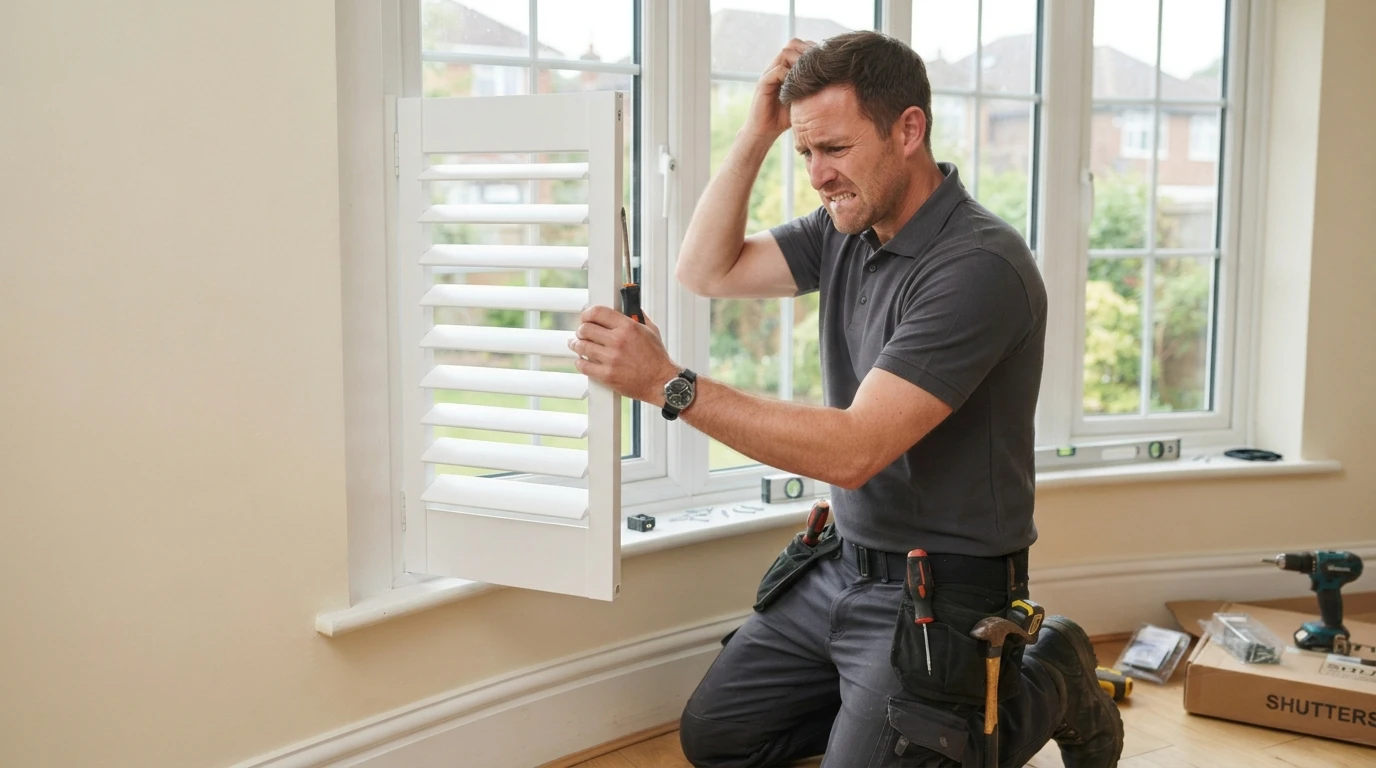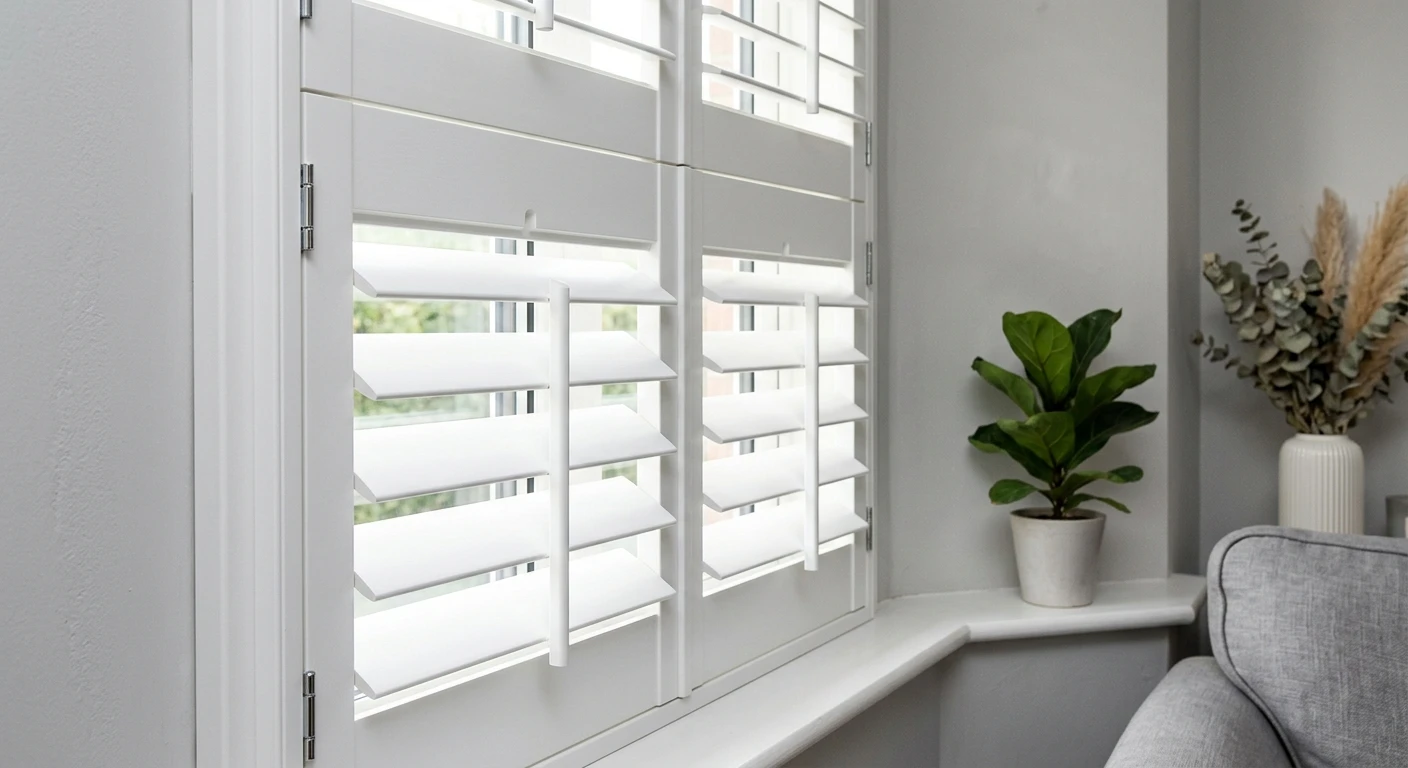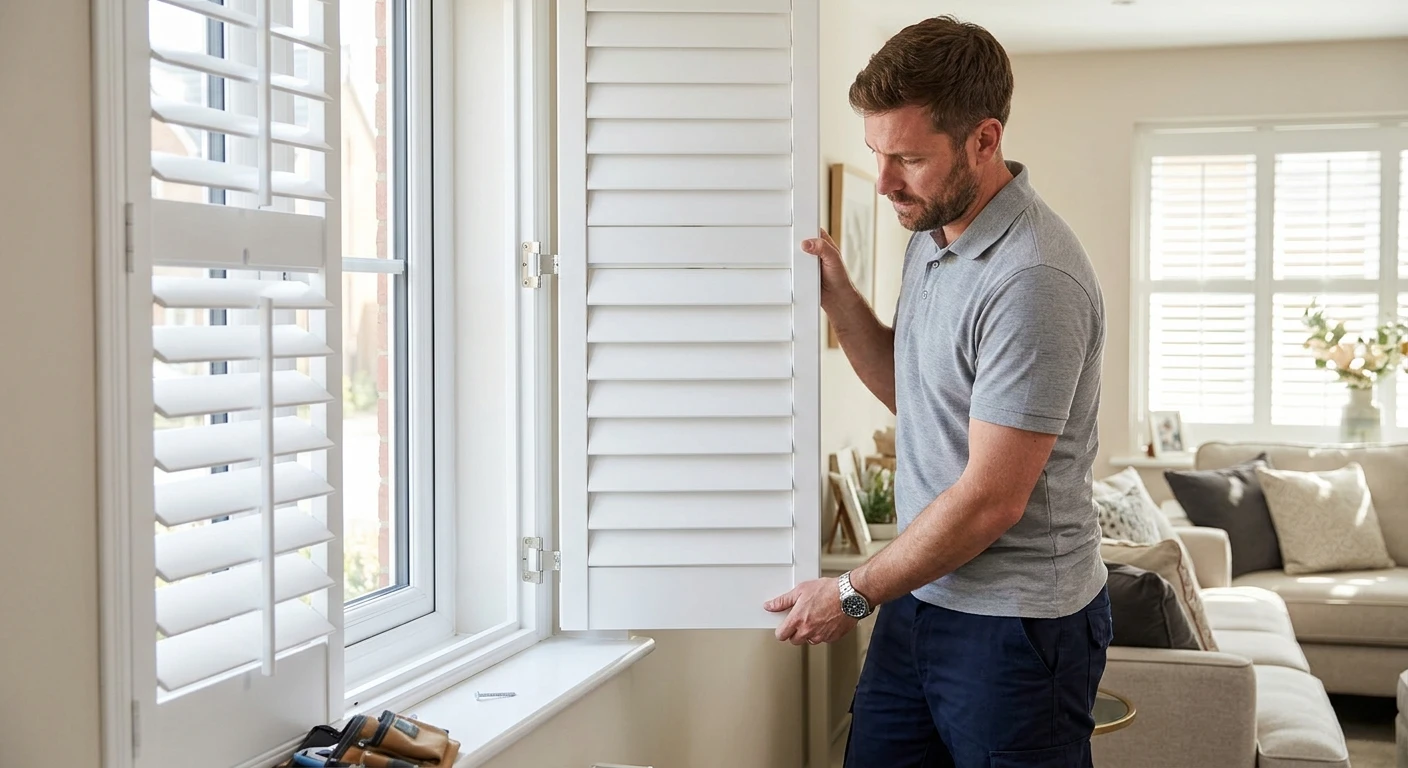
Plantation shutters are designed to be a long term window covering, but there may be times when you need to remove them. Perhaps you’re having new windows fitted, decorating a room or preparing to move house. In many cases, shutters can be removed and refitted, but whether this is straightforward depends on why they are being removed and whether they will be going back into the same window opening.
Understanding how shutters are fitted, and what needs to be considered before removing them, can help you decide on the best approach.
Removing shutters when replacing windows
If you’re having new windows installed, it may be possible to remove your existing shutters and refit them once the work is complete. This can be a practical way to retain your shutters rather than replacing them along with the windows.
However, it is important to plan the work carefully. Shutters are made to measure for a particular window opening, so the dimensions and shape of the replacement window need to be considered before assuming the existing shutters will fit.
Even when new windows are intended to replace the old ones on a like for like basis, small differences in the frame dimensions, the depth of the recess or the position of the fixing points can affect how the shutters fit. If the replacement windows alter the available space, the existing frames or panels may need adjusting, or the shutters may no longer be suitable.
The way the shutters are attached will also influence how easily they can be removed. Many are fitted using hinged frames secured to the window recess or surrounding wall, while the panels themselves are attached to those frames. Careful removal can help prevent damage to the frames, fixings, hinges and surrounding plasterwork.
It is worth discussing the shutters with your window installer before work begins. They can advise whether the shutters need to be removed, while a shutter installer may be able to assess whether they can be refitted after the new windows are in place. Where possible, have the shutters removed and stored safely before the window replacement starts, rather than risking accidental damage during the work.
If you’re unsure how your shutters are fitted or whether they can be reused, it’s also worth contacting the company that originally supplied or installed them. They may be able to advise on removing the shutters, assess whether they are suitable for refitting and help coordinate the work with your window installer. If the original company is no longer available, another professional shutter company may be able to help.
Removing shutters for decorating
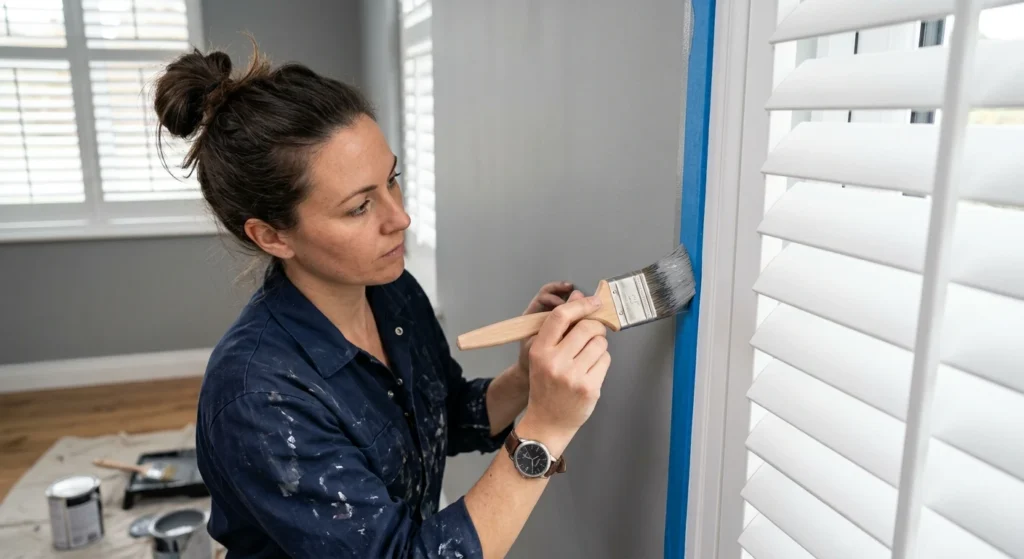
If you’re decorating a room, you may wonder whether it’s worth removing your shutters to make painting or wallpapering easier. Although this is possible with many installations, it may create more work than it saves, particularly if you only need to decorate around the window.
Removing the shutters can disturb the fixings or surrounding plasterwork, and the panels and frames will need to be handled carefully to avoid damage. Refitting them may also require adjustments to ensure everything sits correctly and the panels open and close as they should.
For most decorating projects, it is usually more practical to leave the shutters in place and protect them while you work. Cover the panels with suitable dust sheets or protective film, and use low tack masking tape where needed to protect the frames and edges. Take care when applying tape to painted surfaces, as unsuitable tape or leaving it in place for too long can damage the finish.
If you are carrying out extensive renovations or need to work directly behind the shutter frames, removal may be worthwhile. In these circumstances, consider how the shutters are fixed and whether you have the experience to remove and refit them safely. For routine painting and decorating, however, careful protection and working around the shutters will often be the simpler option.
If removal is critical, speaking to your original installer or another shutter professional beforehand can help you understand what’s involved and avoid unnecessary damage during the process.
Can you take your shutters with you when moving house?

Although shutters can often be removed, taking them with you when you move house is a different matter. Plantation shutters are made to measure for individual windows, and the chances of them fitting the windows in your new home are very slim.
It is not simply a question of whether the new windows are the same approximate size. The shutter frames and panels are manufactured to suit specific dimensions, while the layout of the panels, hinge positions and clearances all affect how they fit and operate. Shutters may also have been adjusted to accommodate irregularities in the original window recess, which are common in older properties.
Even if a window in your new home appears similar, small differences in its dimensions, angles or shape can prevent the shutters from fitting correctly. Trying to adapt them may be impractical, and alterations could compromise their appearance or operation.
For this reason, it is generally best to leave fitted shutters in place when selling your home. They form part of the property’s overall appearance and can be an attractive feature for prospective buyers. Well maintained shutters may help enhance the perceived appeal of a room and contribute to the property’s marketability, although they do not guarantee a higher sale price.
If you are planning a move, it is worth treating your shutters as a feature of the home you are selling rather than something you can realistically transfer to your next property. You can then choose new shutters made to measure for your new windows, if appropriate.
What to consider before removing shutters
Before arranging for your shutters to be removed, consider how they are fitted and what you intend to do with them afterwards. Removing the panels from their frames may be relatively straightforward on some designs, but taking down the complete installation can be more involved, particularly where the frames are screwed into the recess or secured to surrounding walls. Any caulk, or silicone sealant will also need removing.
If you are planning to reuse the shutters, label the panels and frames so that each component can be returned to its original position. Keep all screws, hinges and other fittings together, and store the shutters somewhere dry and protected from knocks, moisture and changes in temperature.
It is also important to avoid forcing panels or fixings that do not release easily. Damage to a frame, hinge or painted finish may make refitting more difficult. If the shutters are large, awkward to handle or fitted in a way you are unfamiliar with, professional removal may be the safer option.
Remember that removing shutters does not necessarily mean they can be refitted without further work. The frames may need repositioning and caulking, the fixings may need replacing, and adjustments may be required to ensure the panels open and close correctly.
Keeping your shutters in place for the long term
Shutters are generally chosen as a lasting window covering, so it makes sense to consider their future when planning home improvements. If you are replacing your windows, careful removal and advance planning may allow you to keep your existing shutters and continue using them for years to come.
If you are moving house, however, their made to measure construction means they are very unlikely to be suitable for your new property. Leaving them in place can preserve an attractive feature for the next homeowner, while giving you the opportunity to choose shutters that are properly fitted to your new windows.
Ultimately, shutters can often be removed and refitted, but the most suitable approach depends on the condition of the shutters, how they are installed and whether they are returning to the same window openings.