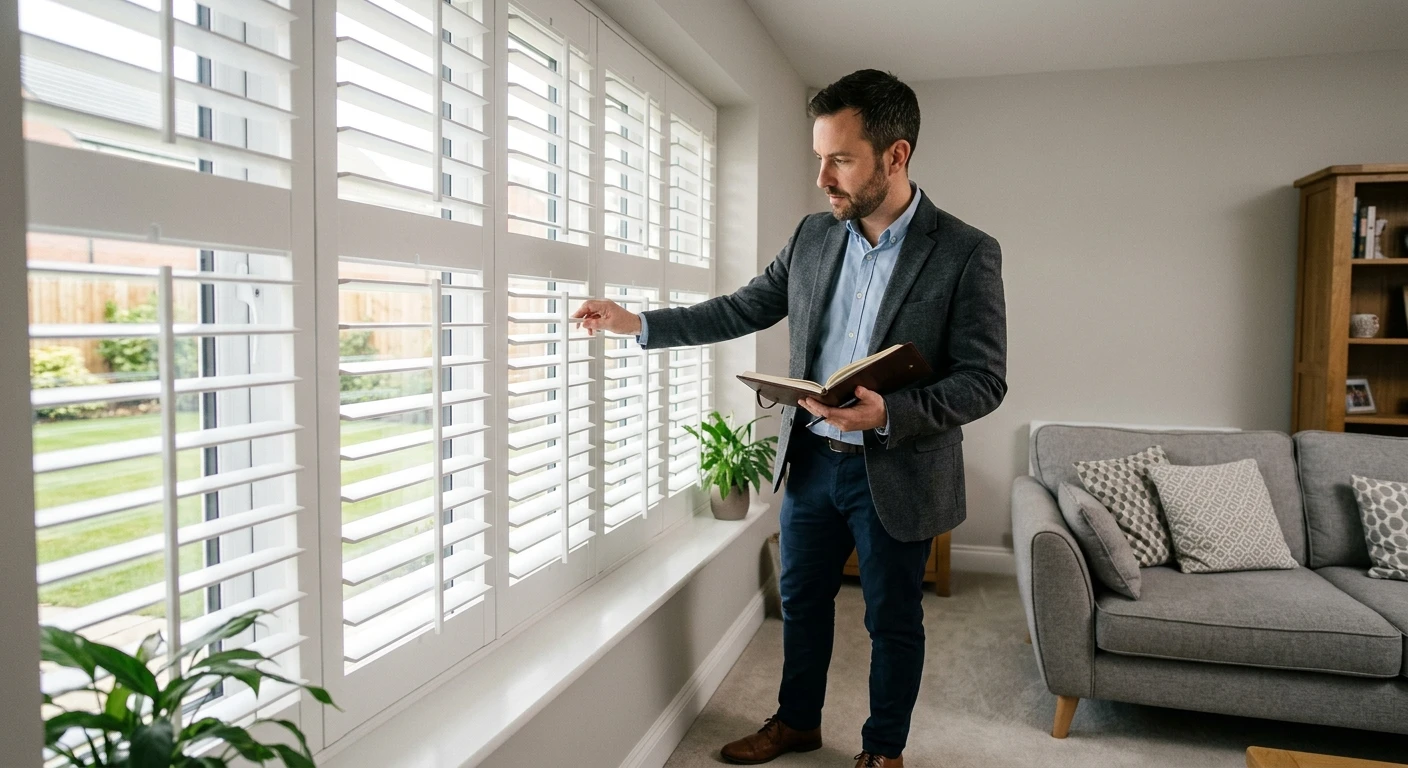
Plantation shutters are often chosen as a long term window covering, but how long should you expect them to last? Well made, properly fitted shutters can last 20-30 years or more, making them a durable alternative to many conventional blinds and curtains. Their actual lifespan will depend on several factors, including the materials used, the quality of the installation, the environment they are fitted in and how well they are maintained.
Unlike window coverings that may need replacing as fabrics fade, cords wear out or mechanisms fail, shutters have a solid construction designed for everyday use over many years. Choosing the right type of shutter for your home and taking care of it can help you get the most from your investment.
How long do plantation shutters last on average?
As a general guide, good quality hardwood and water resistant internal shutters can last 20-30 years or longer when they are installed correctly, used in suitable conditions and reasonably well maintained. Some may remain in good working order for considerably longer, while others may need repairs or replacement sooner.
There is no single lifespan that applies to every shutter. Materials, construction quality and environmental conditions all influence how well they perform over time. A hardwood shutter in a well ventilated bedroom, for example, may experience very different conditions from an MDF shutter fitted in a bathroom where condensation regularly builds up.
It is also worth distinguishing between a shutter reaching the end of its useful life and needing occasional attention. Hinges may require adjustment, louvres may need their tension corrected, and painted finishes can eventually show signs of wear. These issues do not necessarily mean the entire shutter needs replacing.
The 20–30 year estimate is best treated as a general guide rather than a guarantee. The quality of the original product and how well it suits its intended environment will play a significant part in determining how long it lasts. For example, lower cost MDF shutters may have a shorter useful lifespan, perhaps around 10-20 years, particularly if the materials or construction are less durable or they are exposed to unsuitable conditions.
How shutter materials affect longevity
The material used to make shutters is one of the most important considerations when estimating their lifespan. Different materials respond differently to moisture, temperature changes, sunlight and everyday wear, so choosing a suitable option for the room can make a real difference.
Hardwood shutters
Hardwood shutters are a popular choice for homeowners looking for a natural finish and a durable window covering. Good quality hardwood has the potential to last for decades, and one of its advantages is that certain types of damage can be repaired or the finish renewed rather than requiring the entire shutter to be replaced.
However, timber is a natural material that responds to changes in humidity. Prolonged exposure to moisture can cause movement, damage the finish and, in severe cases, lead to deterioration of the wood. Hardwood shutters are therefore particularly well suited to rooms with relatively stable indoor conditions, such as living rooms and bedrooms.
With suitable materials, a good protective finish and appropriate care, hardwood shutters can be a long lasting feature of the home. Their eventual lifespan will depend on the timber used, the quality of construction and the conditions in which they are installed.
MDF shutters
MDF shutters offer a smooth, consistent surface that works particularly well with painted finishes. They can provide many years of use in suitable environments, making them an option worth considering for living rooms, bedrooms and other relatively dry spaces.
Their main limitation is their sensitivity to moisture. If water penetrates the protective coating or reaches exposed edges and joints, the material can swell and lose its original shape. Once significant swelling has occurred, repairing the affected area may be difficult.
For this reason, standard MDF shutters are generally better suited to dry rooms than to spaces exposed to persistent condensation or splashing. The precise suitability will depend on the product’s construction and finish, so it is important to check the manufacturer’s guidance before choosing MDF shutters for a kitchen or bathroom.
Water resistant shutters
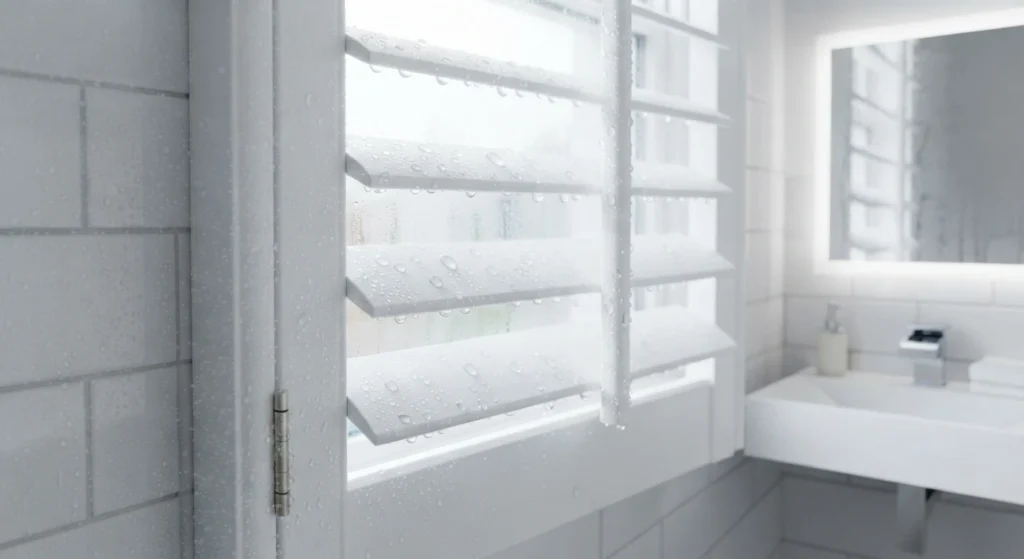
Water resistant shutters are designed to cope better with moisture, making them worth considering for kitchens, bathrooms, utility rooms and other areas where humidity or splashing may be a concern.
Depending on the product, these shutters may be made from materials such as PVC, ABS or water resistant composite constructions. Their resistance to moisture can reduce the risk of problems associated with swelling and deterioration in more demanding environments.
However, water resistance does not mean that every shutter is suitable for every room or that it will last indefinitely. Heat, direct sunlight, construction quality and the durability of hinges and other fittings can still affect performance. Always check that the specific shutter is designed for the conditions in which you intend to use it.
Choosing a material that suits the environment can help avoid premature damage and improve the chances of your shutters providing many years of reliable use.
Where your shutters are installed matters
Even a well made shutter can deteriorate prematurely if it is exposed to conditions it was not designed to withstand. The room, window position and surrounding environment can all influence how long your shutters remain in good condition.
Living rooms and bedrooms
Living rooms and bedrooms are generally favourable environments for internal shutters because indoor conditions tend to be relatively stable. Hardwood, MDF and many synthetic shutter materials can all be suitable, depending on the product and your preferences.
Strong sunlight can gradually affect some painted finishes, particularly around south facing windows, while regular handling can cause wear around hinges and edges. Routine cleaning and occasional checks of the operating mechanisms can help keep shutters looking good and working as intended.
Kitchens and bathrooms
Kitchens and bathrooms can be more demanding environments because of steam, condensation, cooking vapour and occasional splashes. These conditions do not automatically rule out wooden shutters, but they make material choice, ventilation and maintenance particularly important.
Standard MDF and some timber products may be unsuitable where moisture exposure is frequent or persistent. A suitable water resistant shutter may be a more practical choice, particularly near sinks, showers or other areas where splashing is likely.
Good ventilation can also make a difference. Using an extractor fan and dealing with persistent condensation can help reduce moisture around the window and its surrounding fittings.
Conservatories and sun exposed windows
Conservatories and windows that receive prolonged direct sunlight can expose shutters to higher temperatures and stronger UV radiation than other parts of the home.
The effect will depend on factors such as the glazing, window orientation, ventilation and distance between the shutters and the glass. Some materials and finishes tolerate these conditions better than others, so check the manufacturer’s recommendations before making a decision.
A shutter that performs well in a bedroom may not necessarily be the best choice for a conservatory. Matching the product to the environment is an important part of achieving a long service life.
How installation affects shutter lifespan
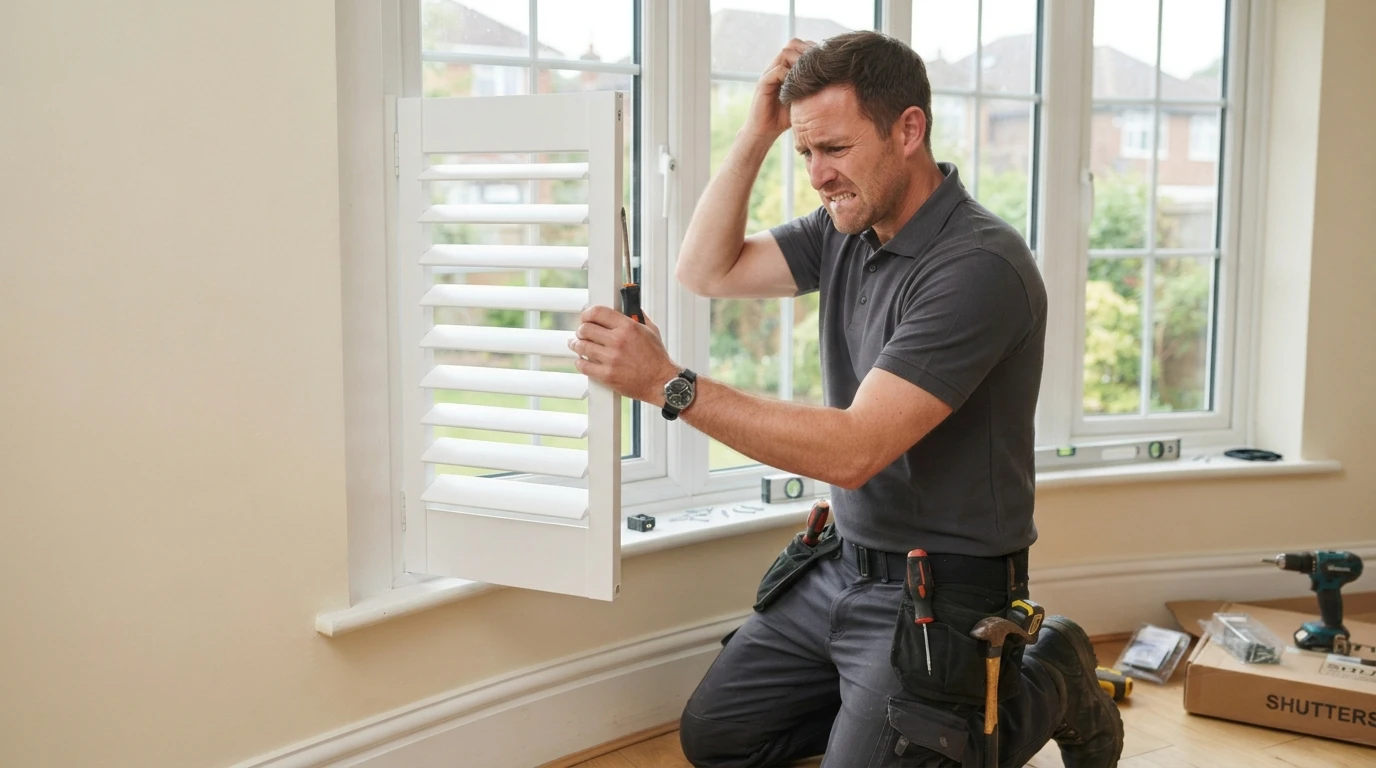
The quality of the installation can have a significant influence on how well shutters perform over time. Even a durable product may develop problems prematurely if it is poorly measured, incorrectly aligned or fitted with unsuitable fixings.
Shutter panels need to open and close freely without catching on the frame, window handles, sill or neighbouring panels. Poor alignment can place unnecessary strain on hinges and other fittings, while insufficient clearance can make everyday operation awkward.
The weight and dimensions of the panels also need to be considered. Larger or heavier panels require appropriate hardware and secure fixings to support them properly over time.
Made to measure shutters require careful measurement of the window opening and consideration of any irregularities. Bay windows, unusually shaped windows and larger openings can present additional challenges because the individual frames and panels need to work together correctly.
Professional measuring and installation can help reduce the risk of fitting problems, although the quality of the shutters themselves and the suitability of the material remain equally important. For DIY installations, following the manufacturer’s measuring and fitting instructions closely is essential.
How to maintain shutters so they last longer
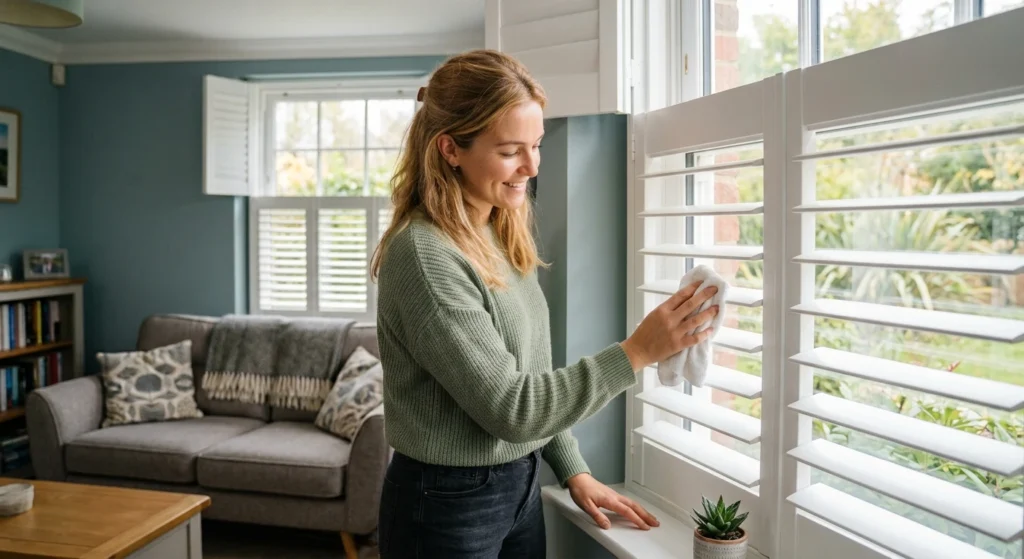
Shutters do not generally require an elaborate maintenance routine, but regular care can help preserve their appearance and operation over the years.
Keep them clean
Dust the frames, panels and louvres regularly using a soft cloth or suitable duster. For marks that need more attention, use a lightly damp cloth if permitted by the manufacturer’s cleaning guidance, and dry the surface as appropriate.
Avoid soaking wooden or MDF shutters, and do not use abrasive cleaners or harsh chemicals that could damage the finish.
Check hinges and moving parts
Regular use can gradually affect hinges, screws and louvre mechanisms. If a panel begins to catch, sag or become difficult to move, investigate the cause rather than forcing it.
Minor adjustments may resolve the issue before additional strain is placed on the fittings. Follow the manufacturer’s instructions or seek professional assistance if you are unsure how to make an adjustment.
Deal with moisture promptly
Wipe away condensation or splashes where appropriate, particularly around windows in kitchens and bathrooms. Persistent dampness should be addressed rather than treated as a cleaning issue alone.
Pay attention to changes in the finish, swelling, discolouration or signs of mould. These may indicate that the shutters are being exposed to conditions they are not suited to.
Look after the finish
Painted and stained finishes can gradually show wear, particularly around edges and areas exposed to direct sunlight or frequent handling. Minor surface damage may be repairable using a suitable method recommended by the manufacturer.
Some wooden shutters can be refreshed or refinished as they age, helping to extend their useful life. However, extensive moisture damage or structural deterioration may not be recoverable, so preventing problems is preferable to relying on repairs.
How do shutters compare with blinds and curtains?
One of the reasons shutters appeal to homeowners is their potential to remain in place for decades. Blinds and curtains can also last for many years, but their longevity depends on their construction, materials, frequency of use and exposure to sunlight.
Blinds may need replacing when fabrics fade, slats become damaged, cords wear out or operating mechanisms stop working properly. Curtains can gradually fade, lose their shape or suffer wear to their fabric and lining, particularly in rooms that receive strong sunlight.
Shutters have a different construction, with framed panels and durable components designed for repeated everyday use. This can give them a longer useful life than many conventional blinds and make them a lasting alternative to softer window coverings.
However, the comparison is not the same for every product. A well made blind or set of curtains may last considerably longer than a lower quality or poorly maintained shutter. It is therefore more useful to consider the likely lifespan of the specific products you are comparing than to assume that shutters will always last a fixed number of times longer.
The potential for shutters to remain in place for many years can reduce the need for repeated replacement. Their higher initial cost is worth considering alongside the period over which they are likely to be used.
Shutters as a long lasting window fitting
Shutters have a long history as a practical feature of buildings. Timber shutters were used in historic homes to provide privacy, security and protection from draughts, particularly before glazed windows became widespread. As glazing became more common, shutters continued to be used as both a functional fitting and an attractive architectural feature.
Traditional shutters were often constructed using timber boards, frames and panels, and many historic buildings retain examples of these fittings. Their continued presence illustrates how well made wooden components can remain in use for generations when their materials, maintenance and surrounding conditions allow.
Modern internal shutters differ in their designs, materials and manufacturing methods, so their lifespan should be judged on the product itself rather than historical examples alone. Nevertheless, the long standing use of shutters demonstrates that they are not simply a short term decorative trend. Their solid construction and practical function have helped them remain a familiar feature of buildings over time.
For homeowners, this history adds to their appeal: shutters can become part of the character of a room rather than a window covering that needs changing whenever interior styles evolve.
Are shutters a long term investment?
Shutters generally involve a higher initial cost than many standard blinds, so their potential lifespan is an important part of the decision. If suitable, well made shutters remain in good condition for 20-30 years or more, they may provide many years of use without needing to be replaced simply because a fabric or operating mechanism has worn out.
In some cases, they may even remain in place when a property is sold, continuing to serve the next homeowner for years to come. This long term practicality is part of what makes shutters an appealing investment for those looking beyond the immediate cost.
Their long term value also depends on more than the initial purchase price. The material must be appropriate for the room, the shutters need to be measured and fitted correctly, and they should receive reasonable care over time. A moisture sensitive product installed in a persistently damp bathroom, for example, may not deliver the same service life as the same product in a dry bedroom.
Appearance is another consideration. Shutters can complement a wide range of interior styles, and their framed construction can become a lasting feature of the room. This can appeal to homeowners who want a window covering that will continue to suit their home even as furnishings, colours and decorative styles change.
Although no shutter is guaranteed to last a particular number of years, choosing a suitable product and looking after it can help maximise its useful life.
Choosing shutters that will last
The best way to get a long service life from shutters is to consider the material, environment and installation together. Look beyond appearance and price to understand what each product is made from, where it can be fitted and what maintenance it requires.
Check the manufacturer’s specifications and warranty, particularly for rooms exposed to moisture, strong sunlight or elevated temperatures. A warranty can offer useful information about the manufacturer’s commitment to its product, but its duration should not be confused with a guaranteed lifespan. Read the terms carefully to understand what is covered and any exclusions that apply.
With the right product, careful installation and sensible maintenance, shutters can remain a practical and attractive feature of your home for many years. For homeowners looking for a durable alternative to conventional blinds or curtains, their ability to stand the test of time makes them an appealing long term choice.