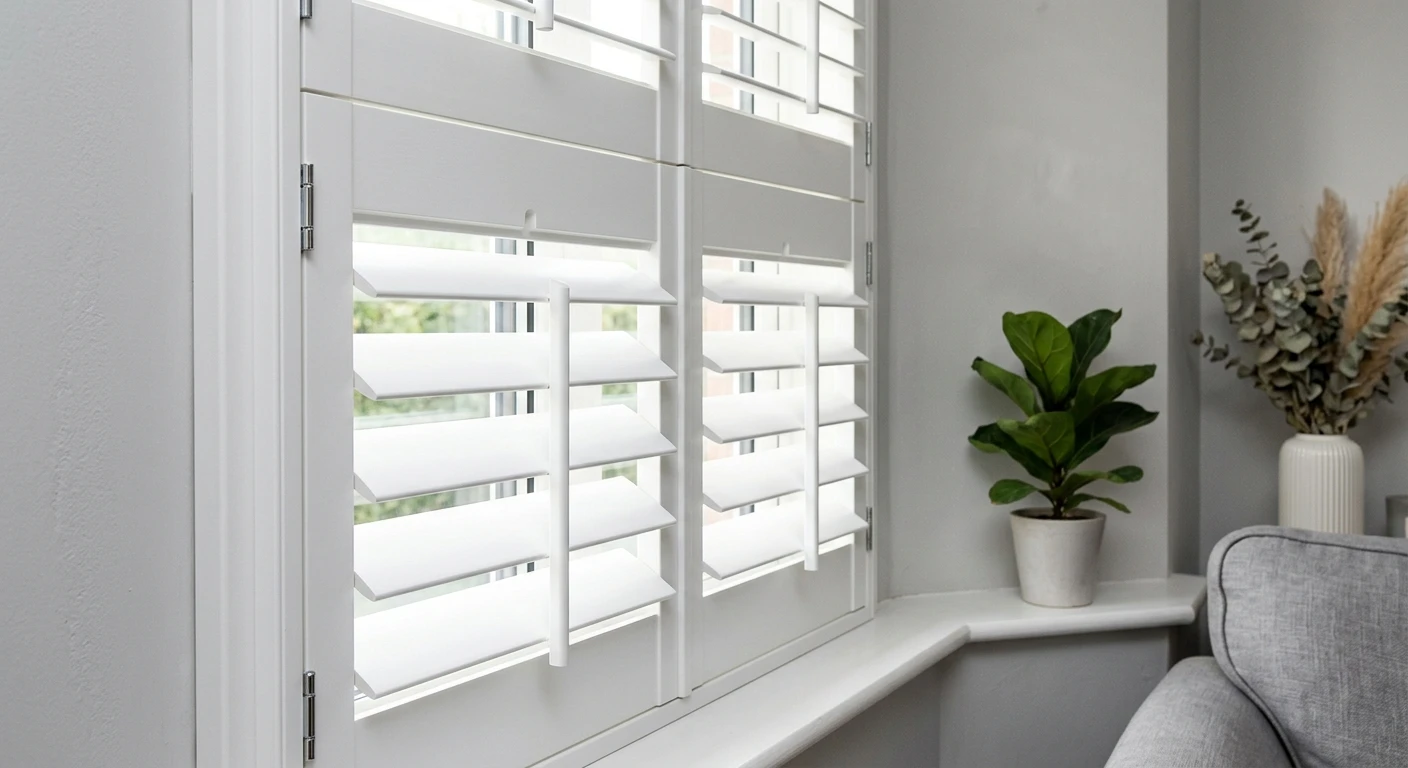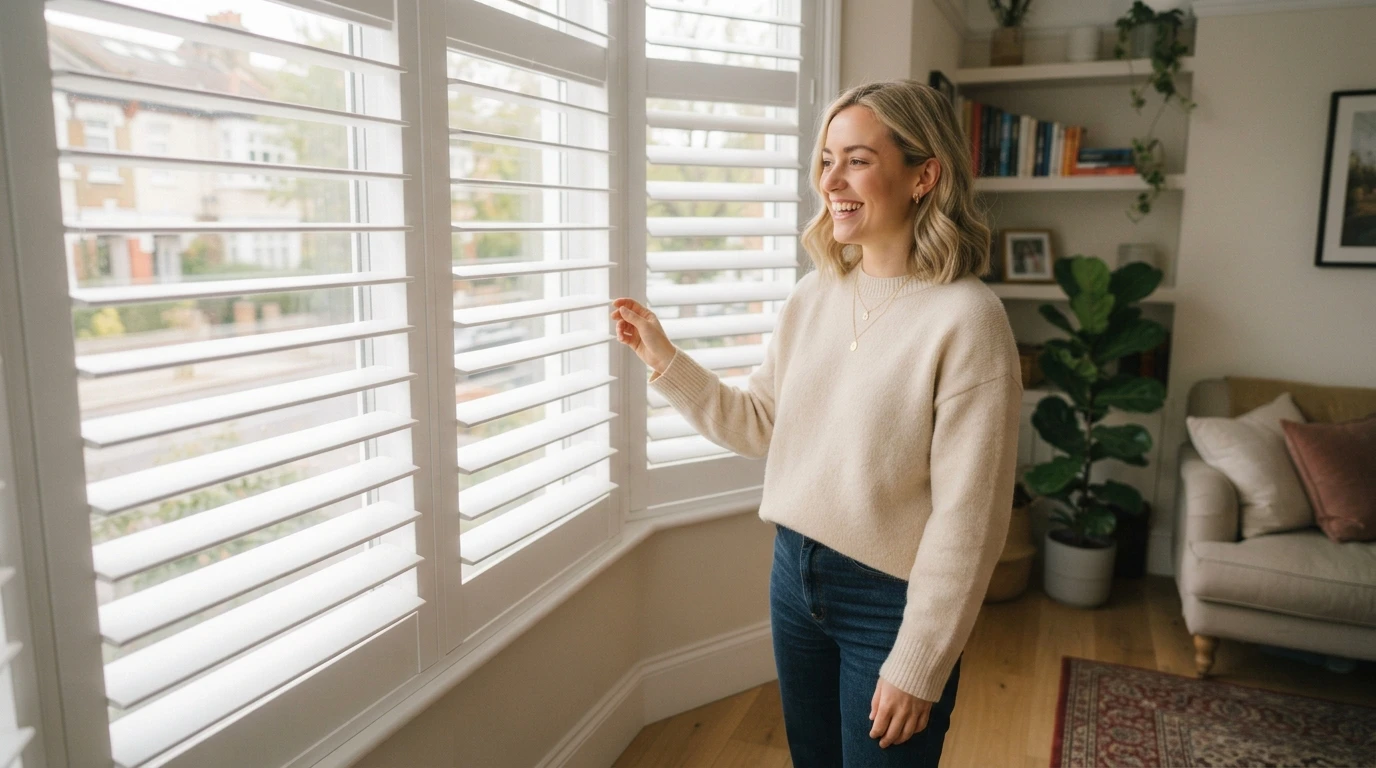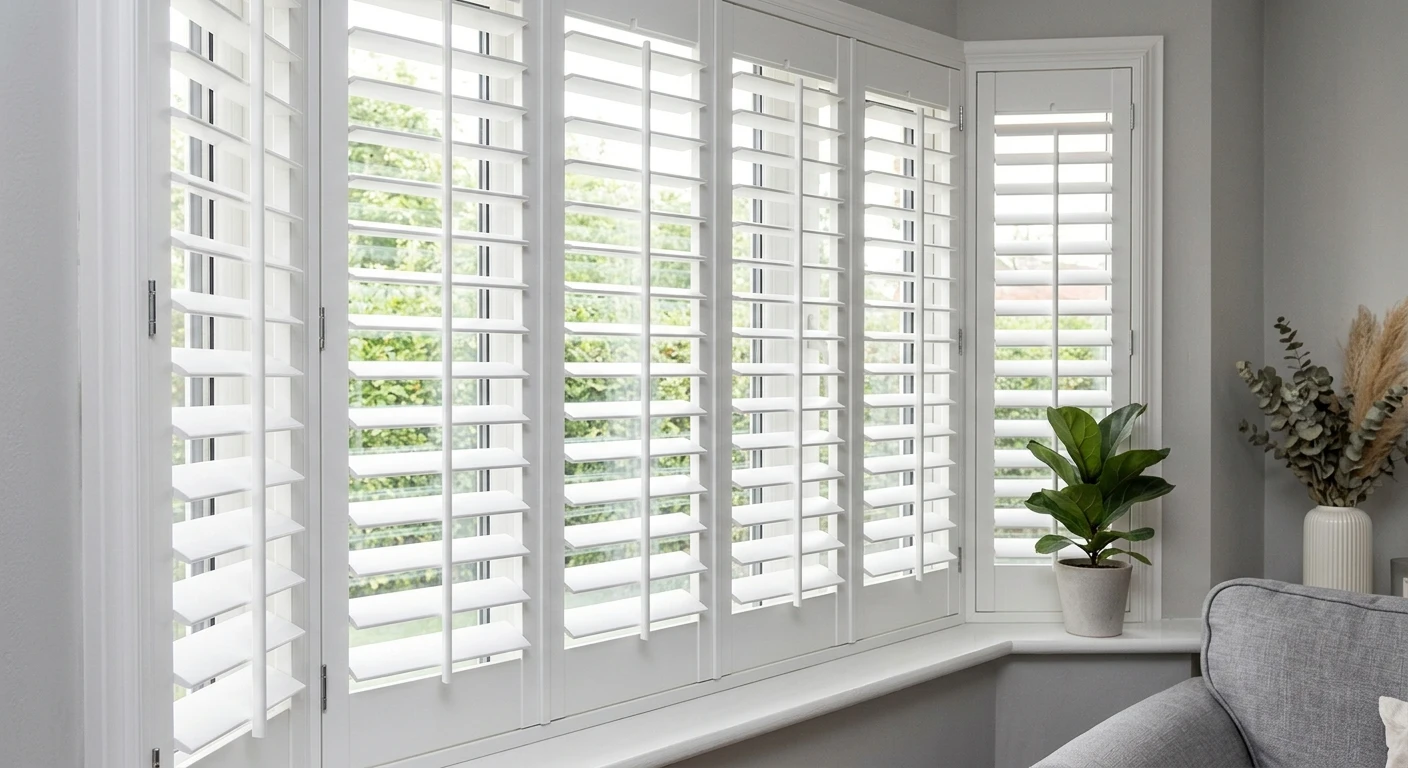
If you have been searching online for shutter blinds, you may have come across a variety of products and different names for what appear to be similar window coverings. The terminology can be confusing, particularly when shutters, plantation shutters and blinds are often discussed together.
In many cases, people searching for shutter blinds are actually looking for plantation shutters, featuring fitted window panels with adjustable horizontal louvres that allow you to control light, privacy and visibility.
So, are shutter blinds the same as plantation shutters? The answer depends on how the term is being used, but understanding the differences can help you find the right product for your home.
Are shutter blinds actually shutters?
The phrase shutter blinds is commonly used by people looking for internal window shutters. It combines two familiar terms, with blinds often associated with adjustable slats and shutters typically having a more substantial framed construction.
Plantation shutters are made up of framed panels and louvres. The panels can be opened to give access to the window, while the louvres can be tilted to adjust the amount of light entering the room and the level of privacy.
Although shutter blinds is a widely understood search term, plantation shutters or window shutters are more precise names for this type of product.
Why do people search for shutter blinds?
The term shutter blinds makes sense when you consider how plantation shutters work. Like traditional blinds, they allow you to adjust the amount of light entering a room and control privacy by changing the angle of the louvres.
However, plantation shutters use solid framed panels, typically wooden, rather than the suspended slats or fabric commonly associated with blinds. This difference in construction is what distinguishes them from conventional window blinds.
If you’re searching for shutter blinds because you like the appearance of adjustable louvres set within a frame, plantation shutters are likely to be the closest match.
Plantation shutters vs venetian blinds – What’s the difference?
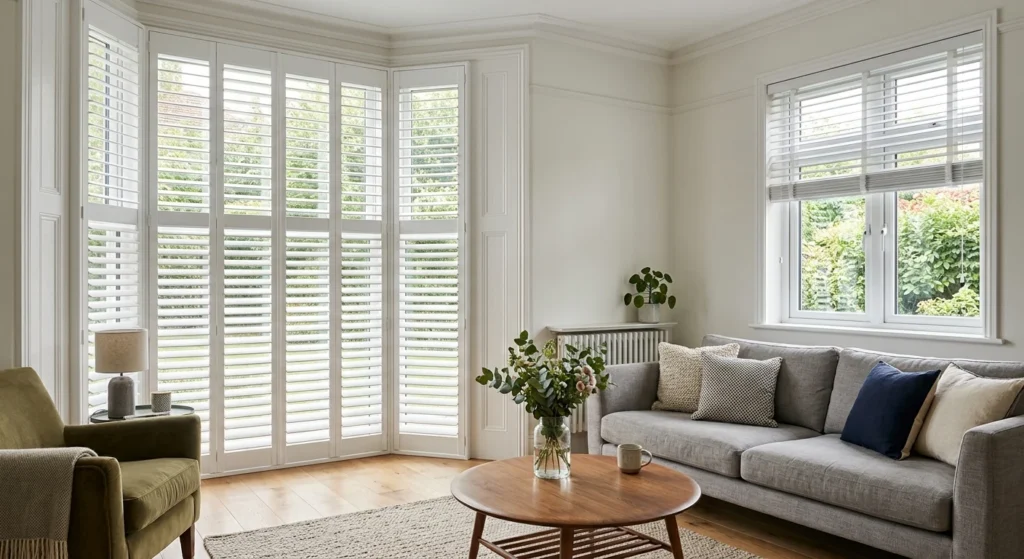
One reason for the confusion is that plantation shutters and Venetian blinds both use horizontal slats or louvres to control light. However, their construction and operation are quite different.
Plantation shutters consist of framed panels fitted to a window opening, with adjustable louvres set within each panel. The panels can be opened to access the window, while the louvres can be tilted to alter the amount and direction of incoming light.
Venetian blinds consist of horizontal slats suspended by cords or a ladder mechanism. The slats tilt to control light and privacy, while the entire blind can usually be raised towards the top of the window when an unobstructed view is needed.
Although both provide adjustable light control, shutters have a more structured appearance, with panels that form part of the window’s overall design. Venetian blinds offer a different approach, with a lighter construction that can be raised or lowered as required.
A more permanent window covering
Beyond their differences in construction, plantation shutters and conventional blinds also differ in the role they play within a home. Shutters are securely installed to the window and can become a lasting feature of the room, while blinds are often chosen as a simpler window covering that can be changed more easily.
Plantation shutters generally involve a higher initial investment than many standard blinds, but their durable construction and timeless appearance can make them an appealing long term choice. They can complement changing interior styles over the years, without necessarily needing to be replaced when a room is redecorated.
Their longevity will depend on the materials used, the quality of construction, the installation and the conditions in which they are used. For homeowners looking for a window covering that combines everyday practicality with a lasting visual impact, plantation shutters can be worth considering as a longer term investment.
Why are they called plantation shutters?
Plantation shutters are a style of internal window shutter commonly associated with wide, adjustable louvres set within a solid frame. The name is well established in the window shutter industry, including in the UK, and has become familiar to homeowners researching this type of window covering.
You may also see them described simply as window shutters or wooden shutters. These terms are broader, as internal shutters are available in a range of designs, materials and finishes, including styles that don’t feature adjustable louvres.
The term plantation shutters is particularly associated with shutters that combine a structured, framed appearance with adjustable louvres for controlling light and privacy. This helps explain why people searching for shutter blinds may come across plantation shutters when researching options for their windows.
What should you look for when choosing shutters?
Now that you understand the difference between blinds and plantation shutters, you can focus on choosing the right shutters for your home. There are a few practical considerations worth keeping in mind before deciding which style and specification will work best for your windows.
Made to measure sizing
Plantation shutters are usually made to suit the dimensions of the individual window. Accurate measuring is important for achieving a neat fit and ensuring the panels can open and close properly. This is particularly relevant for bay windows, older properties and windows with unusual dimensions.
Materials and finishes
Different shutter materials offer different characteristics, so the best choice depends on the room and its requirements. For example, a bathroom may need a material specifically suited to humid conditions, while other rooms may offer greater flexibility in the finish you choose.
Construction and fitting
The quality of the frame, louvres, hinges and operating mechanisms all contribute to how the shutters look and function. The way the shutters are measured and installed also matters, as the panels need enough clearance to operate comfortably.
Considering these factors will help you look beyond the name used in a search and focus on the product that best suits your windows and home.
So, are shutter blinds the same as plantation shutters?
If you’ve been searching for shutter blinds, plantation shutters may be the product you’re looking for. Although the terms are often used interchangeably, plantation shutters are characterised by their solid framing, panels and louvres, distinguishing them from conventional blinds, which typically have a lighter construction.
Understanding the difference makes it easier to compare your options and decide what will work best for your home. You can explore the different shutter styles, materials, finishes and installation options in our guides.