
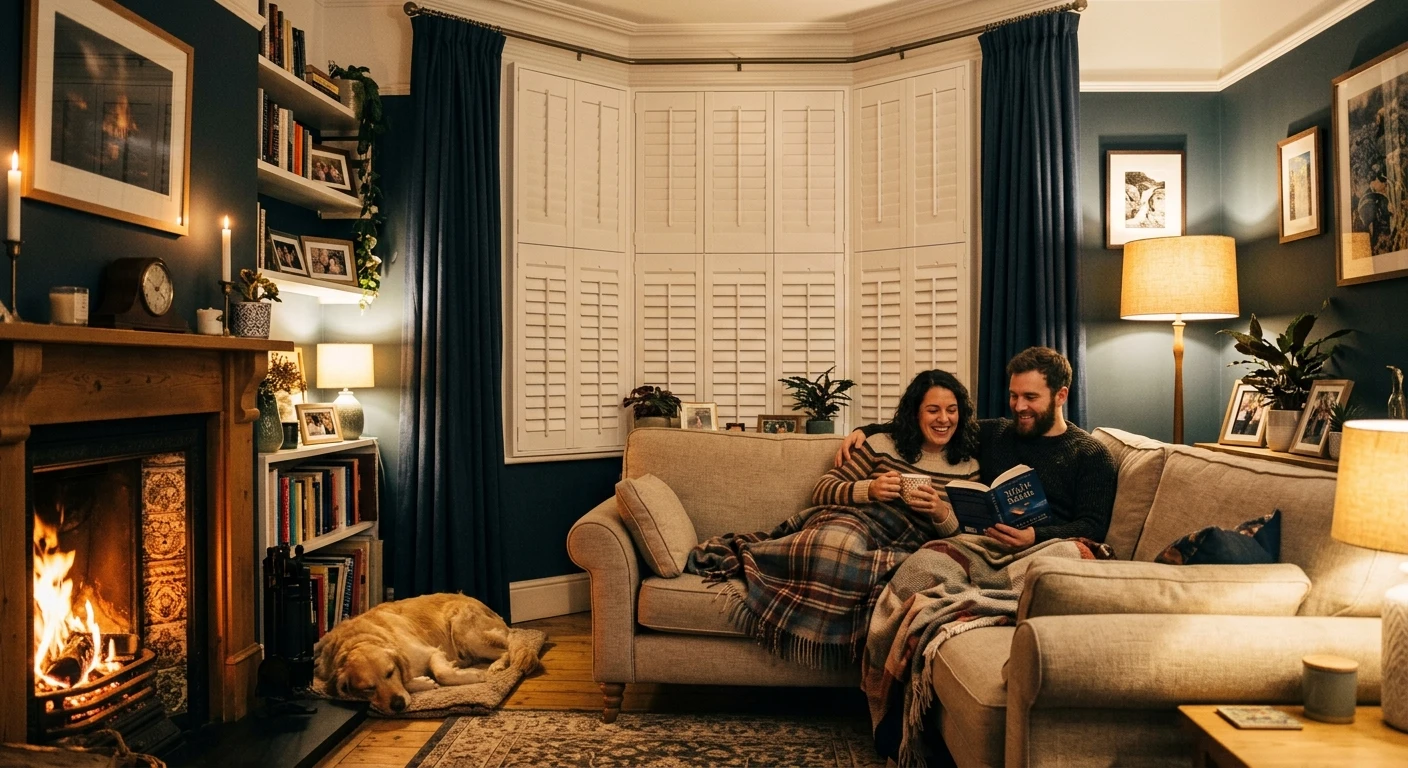
Living near a busy road, a railway line or on a lively street can make it difficult to enjoy a peaceful home. Traffic, people talking outside, car doors slamming and late night activity can all become frustrating, particularly when you’re trying to sleep, work or concentrate.
Plantation shutters are popular for their privacy, light control and attractive appearance, but can they help reduce outside noise, too?
Yes, plantation shutters can certainly help reduce outside noise, but they won’t fully soundproof your home. Their panels and fitted frames provide an additional barrier over your windows, which will help soften everyday sounds from the street. However, how much difference they make depends on the type of noise, the shutter design and, importantly, the quality of your existing windows.
So, are shutters a worthwhile investment if noise reduction is one of your priorities? Let’s look at how they work, which rooms can benefit and how they compare with other window coverings.
How do plantation shutters reduce outside noise?
Sound travels through the air and causes surfaces, including window glass, to vibrate. Windows can therefore be a weak point when it comes to keeping unwanted noise outside, particularly if they’re single glazed, poorly sealed or older.
Plantation shutters introduce another layer between the window and the room. Although they’re not specifically designed as soundproofing products, their construction can certainly help reduce the amount of noise you hear indoors.
They provide an additional physical barrier
Plantation shutters are made from relatively rigid materials, such as hardwood, MDF or engineered composites. When the panels are closed and the louvres are tilted shut, they create an additional barrier in front of the glass.
This may help soften everyday sounds, including passing cars, conversations and general street activity. However, sound can still travel through gaps around the panels and frame, as well as through the window itself.
They create an additional layer
When shutters are fitted inside a window recess, there’s usually a space between the shutter panels and the glazing. This creates an additional layer between the window and your room.
This extra layer can contribute to insulation and may help reduce the amount of outside noise you hear indoors. The overall benefit depends on factors such as the shutter design, how closely the panels fit and the construction of the existing window.
They can cover much of the window opening
Well fitted shutters are made to suit the dimensions of your window. Their frames and panels can cover much of the opening, helping limit direct paths for sound around the edges.
However, plantation shutters aren’t airtight. The gaps between louvres and around the panels mean some sound will still get through. If your windows have worn seals or draughts, addressing these problems may be just as important as choosing a new window covering.
What types of outside noise can shutters reduce?
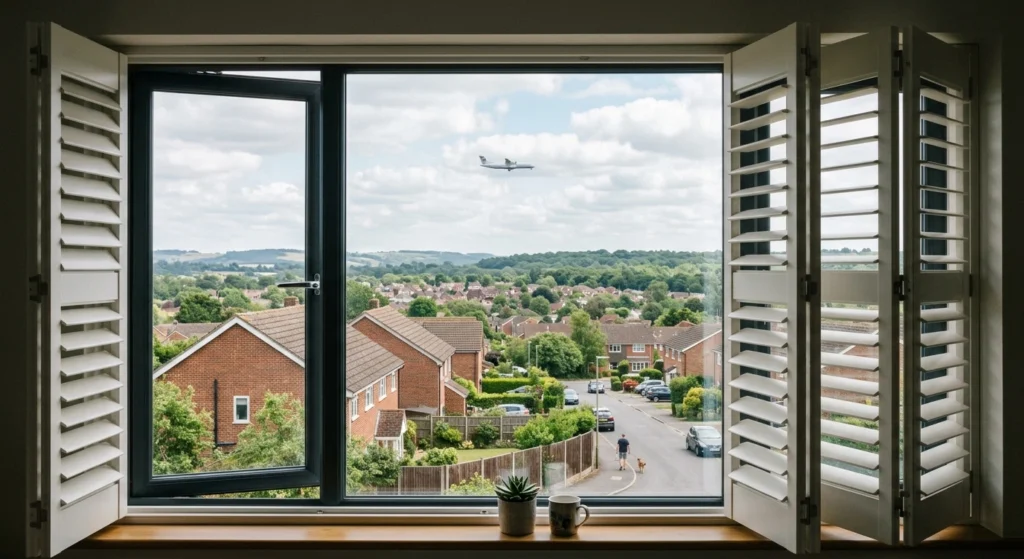
Not all noise behaves in the same way, so the results you get from plantation shutters will depend partly on what’s disturbing you.
| Type of noise | What to expect |
|---|---|
| Passing cars and road traffic | Shutters may soften some everyday traffic noise, but heavy vehicle rumble can remain noticeable. |
| People talking or shouting outside | Closed shutters may help reduce the volume and clarity of conversations. |
| Passersby and busy streets | They may take the edge off voices, footsteps and general street activity. |
| Night time noise | Shutters may help make a bedroom feel quieter, particularly alongside well sealed windows. |
| Weekend parties and late night activity | Some noise may be softened, but loud voices, music and bass can still be heard. |
| Aircraft and trains | Shutters may provide an additional barrier, but they’re unlikely to solve a significant noise problem on their own. |
| Construction work and heavy machinery | Loud, low frequency sounds and vibration can be difficult to control with window coverings alone. |
The key distinction is between reducing noise and eliminating it. If you can hear traffic clearly with your windows closed, shutters may make a difference, but it’s worth considering whether your actual windows are also allowing too much sound into the room.
Can shutters reduce aircraft and train noise?
Plantation shutters may help soften some outside noise from aircraft and trains, but expectations should be realistic. Both can produce substantial noise across a range of frequencies, and sounds may remain noticeable even when the shutters are closed.
If you live close to an airport, under a flight path or near a railway line, improving the acoustic performance of your windows is likely to make a greater difference than changing your window dressing alone.
Plantation shutters can still be a practical addition to your home, offering light control, privacy and a degree of additional sound reduction. However, where noise from aircraft, trains or other transport is a persistent problem, a more comprehensive approach to window insulation may be needed.
Are plantation shutters good for bedrooms?
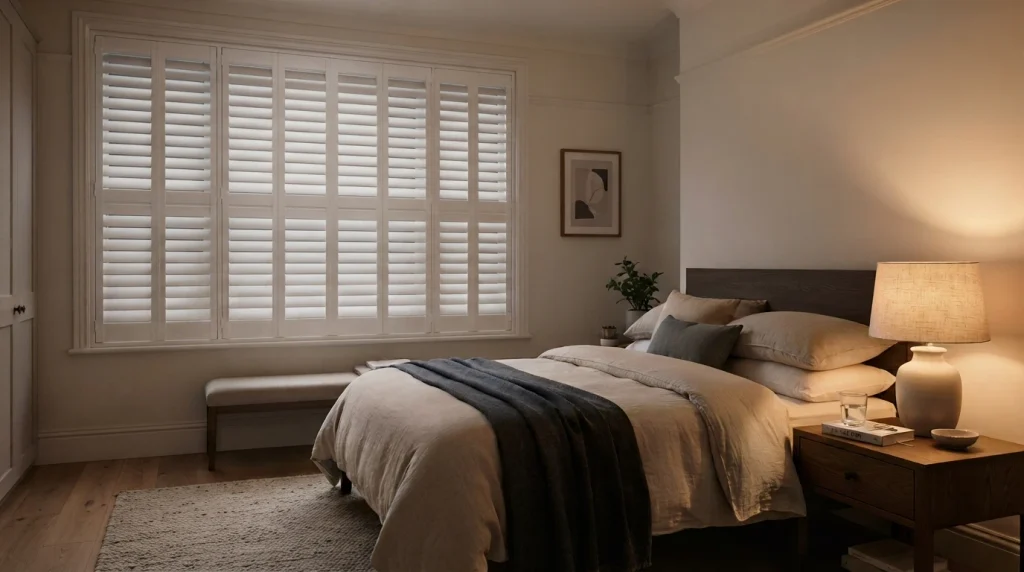
Bedrooms are one of the most useful places to consider shutters if outside noise is affecting your comfort.
A bedroom overlooking a busy road may be exposed to traffic throughout the day, while a room facing a town centre or popular street may be disturbed by people returning home late at night. Even relatively ordinary sounds can become intrusive when the rest of the house is quiet.
Closing the shutters at night may help soften some of this background noise. They also offer several other benefits that make them practical for bedrooms:
- Privacy: Closed shutters help prevent passersby from looking into your room.
- Light control: Tilting the louvres or closing the panels helps manage incoming light, although standard louvred shutters aren’t completely blackout.
- An additional layer at the window: Shutters may help reduce draughts and provide some additional insulation, depending on their design and fit.
- A neat appearance: Unlike curtains, shutters don’t need to be pulled back or gathered to the sides of the window.
What about children’s bedrooms and nurseries?
When you have a young child or newborn, a quieter bedroom can be particularly appealing. Outside noise may disturb daytime naps or make an already noisy environment feel less restful.
Shutters will help soften some external sounds while also providing privacy and control over daylight. However, they shouldn’t be relied upon to create a fully silent sleeping environment.
It’s also worth remembering that standard louvred shutters have gaps between their slats, so they won’t completely block out all sound or light.
Do shutters help with noise at night?
Shutters can help soften some of the outside noise that becomes particularly noticeable at night, from passing cars and people talking to the general activity of a busy street.
The difference may be useful if you’re a light sleeper, but it depends on the noise level and the condition of your windows. Low frequency traffic rumble, loud music and sudden noises may still be audible.
Can shutters make a home office quieter?
Outside noise isn’t only a problem at night. If you work from home, street noise can interrupt video calls, distract you while writing or make it harder to concentrate.
A home office overlooking a busy road may benefit from plantation shutters, which can help soften everyday sounds such as passing traffic and pedestrians. By reducing some of the noise entering through the window, they can help create a calmer, more comfortable working environment.
Shutters also offer excellent control over privacy and natural light, allowing you to create a workspace that feels bright and inviting while limiting views into your room. For those working from home regularly, this combination of noise reduction, privacy and light control can make shutters a practical addition to a home office.
Plantation shutters vs curtains and blinds for noise reduction
Plantation shutters aren’t the only option if you want to reduce outside noise. Curtains and blinds have their own advantages, and the best choice depends on your priorities, existing windows and the type of noise you’re trying to control.
| Window covering | Potential noise reduction benefits | Limitations |
|---|---|---|
| Plantation shutters | Rigid panels and a fitted frame provide an additional barrier across the window. | Gaps between louvres and around panels allow sound to pass through. |
| Heavy curtains | Thick, lined curtains can absorb sound within a room and may offer some reduction in incoming noise. | Gaps at the sides and top can limit their effectiveness. Results vary considerably. |
| Roller blinds | A simple, unobtrusive covering that provides privacy and light control. | Most standard roller blinds are lightweight and offer limited sound insulation. |
| Roman blinds | Fabric folds and thicker linings can help absorb sound and provide additional coverage. | They’re not generally designed to provide substantial insulation against outside noise. |
| Cellular or honeycomb blinds | Their cellular construction traps air and can contribute to insulation, with potential acoustic benefits depending on the product. | They aren’t a substitute for effective glazing or specialist acoustic improvements. |
Are shutters better than curtains for blocking noise?
Plantation shutters can be an excellent choice if you’re looking to reduce outside noise while improving privacy and light control. Their solid construction and fitted frames provide an additional barrier across the window, helping to soften everyday sounds such as passing traffic, people talking and general noise.
Unlike lightweight curtains, shutters feature rigid panels that sit neatly within a frame around the window. When closed, they cover much of the window opening, adding another layer between your home and the outside world.
Heavy, lined curtains can also help reduce noise, particularly by absorbing sound within a room. However, plantation shutters offer the added advantages of adjustable louvres, a neat, built in appearance and precise control over privacy and natural light, without the need to draw back bulky fabric.
For many homeowners, this combination makes plantation shutters an appealing alternative to curtains, particularly in bedrooms, living rooms and home offices facing busy streets.
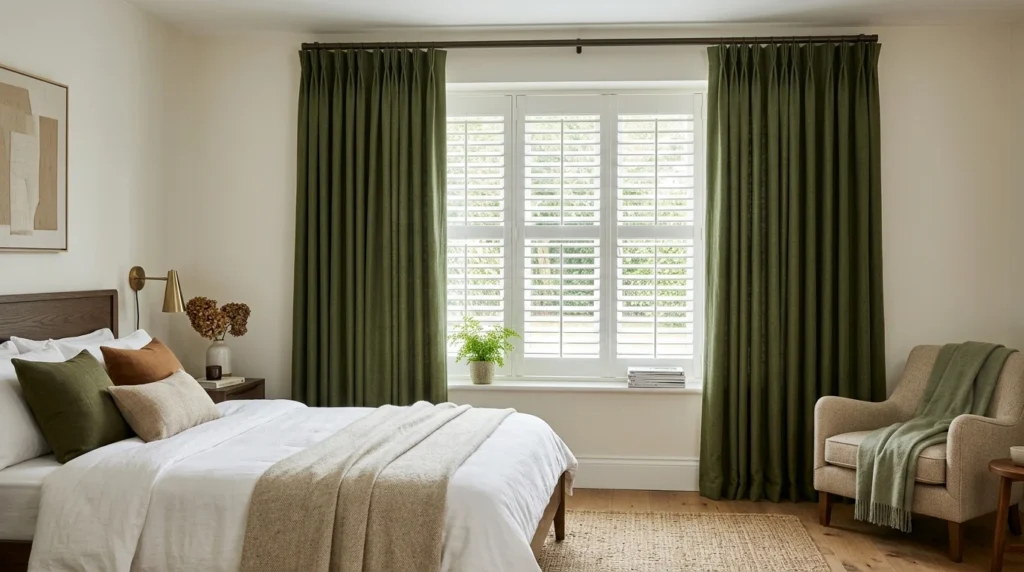
You can also combine shutters with curtains if you want to enjoy the benefits of both. This creates a layered look while providing additional fabric to help absorb sound within the room.
Are shutters better than blinds?
Compared with most standard roller blinds, plantation shutters offer a more substantial physical barrier thanks to their solid panels and sturdy frames. This additional layer across the window can help soften everyday outside noise, while also providing excellent privacy and control over natural light.
Although cellular blinds and lined Roman blinds can offer their own insulating benefits, plantation shutters have the advantage of combining a solid, fitted structure with durability and versatility. Their adjustable louvres allow you to manage light and privacy throughout the day, while the panels can be closed when you want greater privacy and an additional barrier between your home and outside noise.
For homeowners looking to reduce outside noise without compromising on style or practicality, plantation shutters are a particularly appealing option. They offer a long lasting alternative to conventional blinds, with the added benefits of privacy, light control and a timeless appearance.
Which Plantation Shutters Are Best for Noise Reduction?
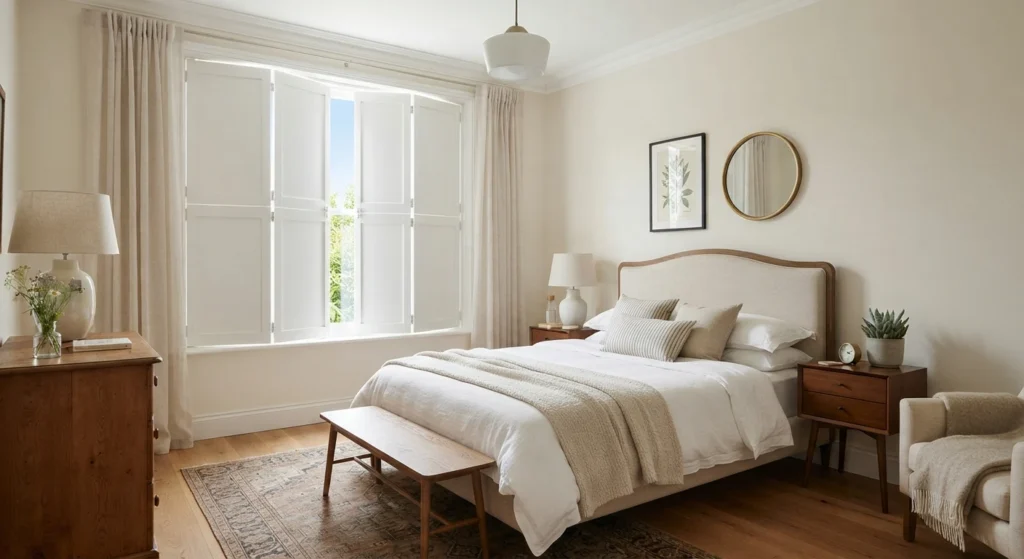
If reducing outside noise is one of your priorities, it’s worth considering the style of plantation shutters you choose. Different designs offer different benefits, but the main aim is to provide an additional barrier across as much of the window as possible while retaining the privacy and light control shutters are known for.
Solid shutters
Solid shutters feature solid panels rather than adjustable louvres, creating a more continuous surface when closed. With fewer openings through the panels, they may be worth considering if you’re looking for a window covering that helps reduce outside noise.
Their effectiveness will still depend on the construction, fit and gaps around the panels, as well as the performance of the window behind them.
Full height shutters
Full height shutters cover the window from top to bottom, providing a consistent covering across the entire opening. When closed, they create an additional barrier between your room and the outside environment, which may help soften everyday sounds such as passing traffic and people talking outside.
They’re a particularly practical choice for bedrooms, living rooms and home offices facing busy streets, offering noise reduction alongside privacy and adjustable light control.
Tier-on-tier shutters
Tier-on-tier shutters also cover the full window, but their panels are divided into two independently operated sections: an upper tier and a lower tier. This gives you greater flexibility over how much of the window is covered at any time.
When both tiers are closed, they cover the window in much the same way as full height shutters, providing an additional barrier that may help reduce outside noise. The main advantage is their versatility. You can open the upper panels to let natural light into the room while keeping the lower panels closed for privacy, or close both sections when you want to cover the entire window.
For homeowners who want the potential noise reducing benefits of full window coverage without sacrificing flexibility, tier-on-tier shutters are an excellent option to consider.
Which style should you choose?
If noise reduction is your main priority, look for a design that provides good coverage across the entire window and fits neatly within its frame. Solid shutters offer a more continuous panel surface, while full height and tier-on-tier designs provide full window coverage with adjustable louvres.
Ultimately, the quality of the fit and the performance of your existing windows will also influence how much outside noise you hear. Whichever style you choose, shutters can provide an additional layer at the window while offering the privacy, light control and attractive finish that make them such a popular choice.
What are the limitations of plantation shutters?
Although plantation shutters can help reduce outside noise, it’s worth understanding how they work and what you can realistically expect from them.
- They aren’t soundproof. Shutters can help soften outside noise, although some sound will still be audible when they’re closed.
- Louvres allow some sound through. Standard plantation shutters have adjustable slats, meaning small gaps remain even when they’re closed.
- Some sounds are harder to reduce. Low frequency sounds, such as deep traffic rumble and bass heavy music, can be more difficult to minimise.
- Your existing windows play a role. The condition of your glazing, window frames and seals will all influence how much outside noise enters your home.
- Results vary between homes. The level of noise reduction depends on the shutter design, the quality of the installation and the construction of the existing window.
Despite these considerations, shutters can be a valuable addition to your windows, helping to soften outside noise while providing privacy, light control and an additional layer of insulation. For the best results, they can be combined with well fitted, high quality windows to help create a quieter, more comfortable home.
How can you further reduce outside noise more effectively?
If noise is regularly disturbing your sleep or concentration, a combination of improvements alongside plantation shutters may help create a quieter, more comfortable home.
Check your window seals and hinges
Draughts and gaps around the window frame can allow sound to enter your home. Repairing damaged seals and addressing gaps may help improve both comfort and noise insulation.
If you notice draughts around a closed window, it’s worth checking the seals, hinges and frame to ensure your windows are performing as well as they can.
Consider upgrading your glazing
The window itself plays an important role in how much outside noise enters your home. Suitable double or triple glazing, acoustic glazing or secondary glazing may help reduce noise, depending on your existing windows and the type of glazing selected.
Plantation shutters can complement these improvements by providing an additional layer in front of the glass. Combined with well fitted, high quality windows, they can contribute to a more comfortable indoor environment.
Combine shutters with curtains
If you’d like to enhance your window dressing further, as previously mentioned, consider pairing plantation shutters with thick curtains. As well as creating an attractive, layered appearance, curtains can help absorb sound within the room while providing additional privacy and light control.
Together, shutters and curtains offer a practical combination of style and functionality, with the potential to help soften outside noise.
Address other sources of noise
Consider whether there are other ways to make your home quieter, too. Depending on your property, improvements such as sealing gaps around external doors, adding soft furnishings and reducing echoes in larger rooms can all contribute to a more peaceful indoor environment.
By combining plantation shutters with suitable improvements to your home, you can enjoy their many practical benefits while taking further steps towards a quieter living space.
Are plantation shutters worth it for noise reduction?
Plantation shutters are well worth considering if you’d like to reduce outside noise while improving the comfort, privacy and appearance of your home. Their solid construction and fitted frames provide an additional layer at the window, which can help soften everyday sounds from outside and create a more peaceful indoor environment.
They’re particularly appealing for bedrooms, home offices and living rooms, where reducing distractions and creating a comfortable atmosphere can make a real difference. Alongside their potential noise reducing benefits, shutters offer excellent control over privacy and natural light, as well as a durable, timeless alternative to conventional curtains and blinds.
Ultimately, plantation shutters offer a practical and stylish way to help reduce outside noise while bringing several other benefits to your home. If you’re looking for a window covering that combines comfort, privacy, light control and lasting appeal, they’re certainly worth considering.