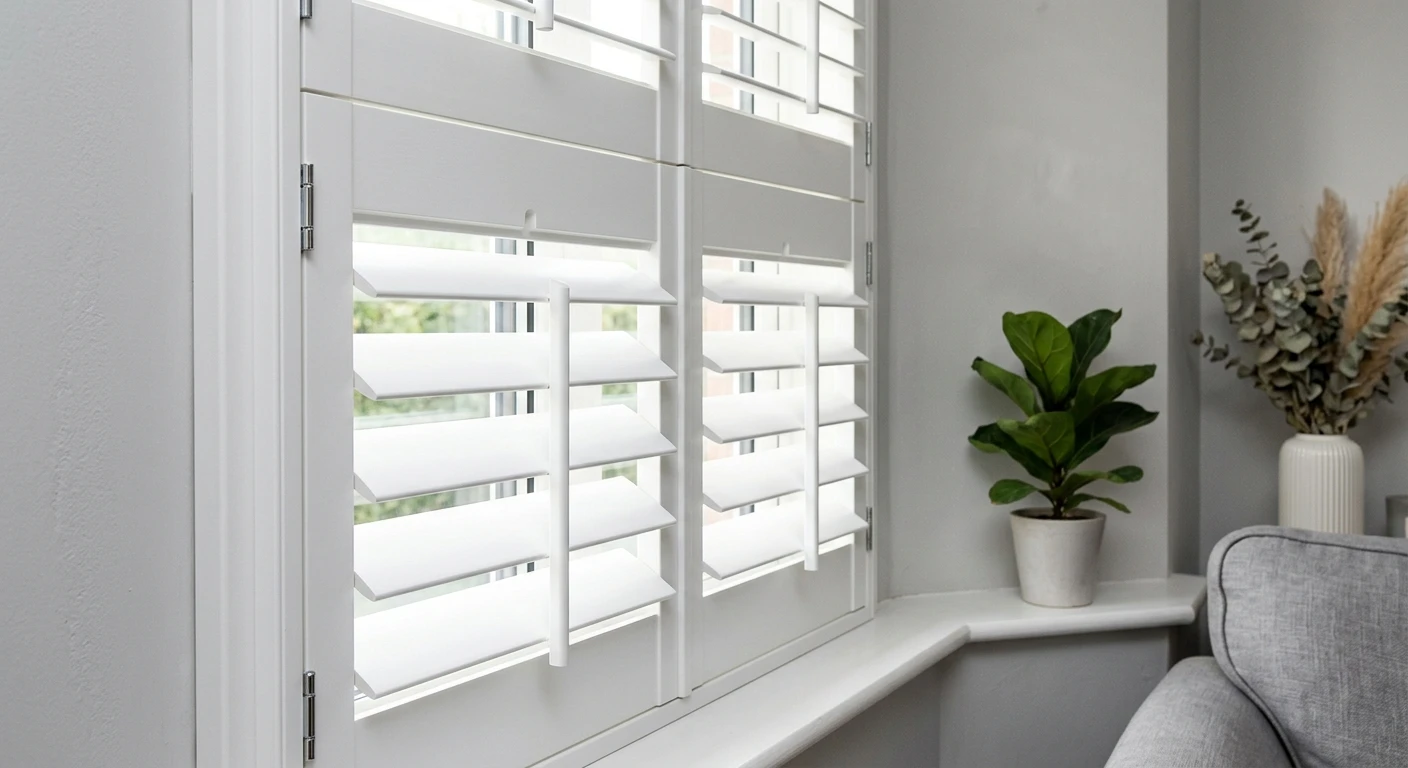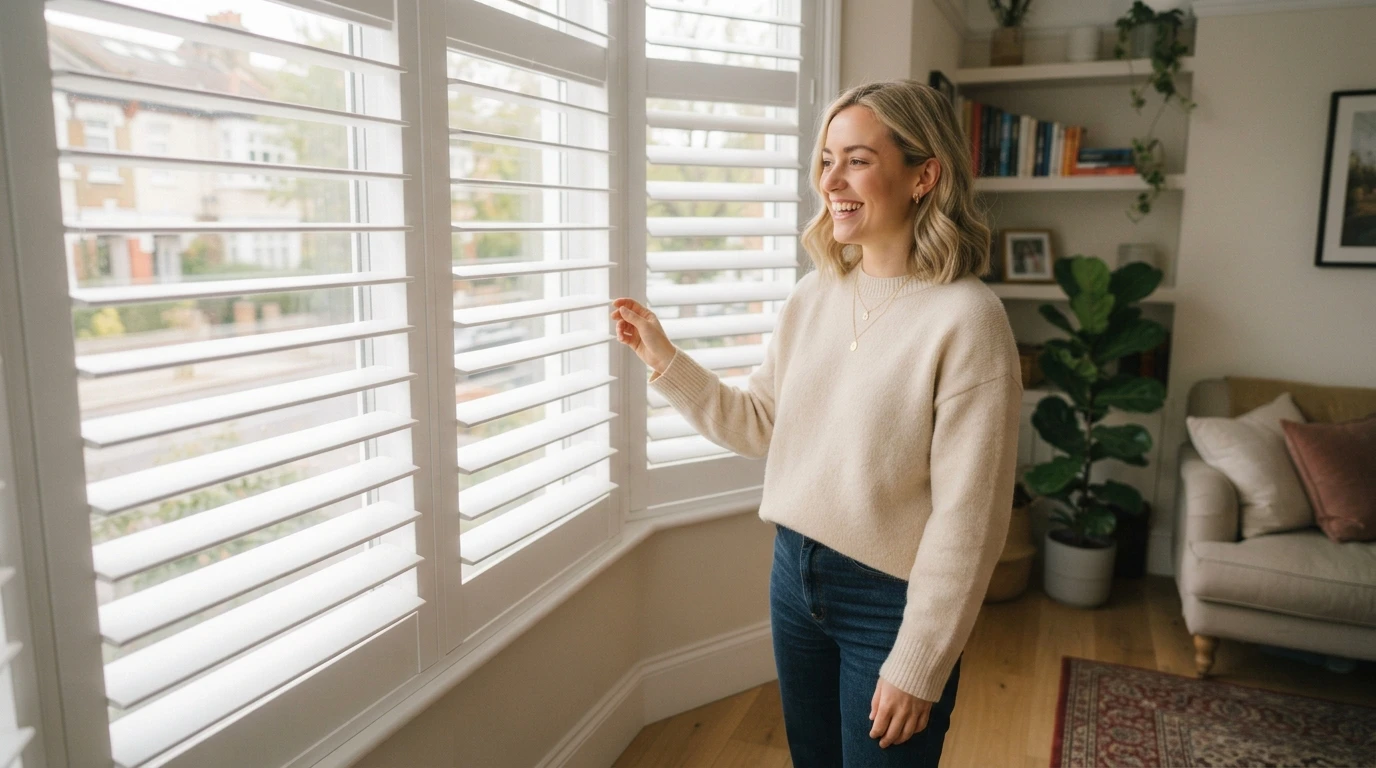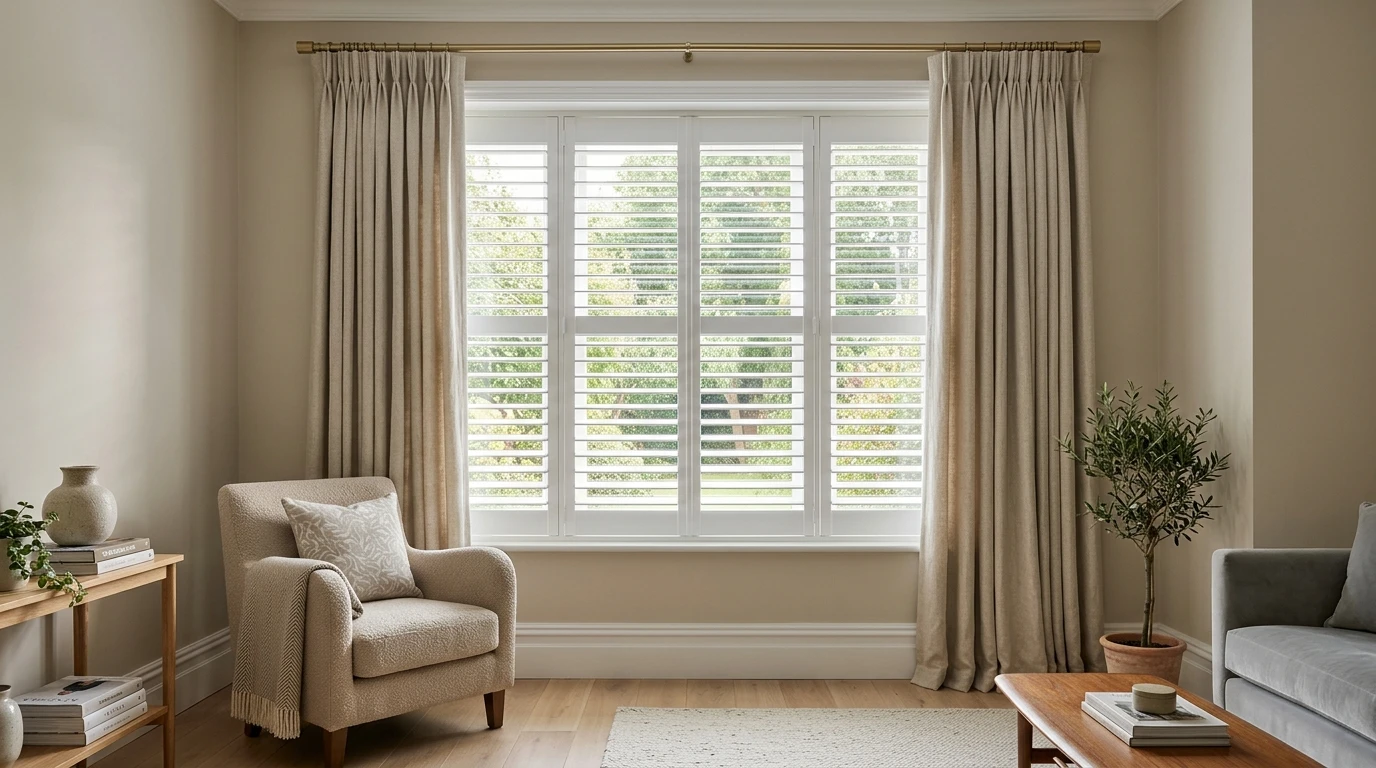
If you’ve been looking at plantation shutters, you may have noticed a horizontal section running across some shutter panels. This is known as a mid rail. As the name suggests, it sits across the middle section of the shutter panel, but it doesn’t necessarily have to be positioned exactly in the middle.
Mid rails have both a practical and visual purpose, while also adding strength and rigidity to the shutter panel. They can allow the upper and lower sections of the shutter to be adjusted independently, while providing an opportunity to create a more considered look that works with the window and the room around it.
What is a shutter mid rail?
A mid rail is a horizontal section built into a shutter panel, separating the louvres above it from those below. On a full height shutter, it is often positioned somewhere around the middle of the panel, although its exact position can vary.
One of the main benefits is that the louvres above and below the rail can be operated independently. You might close the lower louvres for privacy while leaving the upper louvres open to allow more light into the room, or adjust each section to control the amount of light and visibility.
In this respect, a mid rail can give you some of the flexibility associated with tier-on-tier shutters, but without having two separate shutter panels and the visible break between them.
Where should a mid rail be positioned?
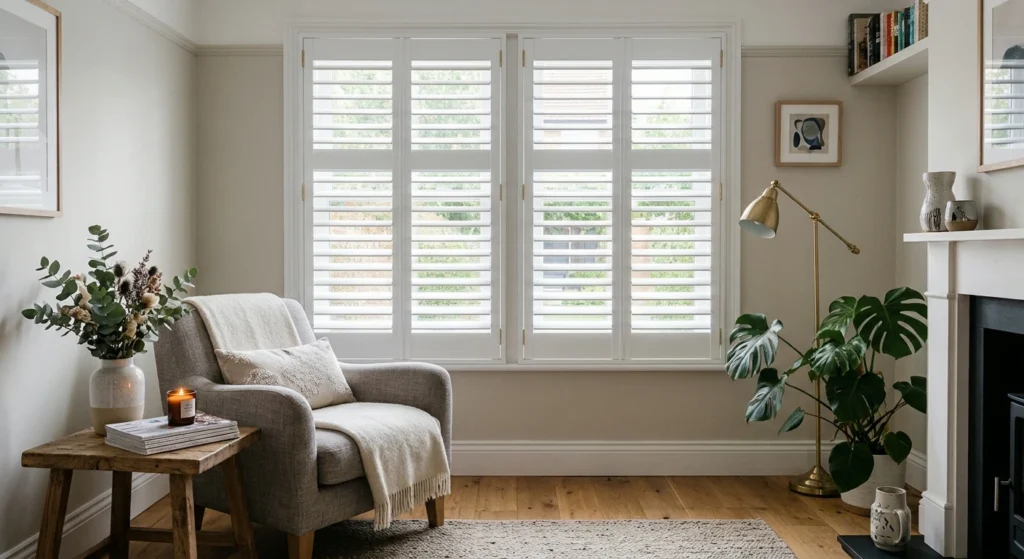
There isn’t one fixed position that works for every window. A mid rail can be placed at different heights depending on the proportions of the window, how you want the shutters to operate and the look you’re trying to achieve.
Placing it around the centre of the panel, or roughly halfway up, is a common choice and can give a symmetrical appearance. However, a mid rail doesn’t have to sit in the middle. It could be positioned around a third of the way up or two thirds of the way up the panel, depending on the window and the look you’re trying to achieve.
Another option is to align the mid rail with an existing feature of the window. For example, it could line up with the meeting rail of a sash window, the horizontal line of another nearby window or a particular feature of the frame. When several shutter panels sit alongside one another, matching their mid rail heights can also help the whole installation flow together.
Mid rails as a design feature
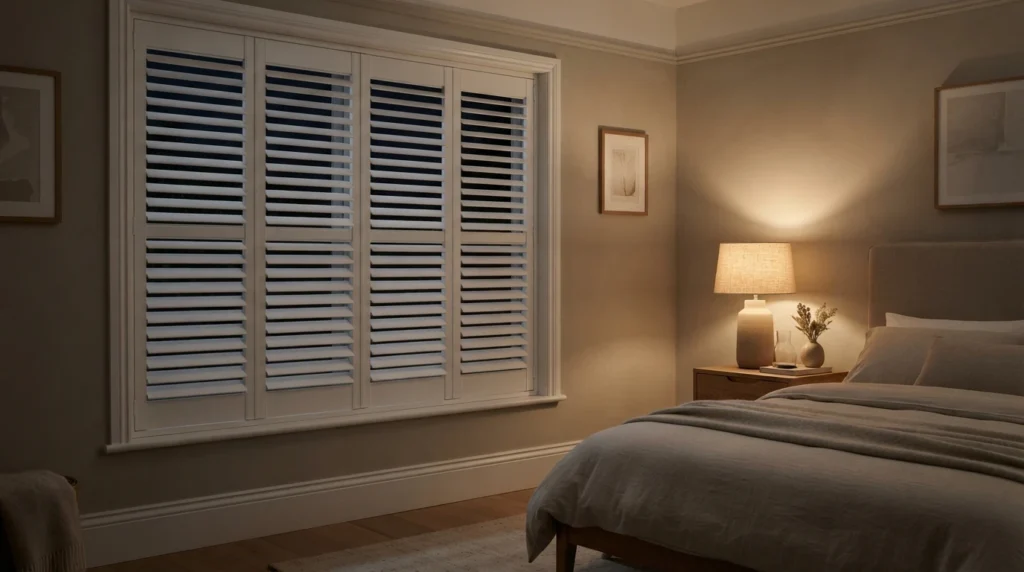
A mid rail doesn’t have to be treated simply as a practical part of the shutter. Its position can become an intentional part of the overall design.
This can be particularly useful when shutters are being fitted across several windows or around a larger glazed opening. Aligning the mid rails with other horizontal lines and furnishings in the room can create a sense of continuity, helping the shutters feel more integrated with the architecture rather than simply being added to the windows.
This can be especially effective on unusual windows or larger installations where several panels sit next to each other. A carefully positioned rail can help different sections look connected even when the individual panels are different sizes.
Visible or hidden mid rails?
Mid rails can be designed to be visible or hidden, depending on the shutter system and the appearance you prefer.
A visible mid rail creates a clear horizontal division across the panel and can suit more traditional interiors or designs where you want the construction of the shutters to be part of their character.
A hidden mid rail can give a cleaner appearance, with the division between the upper and lower sections much less obvious. Despite being less visible, it can still allow the two sections of louvres to be adjusted independently, although you may lose some of the added strength and rigidity provided by a more substantial visible mid rail.
This can be a useful choice if you want the flexibility of separate upper and lower louvre adjustment without creating a strong horizontal line across the shutters.
Are mid rails only used on full height shutters?
No. Although they are particularly common on full height shutters, the same principle can be used with other shutter configurations.
For example, a mid rail can be incorporated into a larger shutter panel where you want independent control of the upper and lower louvres. Café style shutters may also incorporate a rail as part of their design, depending on the panel arrangement and the look being created.
The exact options will depend on the shutter construction and the dimensions of the panels, so it’s worth discussing the possibilities when the shutters are being designed.
Mid rails and window proportions
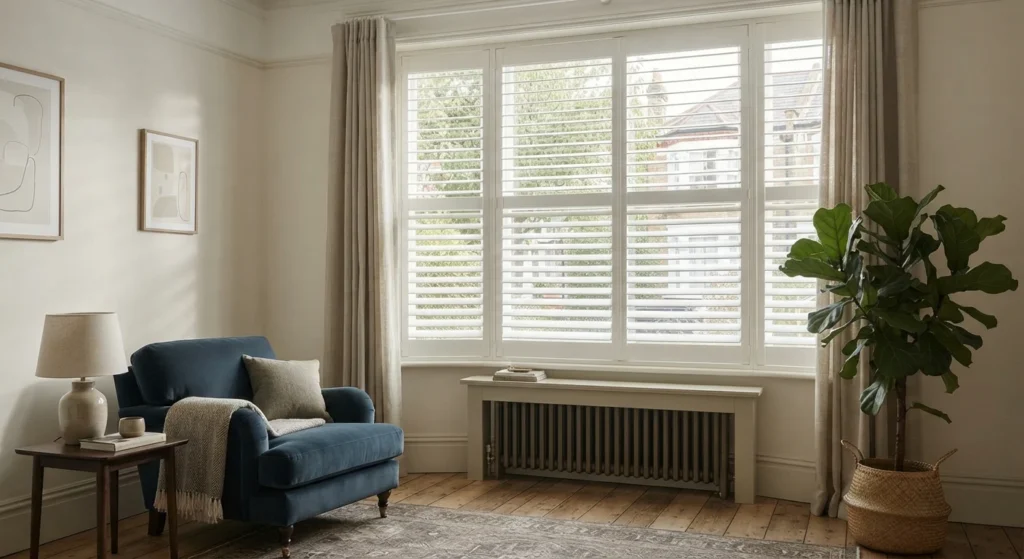
The position of a mid rail can make a noticeable difference to how a shutter looks. Consider the other horizontal lines around it.
On a sash window, for example, aligning the mid rail with the meeting rail can make the shutter feel naturally connected to the window itself. On a set of windows at different heights, matching the rails across the shutters can help create a more consistent appearance.
The same principle applies to doors and sidelights. If shutters are being fitted across a French door and its surrounding windows, carefully positioned mid rails can follow the lines of the adjoining glazing and help the whole installation look like one coordinated design.
Mid rails can also provide additional strength and rigidity, which can be particularly useful on larger shutter panels or across wide windows such as bay windows. In these situations, the rail isn’t just a design detail, it can also form an important part of the panel’s construction.
A small detail that can make a big difference
Mid rails are easy to overlook when choosing shutters, but they can affect both how the shutters operate and how they look. They give you the option of adjusting upper and lower louvres independently, while their position can also be used to match existing architectural lines or create a particular visual balance.
There isn’t necessarily a single ‘correct’ position. The best choice depends on the window, the shutter configuration and the look you want to achieve. When properly considered, a mid rail can be much more than a dividing line, it can become an important part of the overall shutter design.