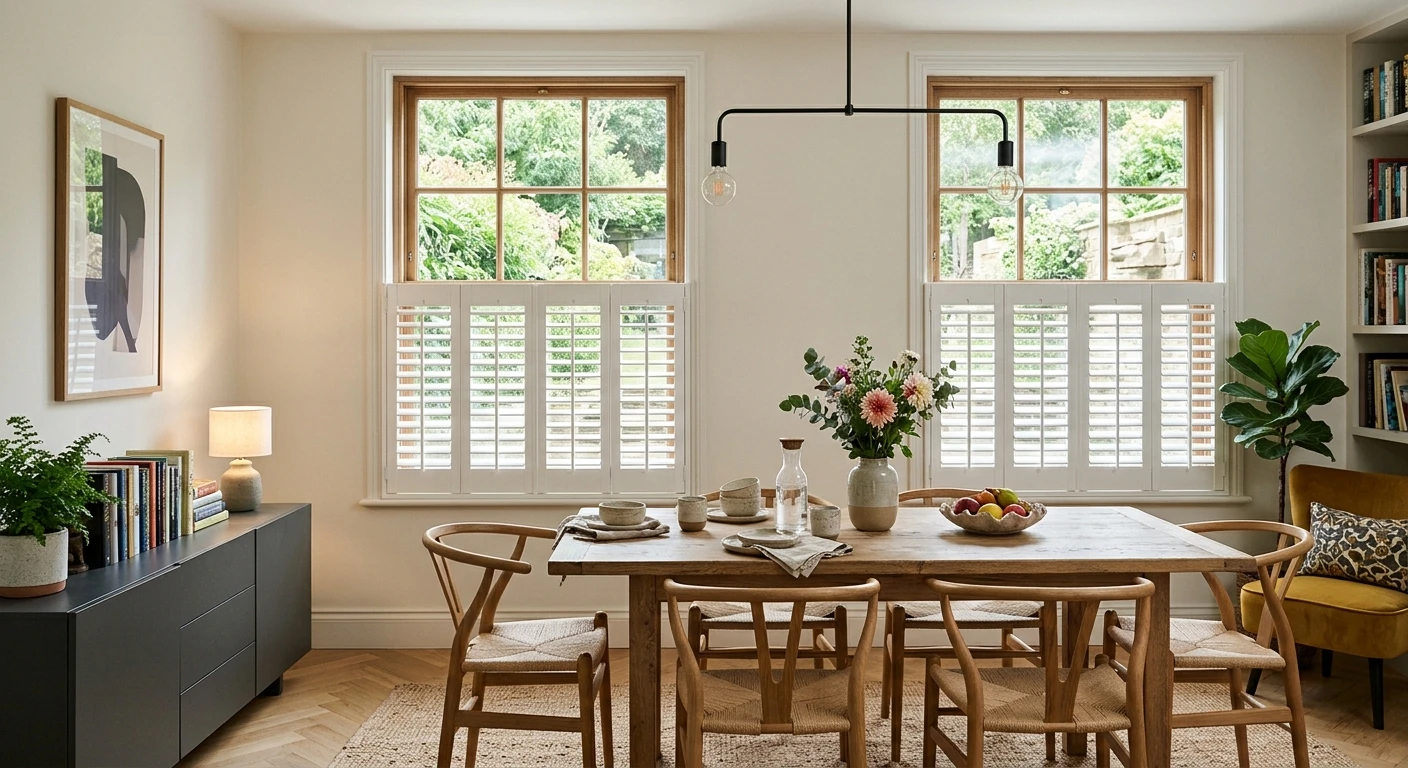
Café style shutters are one of the simplest shutter designs, but they can have a surprisingly big impact on a room. Rather than covering the whole window, they cover only the lower section, leaving the upper part completely open.
The result is a useful combination of privacy and natural light. You can screen the part of the window where people outside are most likely to look in, while leaving the upper glass unobstructed.
But where did this unusual style come from, and why are café shutters still so popular today?
What are café style shutters?
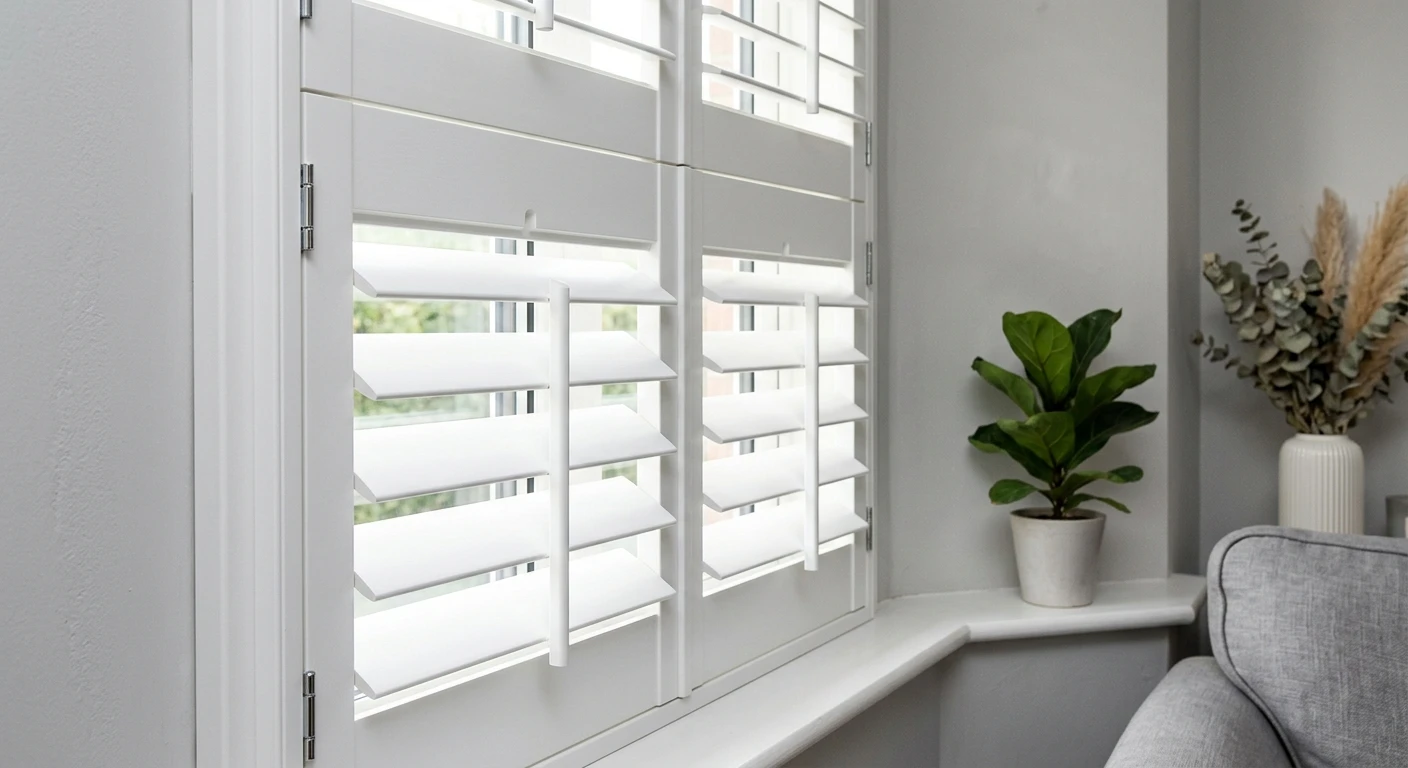
Café style shutters, sometimes called half height or half window shutters, cover the lower portion of a window rather than the entire opening.
They are usually fitted from the bottom of the window up to around halfway, although there is no rule that says they have to stop exactly in the middle. The height can often be chosen to suit the window lines, the level of privacy required and the proportions of the room.
The upper part of the window remains uncovered, allowing daylight to enter freely and leaving any view above the shutters open.
Like other louvred shutters, the panels can be adjusted to control the amount of light and privacy below. The difference is simply that you’re not covering the whole window.
Why are they called café style shutters?
The name comes from their association with European cafés, particularly in France and Paris.
The basic idea was simple. A café or restaurant on a busy street could use lower shutters to give customers some privacy from people passing outside, while leaving the upper part of the windows open to daylight and the street beyond.
It was a practical compromise. Customers could enjoy the atmosphere and light from outside without sitting completely exposed to everyone walking past.
That combination of privacy and openness is still the main appeal of café style shutters today.
The style has also acquired a distinctly European character. Even in a modern home, café shutters can give a window a subtle continental feel without making the rest of the room look traditionally styled.
Why choose café style shutters?
The biggest reason is lighting while still retaining lower level privacy.
If your main concern is people looking through the lower part of a window, there may be little reason to cover the entire opening. Café shutters can screen the area at eye level while leaving the upper glass clear.
This can be particularly useful for windows facing a pavement, road or neighbouring property.
They can also make a room feel lighter than one fitted with full height shutters. With the upper section left completely open, daylight can reach the room without having to pass through louvres.
There is also a visual advantage. Café shutters use less material and leave more of the window itself on display, which can be particularly attractive where you have tall windows, attractive glazing or interesting architectural details.
Of course, there is also the look. They have a distinctive character that can work equally well in traditional and contemporary interiors.
Where can café style shutters be used?
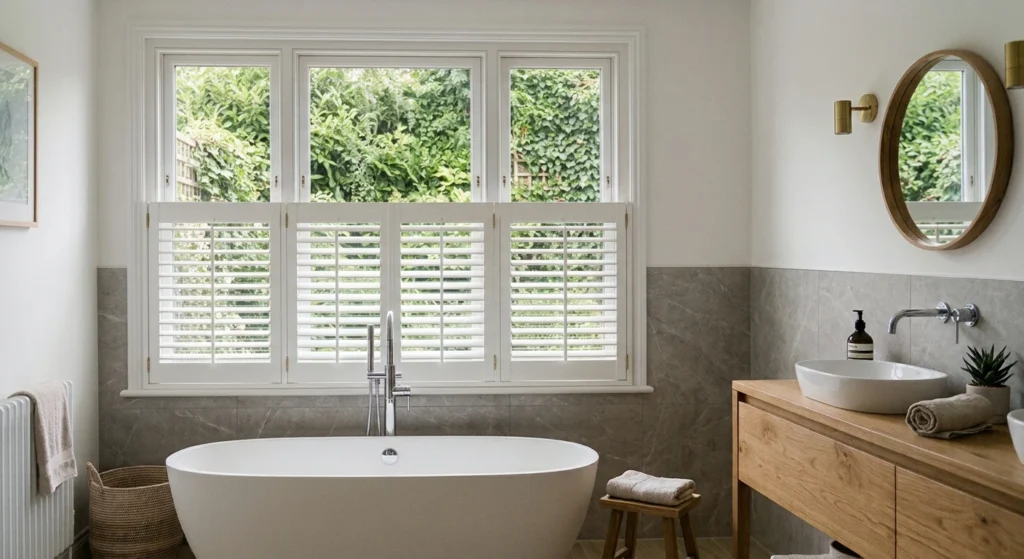
Café shutters are particularly well suited to ground floor windows where privacy is important but you don’t want to sacrifice daylight.
Living rooms
A front living room overlooking a pavement is an obvious example. The lower shutters can prevent passers by from looking directly into the room, while the uncovered glass above keeps the room feeling open.
They can work particularly well in period properties, where the half height arrangement can look quite natural alongside traditional window proportions.
Kitchens
Café shutters can be a good choice for kitchen windows, especially those facing a road or neighbouring property.
They provide privacy without making the window feel enclosed, while leaving the upper part of the window open can help bring in valuable natural light. This can be particularly useful in a kitchen, where you’re often washing up, preparing food or carrying out other tasks that benefit from good visibility.
The simple shutter panels can also sit neatly above worktops and sinks, making café shutters a practical option where space around the window is limited.
Bathrooms
Privacy is often the priority in a bathroom, but café shutters can work particularly well where the upper part of the window is already less exposed or has frosted glass.
Where the whole window needs to be private, however, a full height shutter may be more appropriate.
Dining rooms
Café style shutters can be particularly effective in dining rooms, perhaps more so than their practical benefits alone would suggest. Their association with cafés and restaurants gives them a natural connection with dining, which can help create a relaxed, inviting atmosphere.
The lower shutters provide privacy while leaving the upper part of the window open to natural light and the view outside. During the day, this can help keep the room feeling bright and open, while in the evening the shutters can create a more intimate feel when you’re sitting down for dinner.
They can work just as well for a family meal as they can when you’re hosting friends for a dinner party. Combined with the right lighting, furniture and curtains, café shutters can help give a dining room a characterful, welcoming feel without making the window covering the main feature of the room.
Café shutters and bay windows
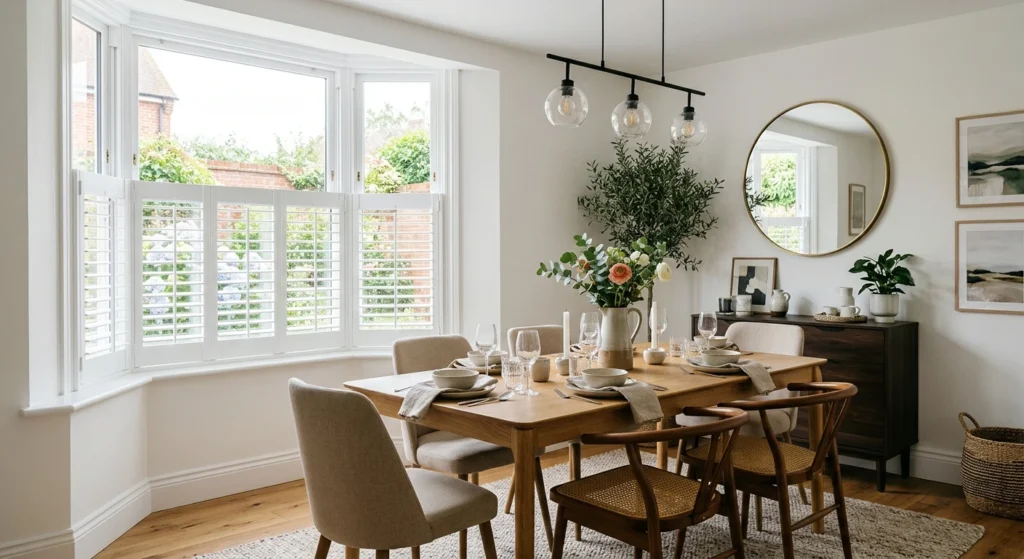
Café style shutters can work particularly well on bay windows.
Rather than covering the entire bay from top to bottom, the shutters can follow the lower portion of each window, creating a continuous visual line around the bay. This can give the bay a neat, balanced appearance while still allowing plenty of natural light through the upper glazing.
They can be particularly effective in period properties, where bay windows are often a prominent feature of the room. The café style can also work beautifully with curtains, with the shutters providing privacy at the lower part of the windows while curtains add softness, colour and texture around the whole bay.
The height is worth considering carefully. A café shutter doesn’t necessarily have to stop at exactly half the window. Aligning the top of the shutters with a natural feature, such as the meeting rail of a sash window, can sometimes create a more balanced appearance.
Traditional or modern? Café shutters can be both
Café style shutters have a traditional history, but there is nothing particularly old fashioned about the design.
The overall appearance can change considerably depending on the material, colour, louvre size and hardware.
Natural timber with a visible grain and a traditional central tilt rod can create a more classic look. Painted shutters with wider louvres and a discreet or hidden tilt mechanism can feel much more contemporary.
With or without a tilt rod?
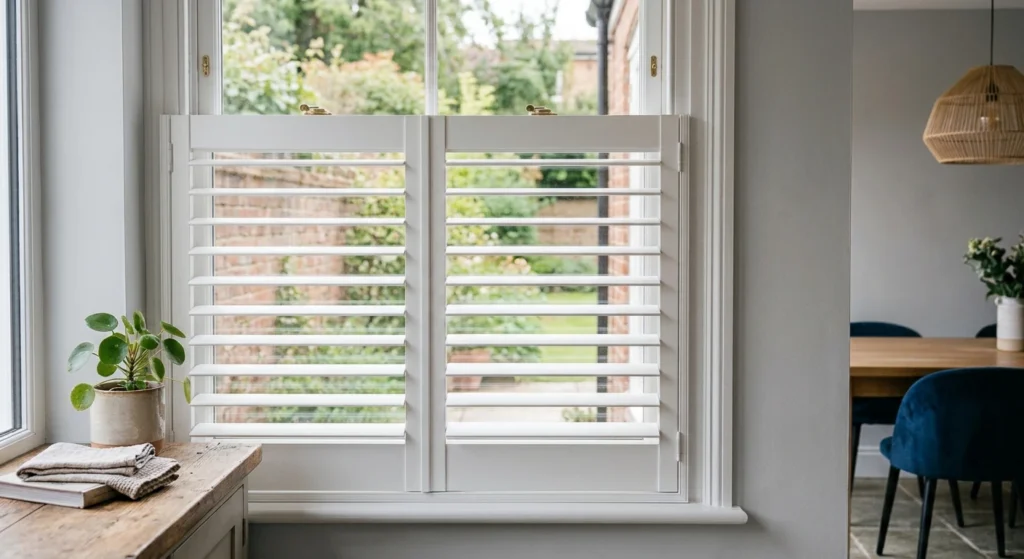
The traditional appearance is often associated with a visible central tilt rod running down the front of the shutters. Moving the rod adjusts the louvres, and it gives the panels a recognisable shutter appearance.
Modern shutters can also be supplied without a visible tilt rod. A hidden mechanism allows the louvres to be adjusted by moving one of the slats, giving the shutters a cleaner and less traditional appearance.
Neither option is necessarily better. It largely comes down to the look you prefer and the particular shutter system being used.
This is one of the reasons café shutters can work across such a wide range of interiors. The basic half height design stays the same, while the details can make it look traditional, contemporary or somewhere in between.
Can you combine café shutters with curtains?
Absolutely, and the two can work particularly well together.
Café shutters provide everyday privacy at the lower part of the window, while curtains can be drawn across the entire window when you want greater privacy, darkness or a softer appearance.
This can be particularly useful in living rooms and bedrooms, where you may want the flexibility of keeping the shutters closed during the day but opening or closing curtains depending on the time of day.
The combination also helps overcome one of the main limitations of café shutters, the upper part of the window remains uncovered.
If you need complete privacy or darkness at night, curtains can provide the additional coverage that the café shutters don’t.
Are café style shutters right for every window?
Not necessarily.
Their main strength is also their main limitation. They only cover part of the window.
If you need complete privacy, maximum light control or greater blackout, full height or tier-on-tier shutters may be more suitable.
Café shutters also leave the upper part of the window exposed, so they’re not ideal if you want to completely hide the window or create a more enclosed feel.
But where privacy is mainly needed at eye level, they can be a very effective solution.
A simple idea that still works
There’s something appealing about the simplicity of café style shutters. They solve a straightforward problem without covering more of the window than necessary.
The idea may have its roots in European cafés, but the reason it continues to work in homes is just as relevant today. Privacy where you need it, daylight where you want it.
And with the choice of materials, colours, louvre sizes and traditional or modern operating styles available today, café shutters can be adapted to suit everything from a period bay window to a clean, contemporary kitchen.