
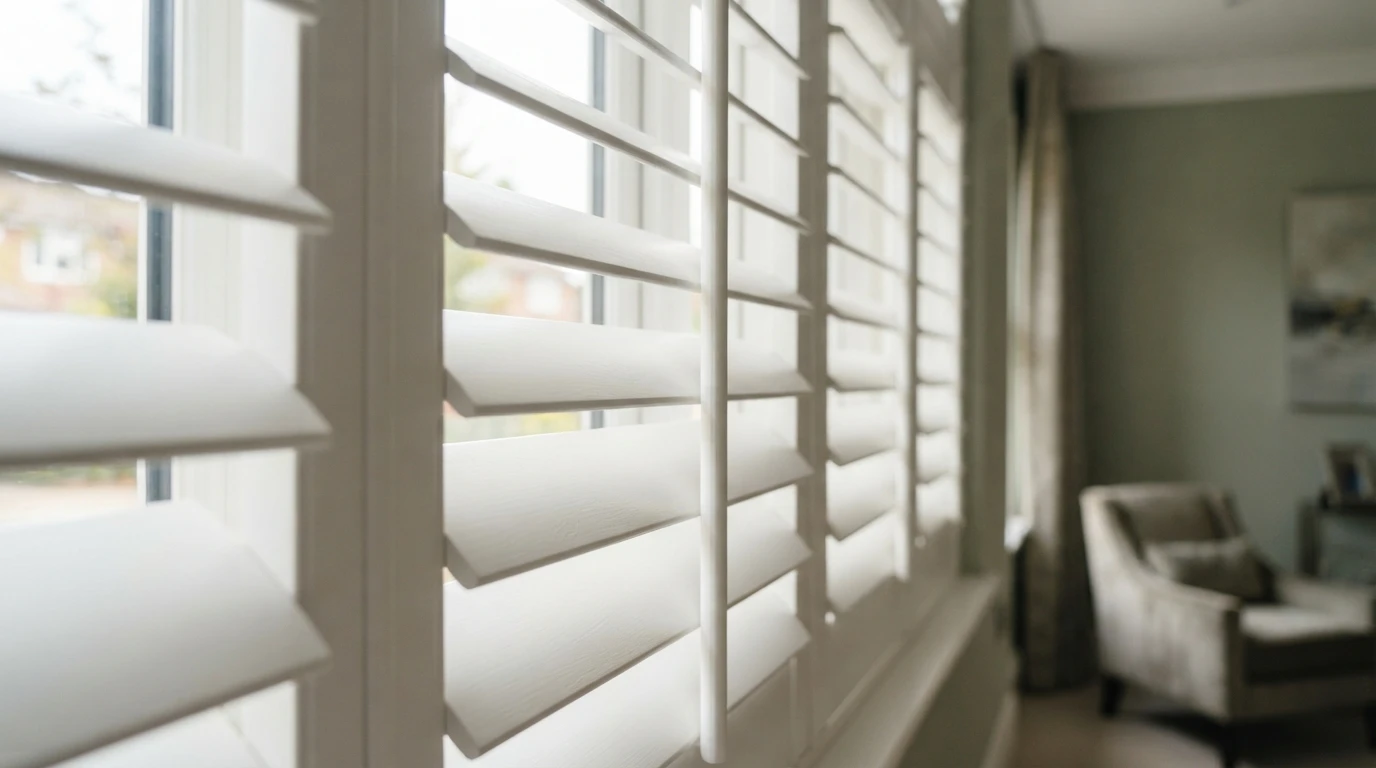
Choosing a louvre size is partly about appearance, but it is also about how you want your shutters to work in everyday life. You might prefer a more open view through the windows in your living room, while in a bedroom or bathroom; privacy could be a bigger consideration.
There is no single size that suits every window. The room, the position of the window and your personal preferences can all help you decide which louvres are right for your home.
What louvre sizes are available?
Shutter louvres come in a range of sizes, commonly 47mm, 63mm, 76mm, 89mm and 114mm. The options available will depend on the supplier and the particular shutter range.
The difference becomes more noticeable when you see the shutters fitted. Smaller louvres create more horizontal lines across the window, while larger ones give a more open appearance. Neither is inherently better, so it helps to consider the effect you prefer rather than choosing on size alone.
How louvre size affects the view and privacy
Larger louvres generally provide a less obstructed view when tilted open because there are fewer slats across the window. This can appeal if you enjoy looking out into the garden or want the shutters to feel less visually busy.
Smaller louvres create more divisions across the window and may suit you if you prefer a more detailed appearance. However, privacy depends on more than louvre size. The angle of the slats, the height of the window and the position of people outside all affect how easily someone can see into the room.
Which louvre sizes might work well?
There is no fixed rule for choosing louvre sizes, and the same size can work well in different rooms. However, some sizes may be worth considering depending on the window, how much natural light you want, the level of privacy you need, the view outside and the overall look you prefer.
The table below offers a few ideas to help you compare the options. There is no right or wrong choice, as much depends on your windows, how you use each room and the look you prefer. The suggested sizes are simply a starting point, and availability will vary between shutter ranges.
| Room or situation | Sizes worth considering | Why you might choose them |
|---|---|---|
| Living room with a garden view | 76–114 mm | Larger louvres can create a more open appearance and a less obstructed view when tilted. |
| Bedroom | 63–89 mm | A versatile starting point if you want to balance appearance, daylight and privacy. |
| Bathroom | 47–76 mm | Smaller louvres may appeal if you prefer a more detailed look, particularly on a smaller window. |
| Street facing or ground floor window | 47–76 mm | Worth considering if you prefer more divisions across the window, although privacy depends on the window and louvre angle too. |
| Large windows and patio doors | 89–114 mm | Wider louvres can feel more in proportion to a large opening and create a less busy appearance. |
| Smaller windows | 47–76 mm | Smaller sizes may suit the proportions, although larger louvres can work too depending on the look you want. |
Choosing louvre sizes for different rooms
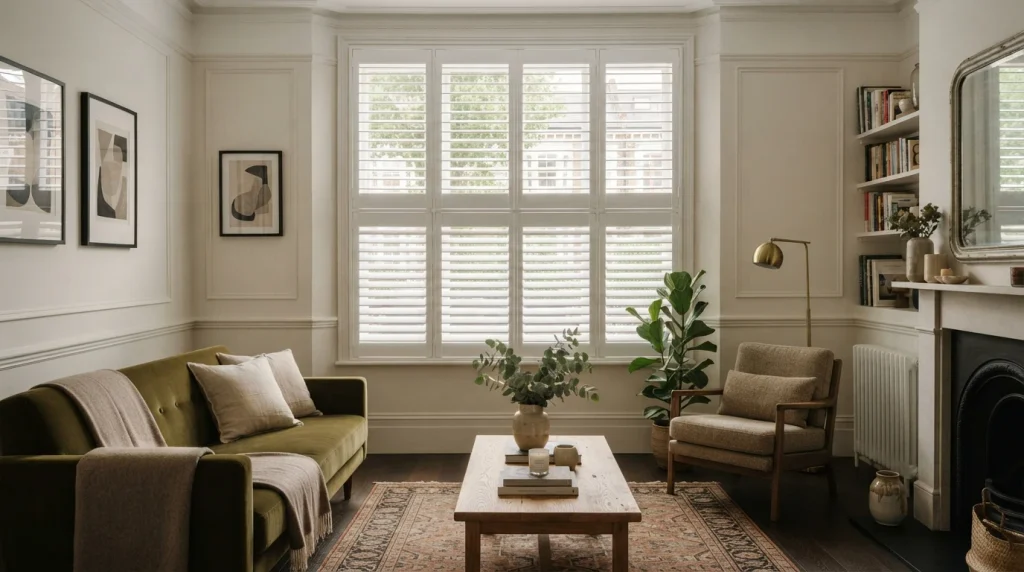
Living rooms and spaces with a view
In a living room overlooking a garden or attractive view, larger louvres may be appealing because they create a more open appearance when tilted. They can also feel in proportion to larger windows.
For a room facing a road or neighbouring property, you might prefer the look of smaller louvres, which create more divisions across the window. However, privacy depends on the angle of the louvres, the position of the window and how easily people can see inside, rather than size alone.
Bedrooms and bathrooms
In bedrooms, you may want a comfortable, private space where you can control daylight without feeling overlooked. Larger louvres can give the window a more open look during the day, while smaller ones offer a more detailed appearance. The right choice will depend on the window, your surroundings and the look you prefer.
Bathrooms often place greater emphasis on privacy, particularly when windows face neighbouring homes or public areas. Either size can work, but consider the height and position of the window, along with how the louvres can be angled to limit views inside. Material suitability is another consideration in rooms exposed to moisture.
Street facing and ground floor windows
Windows at street level can be more difficult to screen, especially when passers-by can see directly into your home. You may want to retain natural light while reducing direct views into the room.
Smaller louvres may appeal if you prefer a more detailed appearance, while larger ones can provide a more open view when tilted. However, privacy depends on the angle of the louvres, the height and position of the window and the direction from which people can see inside. It is worth considering these factors alongside the size you prefer.
Large windows and patio doors
On larger windows and glazed doors, wider louvres may feel more in proportion to the opening. Their broader appearance can also make the shutters feel less visually busy.
Smaller louvres can still work well if you prefer their appearance or want to maintain a consistent style across different windows in your home.
Should you use the same louvre size throughout your home?
Not necessarily. You might prefer larger louvres in a living room to make the most of a view, but choose a different size for a smaller bedroom window or a street facing room.
Using the same size across several windows can create a consistent look, particularly when they are visible together. In other rooms, choosing according to the individual window and how you use the space may matter more than keeping every shutter identical.
So, which louvre size should you choose?
Start by thinking about how you want each room to look and feel. Consider whether you value an open view, a more detailed appearance, privacy or consistency across your windows. Then take the size and position of each window into account.
If possible, look at samples or finished shutters in person. Seeing the proportions for yourself can make it easier to decide which size feels right for your home.