Plantation shutters can be very effective at controlling natural light, but they don’t necessarily create a completely dark room. How much light gets through depends on the shutter style, louvre size, panel configuration and the way the shutters are fitted.
Even when the panels are fully closed, small amounts of light can find their way through the gaps between louvres, around the edges of the panels and through areas where the shutter frame meets the window opening. If you need a room to be as dark as possible, it’s worth understanding where that light can enter before choosing your shutters.
How different shutter styles block light
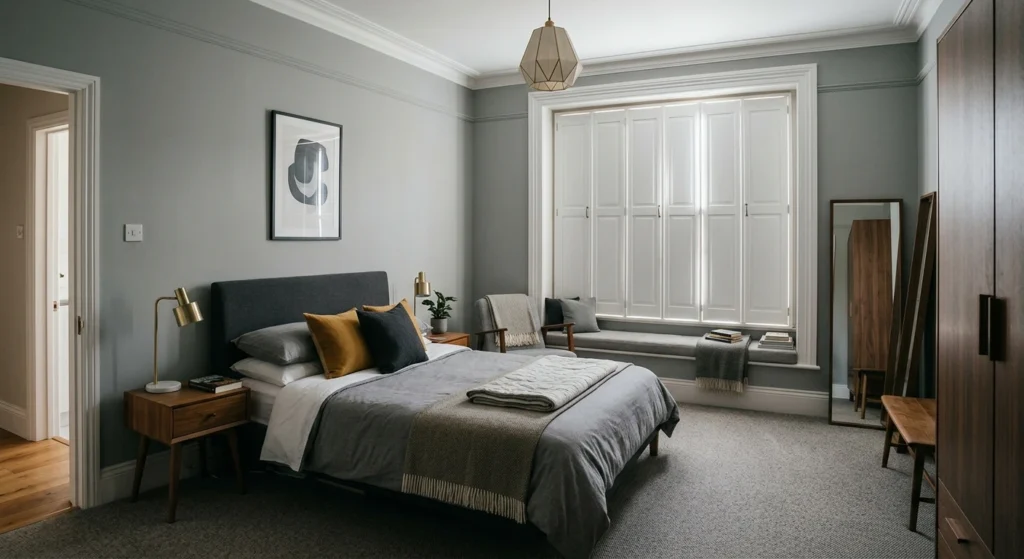
The overall shutter style makes a noticeable difference to the way you can control light. Full height, tier-on-tier, café style and solid panel shutters all behave differently.
Full height shutters
Full height shutters cover the entire window in one set of panels, making them a straightforward option when you want to control light across the whole opening.
With the louvres closed, most of the window is covered, although some light can still pass through the gaps between the slats and around the edges of the panels and frame.
One advantage of full height shutters is the simplicity of the design. There is no horizontal division between separate panels, so there is less opportunity for light to enter through a central panel gap.
Full height shutters can also incorporate a mid rail, allowing the upper and lower louvres to be adjusted independently. This gives you useful control over privacy and daylight, but when maximum darkness is the priority, the louvres can simply be closed across the whole window.
Tier-on-tier shutters
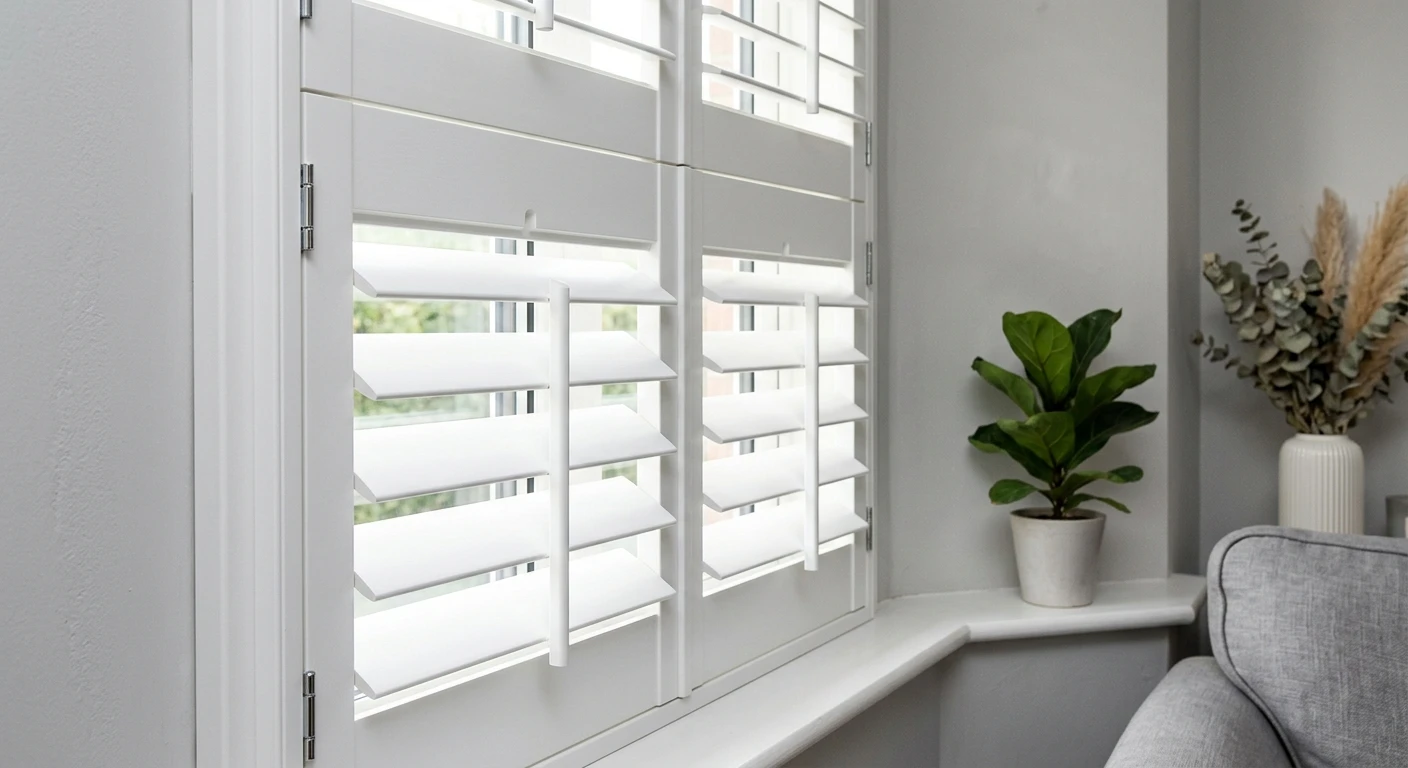
Tier-on-tier shutters have separate upper and lower panels, allowing each section to be opened or closed independently.
This makes them particularly flexible for light control. You could close the lower panels for privacy while leaving the upper panels open for daylight, close both sections when you want more shade, or open either section depending on the time of day.
The trade off is the additional horizontal panel division. When both sections are closed, there is a gap between the upper and lower panels which can allow some light through. This means tier-on-tier shutters may not block quite as much light as a single full height configuration, even when everything is closed.
For everyday light control, that flexibility can be a major advantage. For a bedroom where maximum darkness is the priority, however, the extra panel gap is worth considering.
Café style shutters
Café style shutters cover only part of the window, usually the lower section, leaving the upper glazing uncovered.
They can be a good choice when privacy is more important than blocking daylight. You can close the shutters to screen the lower part of the window while allowing plenty of natural light through the uncovered glass above.
The obvious disadvantage is that they cannot block light from the uncovered section of the window. If your aim is to make the room dark during the day, café style shutters are unlikely to be the best choice on their own.
Solid shutters
Solid panel shutters use solid sections rather than adjustable louvres, so there are no gaps between slats for light to pass through. If blocking out as much light as possible is your main priority, solid panel shutters are your best bet.
They can be particularly effective at reducing direct light through the shutter panels, as well as offering a very different look from conventional louvred shutters. Their simple panel design can work particularly well in traditional and period interiors.
They aren’t completely blackout, though. Some light can still enter around the edges of the panels and through the small gaps needed for the shutters to open and operate.
How much light gets through the louvres?
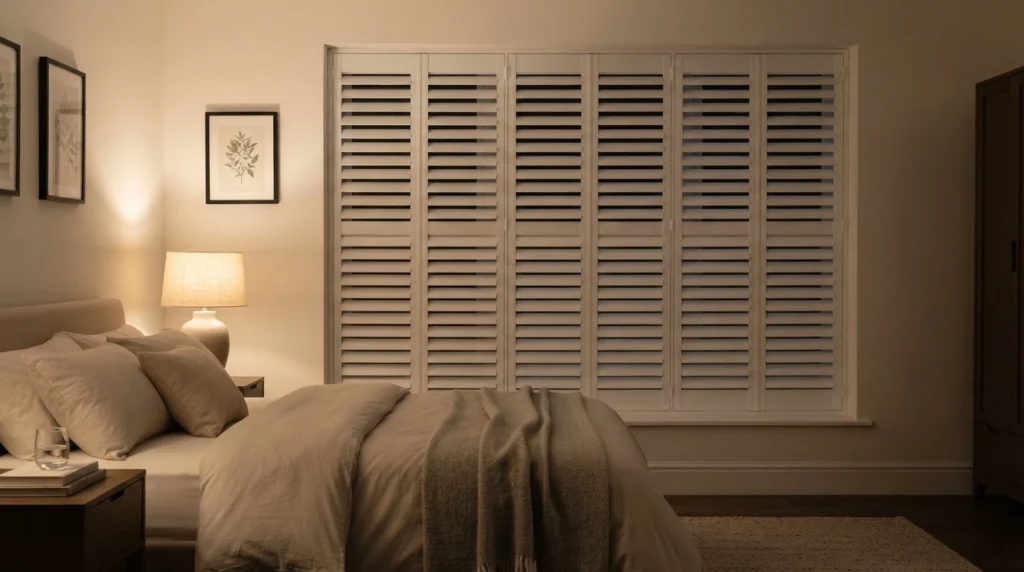
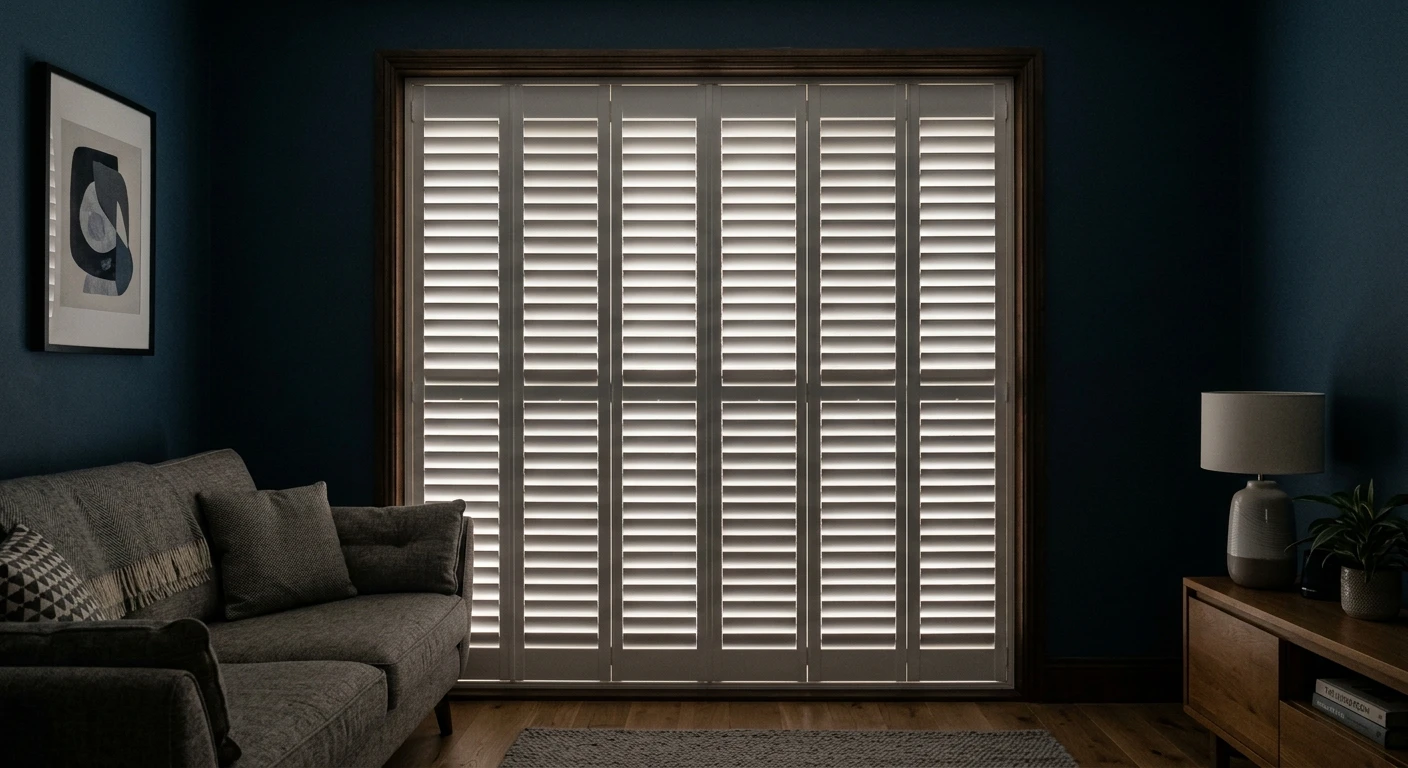
Even when plantation shutter louvres are fully closed, they aren’t a completely solid barrier. The slats overlap, but their shape and movement leave small areas where light can find its way through.
Louvre size can make a difference to the overall effect.
Smaller louvres mean more slats across the window, creating more individual gaps. Wider louvres use fewer slats, which can mean fewer gaps across the same area of glazing.
However, choosing louvre size purely on the basis of light blockage isn’t necessarily the best approach. The size also affects the appearance of the shutters, the amount of outside view you can see when the louvres are open and the overall proportions of the window.
If blocking light is a priority, it’s worth looking closely at the actual shutter design rather than assuming that a particular louvre size will make the room blackout.
Where else can light get through?
The louvres aren’t the only potential source of light leakage.
Even professionally measured and fitted shutters can allow small amounts of light around the edges. There may be narrow gaps between the shutter panels and frame, around the frame itself or where the frame meets the wall or window recess.
The shape and condition of the window opening can also make a difference. Windows aren’t always perfectly square, and unusual shapes or uneven surfaces can create small areas where light is visible when the shutters are closed.
This doesn’t mean the shutters have been badly fitted. A shutter system needs to open and close, so it cannot form a completely sealed barrier around the window.
If you stand in a darkened room during daylight and look closely at the edges of closed shutters, small amounts of light may therefore still be visible.
Can shutters provide blackout?
Shutters can make a room considerably darker, but blackout is a stronger claim.
If you need near total darkness, particularly for sleeping during daylight hours, shutters alone may not provide the level of light exclusion you’re looking for.
This can be especially relevant in bedrooms and children’s rooms. A room that appears reasonably dark during the evening can still receive a surprising amount of daylight in the morning or during the summer months.
For some people, the level of light reduction provided by shutters will be more than enough. For others, particularly light sensitive sleepers, additional window covering may be worthwhile.
Combining shutters with blinds or curtains
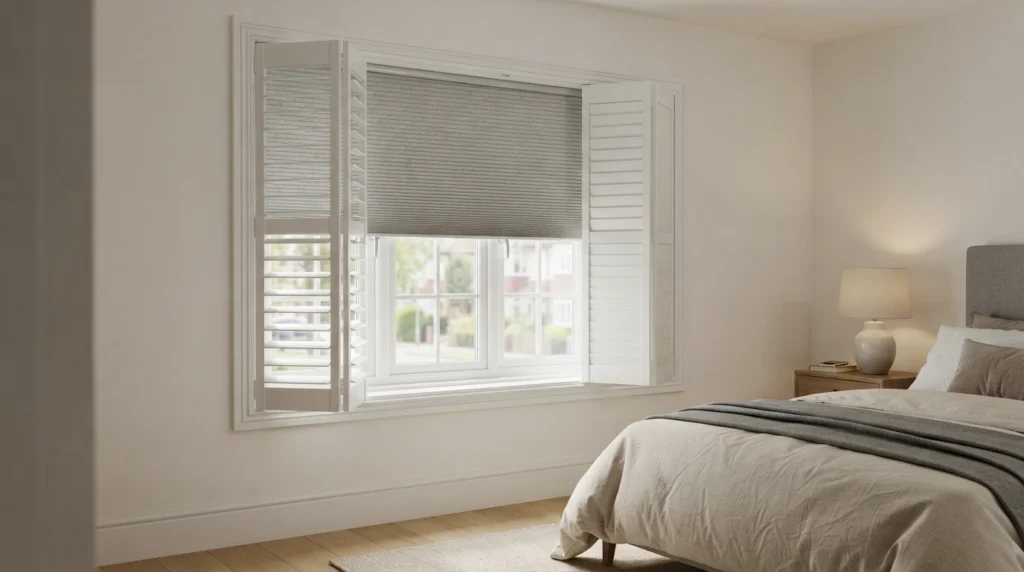
One way to get the benefits of shutters while improving light blockage is to combine them with another window covering.
A blind fitted behind or alongside the shutters can provide an additional layer between the glass and the room. Depending on the type of blind and how it is fitted, this can reduce the amount of daylight reaching the room and help close off some of the areas where light would otherwise be visible.
Curtains can provide another option. Floor length curtains fitted outside the window recess can cover the shutter frame and surrounding areas, helping to reduce light escaping around the edges as well as adding another layer over the glazing.
This combination can also be useful from a design perspective. Shutters provide everyday control over privacy and daylight, while curtains or blinds can be used when you need the room to become much darker.
What works best for bedrooms and children’s rooms?
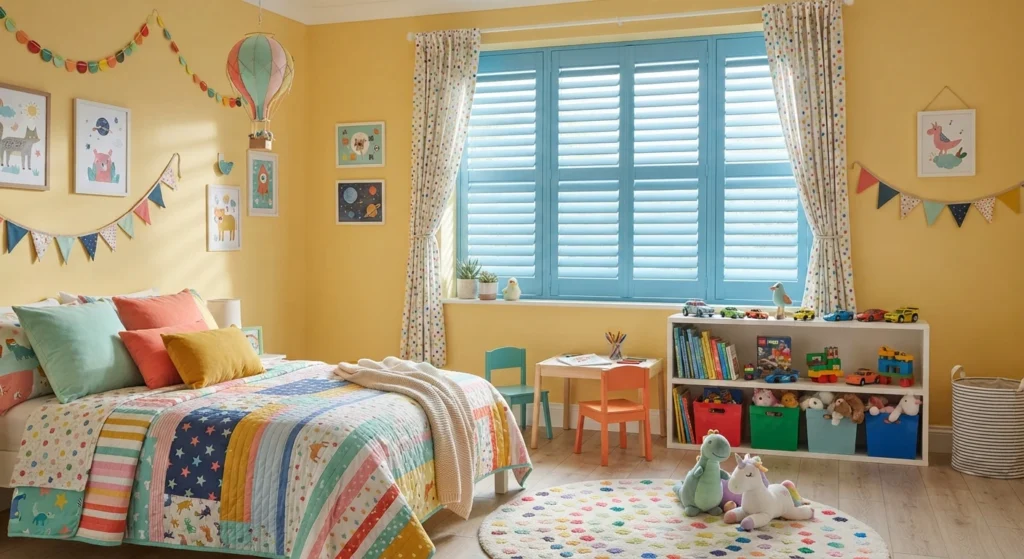
If you’re choosing shutters for a bedroom, think about how much darkness you actually need rather than simply asking whether shutters block light.
For a guest bedroom or a room where some morning daylight is welcome, full height shutters may provide plenty of light control. If you want greater flexibility during the day, tier-on-tier shutters allow you to control the upper and lower parts of the window independently.
For a child’s bedroom, however, the ability to make the room darker during daytime naps may be more important. Full height shutters with closed louvres can reduce a substantial amount of light, but you may want to consider an additional blind or curtains if darkness is a priority.
The same applies to adults who work night shifts or simply prefer a very dark bedroom. Shutters can form part of an effective blackout solution, but they shouldn’t automatically be treated as a complete blackout covering.
So, do plantation shutters block out light?
Plantation shutters can block a significant amount of light, but the result depends on the shutter design and how the installation is configured.
Full height shutters provide broad coverage with no central panel division, making them a straightforward choice for light control.
Tier-on-tier shutters offer greater flexibility, but the division between the upper and lower panels can allow some additional light through.
Café style shutters are useful for privacy and daylight control but leave part of the window uncovered.
Solid panel shutters fully reduce light through the shutter panels because there are no louvre gaps, although light can still enter around the edges.
Louvre size, frame design and the accuracy of the installation also influence the final result. And if you need a genuinely dark room, combining shutters with a suitable blind or curtains may be a better solution than relying on shutters alone.
The best choice therefore depends on whether you’re looking for general daylight control, privacy, a darker bedroom or as close to blackout as possible. Understanding where the light can enter makes it much easier to choose a shutter configuration that suits the way you use the room.