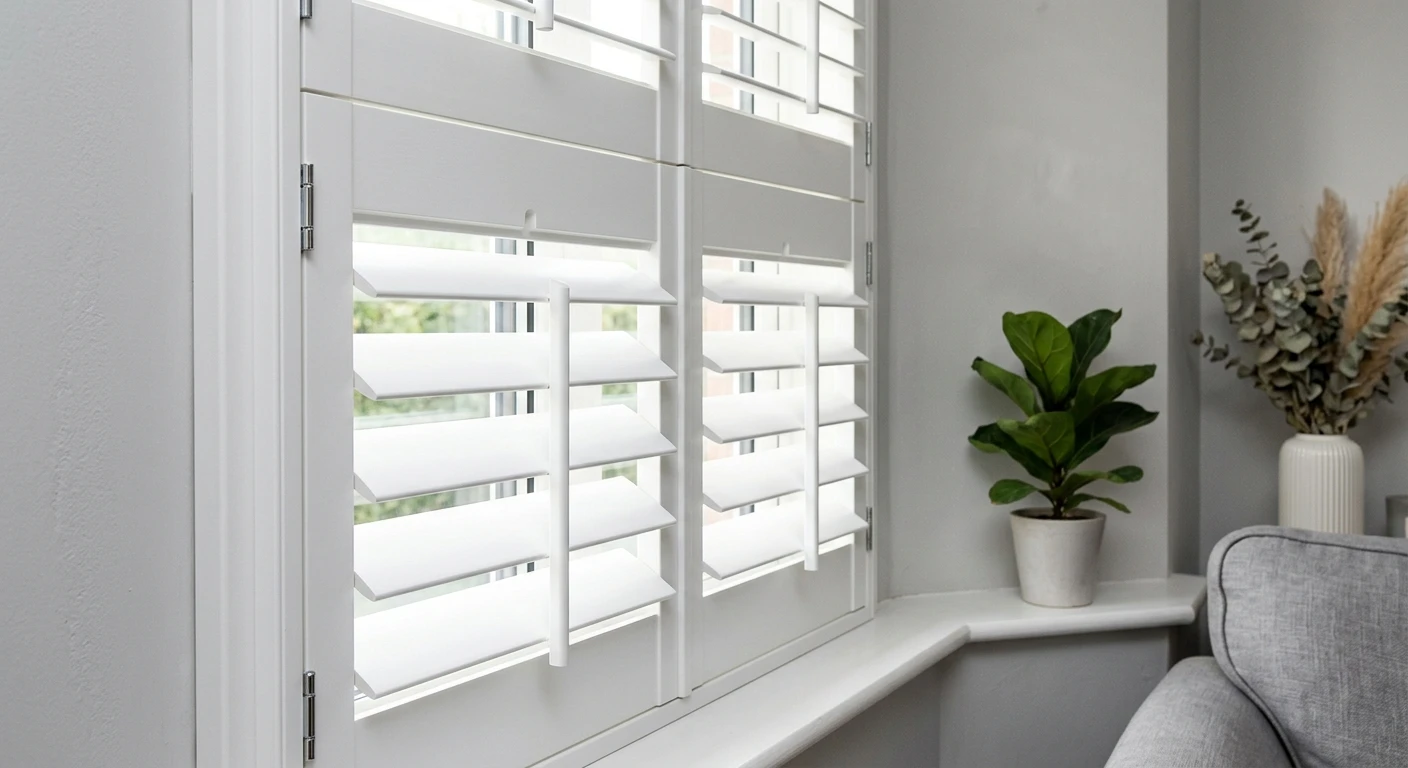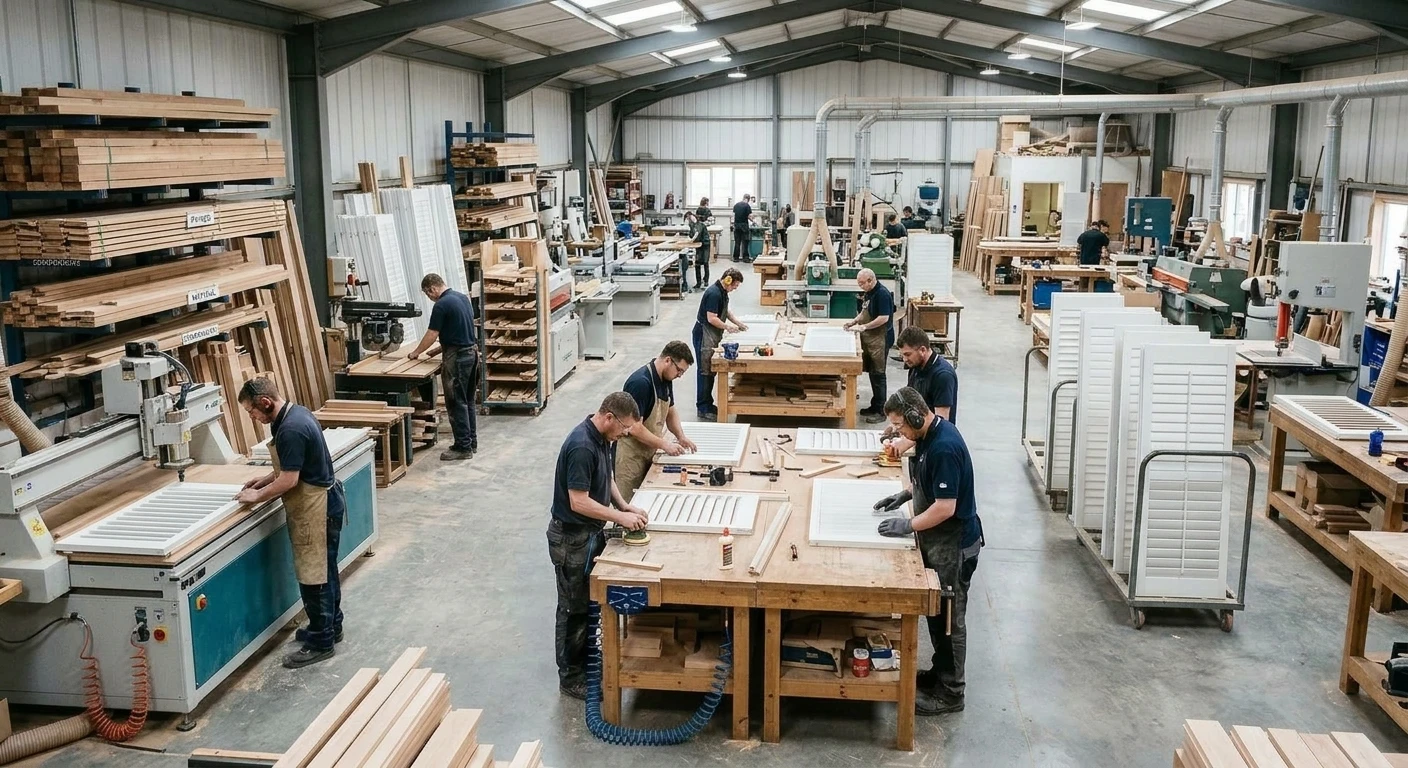
When choosing shutters, it’s natural to focus on the style, colour, material and price. But there’s another factor worth considering: where are your shutters actually made?
Many shutters sold in the UK are manufactured overseas, particularly in China, where specialist factories have been producing shutters for many years. However, UK made options are available too, including genuine hardwood shutters and faux wood designs made from PVC or composite materials.
Buying British made products may appeal to you for several reasons, whether you’re interested in supporting UK manufacturing, reducing delivery times or knowing more about how your shutters are produced. But does buying UK made shutters necessarily mean getting a better product?
The answer isn’t quite that simple. Understanding the differences between UK and overseas manufacturing, as well as the materials used, will help you make a more informed decision.
Are shutters made in the UK?
Yes, although the choice of UK made shutters is not necessarily the same as the range available from overseas manufacturers.
Some shutters are manufactured in Britain using natural hardwood, with basswood being one example. Others are made from faux wood or composite materials, including PVC based products designed to offer a practical alternative to traditional timber shutters.
Northern Ireland is also home to manufacturing facilities producing faux wood shutters for the UK market. As Northern Ireland is part of the United Kingdom, these products are correctly described as UK made when the shutters are manufactured there.
It’s worth distinguishing between a company that is based in the UK and one that actually manufactures its shutters here. A British company may measure and install shutters locally while sourcing the finished products from a factory overseas. Equally, a UK manufacturer may supply shutters through a network of independent retailers and installers.
None of these arrangements is automatically better than another, but they can affect the materials available, the production process and the time it takes to receive your order.
What materials are used for UK made shutters?
The material is an important part of the picture because not all shutters are made in the same way.
Hardwood shutters made in the UK
Genuine hardwood shutters are manufactured in the UK, although many natural timber shutters sold here are imported. Basswood is one example of a hardwood used in British shutter production.
Timber offers a natural grain and character that cannot be replicated exactly by a synthetic material. It can also be painted or stained, depending on the product, to create different finishes.
The timber itself is only part of the equation, however. Its suitability for shutter manufacturing, the quality of the construction, the finishing process and the accuracy of the finished panels all influence the final product.
UK made hardwood shutters can appeal to buyers who specifically want natural timber combined with British manufacturing. The available choice of wood species, colours and specifications may be more limited in some ranges, so it’s worth checking what’s offered before making a decision.
Faux wood and composite shutters made in the UK
UK made faux wood shutters are another option. These are generally manufactured from PVC or composite materials rather than solid timber, although the exact construction varies between products.
They are often designed to provide the appearance of traditional plantation shutters while offering practical benefits in rooms where moisture and condensation are a concern. Depending on the product, they may be suitable for kitchens, bathrooms and other areas where natural timber requires more careful consideration.
The term faux wood can cover different constructions, so it’s important to check the specific material rather than assume all products are identical. Water resistance, durability and suitability for wet environments depend on the product’s design and manufacturer specifications.
UK made composite shutters can also offer relatively short production and delivery times because they don’t need to make the same international journey as products manufactured overseas.
The important distinction is that UK made shutters can include both natural hardwood and synthetic or composite options. Country of manufacture alone doesn’t tell you what the product is made from.
Why are so many shutters manufactured overseas?
China and other parts of Asia have established shutter manufacturing industries, with specialist factories producing made to measure products for customers around the world.
Over many years, some manufacturers have invested in dedicated machinery, production facilities, finishing equipment and processes designed specifically for window shutters. This experience can be valuable when producing large numbers of bespoke panels that need to fit accurately, operate smoothly and maintain a consistent finish.
Manufacturing shutters involves considerably more than cutting materials to size. Panels, frames, hinges, louvres and other components need to be produced and assembled accurately. Finishes must also be applied consistently and the finished products need to meet the required specifications.
Experienced manufacturers can develop considerable expertise in these processes. Established factories may also offer a broad choice of materials, including different timber species, engineered wood and composite products, depending on their product range.
This can give suppliers more flexibility when matching shutters to different budgets, designs and room conditions. However, the range varies between manufacturers and a wider selection doesn’t automatically mean better quality.
It’s also worth remembering that imported shutters aren’t necessarily generic or mass produced products of inferior quality. Many are made to measure for individual homes and specialist overseas factories can produce shutters to a high standard.
The important question is not simply where a shutter was made, but who manufactured it, what materials were used and how the finished product is made and checked.
Are UK made shutters better quality?
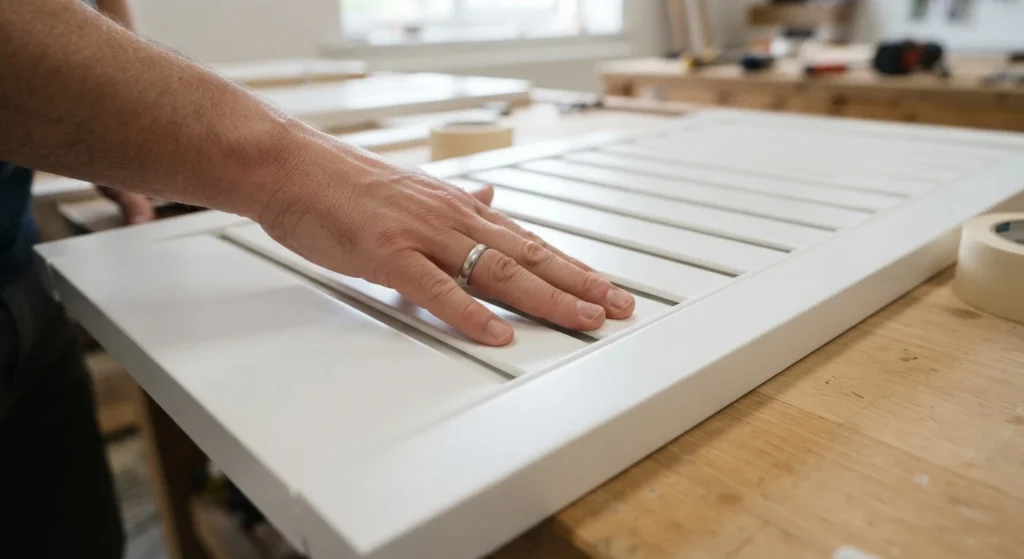
Not necessarily. British manufacturing can offer advantages, but country of origin on its own is not a reliable measure of quality.
A UK based factory may provide close oversight of production, direct communication with the manufacturing team and easier access to local alteration or repair services. Shorter transport distances can also make it simpler to move products from the factory to the installer.
These can be worthwhile benefits, particularly if something needs adjusting or replacing after manufacture.
However, an established overseas manufacturer can offer similarly strong production standards, experienced technicians and well developed quality control processes. Some factories have specialised in shutters for many years and have considerable experience working with different materials and designs.
The quality of the finished product depends on several factors, including:
- Materials: the quality and suitability of the timber or composite used.
- Construction: the accuracy of the panels, joints, frames and moving components.
- Finishing: the consistency and durability of the paint, coating or stain.
- Quality control: how products are checked during manufacture and before dispatch.
- Installation: how accurately the shutters are measured, fitted and adjusted.
A well made imported shutter can be an excellent product, just as a UK made shutter can be. It’s worth comparing the actual specifications and asking about quality checks rather than assuming that one country automatically produces better results.
Are UK made shutters more expensive?
There isn’t a simple rule that UK made shutters cost more than imported ones.
Manufacturing costs can differ between countries, but the price you pay also depends on the material, design, specification, supplier and installation service. A premium hardwood shutter made in Britain may cost more than a basic imported composite product, but that doesn’t tell you whether the difference is due to the country of manufacture, the materials or the overall specification.
Equally, imported shutters aren’t always the cheapest option. Higher grade timber, more complex designs, specialist finishes and additional features can all increase the price.
The fairest way to compare costs is to look at products with similar specifications. Check the material, panel construction, finish, warranty, measuring service and installation arrangements. Make sure you’re comparing like with like rather than simply looking at the headline price.
If supporting British manufacturing is important to you, you may be willing to pay more for a particular UK made product. But it’s worth establishing exactly what you’re getting for the price, rather than assuming that a higher cost automatically means better quality.
Do UK made shutters have shorter lead times?

UK made shutters can offer shorter lead times because they don’t need to be shipped to Britain from an overseas factory. However, the time you’ll wait depends on the type of shutter, the manufacturer and how busy they are when you place your order.
Some UK made faux wood shutters advertise lead times of as little as two weeks, while certain UK made hardwood ranges quote around four to six weeks for manufacture and fitting. These are examples of advertised timescales rather than guarantees and the actual wait will depend on the supplier and your particular order.
Imported shutters may require additional time for international shipping, customs procedures and transport to the supplier or installer. However, overseas manufacturers can have efficient production processes and the overall lead time also depends on production queues, the complexity of your order and the installer’s availability.
It’s therefore worth comparing the expected timescale for the specific shutters you’re considering, rather than assuming UK made products will always arrive sooner. Ask whether the quoted period covers manufacture, delivery, installation or all three.
If you’re working to a deadline, such as decorating a room or completing a renovation, the lead time could be an important factor in your decision.
Repairs, alterations and aftercare
Another potential advantage of having shutters manufactured in the UK is the ability to arrange certain repairs and alterations locally. If a hardwood panel is damaged, needs adjusting or requires remedial work, access to the original manufacturing facility may make it easier to assess the problem and carry out a repair.
With shutters manufactured overseas, resolving some issues may involve obtaining replacement components or panels from the original factory. This can take longer, particularly if the required parts need to be made to measure and shipped internationally. The options available will depend on the supplier and the nature of the problem and many companies selling imported shutters can still arrange repairs or replacement parts.
It’s therefore worth asking about aftercare before you buy. Find out whether the supplier can repair damaged panels, make alterations after installation and source replacement parts if needed. Also check whether the work is carried out locally or requires the shutters to be returned to the manufacturer.
Having UK manufacturing facilities available can be a practical advantage, but the level of support offered by the individual supplier is what really matters. A clear repairs service and access to the right parts can be just as important as where the shutters were originally made.
How can you find out where your shutters are made?
If country of origin matters to you, don’t rely solely on the location of the company selling the shutters. Ask a few straightforward questions before placing an order.
Where are the shutters manufactured? Find out the actual production location, rather than simply where the company is based or where the shutters are dispatched from.
What are they made from? Establish whether the shutters are genuine hardwood, engineered wood, PVC or another composite material. If they’re timber shutters, ask which wood species is used.
What happens during manufacturing? It may be useful to understand whether the panels are made and finished at the stated location or whether components are manufactured elsewhere and assembled locally.
What quality checks are carried out? Ask how the supplier checks the finished product and what happens if a panel arrives damaged or doesn’t meet the agreed specification.
Who handles repairs and aftercare? Find out who is responsible for warranty claims, replacement parts and any adjustments that may be required.
These questions are useful regardless of where the shutters are made. They help you understand the product and service you’re buying, rather than relying on broad claims about British or overseas manufacturing.
Does it matter where your shutters are made?
For some people, buying UK made shutters is an important consideration. Supporting domestic manufacturing, having a shorter supply chain or choosing a product manufactured closer to home can all be valid reasons to prefer a British made option.
For others, the priority may be the choice of materials, the appearance of the finished shutters, the price or the experience of the company supplying and fitting them. An established overseas manufacturer may offer a wider selection of timber species and product specifications, while a UK made range may offer particular benefits in terms of lead times or access to local manufacturing support.
There isn’t one right answer for every home. Nor is there a simple divide between good British shutters and inferior imported alternatives.
The best approach is to look at the complete product: its materials, construction, finish, suitability for your rooms, warranty and installation service. If buying British made shutters is important to you, confirm where they are manufactured and understand what that means for the particular range you’re considering.
Ultimately, the aim is to choose shutters that meet your needs and offer the quality, appearance and value you’re looking for. Knowing where they’re made is a useful part of that decision, but it shouldn’t be the only factor.