
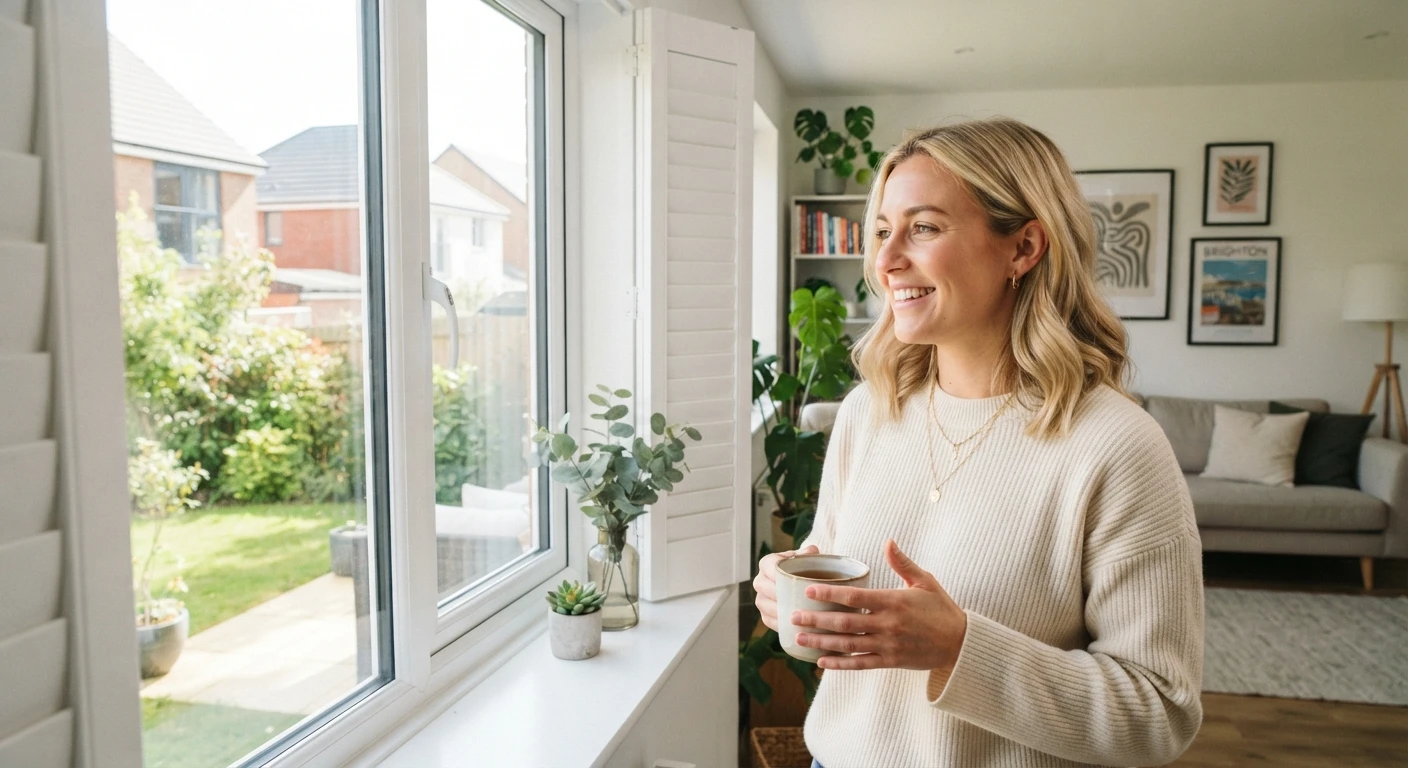
One question people often ask when considering plantation shutters is whether they will still be able to open their windows once the shutters are fitted. It is a reasonable concern, particularly if you have tilt and turn windows, handles that sit close to the frame, or doors that need to open fully.
The reassuring answer is that shutters can work with many different types of windows. The key is choosing a suitable design and making sure the position of the shutter frame, panels and hinges allows you to use the window as intended.
Some shutters fold back against the wall to give you access, while other systems are designed to move with the window itself. Here is how the different options work.
Can you open a window behind traditional shutters?
With a conventional hinged shutter installation, the shutter panels usually need to be opened before you can reach the window. The panels fold back towards the sides of the opening, allowing you to access the handles and open the window.
When the shutters are closed, you can still adjust the louvres to control daylight and privacy. However, you generally cannot reach the window handle through the closed shutter panels unless the design has been adapted to accommodate it.
This arrangement works well for many windows, but the space available around the opening matters. The shutter panels need room to swing and their position must allow the window to open without colliding with the shutters.
How do shutters work with different window types?
Casement windows
Many traditional UK casement windows open outwards, making them relatively straightforward to accommodate with conventional shutters. Once the shutter panels are folded back, the window can open without moving into the room.
The design still needs to account for handles, window stays and other fittings. If a window opens inwards rather than outwards, additional clearance may be needed to prevent it from catching on the shutter frame or panels.
Sash windows
Sash windows slide vertically, so their opening movement is different from that of a hinged casement window. Shutters are commonly fitted around sash windows, with panels that open to provide access to the sliding sashes.
The main considerations are the position of the shutter frame, the available space around the window and access to any catches or locks. The shutter design should allow the sashes to move as intended once the panels are open.
Tilt and turn windows
Tilt and turn windows need more careful consideration because they can tilt inwards at the top for ventilation or swing inwards for access and cleaning.
With conventional shutters, the panels normally need to be folded back before the window can move. The position of the frame and the space available for the opening window are particularly important.
Some no drill shutter systems may be suitable for these windows, allowing the shutter to move with the window. However, compatibility depends on the window frame, glazing beads, handles and the particular system being considered.
Bay and unusually shaped windows
Bay windows can usually be fitted with shutters arranged across the different sections of the bay. Each section may have its own panels, which can fold back to provide access to the windows behind them.
Arched and other shaped windows can also be accommodated with suitable made to measure designs. The important thing is to plan the panel layout around the shape of the opening and how each window operates, rather than treating the whole bay or opening as one standard window.
Which shutter designs give you the most access?
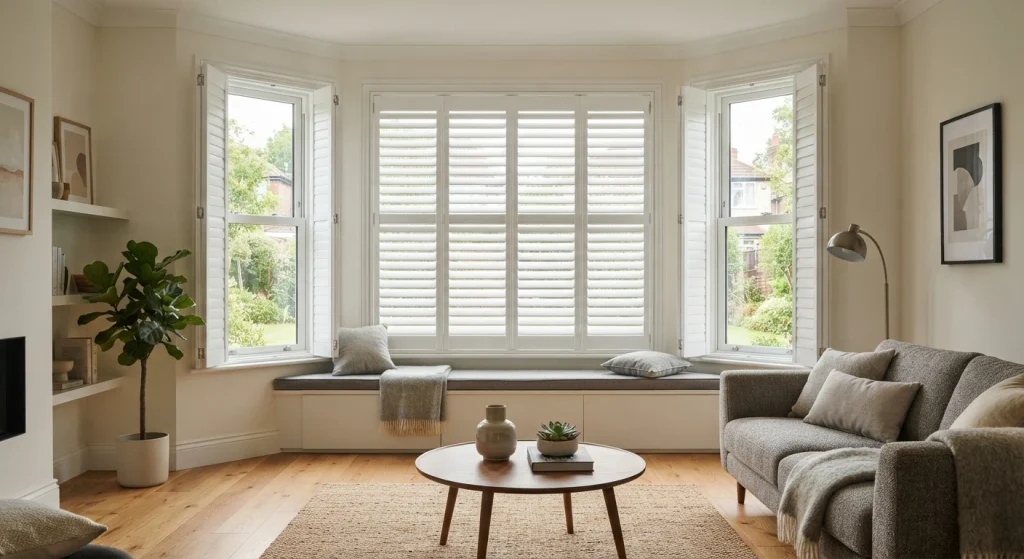
The style of shutter affects how much of the window you can uncover and how the panels move.
Full height shutters cover the window from top to bottom. The panels can usually be opened together to give access to the entire window, although the number and arrangement of panels will depend on the width of the opening.
Tier on tier shutters have separate upper and lower panels. You can open the top section while keeping the lower section closed, or open both when you need fuller access. This can be useful if you want to let in air or reach a window catch without opening every panel.
Tracked and bi-fold shutter systems can be useful for wider openings, including some patio doors. Rather than relying solely on conventional side hinges, the panels move along a track or fold together to one side. The space they occupy when open, and how far they can move, will depend on the system and the available room.
Café style shutters cover only the lower part of the window, leaving the upper section uncovered. They can provide privacy while allowing light into the room, but the lower shutters still need to open if you want to access a handle positioned behind them.
The best configuration depends on whether you want occasional access, frequent ventilation or the ability to open the whole window with minimal obstruction.
What if the window handle gets in the way?
Handles can be an important detail, especially if they project outwards or sit close to the edge of the window frame.
Depending on the window and shutter system, the solution may be to position the shutter frame further forward, allow extra clearance or incorporate a cut out in a suitable part of the shutter panel to accommodate the handle.
Not every handle can be accommodated neatly, and a cut out is not always the most practical answer. Its position, the shape of the handle and the construction of the shutter all need to be considered. It is worth checking this before the shutters are ordered, rather than discovering afterwards that the handle is difficult to reach.
The same principle applies to locks, stays and other fittings that need to remain accessible.
Could no drill shutters make access easier?
No drill shutters are an alternative worth knowing about, particularly if you have modern uPVC windows or glazed doors.
Some systems attach directly to a compatible window frame instead of being conventionally fixed to the surrounding wall or recess. Depending on the design, the shutter can move with the opening window or door, which may make it easier to retain access without having to fold separate panels back first.
This can be particularly useful for suitable tilt and turn windows, where the window needs to move into the room. However, no drill shutters are not compatible with every window. The glazing beads, frame dimensions, handle position and available clearance can all affect whether a particular system will work.
They are also not the same as conventional shutters fitted with screws into the surrounding opening. If you are looking for a way to preserve the movement of a window while avoiding conventional drilling, it is worth investigating the systems available for your specific window type.
What about French doors, patio doors and bi-fold doors?
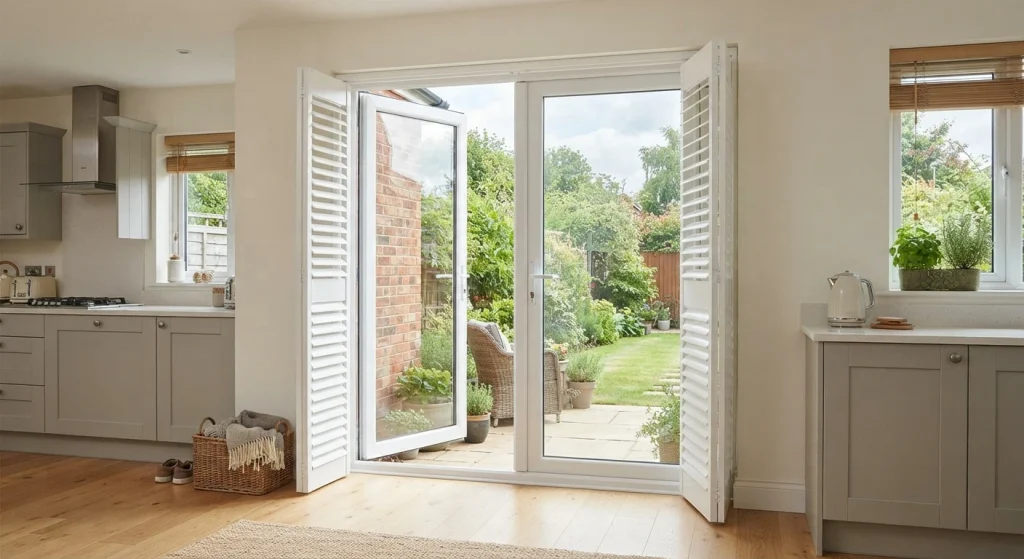
The same considerations apply to glazed doors, but the amount of movement and access required can be greater.
Shutters fitted to French doors need to allow the doors to open without colliding with the panels or handles. For wider patio openings, tracked or bi-fold systems may allow multiple shutter panels to move aside together.
Handle clearance is particularly important on doors, where the handles may be larger or positioned differently from those on windows. Some designs can accommodate handle cut outs, while suitable no drill systems may offer another option for compatible glazed door frames.
If you want to open the doors regularly to access a garden or patio, consider where the shutter panels will sit when fully open and whether they will obstruct the doorway.
What should you check before choosing shutters?
Before deciding on a shutter design, think about how you use each window. Do you open it every day for ventilation? Does it tilt inwards, slide or swing outwards? Do you need regular access to a handle or lock, or do you need to open the window fully for cleaning?
It is also worth checking how much room the shutter panels will need when folded back and whether they could obstruct furniture, curtains or a doorway.
If access is important, make sure the window opening and handle positions are considered during measuring and design. A suitable arrangement should allow you to use the window as intended, not simply cover it neatly.
If you have an unusual window, awkwardly positioned handles or concerns about how the shutters will open, professional installation may give you extra peace of mind. An experienced installer can assess the window, explain the available options and check that the proposed design allows for the movement and access you need. This can be particularly helpful where the right frame position or panel configuration is important.
So, can you open windows with shutters?
Yes, shutters can be designed to work with many different window types, but the right solution depends on how the window opens and the access you need.
Traditional hinged panels work well for many windows, while tier on tier, tracked and bi-fold configurations can offer different ways of moving the panels out of the way. Handle cut outs may help in some situations, and no drill shutters can provide an alternative for certain compatible windows and doors.
The important thing is to consider how you use the window before choosing the shutter design. With the right arrangement, you can enjoy the benefits of shutters without giving up the everyday access your windows need.