Most people assume that their windows are reasonably straight and square, but that’s not always the case. Older properties in particular can have window openings that are slightly uneven, with sloping sides, bowed frames or differences in width and height.
If you’re thinking about installing plantation shutters, you might wonder whether these imperfections will cause a problem. Will the shutters still fit? Will there be noticeable gaps? And does an uneven window mean you’ll need to abandon the idea altogether?
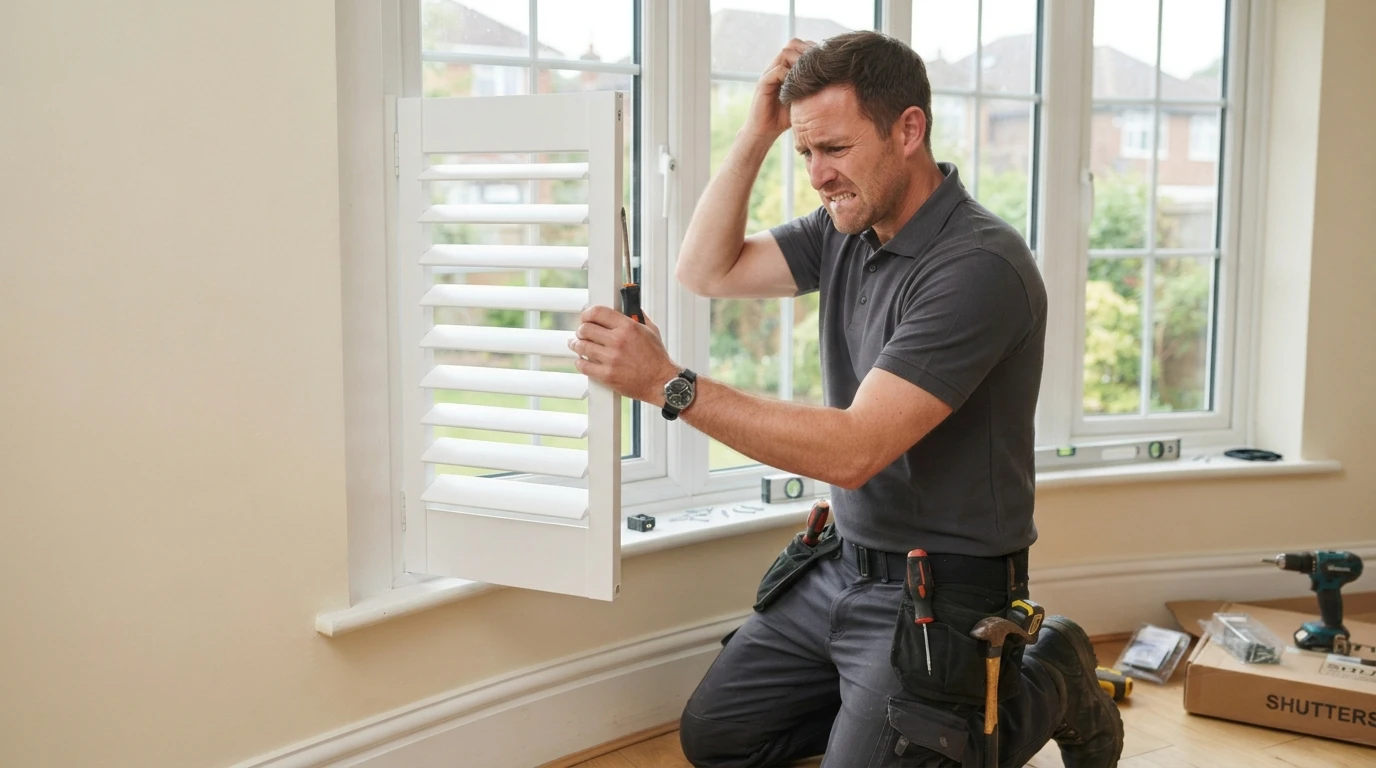
Fortunately, not necessarily. Shutters can be fitted to many windows that aren’t perfectly square, but getting a good result depends on accurate measurements and choosing the right frame and fitting arrangement.
Why aren’t some windows perfectly square?
Few window openings are completely square, and small variations are perfectly normal.
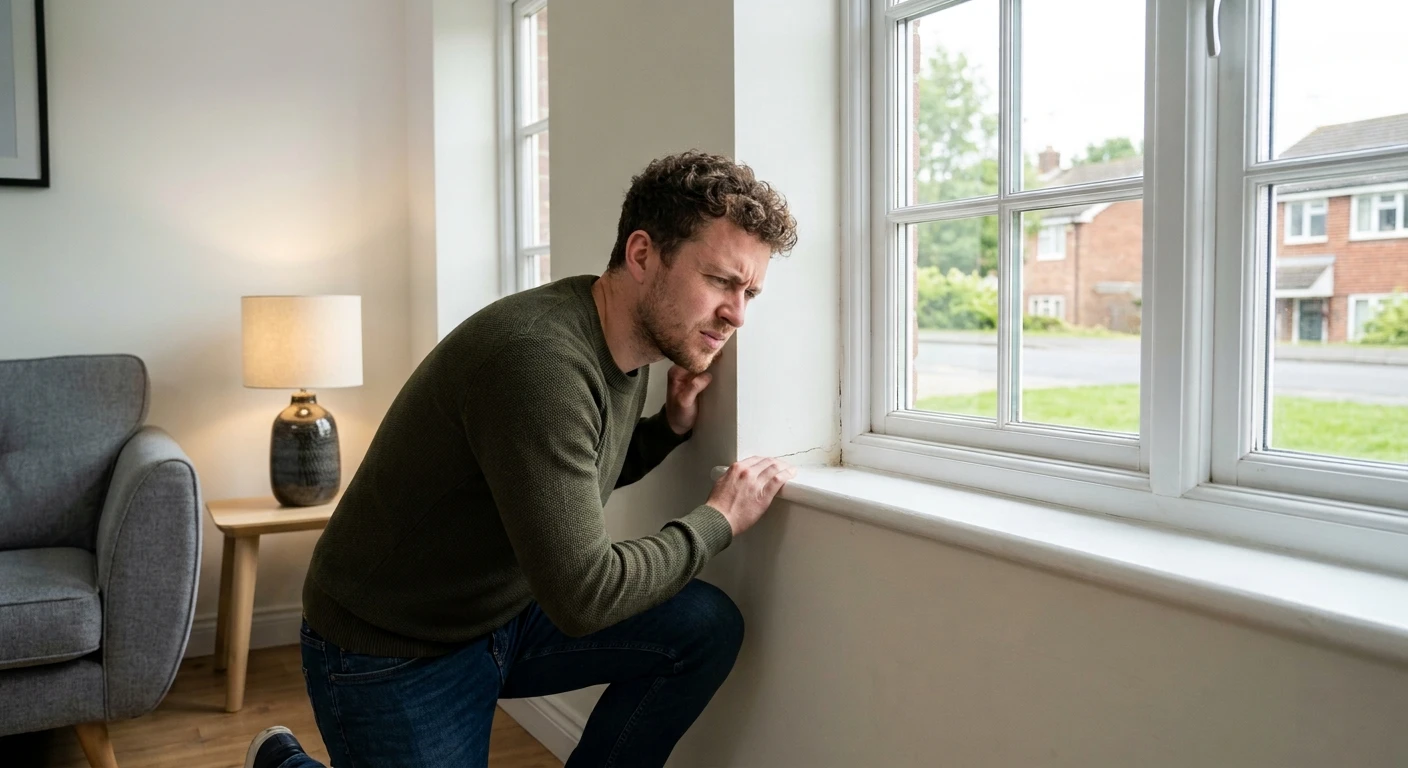
In older homes, years of settlement, movement in the building and changes to the surrounding structure can cause window openings to become slightly uneven. Timber frames can also move over time, while plasterwork and window reveals aren’t always perfectly straight.
Even relatively modern properties can have minor imperfections. A window might be slightly wider at the top than the bottom, one side might lean inwards, or the surrounding recess might bow towards the centre.
These differences might not be particularly noticeable when looking at the window, but they can become more important when you’re trying to fit something made to precise measurements.
Can you still fit shutters to windows that aren’t square?
Yes. An uneven window doesn’t automatically mean that shutters aren’t suitable.
In fact, shutters can be a particularly good solution for windows with minor imperfections because the right frame arrangement can help disguise uneven edges and create a much neater overall appearance.
The important thing is to establish exactly where the irregularities are and how pronounced they are. A slightly sloping window might be relatively straightforward to accommodate, whereas a significantly bowed recess or opening with substantial differences in width could require a different fitting approach.
This is why it’s important not to assume that all uneven windows need the same solution.
How to check whether your windows are out of square
If you’re measuring your own windows, it’s worth checking for unevenness before placing an order.
Rather than measuring the width and height just once, take measurements in several places across the opening.
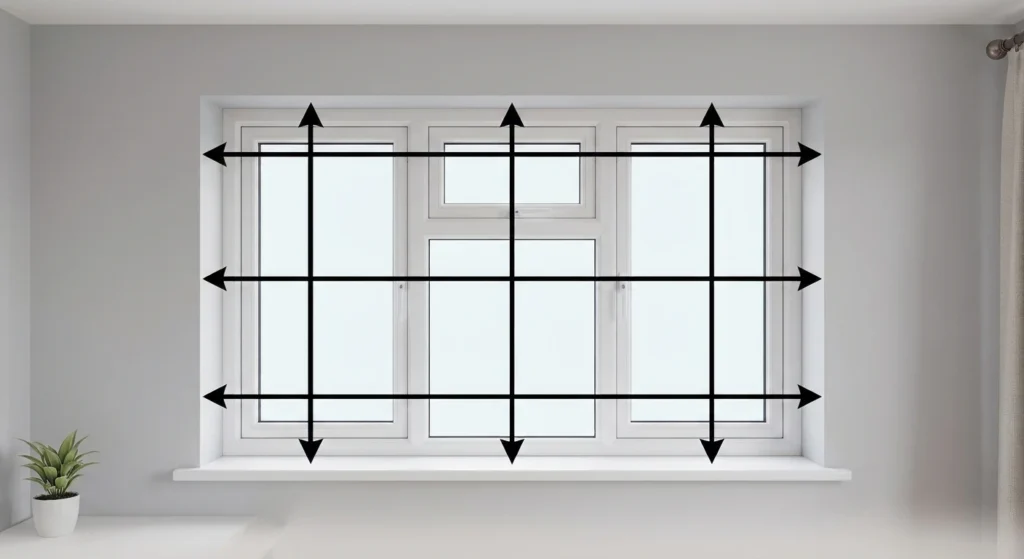
For the width, measure from left to right at three points:
- Across the top of the window.
- Across the middle.
- Across the bottom.
For the height, measure from bottom to top at three points:
- Down the left hand side.
- Through the centre.
- Down the right hand side.
This gives you six measurements in total and helps identify whether the opening changes in width or height.
For example, if the top measurement is noticeably wider than the bottom, the sides may be leaning inwards. If the measurements down the left and right sides differ, the top or bottom of the opening may be sloping.
Another way to check whether a window is square is to measure diagonally between opposite corners. Measure from the top left corner to the bottom right, then from the top right to the bottom left. If the two diagonal measurements differ, the opening isn’t perfectly square.
Diagonal measurements can be a useful additional check, although the width and height measurements taken at several points remain important when specifying made to measure shutters.
If you discover significant differences, don’t simply choose the smallest measurement and assume everything will fit. Record all the dimensions and discuss them with your shutter supplier or installer before proceeding.
Choosing the right frame for an uneven window
The frame you choose can make a considerable difference when fitting shutters to an irregular opening.
There are different frame arrangements available, and some are particularly useful when you need to disguise uneven edges or avoid relying on the window recess itself being perfectly straight.
Z frames
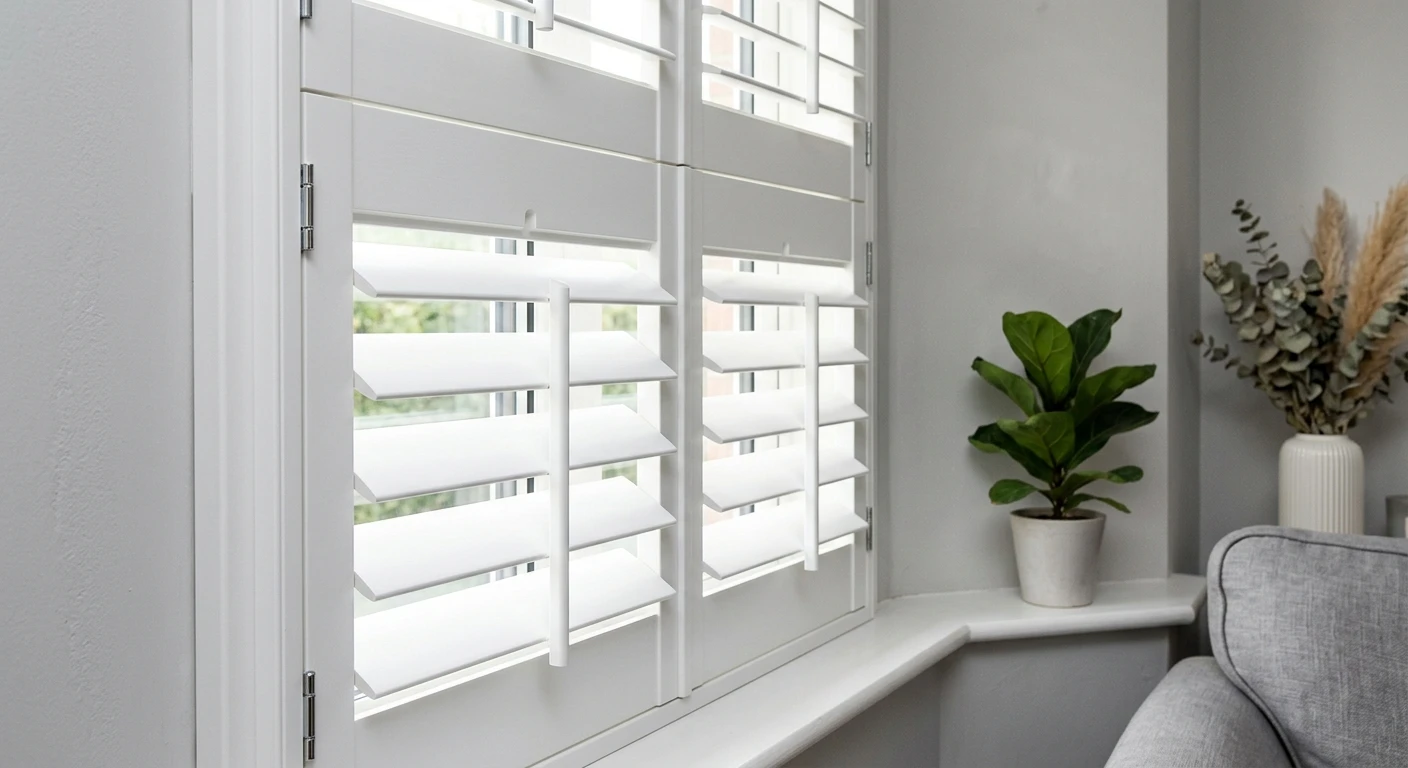
A Z frame is designed to sit within the window recess, with a shaped edge that extends over the surrounding opening.
This overlapping section can help conceal small gaps, uneven edges and minor imperfections around the window. Rather than having the shutter frame follow every slight irregularity in the recess, the frame can create a cleaner, more consistent outline.
This can be particularly useful in older properties where the window opening isn’t perfectly square but there is still sufficient space to fit the shutters inside the recess.
However, a Z frame won’t correct every type of unevenness. The frame still needs to be positioned correctly, and the amount of overlap available will depend on the particular frame design.
L frames
L frames are another common option and can be used for both inside recess and outside recess installations.
An outside mounted L frame sits on the wall or surrounding surface rather than being fitted entirely within the window recess. This can be useful when the recess is particularly uneven, too shallow or otherwise unsuitable for an inside fit.
Because the frame sits outside the opening, it can cover some of the irregular edges and provide a more consistent outline around the shutters.
The final appearance will depend on the surrounding wall and window shape, though. If the opening is noticeably bowed, the unevenness may still be visible around the shutters when the panels are opened.
The best frame choice will depend on the shape of the window, the amount of available space and how you want the finished shutters to look.
What if the window is bowed?
A bowed window or recess presents a slightly different challenge from an opening that is simply wider at the top or bottom.
For example, the sides of the window might curve inwards slightly towards the middle, or the surrounding wall might not be completely flat.
In these situations, the installer needs to consider how the frame can be positioned and secured without following every uneven contour of the opening.
Depending on the extent of the bow, a suitable frame may be able to overlap the irregular edges and disguise much of the problem. In other cases, adjustments to the fitting arrangement may be needed to achieve a neat result.
It’s important not to force a shutter frame to follow a badly distorted opening if doing so would affect its alignment. The panels need to remain properly supported and operate freely, with sufficient clearance around them.
This is one of the reasons why assessing the window before ordering is so important.
Why professional measuring can be particularly useful
Although measuring shutters yourself is perfectly possible, uneven windows are a good example of where professional experience can be valuable.
An experienced shutter installer should be able to recognise when a window isn’t square, identify potential fitting problems and recommend a suitable frame arrangement.
They can also consider other details that might affect the finished installation, such as window handles, sills, surrounding architraves and the amount of space available for the panels to open.
If you’re taking the DIY route, it’s worth contacting your supplier if your measurements show noticeable differences. Some companies will be happy to review your dimensions or photographs and advise on the most appropriate product and frame.
Don’t be tempted to hide unusual measurements or adjust them to make the window appear square on paper. It’s much better to identify the problem before the shutters are manufactured than discover it when they arrive.
Don’t let uneven windows put you off
Not having perfectly square windows doesn’t mean you have to rule out plantation shutters.
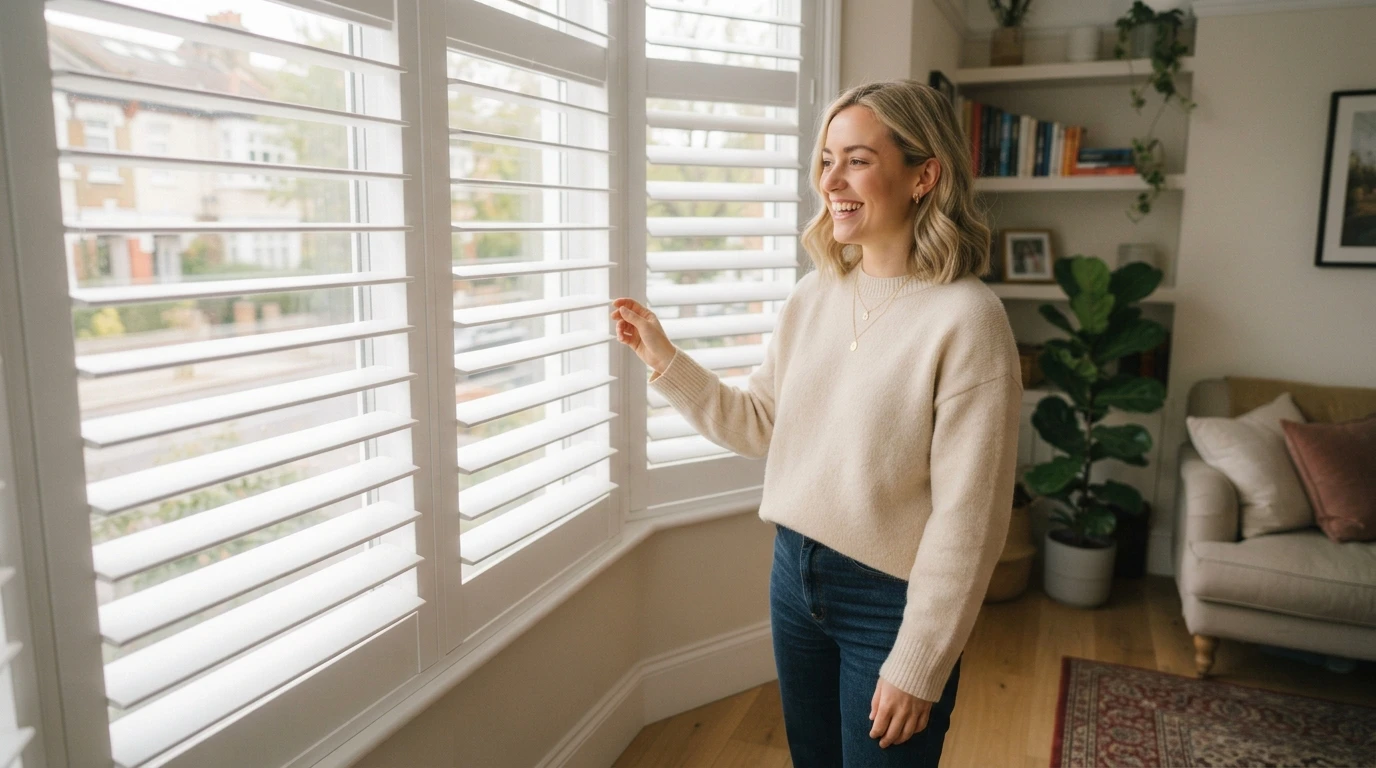
Many irregularities can be accommodated through careful measuring, the right frame selection and a suitable fitting approach. Even older properties with slightly bowed or uneven openings can often be fitted with shutters that look neat and well proportioned.
The key is understanding what you’re working with before ordering. Take measurements at several points, record any differences and get advice if you’re unsure.
Your windows don’t have to be perfectly square to have beautifully fitted shutters.