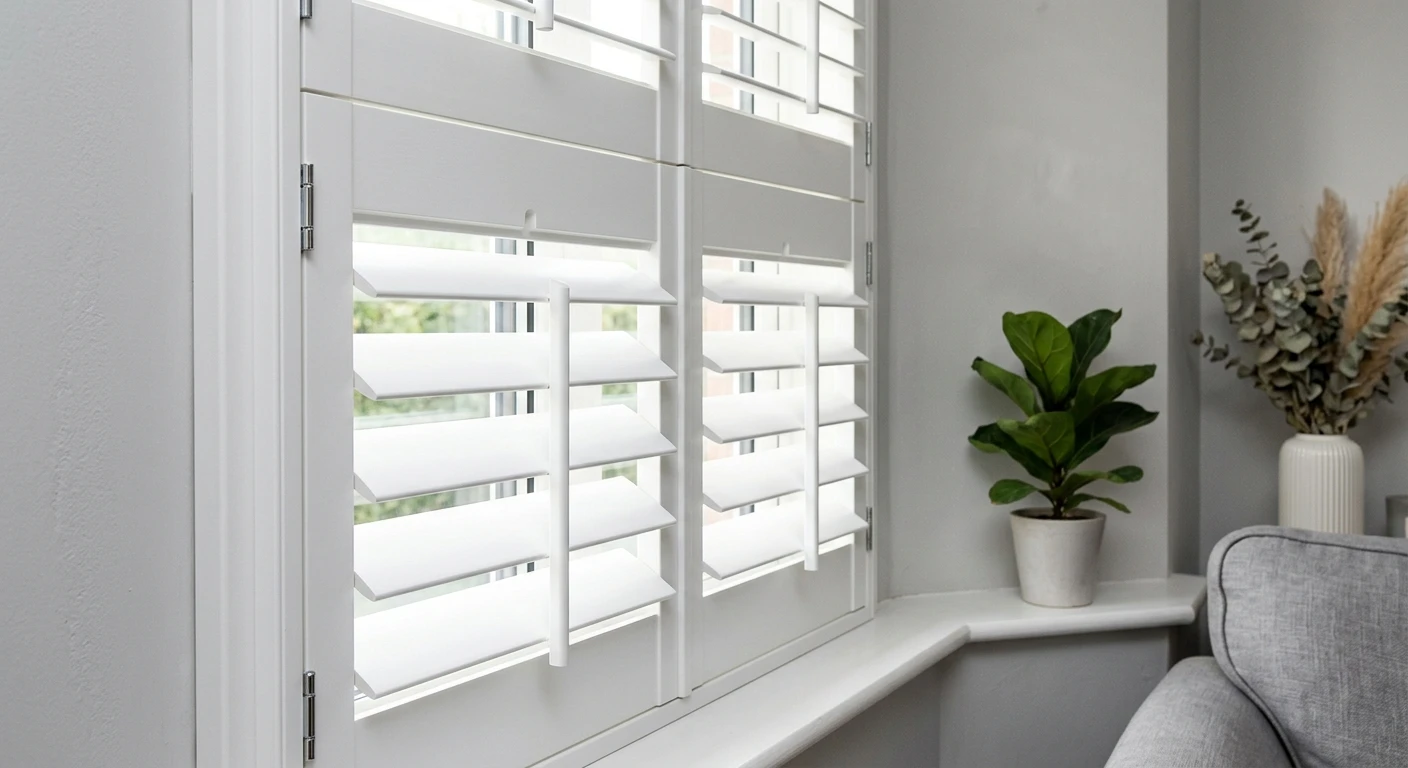
Plantation shutters can be a significant investment, particularly if you’re looking to fit them throughout your home. Everyone has different budgets, priorities and expectations, so it’s perfectly understandable to look for ways to keep the cost down and with such a wide range of shutters available, there are certainly ways to save money without necessarily compromising on the result.
However, not all shutters are made to the same standard, and a particularly attractive price can sometimes come with compromises that aren’t immediately obvious. Whether it’s the materials used, the quality of construction or the decision to measure and install them yourself, there are a few things worth considering before choosing the cheapest option.
This isn’t about suggesting that you need to buy the most expensive shutters available. It’s about understanding what you might be sacrificing to save money, where spending a little more could make a difference, and when a cheaper option might actually be perfectly suitable.
Are cheaper shutters necessarily poor quality?
Not at all. A lower price doesn’t automatically mean a poor product, just as a higher price doesn’t guarantee better quality.
There are several reasons why one set of shutters might cost considerably less than another. The material, manufacturing process, construction, choice of components, finish and level of service can all influence the final price.
Some companies also operate primarily online, sell directly to customers or offer limited product ranges, which can help keep their prices down. Others may offer DIY shutters without the additional cost of professional measuring and installation.
The important thing is to understand what is behind the price difference. Two sets of shutters might look very similar in photographs, but their construction, materials and overall specification could be quite different.
Choosing cheaper materials
One of the biggest influences on shutter prices is the material used. Natural hardwood, MDF, PVC and composite materials all have different characteristics, advantages and limitations.
Hardwood versus cheaper timber
Not all hardwood shutters are made from the same type of timber. Some use more expensive hardwoods, while others are manufactured using less costly species.
This doesn’t necessarily make the cheaper timber unsuitable. Some more affordable hardwoods are perfectly capable of producing attractive, durable shutters. However, timber species can differ in density, weight, grain structure, stability and how well they accept a painted or stained finish.
The way the timber is selected, dried and manufactured also matters. Poorly prepared timber can be more prone to movement, twisting or warping, which can affect how well the panels fit and operate over time.
It’s therefore worth looking beyond the simple description of hardwood shutters and asking what type of timber is actually being used.
MDF shutters
MDF is a popular choice for lower cost shutters, and there are good reasons for this. It’s an engineered wood product that provides a smooth, consistent surface, making it particularly suitable for painted finishes.
Well made MDF shutters can be an excellent option in the right circumstances. However, they aren’t a direct substitute for natural hardwood in every respect.
Contrary to what you might expect, MDF can actually be heavier than many natural hardwoods. This can place additional demands on the panel hinges and supporting frame, particularly on larger shutters.
MDF can also be more vulnerable to moisture if water reaches exposed or damaged areas, although the construction and protective coating of individual products can make a significant difference.
Another consideration is repairability. Damage to a painted timber shutter may sometimes be repaired and refinished, whereas damage to an MDF component can be more difficult to restore satisfactorily.
That doesn’t mean MDF is a bad choice. It simply means you should consider where you’re fitting it, how it will be used and what you expect from it.
PVC and composite shutters
PVC and composite shutters can also provide a more affordable alternative to natural hardwood. Depending on their construction, they can offer useful resistance to moisture and are often considered for bathrooms, kitchens and other areas where humidity may be a concern.
However, products within this category can vary considerably. Some are relatively lightweight, while others use reinforced or engineered cores to provide greater rigidity.
A cheaper product may use less substantial construction or have fewer reinforcement features. This can become more noticeable on larger panels, where weight and rigidity are particularly important.
It’s worth checking what the product is actually made from rather than relying on broad descriptions such as faux wood or composite. These terms can cover quite different materials and constructions.
Construction quality matters
The material is only part of the story. How a shutter is put together can make a considerable difference to its strength, stability and ability to withstand regular use.
A typical shutter panel is made up of vertical side sections, horizontal rails and adjustable louvres. These components need to be securely joined and accurately assembled to create a rigid, square panel.
The joints connecting the rails to the sides are particularly important. Poorly made or inadequately secured joints can allow movement within the panel, potentially leading to looseness, distortion or separation over time.
Some manufacturers use traditional mortise and tenon joints, while others use dowels, engineered joints or different forms of reinforcement. The method itself doesn’t tell you everything about quality. The accuracy of the machining, materials, adhesive and assembly all matter.
The same applies to the louvres. They need to sit securely between the sides of the panel, rotate smoothly and remain in position when adjusted. Poorly fitted pivot components or an inadequate tensioning system can result in louvres that become loose, fail to hold their position or operate unevenly.
These are not always things you’ll notice when looking at a new set of shutters. They can become more apparent after months or years of regular use.
The importance of hinges and other components
It’s easy to concentrate on the appearance of the shutters themselves and overlook the smaller components that allow them to work properly.
Hinges, catches, magnets, louvre pivots and tilt mechanisms all contribute to how the shutters operate. Their quality, positioning and suitability for the size and weight of the panels are important.
For example, a large, heavy panel needs appropriate support. If the hinges or fixings are inadequate, the panel may begin to drop, making it harder to open and close correctly. Similarly, poor quality louvre mechanisms can become loose or unreliable with repeated use.
This doesn’t mean that every shutter needs expensive or elaborate hardware. It means the components should be suitable for the product they’re supporting.
A cheaper shutter might look almost identical to a more expensive one when closed, but differences in the hardware and construction can become more noticeable through everyday use.
Don’t overlook the finish
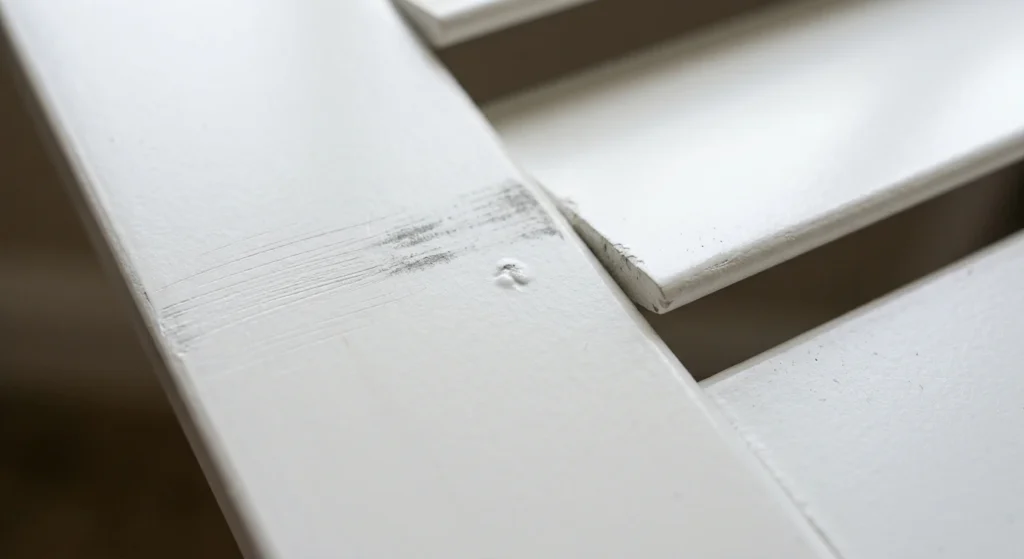
The finish is another area where products can differ.
Painted shutters need more than just a coat of colour to achieve a durable, attractive result. Surface preparation, priming, the quality of the coating and the way it’s applied can all affect the final appearance.
A good finish should be reasonably consistent, with no obvious rough patches, uneven coverage or excessive build up around moving components. It should also be appropriate for the material underneath.
Less expensive shutters may have a more basic finish or a narrower choice of colours and surface treatments. This isn’t necessarily a problem, particularly if you’re happy with the available options, but it’s worth checking what you’re getting.
After all, shutters are a fairly permanent feature of a room, and a poor finish can become frustrating when it’s something you see every day.
Saving money by fitting shutters yourself
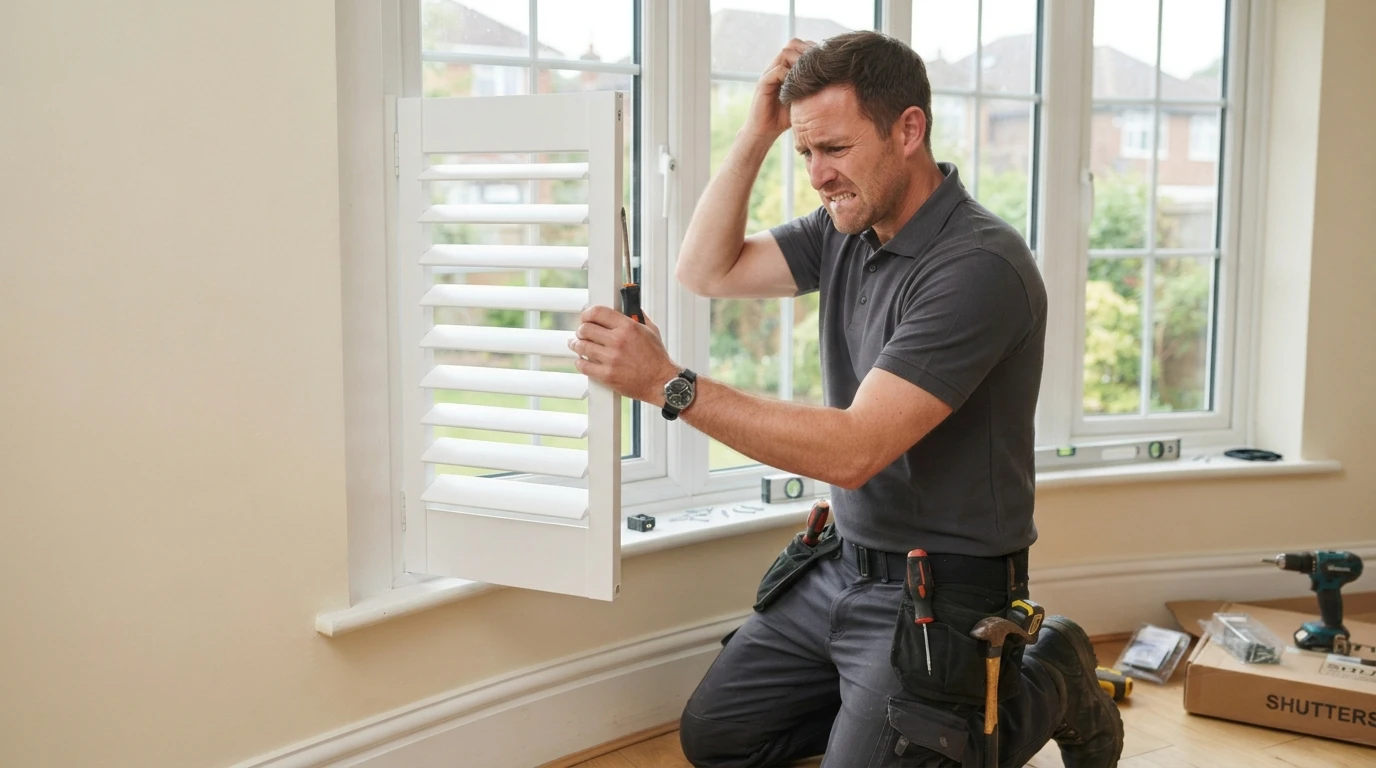
Another way to reduce the cost of shutters is to take the DIY route rather than paying for professional measuring and installation.
There is nothing wrong with this approach. DIY shutters can offer excellent value, particularly for straightforward windows and anyone who is confident using a tape measure and carrying out basic fitting work.
However, measuring and fitting shutters isn’t always as simple as it might first appear.
Window openings are rarely perfectly square, and the dimensions can vary between the top, middle and bottom of the recess. Window handles, vents, sills and other obstructions can also affect the measurements and the way the shutters need to be fitted.
Getting these details wrong can result in panels that don’t fit properly, frames with uneven gaps or shutters that don’t open and close as intended. Because made to measure products are manufactured to the dimensions supplied, mistakes can be expensive to put right.
Professional measuring and installation can help avoid these problems. An experienced installer should be able to identify potential difficulties, recommend a suitable frame and fitting arrangement, and ensure that the finished shutters are properly aligned and supported.
Of course, professional installation comes at an additional cost, and it won’t be necessary for everyone. But it’s worth considering whether the potential saving is worth taking on the responsibility yourself, particularly if you have unusually shaped windows, large openings or awkward fitting requirements.
When is it worth spending a little more?
There isn’t a single answer, as it depends on the shutters you’re buying, where they’re going and how you intend to use them.
For example, a reasonably priced MDF shutter might be perfectly suitable for a smaller bedroom window, particularly if you want a simple painted finish and don’t expect it to be exposed to moisture.
For a large set of shutters covering wide windows or glazed doors, however, panel weight, rigidity, hinges and overall construction may deserve more attention. Similarly, if you’re fitting shutters in a busy family home where they’ll be opened and adjusted frequently, the quality of the components and finish may be more important.
It’s also worth thinking about how long you intend to keep them. If you’re looking for a temporary or relatively inexpensive solution, a budget product might meet your needs. If you want shutters that will remain a feature of your home for many years, it may be worth investing in a better specification.
The cheapest option isn’t always the one that costs you least in the long run, particularly if repairs or replacement become necessary.
What should you check before buying cheap shutters?
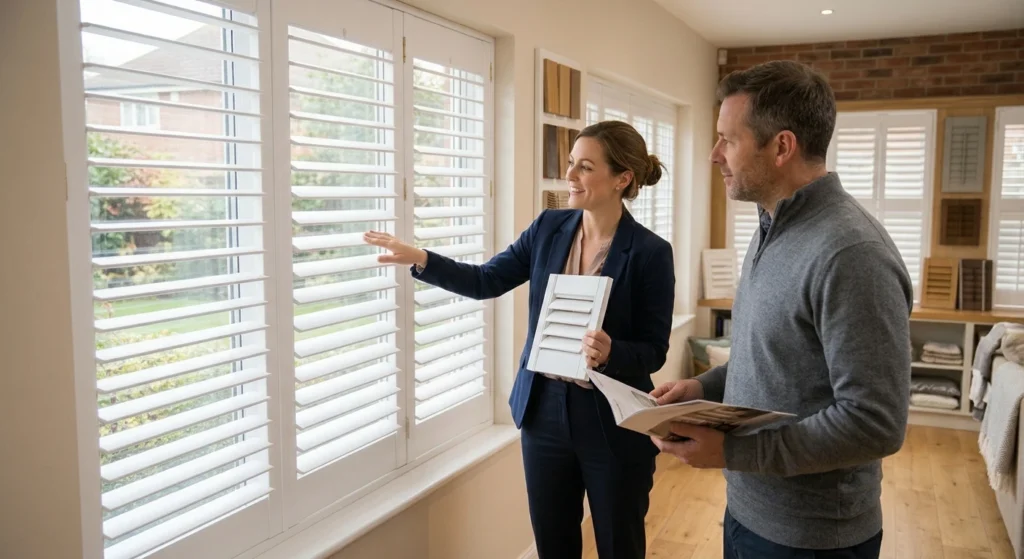
Before committing to a particularly low quotation or an inexpensive online product, take a little time to understand exactly what’s included.
Some useful things to check include:
- Material: Find out what the shutters are made from, including the type of timber or engineered material used.
- Construction: Ask how the panels are assembled and whether they have any reinforcement where needed.
- Components: Check the quality and suitability of the hinges, louvre pivots and operating mechanisms.
- Finish: Find out what type of coating is used and whether the shutters are available in the finish you want.
- Measuring and fitting: Establish whether these services are included or whether you’re responsible for getting the dimensions and installation right.
- Warranty and aftercare: Check what is covered, how long the warranty lasts and what happens if something goes wrong.
It’s also sensible to look at actual product samples where possible. Photographs can make very different materials and finishes look remarkably similar, whereas handling a sample can give you a better idea of the weight, surface and general feel of the product.
So, are “cheap” plantation shutters worth buying?
They certainly can be.
There are plenty of ways to reduce the cost of a shutter project without necessarily ending up with a poor result. Choosing a more affordable material, selecting a simpler specification or carrying out your own measuring and installation can all be sensible decisions, provided you understand the implications.
The problem comes when the price is the only consideration. A particularly cheap set of shutters might involve compromises in construction, components, finish or fitting that aren’t immediately obvious. Those differences may not matter to everyone, but they could become important once the shutters are installed and in regular use.
Ultimately, it’s about finding the right balance between price, quality and expectations. You don’t need the most expensive shutters on the market, but you should know what you’re buying and feel confident that they’re suitable for your home.
A good deal isn’t simply about paying less. It’s about getting the best value for the money you’re prepared to spend.