If you look at homes in different parts of the world, you’ll notice that shutters aren’t always fitted in the same place. In the UK, we’re generally familiar with shutters fitted inside the window, but in many other countries, particularly warmer parts of Europe, external shutters are just as common, if not more so.
So why do we tend to install shutters indoors in the UK? Is it simply a matter of appearance, or are there practical reasons behind the difference?
The answer has quite a lot to do with climate, local building traditions and the way we use our homes.
Shutters haven’t always been fitted inside
Window shutters have been used for centuries, both inside and outside buildings. Their original purpose was largely practical, helping to protect windows, control sunlight, provide privacy and allow ventilation.
In some regions, external shutters became an important part of traditional architecture. They could be closed to shield windows from strong sunshine, wind and storms, or opened to let fresh air circulate.
Internal shutters developed alongside these designs, offering many of the same benefits from inside the home. In Britain and other parts of northern Europe, timber shutters were traditionally used to provide privacy, reduce draughts and help protect rooms from cold conditions.
Over time, different countries developed their own approaches, influenced by the weather, architecture and materials available locally.
Different climates, different shutter traditions
One of the biggest influences on shutter design is climate.
In warmer countries, particularly around the Mediterranean, external shutters have traditionally been popular because they can help keep direct sunlight away from the window glass. Closing them during the hottest parts of the day provides shade before the sun heats the interior of the building.
This can be particularly useful in regions where summers are long, hot and sunny. External window shutters also form part of the traditional appearance of many properties, with wooden or louvred designs becoming familiar features of local architecture.
The UK has a rather different climate. We experience cooler temperatures, more frequent rainfall and less consistently intense sunshine. While shading is still useful during brighter months, our priorities are often more focused on privacy, controlling natural light and making our interiors comfortable.
Internal shutters offer a practical way to achieve this without exposing the shutter panels to rain, wind and other outdoor conditions.
Why internal shutters suit UK homes
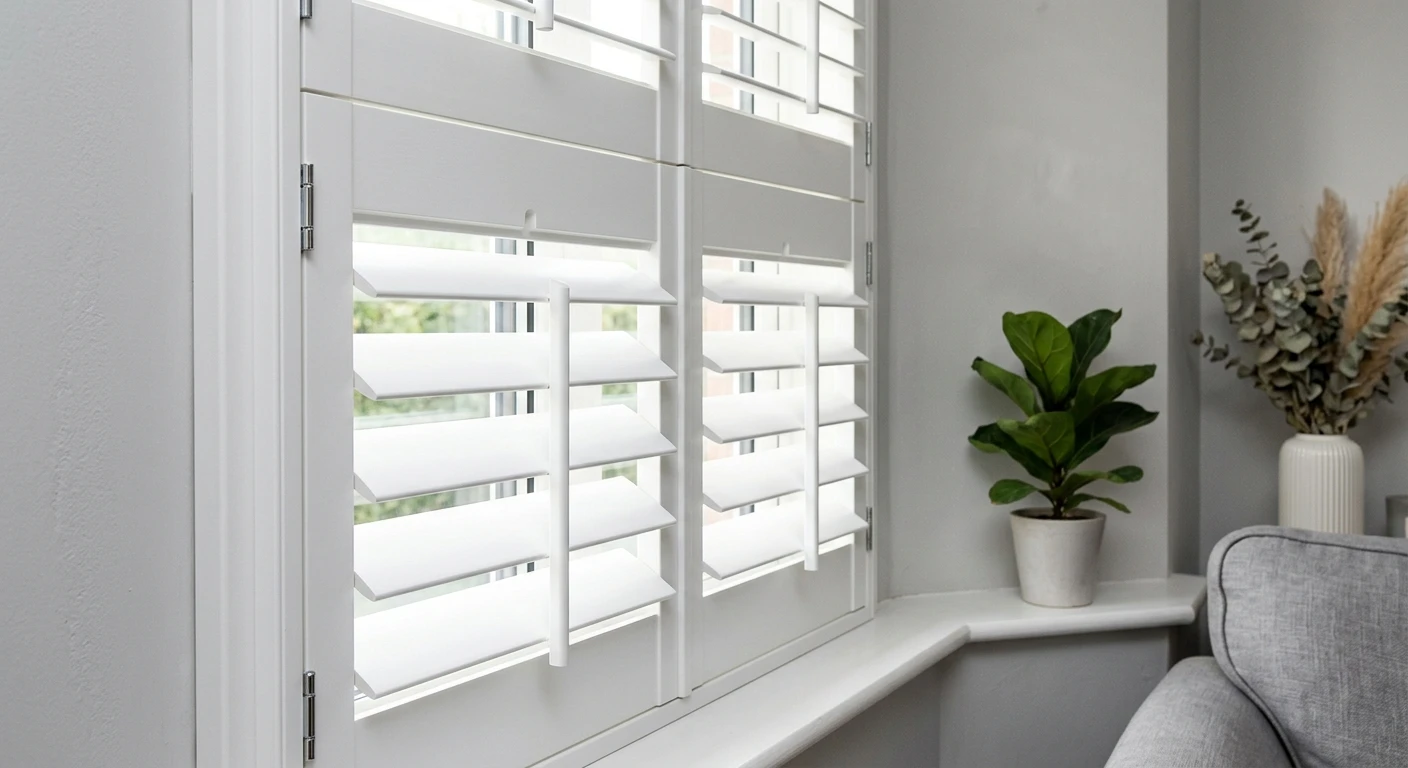
Fitting plantation shutters inside the window brings several practical advantages.
Protection from the weather
Internal shutters are sheltered from the elements, helping to protect their materials and finishes from rain, wind and prolonged exposure to outdoor conditions. This is particularly relevant in the UK, where damp weather is a regular consideration.
Privacy and light control
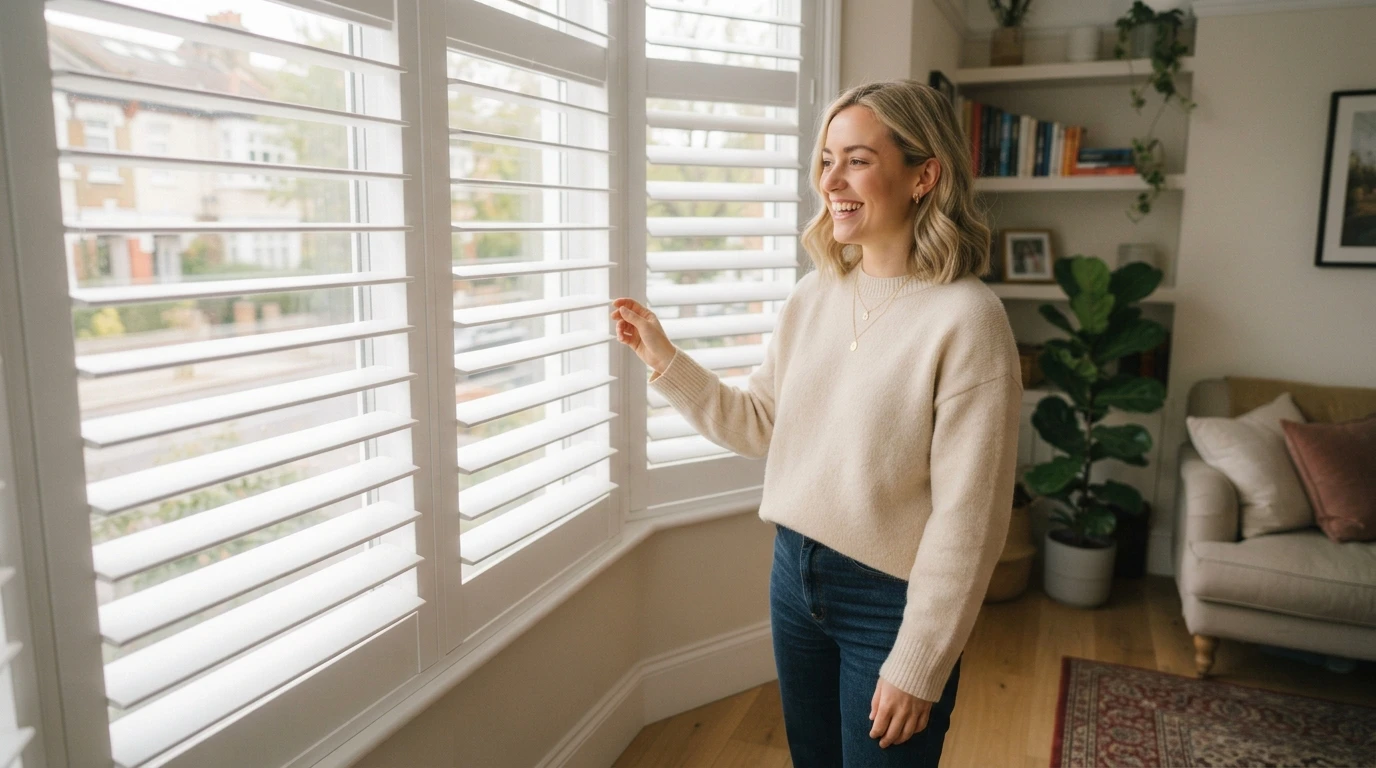
Being fitted indoors makes shutters easy to adjust throughout the day. You can close the louvres for privacy, angle them to manage incoming sunlight or open the panels when you want an unobstructed view.
Convenience
Internal shutters can be operated from within the room, without needing to access the outside of the property. This makes them particularly practical for upper floor windows and homes where external access would be difficult.
A feature inside the home
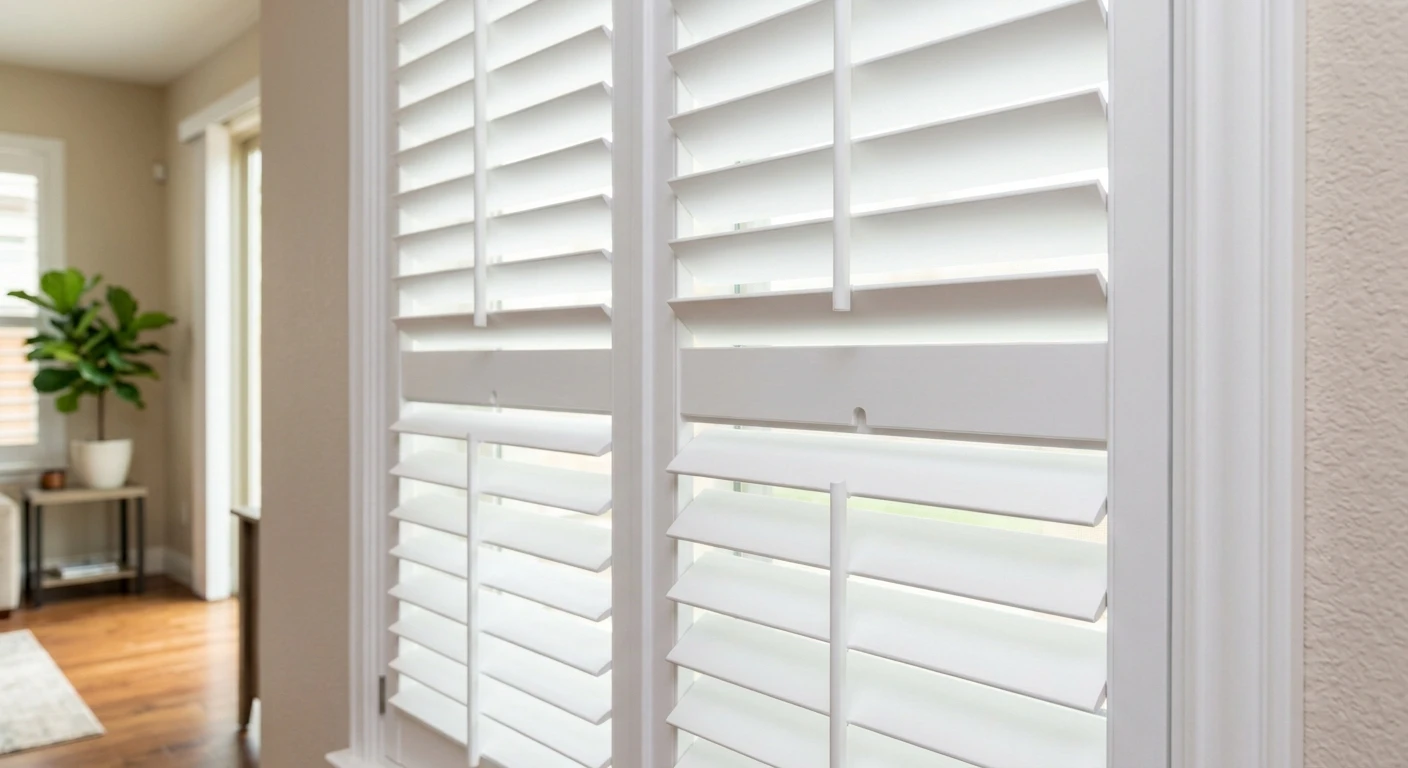
Modern interior shutters are also chosen for their appearance. They can be made to fit individual windows, with different materials, colours and configurations available to suit both traditional and contemporary interiors.
Are external shutters still used in the UK?
Yes. Although internal window shutters are the familiar choice for many modern UK homes, external shutters haven’t disappeared.
You can still find traditional external shutters on older properties, particularly where they form part of the building’s original character. Some modern homes also use external shutters for shading, privacy and security.
The important thing is that there isn’t one approach that works everywhere. The most suitable design depends on the building, its location, the climate and what the shutters are intended to achieve.
Why we tend to fit shutters indoors today
The popularity of internal shutters in the UK is really a combination of practicality, tradition and changing tastes. Our climate and housing styles have helped make interior shutters a natural choice, while modern designs have made them suitable for a wide range of windows and homes.
Other countries have developed different shutter traditions for equally practical reasons. In hotter climates, external plantation shutters can play an important role in keeping buildings shaded, while in the UK, interior shutters offer a convenient way to manage light and privacy throughout the year.
Neither approach is necessarily better than the other. They’re simply different solutions shaped by the places in which they’re used.