When choosing window coverings for smaller windows, shutters might not be the first option that comes to mind. There is sometimes a misconception that shutters are better suited to larger windows, with small openings considered too restrictive or awkward to accommodate them. In reality, shutters can work beautifully on smaller windows, offering a neat, made to measure finish alongside the same practical benefits available on larger installations.
Whether you have a compact kitchen window, a small downstairs toilet window or an unusually shaped opening, there are different shutter styles and configurations worth considering. The key is finding an approach that works with the proportions of the window and the way you want to use it.
Are shutters suitable for small windows?
Small windows can be just as suitable for shutters as larger ones. Because shutters are made to measure, they can be designed around the dimensions and shape of an individual opening rather than relying on standard sizes.
In some respects, smaller windows can be particularly well suited to shutters. Their fitted appearance can help keep a compact space looking tidy, while the panels provide privacy without the need for bulky curtains or blinds.
The main consideration is how much room there is for the shutter panels, frames and any dividing rails. Smaller openings leave less space for these features, so the choice of style and configuration can make a difference to the finished result.
Choosing the right shutter style
The style of shutter you choose can make a difference on a smaller window, particularly when there is limited space for panels and dividing rails. Simpler designs are often easier to accommodate, while some configurations may be more restricted by the proportions of the opening.
Full height shutters
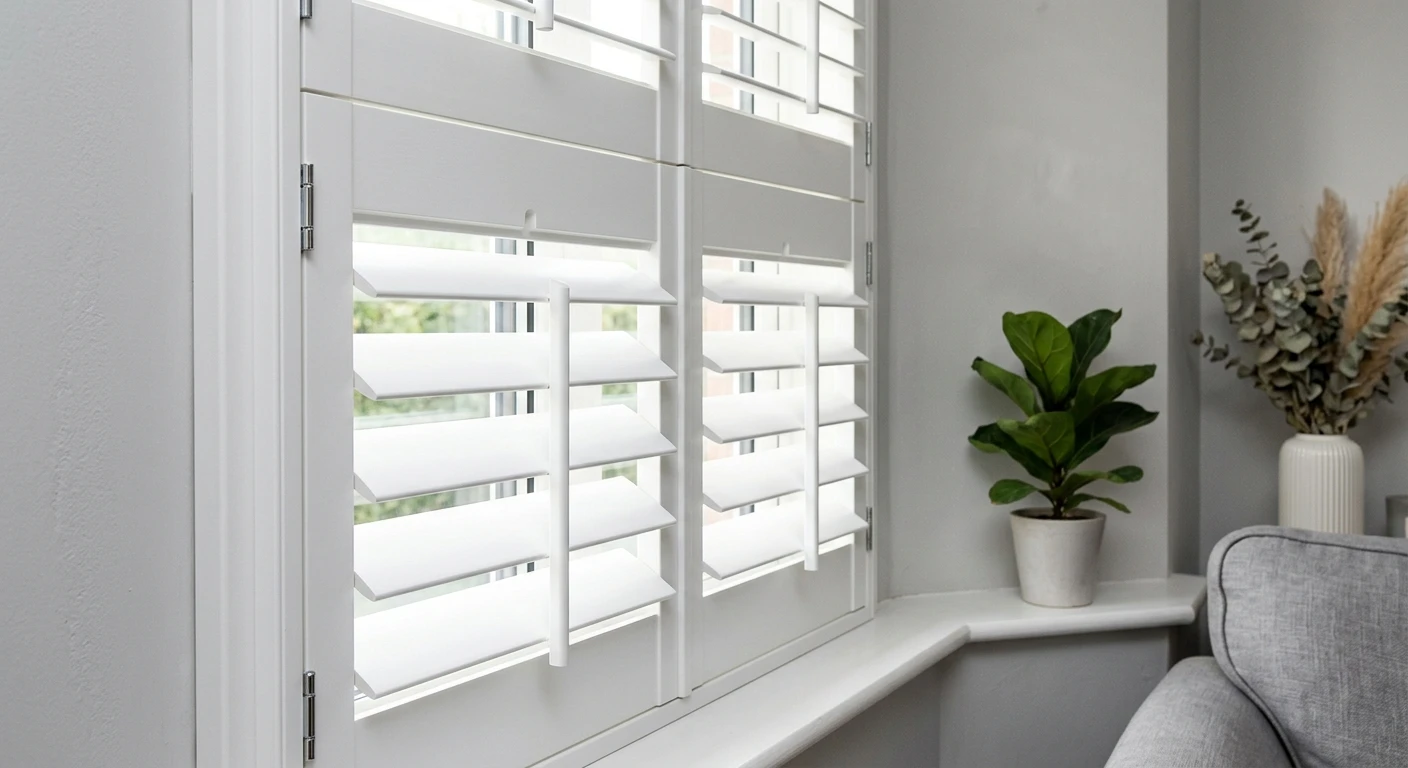
Full height shutters are often a practical choice for smaller windows, with panels covering the entire opening from top to bottom. Their straightforward design avoids the need to divide a compact window into several sections, helping to keep the overall appearance neat and well proportioned.
A hidden mid rail can also be a useful option. This allows the louvres above and below the rail to be adjusted independently, without a visible horizontal division across the panels. It provides added flexibility while maintaining a clean appearance.
Solid shutters
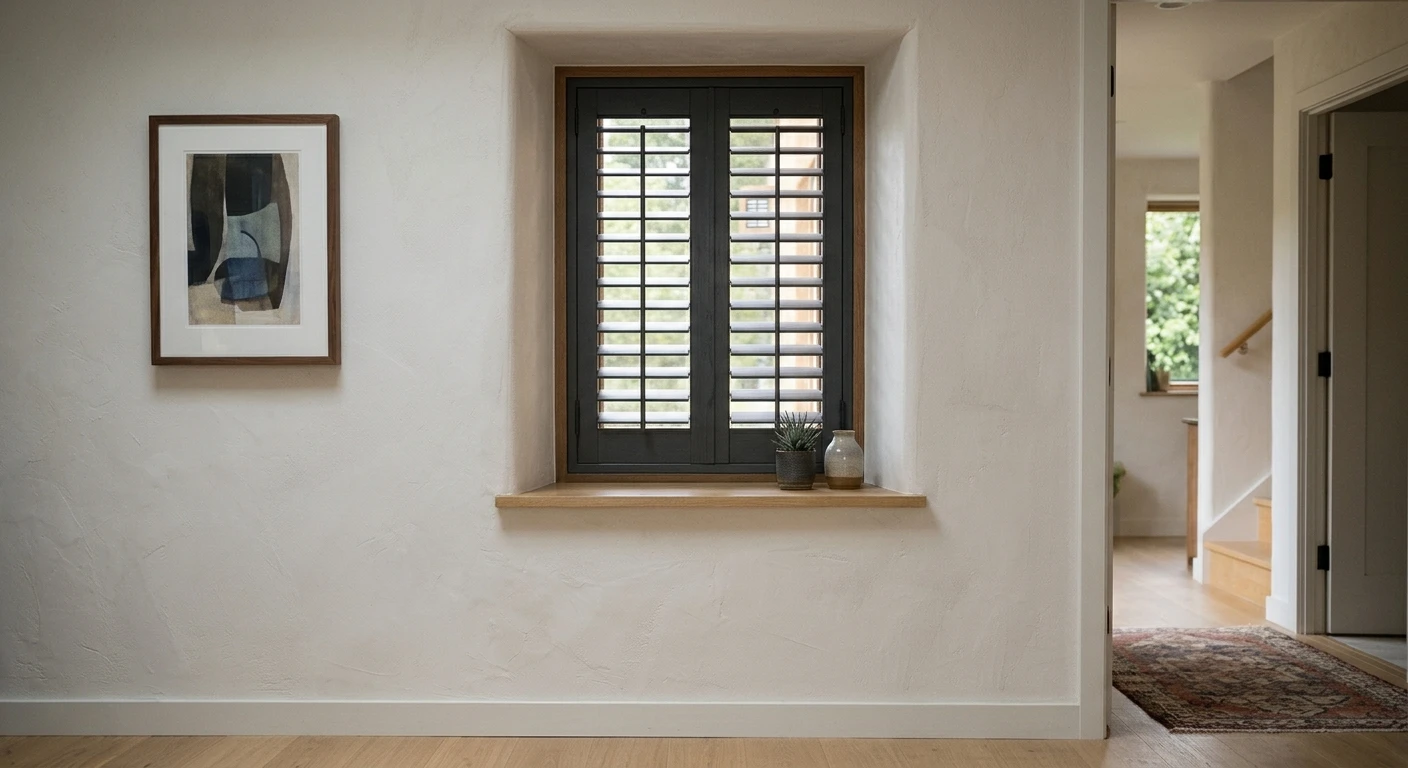
Solid shutters can work particularly well on smaller windows. Without louvres or the need for adjustable sections, they offer a simple panel design that can suit compact openings and provide complete privacy when closed.
They are worth considering in rooms where controlling light through adjustable louvres is less important, or where you simply prefer the look of solid panels.
Styles that may be more challenging
Tier-on-tier shutters
Tier-on-tier shutters have separate upper and lower panels that can be opened independently, offering flexibility when managing privacy and natural light. However, this style needs enough window height to accommodate both sets of panels and their framework.
On a particularly small window, the proportions can become restrictive, with the individual sections potentially looking crowded or leaving limited space for the panels to operate comfortably. They may still be possible in some cases, but are not always the most practical choice.
Café style shutters
Café style shutters cover only the lower part of the window, leaving the upper section open to allow natural light into the room. They can be useful where privacy is needed at lower level without covering the entire opening.
However, smaller windows may not have enough height to make this arrangement worthwhile. Once the lower section is covered, there may be very little uncovered glazing remaining, so the overall proportions need careful consideration.
Small windows with unusual shapes
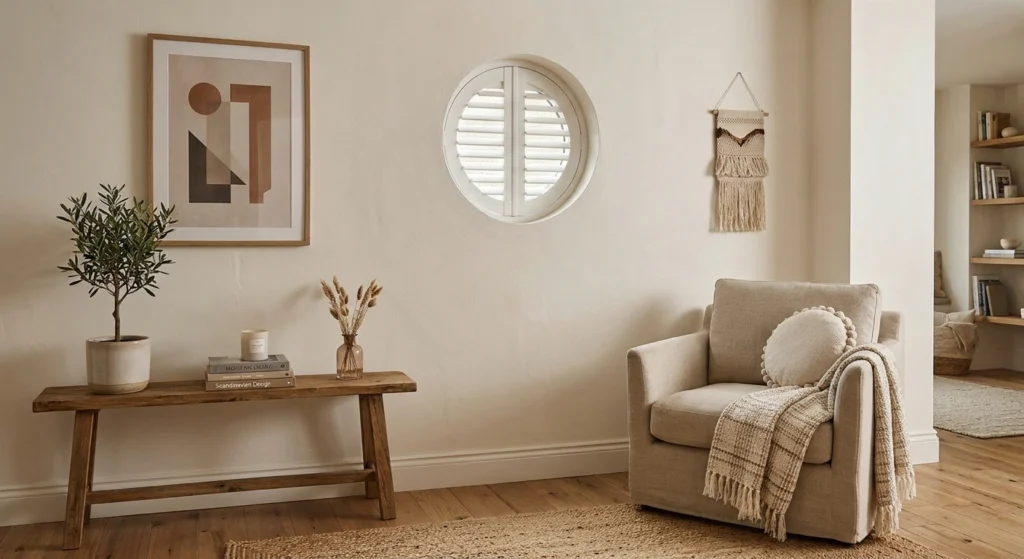
Not all small windows are simple rectangles. Some are circular, arched, triangular or diamond shaped, while others have angled sides or unusual proportions.
These openings can sometimes be more challenging to dress, particularly when conventional blinds or curtains are difficult to fit neatly. Made to measure shutters can provide a solution for many unusual window shapes, with panels designed to follow the outline of the opening.
Smaller Circular and diamond shaped windows, for example, may be suitable for specially shaped shutter designs, although the available configurations will depend on the dimensions and construction of the window. Some shapes may have more limited options for opening panels or adjustable louvres, so it is worth discussing the possibilities with a specialist before making a decision.
Shutters for smaller rooms
Small windows are often found in rooms where privacy and practicality are particularly important. Downstairs toilets, compact kitchens, utility rooms and smaller bathrooms are all examples where shutters can be a useful window covering.
In a downstairs toilet, shutters can provide privacy while still allowing natural light into the room. Full height shutters can cover the entire window, while café style may be an option where the window is high enough to leave a useful area of uncovered glazing above.
In a small kitchen, shutters offer a neat alternative to curtains and can be easier to keep looking tidy around worktops and other fittings. The choice of material is also worth considering, particularly where the window is close to a sink or an area exposed to moisture.
Even in a small room, shutters can help make the most of the available window space without introducing unnecessary bulk.
Enjoying the benefits of shutters on smaller windows
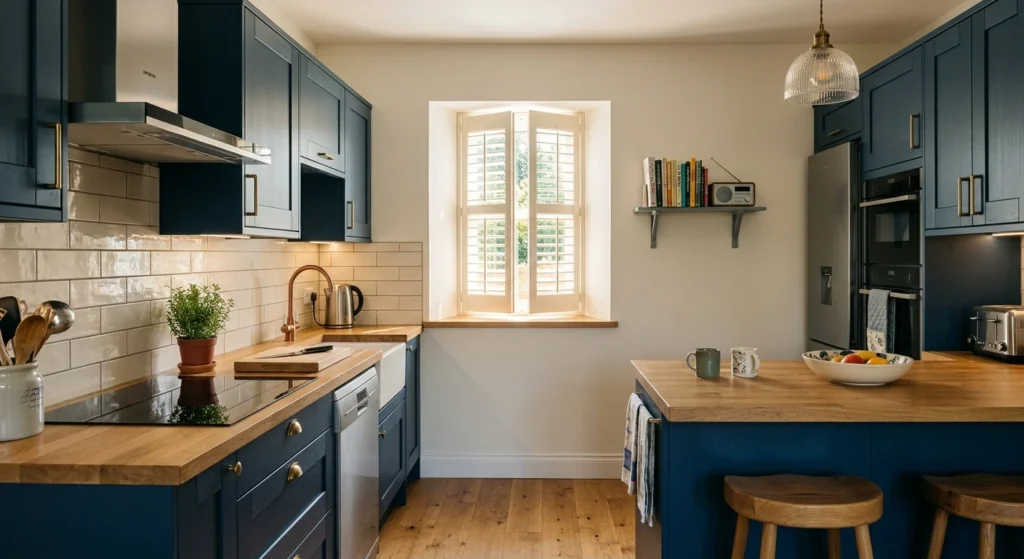
Having a small window doesn’t mean missing out on the advantages that shutters can offer. They can provide privacy, help manage incoming daylight and give a window a defined, finished appearance.
With adjustable louvres, you can alter the amount of light entering the room while maintaining a degree of privacy. Solid panel shutters are another possibility where adjustable light control is less important, offering a more traditional appearance and a way to cover the window completely.
Shutters are also made to fit the individual opening, so there is no reason to assume that a smaller window has to be left out when planning a shutter installation.
Finding the right solution for your window
The most suitable shutter design will depend on more than the overall size of the window. Its height, width, shape, position and available fixing space can all influence which styles and configurations are practical.
Full height shutters can be a particularly useful starting point for smaller openings, while tier-on-tier and café style designs may work where the proportions allow. Unusual shapes can also be catered for, although they may require more specialised designs and fitting arrangements.
Ultimately, small windows should not be overlooked when considering shutters. With the right design and careful measuring, even a compact or awkwardly shaped opening can be dressed with a shutter that looks well suited to the space and offers plenty of practical benefits.