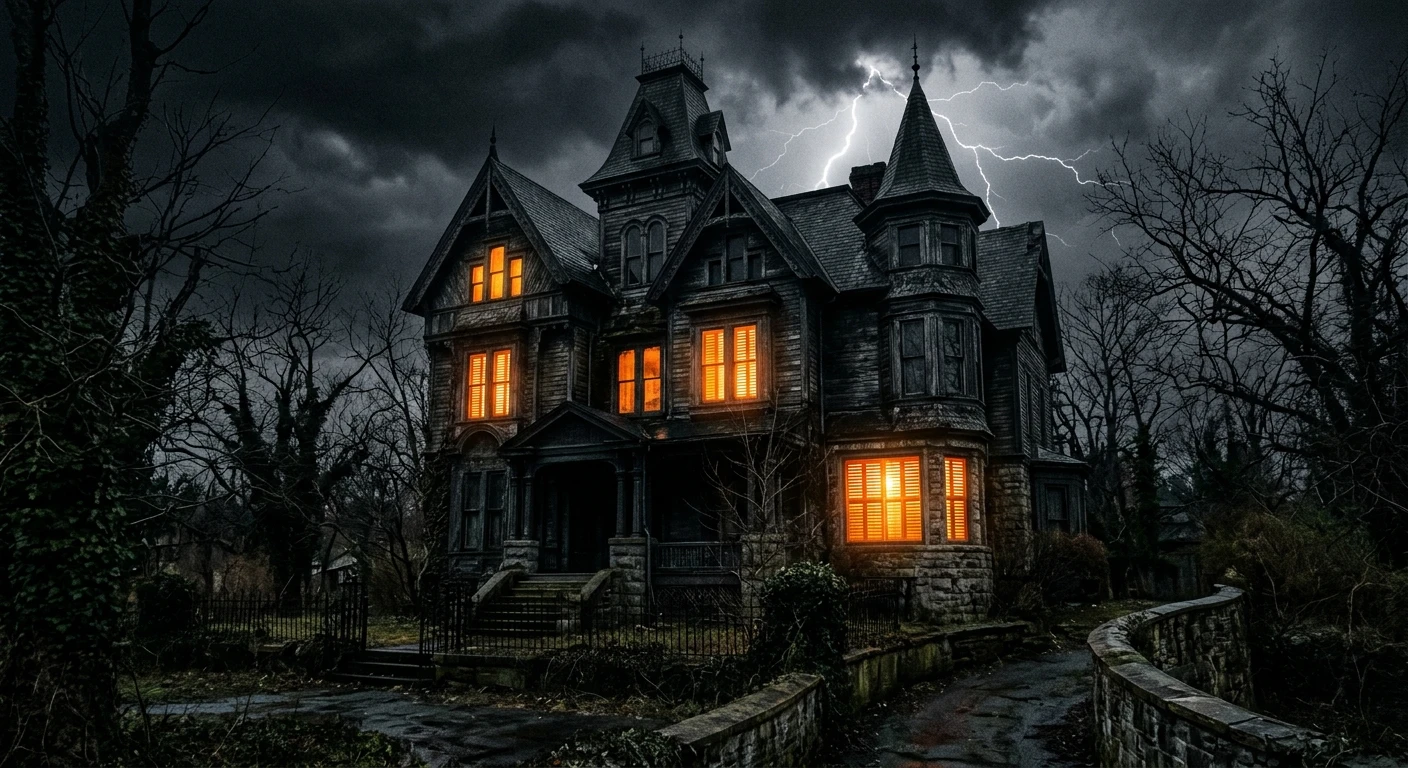
If you were designing the perfect haunted house, you’d have a few things to consider. Creaking floorboards, a suitably gloomy hallway, portraits with eyes that seem to follow you around the room, and, of course, the right window shutters.
After all, the windows are a big part of a house’s character. Get them right and even an otherwise ordinary property can look wonderfully sinister. But what sort of shutters would you choose for a house full of ghosts, strange noises and the occasional unwanted visitor from beyond the grave?
Let’s take a look at some possibilities.
Black shutters for a properly Gothic look
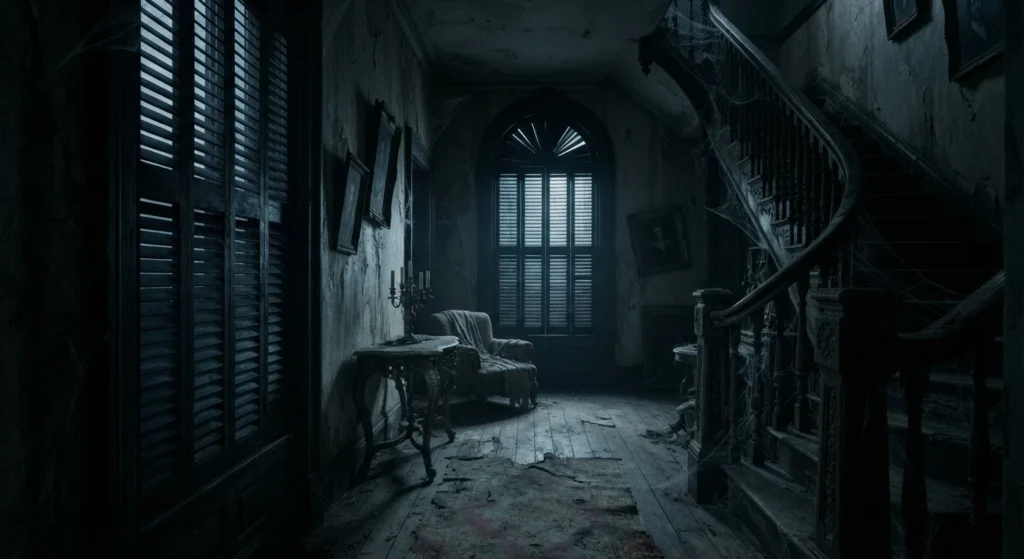
When it comes to haunted houses, black is an obvious starting point. Imagine a towering old mansion with dark stone walls, ivy creeping around the windows and black shutters framing every opening. It would look suitably forbidding even on a bright summer’s day.
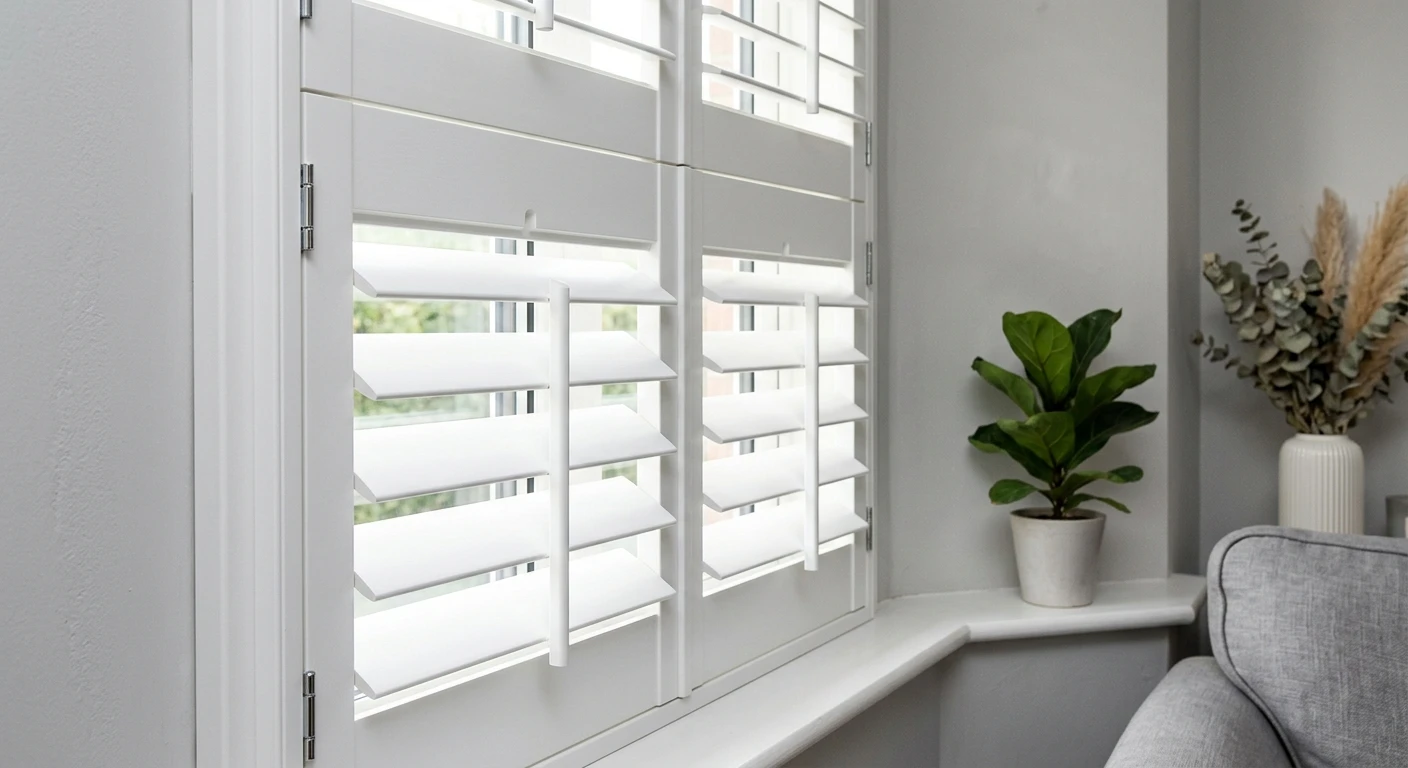
Black shutters can give a building a dramatic, traditional appearance, particularly when paired with period architecture. For an old Gothic mansion, solid panels would create a suitably imposing finish, while louvred shutters would add a little more detail and allow light to be adjusted inside.
Of course, black isn’t the only option. Deep charcoal, dark green and weathered wood could all work beautifully for a property that’s been standing for several centuries and hasn’t seen a decorator since the previous owner mysteriously vanished.
Louvres for moonlight, mystery and vampire management
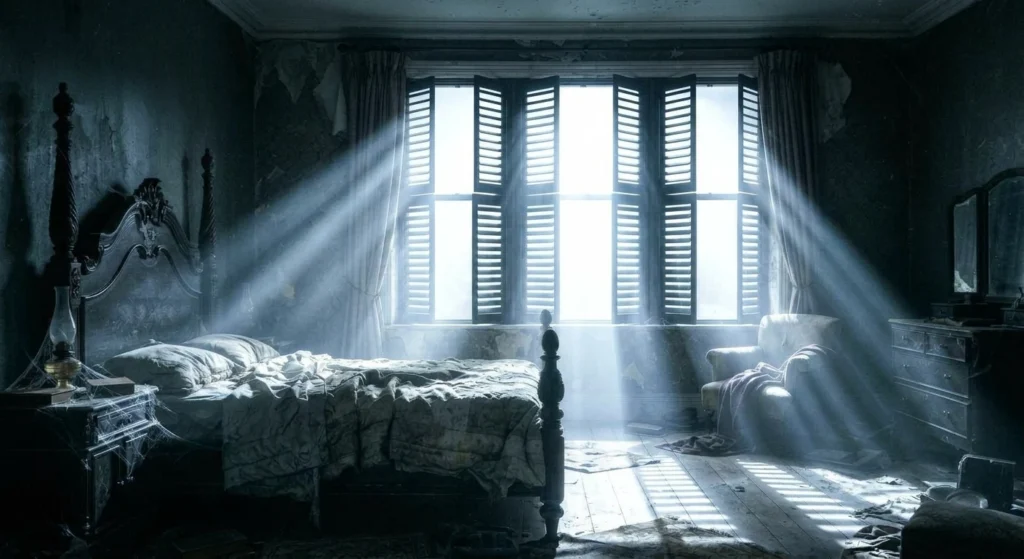
Adjustable louvres are particularly useful when you need precise control over the atmosphere. Imagine a full moon hanging over the graveyard, casting an eerie glow through the windows of your haunted bedroom.
Tilt the louvres to let just enough moonlight into the room, creating dramatic stripes of light across the floor. You can enjoy the view of the moon without throwing the entire window open to the cold night air.
And what if you wake up in the middle of the night to find a vampire standing at the foot of your bed? A quick adjustment of the louvres and panels might let you direct a beam of moonlight straight at the unwelcome guest. Whether this would actually do any damage is a matter for the folklore experts, but at least you can try to make your shutters part of the defence.
In a less supernatural setting, the same adjustability is useful for directing natural light, reducing glare and balancing privacy with the view outside. Even a haunted house needs somewhere comfortable to sit during the day.
Solid panels for rooms best left in darkness
Not every haunted house calls for adjustable louvres. Some rooms are better suited to solid panel shutters, particularly if you’re aiming for an old fashioned, fortress like appearance.
Think of a dusty library filled with ancient books, a tower bedroom that hasn’t been opened for decades, or a mysterious room at the end of a corridor that everyone has been told to avoid.
Solid panels have a simpler, more traditional look than louvred designs and can create a strong visual statement. They also provide a way to cover the window without rows of slats breaking up the appearance.
Would they keep the ghosts out? Probably not. Would they help create the impression that something rather unpleasant is going on behind the windows? Absolutely.
A little colour for your supernatural interiors
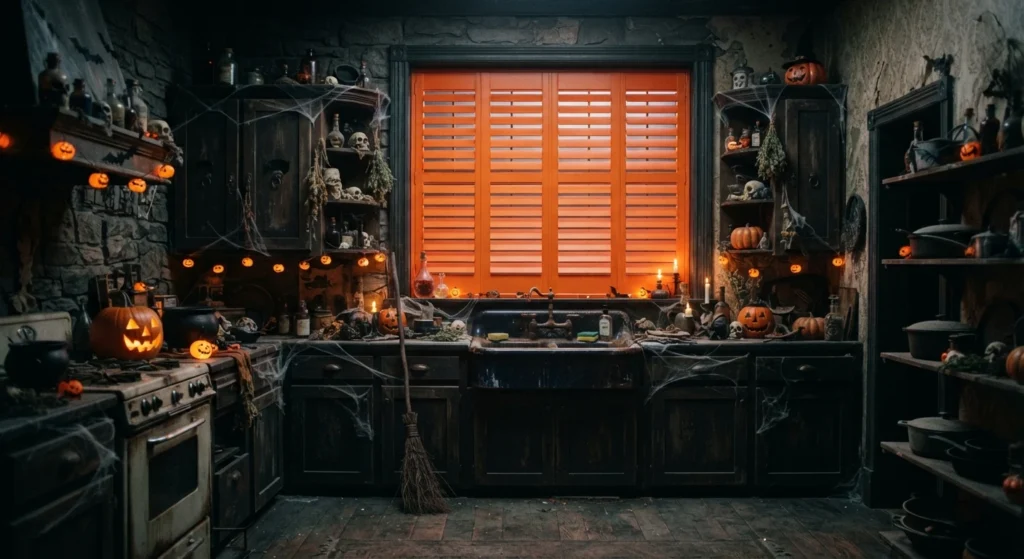
Black might be the obvious choice, but a haunted house doesn’t have to be monochrome. In fact, choosing different colours for different rooms could make the whole property much more interesting.
Deep burgundy would suit a vampire’s private chambers, especially with dark timber furniture and a suspicious number of velvet cushions. Pumpkin orange could bring a touch of Halloween warmth to a kitchen full of bubbling potions, while dark purple or a witchy green could add just the right touch of magic to a witch’s study.
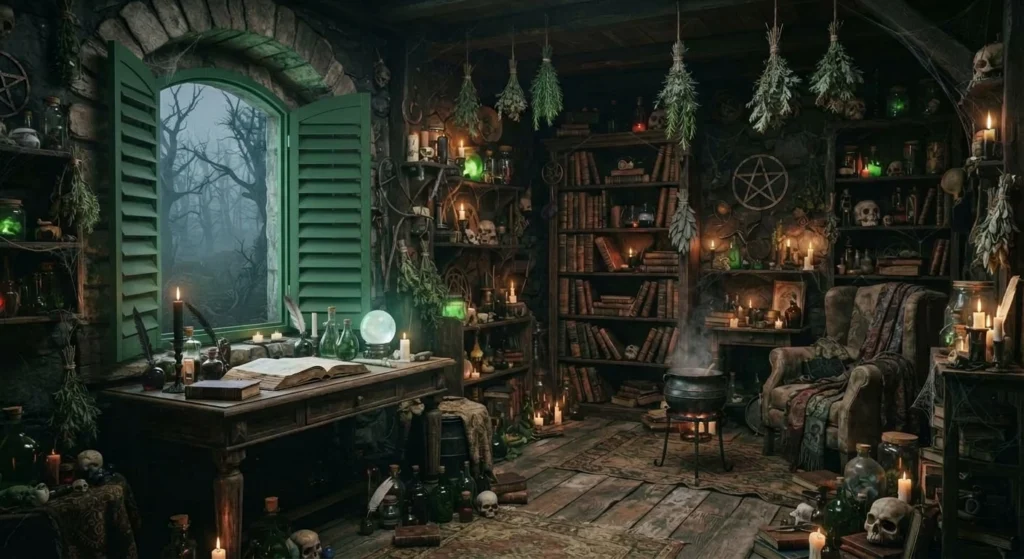
For a more restrained approach, forest green or deep blue could complement traditional interiors without making the house look like a Halloween shop.
The important thing is to think about how the shutter colour works with the walls, window frames and furnishings. Even supernatural residents deserve a reasonably coordinated interior.
Strange windows need special treatment
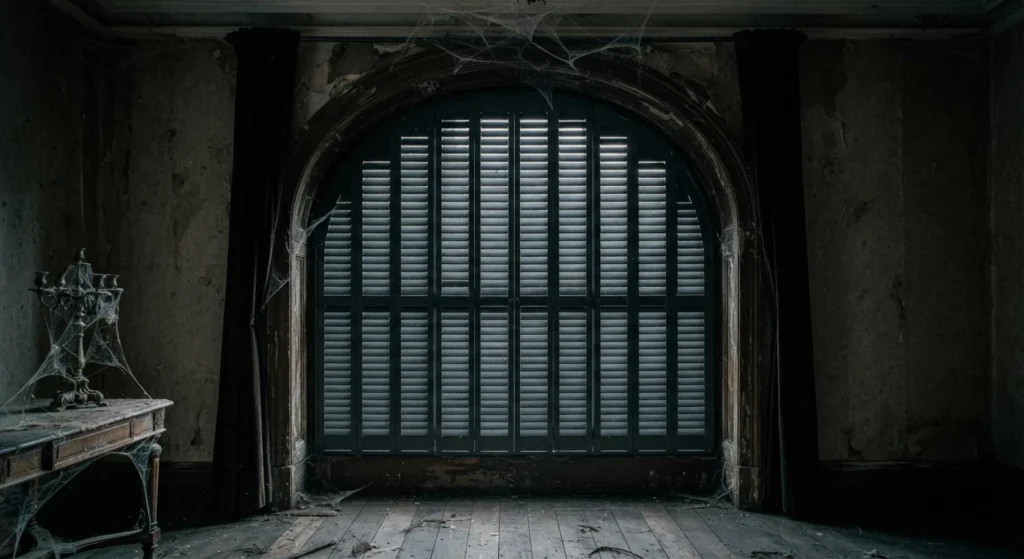
A proper haunted mansion is unlikely to have nothing but neat, rectangular windows. There will surely be a narrow opening in a tower, an oversized window overlooking the graveyard and perhaps an awkward little arch beneath the roof.
These unusual shapes can make choosing shutters more complicated. The available designs depend on the window’s dimensions, shape and the options offered by the manufacturer. Some configurations may require specially made panels, while others may limit the styles or louvre sizes available.
It is worth considering how the shutters will fit and operate as well as how they look. After all, the last thing you want is a panel that catches every time you try to close it because a centuries old window frame isn’t quite as straight as it should be.
And if the tower window is where you hear unexplained whispering at night, you might want to check the measurements in daylight.
Keeping an eye on what’s outside
Every haunted house needs at least one window from which to observe suspicious activity. Perhaps there’s a shadow moving between the trees, a light flickering in the abandoned cottage next door or something that appears to be hovering above the lawn.
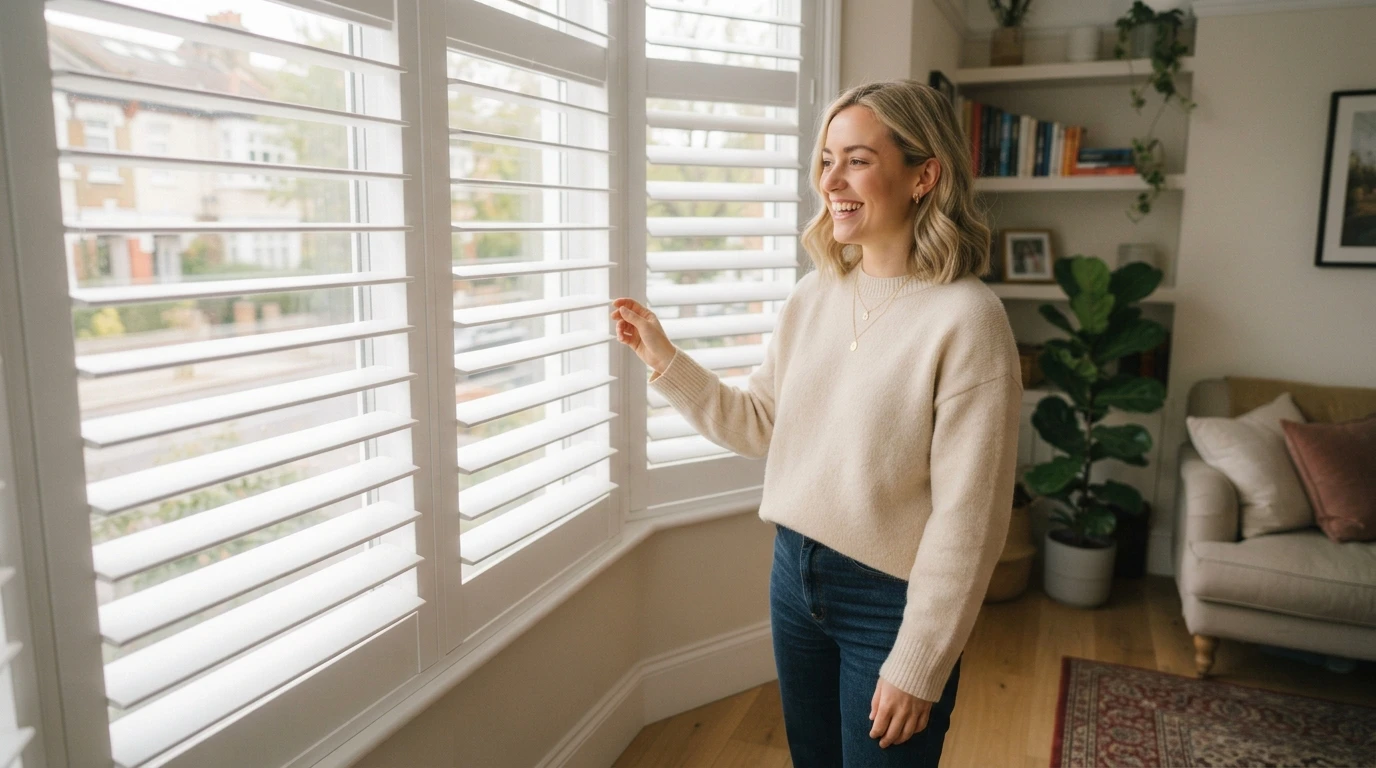
Adjustable louvres can let you look outside while retaining some privacy, without having to pull back curtains or swing open the window covering. You can angle the slats to suit the view and the amount of light entering the room.
Of course, shutters won’t explain why the garden gnome has moved three feet to the left overnight. Some mysteries are beyond even the most carefully specified window covering.
What would we choose for the ultimate haunted house?
If we were putting together the window scheme for our imaginary mansion, we’d start with black or charcoal shutters to establish that suitably Gothic look. Inside, solid panels would suit the darker, more traditional rooms, while adjustable louvres would be ideal in bedrooms and living spaces where controlling light and privacy matters.
For the tower windows, we’d look carefully at the shape and dimensions before deciding which designs would work. Somewhere in the house, there would have to be a room with deep red shutters, if only to give the resident vampire somewhere to entertain guests.
The result would be a house full of character, with each room having its own atmosphere and the shutters playing a part in the overall design.
Whether you’re decorating a genuinely historic property or simply getting into the Halloween spirit, it’s a reminder that shutters can do more than cover a window. They can help define the style of a room, complement the architecture and change the way light enters a space.
As for keeping out ghosts, vampires and other supernatural visitors, we can’t promise anything. You might need to consult a specialist for that.