
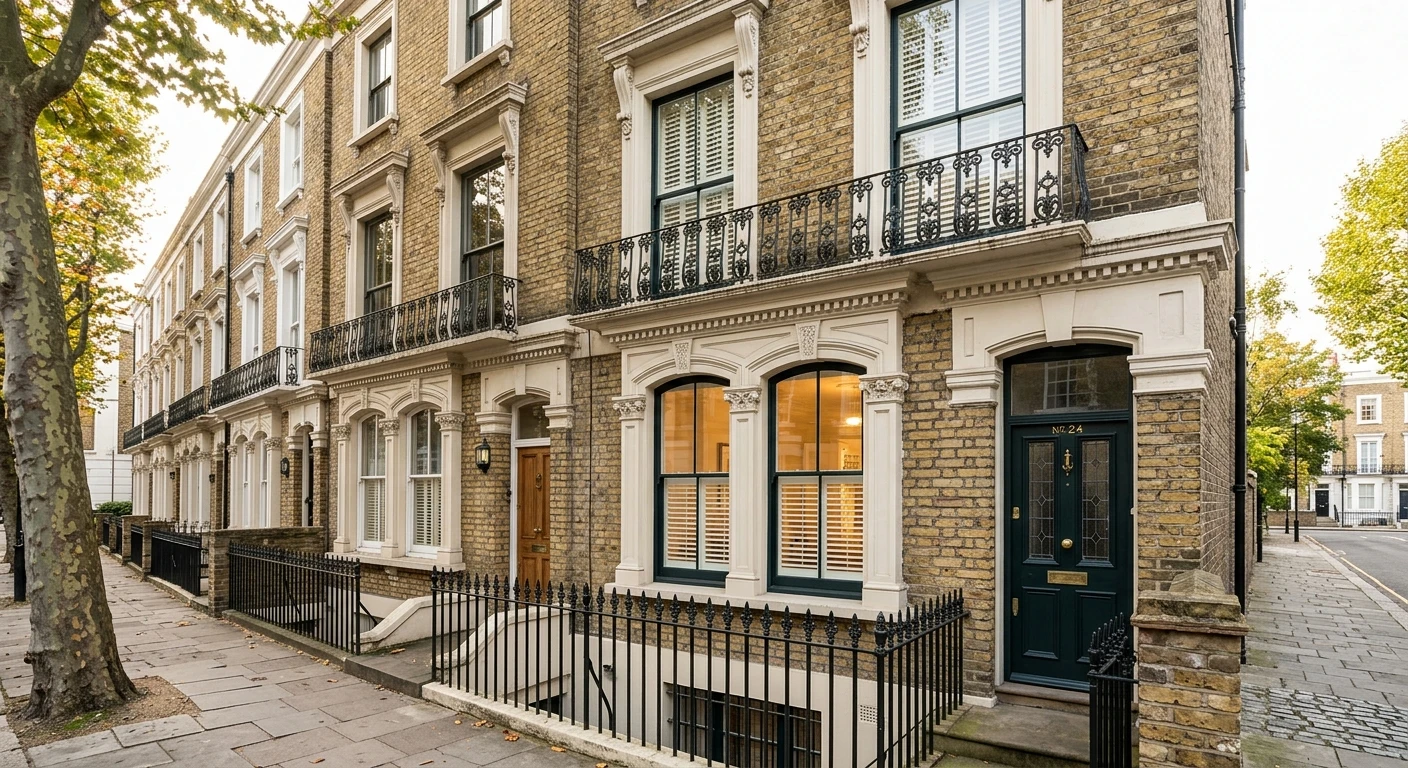
Period properties have a character that is difficult to replicate. From the elegant proportions of Georgian townhouses to the distinctive bay windows of Victorian homes and the generous windows of Edwardian houses, their architectural details are a large part of their appeal. Choosing window dressings that complement these features can make a real difference to the finished interior.
Plantation shutters can be an excellent choice for period homes, offering privacy and control over natural light while creating a neat, considered finish. They also have a connection to a much longer tradition of internal window shutters in British homes. With the right design and careful fitting, modern shutters can sit comfortably alongside original architectural features without compromising the character of the property.
A long history of shutters in British homes
Internal window shutters have been used in British buildings for centuries. In Georgian and Victorian homes, they provided practical benefits, including privacy, protection from draughts and some control over incoming light. They were often made from timber, with solid, panelled designs that could be folded or hinged back into the window reveals when not in use.
In many traditional properties, shutters were designed as an integral part of the window rather than an addition to the room. Recesses and shutter boxes allowed the panels to sit neatly within the window opening, leaving the surrounding architectural details visible.
Today’s plantation shutters have a different appearance, with adjustable horizontal louvres that allow light and privacy to be controlled throughout the day. They are not necessarily a direct reproduction of the solid shutters found in historic homes, but they continue the broader tradition of using internal shutters to combine practicality with considered design.
Modern manufacturing also makes it possible to create shutters to suit a much wider range of window shapes, sizes and configurations, making them an option worth considering when updating a period property.
Do shutters suit Georgian, Victorian and Edwardian homes?
The short answer is yes. Shutters can work particularly well in period properties because their clean lines and carefully fitted panels can complement traditional window proportions. The key is to choose a design that works with the architecture rather than treating every window as if it were the same.
Georgian properties
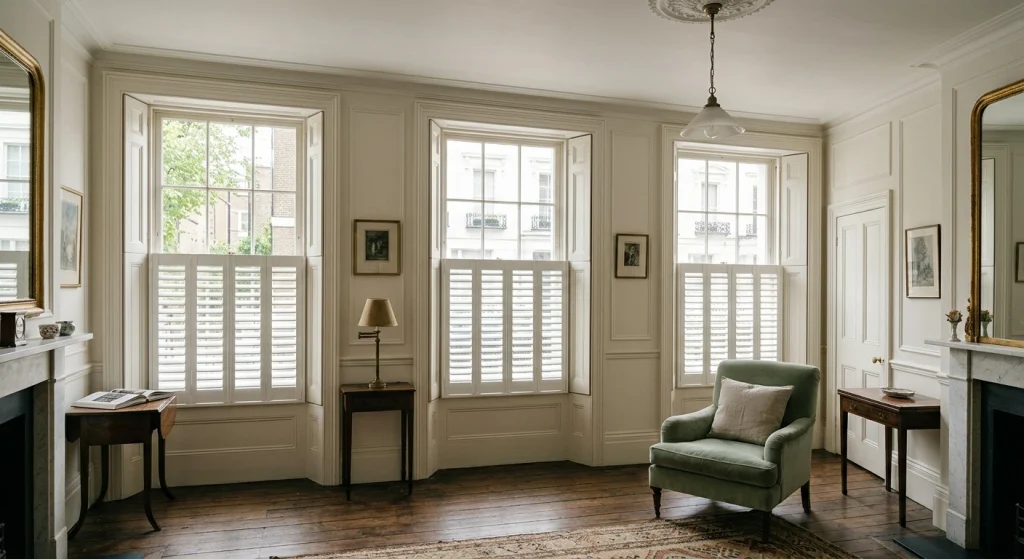
Georgian homes are often recognised by their symmetry, tall sash windows and elegant proportions. Decorative architraves and deep window reveals can also be important features, particularly in larger townhouses.
Full height plantation shutters can complement the height of Georgian windows, creating a balanced finish that does not compete with the architecture. Tier-on-tier shutters, with independently operated upper and lower panels, can be useful in rooms facing the street, where privacy is needed at a lower level while daylight is still welcome above.
In these properties, careful measurement is especially important. The shutters should follow the proportions of the window and sit appropriately within the opening, preserving the visual balance that makes Georgian architecture distinctive.
Victorian properties
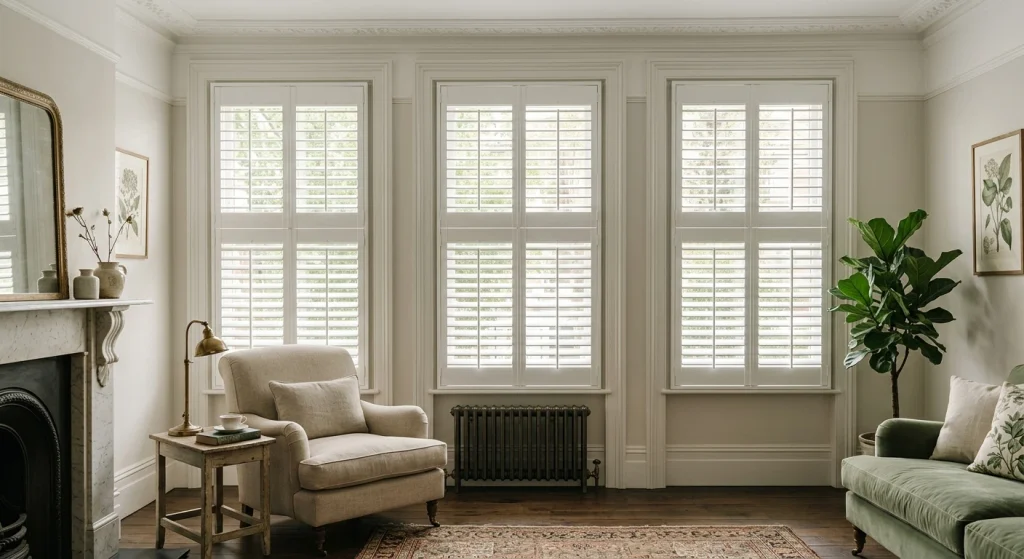
Victorian homes encompass a wide range of architectural styles, from modest terraced houses to larger suburban villas. Bay windows, tall sash windows and decorative timber surrounds are common features, although their design varies considerably from property to property.
Plantation shutters can complement these windows without overwhelming their character. Full height shutters can provide a simple finish for tall windows, while tier-on-tier designs offer flexibility in rooms where privacy and daylight need to be balanced.
Bay windows require particular attention. Each section may sit at a different angle, and the available space can vary around the bay. Made to measure shutters can be designed to follow these angles, creating a more cohesive appearance across the whole window.
Edwardian properties
Edwardian homes often combine traditional architectural details with a lighter, more spacious feel. Some feature generous sash windows, wider openings or prominent bays that bring natural light into the home.
Full height shutters can work well with tall windows, while tier-on-tier designs can provide flexibility where the room is overlooked. Café style shutters, which cover only the lower part of the window, may also be suitable for ground floor rooms where privacy is important but the upper section of the window is best left unobstructed.
As with Georgian and Victorian properties, the aim is not to impose a particular shutter style simply because it is associated with a certain period. It is to find a design that complements the individual home’s windows and existing features.
Why made to measure shutters matter in older homes
One of the challenges of fitting shutters in a period property is that the windows may not be as uniform as they first appear. Over time, buildings settle, timber frames move and previous alterations can leave windows with slightly different dimensions.
A window opening may be out of square, the reveals may vary in depth, or the angles across a bay window may differ from one section to the next. These details can make a significant difference to how shutters fit and operate.
Made to measure shutters are designed around the individual window rather than standard dimensions. This is particularly valuable in older homes, where a carefully planned fit can help the shutters sit neatly within the opening and work with the existing architecture.
Professional measuring and fitting can also help identify practical considerations before installation, including the position of handles, the way the windows open and the space available for the shutter panels. This is especially important where windows have unusual shapes or original architectural details that need to be retained.
Modern shutters, traditional character
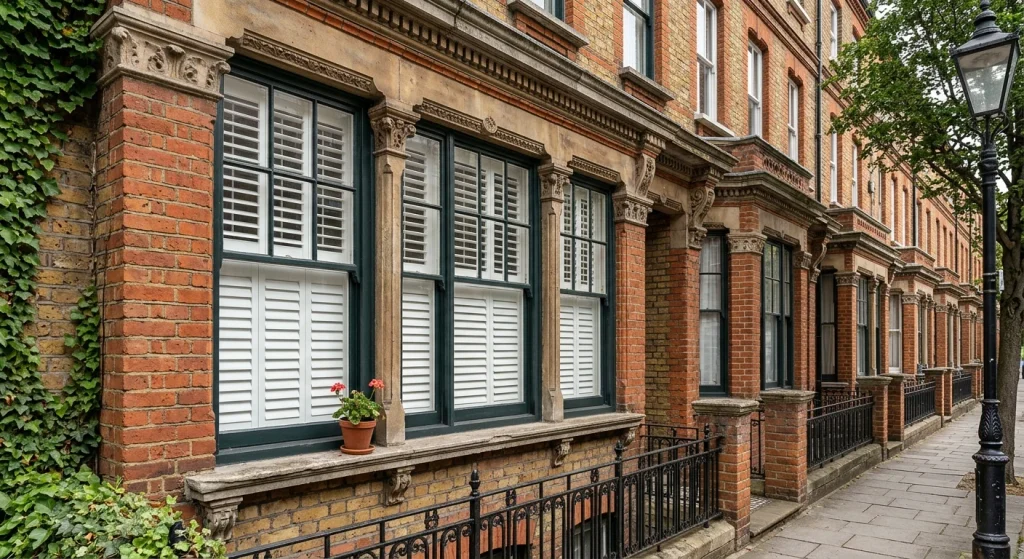
Although the appearance of plantation shutters has evolved, modern materials and manufacturing methods offer more choice than was available to previous generations.
Depending on the product, shutters may be made from timber, engineered wood or composite materials designed for particular environments. The right material depends on the room, the size and configuration of the window, and the practical requirements of the installation.
For period properties, the important consideration is how the finished shutters relate to the original window and its surroundings. Their proportions, panel arrangement and finish should complement the architecture rather than draw attention away from it.
A discreet finish can work well alongside traditional plasterwork, timber frames and decorative surrounds. Equally, a more contrasting finish may suit a period interior that has been updated with a contemporary approach. There is no single solution for every historic home; the aim is to make a considered choice that feels right for the property.
Preserving the features that make period homes special
Original window surrounds, deep reveals, decorative architraves and historic timberwork all contribute to the character of an older property. When adding shutters, these details deserve careful consideration.
A well planned installation should take account of the window’s proportions and the available space, helping the shutters complement the existing features rather than obscure or compete with them. Where original shutters or other historic fittings survive, it is worth considering whether they can be repaired or retained before deciding to replace or add anything.
Listed buildings and properties in conservation areas may also require additional checks. The rules depend on the building and the proposed work, so it is sensible to seek advice from the local planning authority or a suitable conservation professional where necessary.
The goal is not to make a period home look as though it has never changed. It is to introduce modern comfort and practicality in a way that respects the architecture and preserves what makes the property distinctive.
A timeless choice for period properties
Georgian, Victorian and Edwardian homes each have their own architectural character, but they share one important consideration: window dressings should work with the proportions and details of the building.
Plantation shutters offer a practical way to manage privacy and natural light while providing a neat, tailored finish. Their connection to the long history of internal shutters makes them a natural option to explore for period properties, even though modern louvred designs differ from many of the solid, panelled shutters originally used.
With a suitable style, careful measurement and an installation that takes the existing features into account, shutters can complement a period home while meeting the needs of modern living. Rather than competing with the property’s history, they can become a considered addition that allows its original character to remain at the centre of the design.