
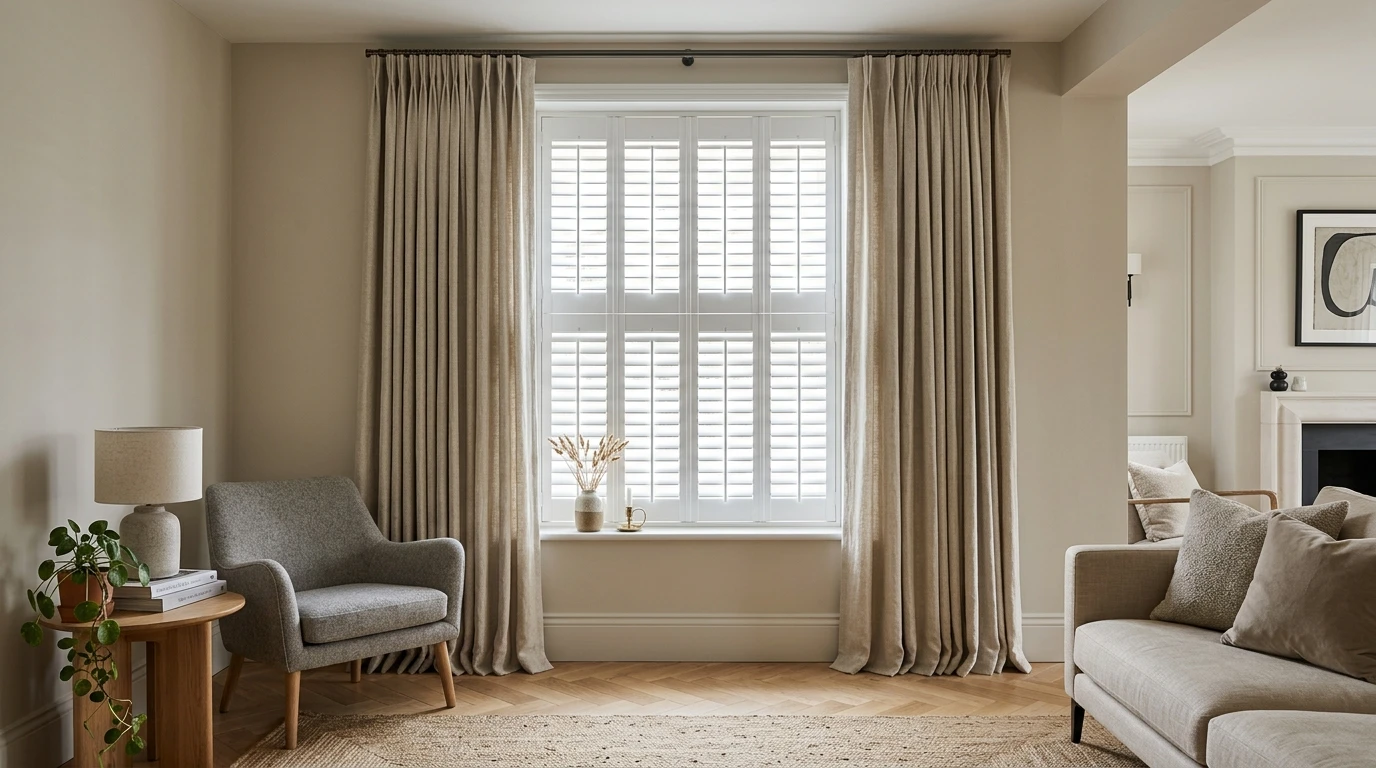
Plantation shutters and curtains are often treated as alternatives, but they can work very well together. Combining the two gives you more flexibility over light and privacy, adds another layer at the window and creates a different look from shutters alone.
They also bring different qualities to a room. Shutters provide a fitted, structured finish with adjustable louvres, while curtains introduce fabric, texture and colour. And because curtains are relatively easy to change, you can update the look of a room over time without replacing the shutters.
The combination can be particularly useful with café style shutters, which cover only the lower part of a window. But whether you want greater darkness, additional insulation or simply a more individual interior, there are several reasons to consider using both.
Why combine curtains with shutters?
Shutters offer adjustable control over daylight and privacy, while curtains provide a further covering that can be drawn when needed. Together, they give you more options throughout the day.
You might angle the louvres to filter daylight while keeping the curtains open and then draw the curtains in the evening for greater privacy and a softer atmosphere. In a bedroom, you could combine the shutters with blackout lined curtains to reduce incoming light.
There is also the appearance to consider. The clean lines of shutters can be balanced by the folds and texture of curtains, giving the window a more layered finish. Depending on your choice of fabric and colour, this can be subtle and understated or make the window a feature of the room.
Of course, curtains are not essential. Shutters can look and function perfectly well on their own. The question is whether an additional layer would be useful for your windows and the way you use the room.
Curtains with café style shutters
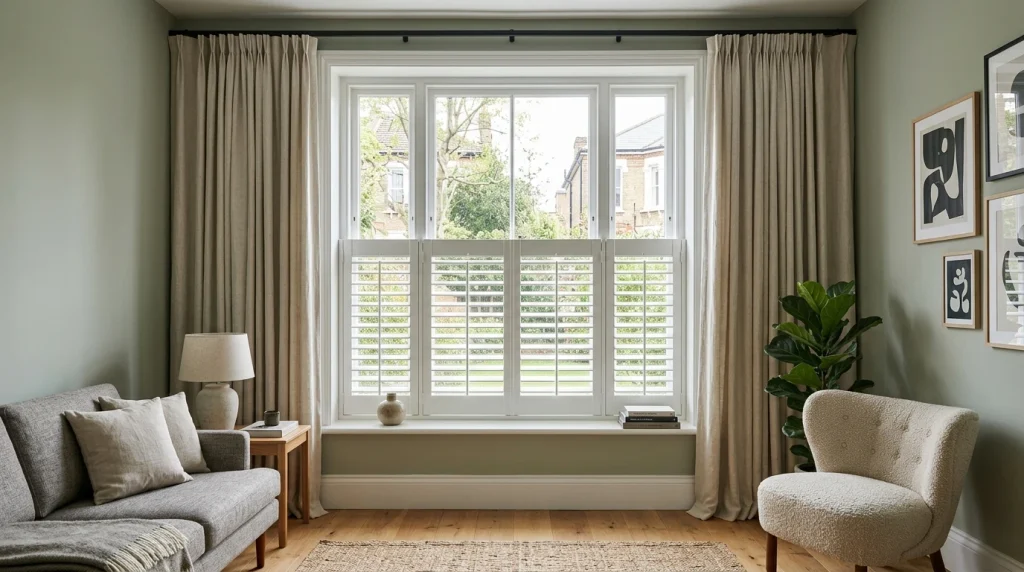
Café style shutters cover the lower portion of a window, leaving the upper glass uncovered. This allows daylight to enter from above while providing privacy across the lower section, which can be particularly useful for street facing windows.
However, leaving the upper part of the window exposed may not suit every situation. You might want to cover it in the evening, reduce direct sunlight or create a more finished appearance around the whole window.
Curtains provide a straightforward way to do this. You can leave them open during the day to make the most of the light, then draw them when you want to cover the entire window. The shutters continue to provide adjustable privacy below.
This combination can also create an interesting design in its own right, with the solid lines of the lower shutters contrasting with the softer fabric above. Whether you prefer full length curtains or a more understated treatment will depend on the window and the look you want to achieve.
Café shutters do not automatically need curtains, though. An uncovered upper section may be exactly what you want, and a blind is another option if you prefer a different finish.
Can curtains and shutters help with blackout?
If you want a bedroom to be darker, combining shutters with curtains gives you another way to control incoming light.
Standard louvred shutters can reduce daylight considerably, but small amounts of light may still pass between the louvres and around the edges of the panels. Curtains add another layer across the window, helping to block more light when they are closed.
Blackout lined curtains are worth considering if darkness is a priority. Their lining is designed to prevent light passing through the fabric, although light can still enter around the sides, top and bottom depending on the fit.
The overall result depends on both coverings and how they are installed. Wider curtains and a track or pole that extends beyond the window can help reduce gaps around the edges.
For many bedrooms, the combination offers a useful balance: shutters for adjustable daylight and privacy during the day, with curtains that can be drawn when you want a darker, more enclosed space.
Can curtains and shutters improve insulation?
Both shutters and curtains can help reduce heat loss through a window, and using them together adds another layer between the room and the glass.
Shutters create a barrier across the window, while curtains provide an additional layer of fabric that can help limit heat transfer when closed. The materials, construction and fit of each covering influence how well they perform, as do the type of glazing and the condition of the window itself.
Curtains can be particularly useful in this respect when they are made from a heavier fabric or have a thermal lining. Their coverage also matters: curtains that extend beyond the window and sit close to the surrounding wall can help limit the movement of cooler air around the edges.
The combination can contribute to a more comfortable room, particularly during colder weather, while helping to reduce heat escaping through the window. The precise benefit will vary from one home to another, so it is better to consider the coverings as part of the room’s overall insulation rather than expect a fixed level of energy saving.
If thermal performance is important to you, look at the curtain fabric and lining alongside the shutter construction and how closely both coverings fit the window.
Creating a more individual look
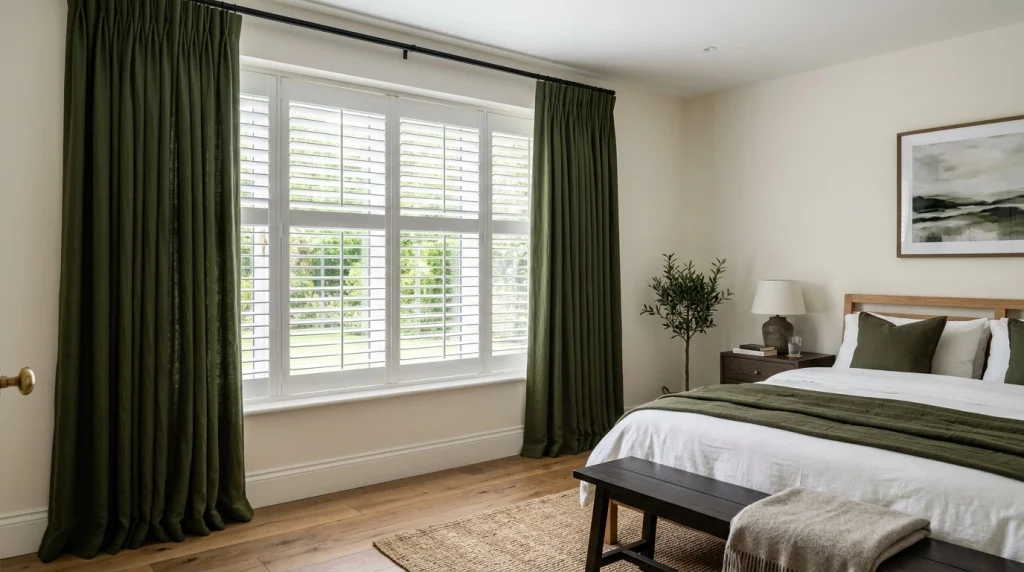
One of the appealing aspects of combining shutters and curtains is the opportunity to give a room its own character.
Shutters have a defined, architectural appearance, with their frames and horizontal louvres creating a consistent pattern around the window. Curtains introduce a different texture and shape, from lightweight linen that softens the edges to heavier fabrics that make the window a more prominent feature.
Colour can change the effect considerably. Neutral curtains can complement white or off white shutters for a restrained look, while deeper shades can create contrast. Patterns and textured fabrics can introduce interest without necessarily overwhelming the room.
The right combination will depend on the wider interior. Simple curtains can sit comfortably in a contemporary space, while fuller fabrics may work better with traditional furnishings or period features. You can also use curtains to pick up colours already present in the room, tying the window treatment into the rest of the scheme.
There is no single look to aim for. The benefit of combining the two is that you can choose the balance of structure, softness and colour that suits your home.
Curtains give you flexibility when redecorating
Shutters are usually made to measure and fitted as a more permanent part of the room. They are often chosen to complement the windows and wider interior, with the expectation that they will remain in place for years.
Curtains are much easier to change. If you repaint the walls, replace the furniture or simply want a different look, you can choose a new fabric or colour without necessarily changing the shutters.
This is one reason a relatively neutral shutter finish can work well alongside curtains. The shutters provide a consistent backdrop, while the fabric can evolve with your decorating choices. You might start with understated linen curtains, then introduce a richer colour or pattern when you next refresh the room.
Changing curtains is not the only way to update a window, but it offers a straightforward way to make a noticeable difference without replacing a more permanent fixture.
What should you consider before combining them?
Before choosing both coverings, think about how they will fit and work together.
Space around the window: Hinged shutter panels need room to open and fold back. Curtain poles, tracks and gathered fabric should not obstruct their movement.
Curtain position: Consider whether the curtains will hang outside the shutter frame or within a recess. The available space and the layout of the window will influence what is practical.
Handles and window access: Make sure the curtains can be drawn without making handles difficult to reach, and that you can still open the shutters and windows as intended.
Radiators and furniture: Long curtains may hang over a radiator or behind furniture. Consider the room layout and how you want heat to circulate.
Light and privacy: If darkness is important, think about lined curtains and how much coverage they provide. If you mainly want a decorative layer, lighter fabrics may be sufficient.
Cost: Combining two window coverings will usually cost more initially than choosing just one. Consider which benefits matter most to you and whether both coverings are worthwhile for that particular room.
These details are especially important around bay windows, narrow recesses and windows with unusual handles or opening mechanisms. Planning the arrangement before ordering can help ensure the shutters and curtains work together rather than compete for space.
Do you need curtains with plantation shutters?
No. Shutters can provide effective everyday control over daylight and privacy without an additional covering.
Curtains are worth considering if you want to soften the appearance of the window, add another layer for darkness or insulation, or retain the freedom to change the room’s look over time. They can be particularly useful with café style shutters if you also want the option of covering the upper part of the window.
The combination will not suit every room or decorating style, and the extra cost and space required may not be worthwhile for everyone. In other situations, though, the two can complement one another both practically and visually.
So, should you combine curtains with shutters?
It depends on what you want from your window coverings. Shutters alone may provide everything you need, while curtains can add flexibility, another layer for warmth and darkness, and a different decorative feel.
If you like café style shutters but want to cover the whole window when needed, curtains are one option worth considering. If you want a darker bedroom or a little more help retaining warmth, they can serve a practical purpose as well as a decorative one. And if you enjoy changing your interior, curtains allow you to refresh the room without replacing the shutters.
Rather than treating shutters and curtains as competing choices, consider how they could work together. The right combination is the one that suits your windows, your room and the way you want to live in it.