
Shutters by Room
Shutters can be used throughout the home, but the practical considerations can vary depending on the room. Privacy, natural light, moisture, ventilation and how the space is used can all influence the type of shutter and material that may be suitable.
Below is an overview of the main rooms where shutters are commonly used. Each guide looks at the particular considerations for that room, along with the shutter options and features worth thinking about.
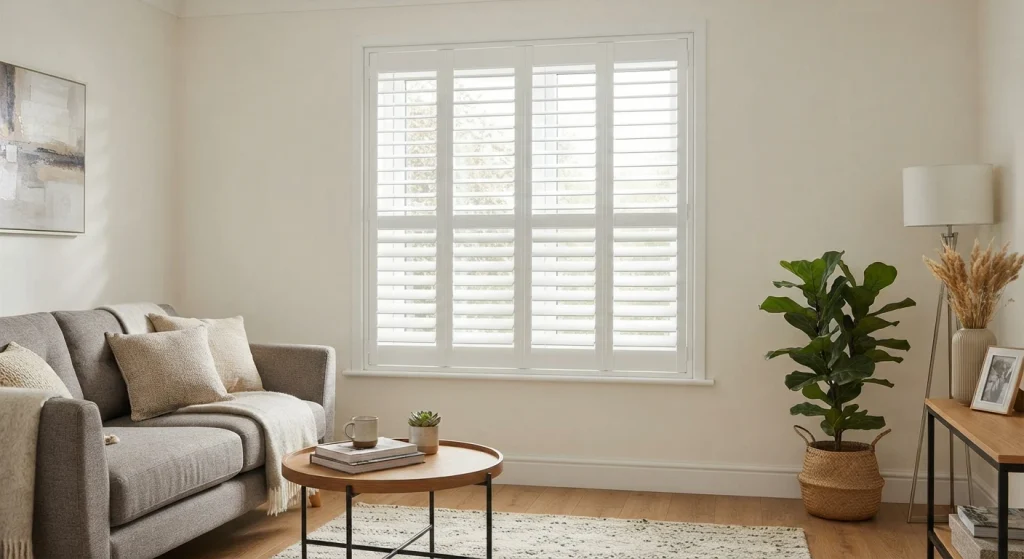
Living room shutters
Living rooms can accommodate a wide range of shutter styles, from full height and tier-on-tier to café style and solid panels. The right configuration can depend on the size and shape of the windows, how much natural light you want and the level of privacy required.
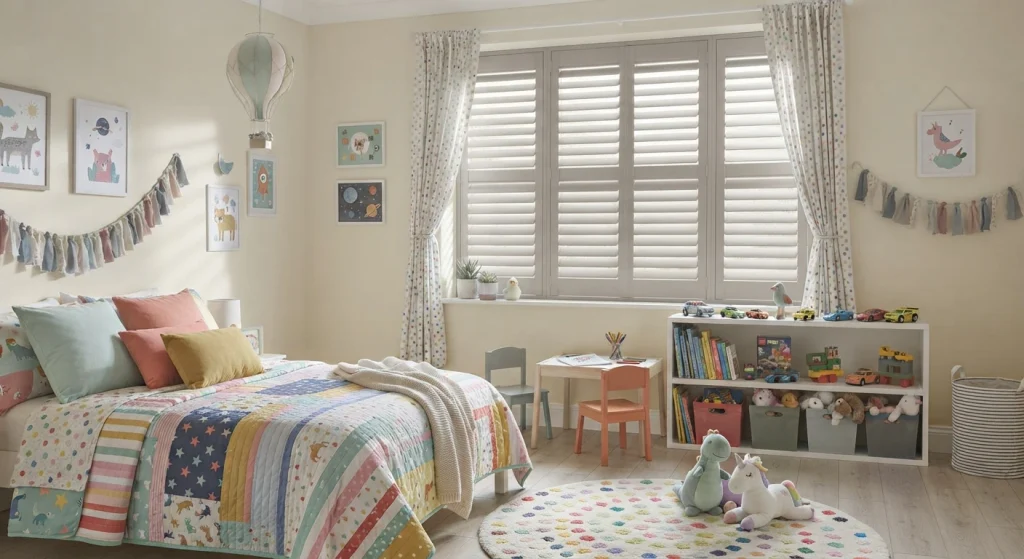
Bedroom shutters
Bedrooms often require a balance between privacy, natural light and the ability to create a darker room. Different shutter styles and louvre configurations offer varying levels of control, while the choice of material and finish can also affect the overall appearance.
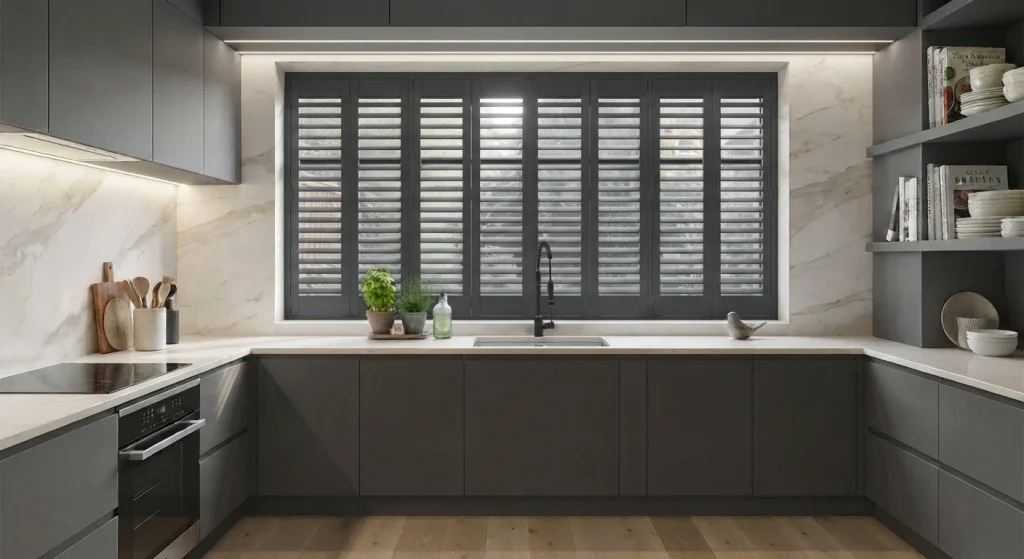
Kitchen shutters
Kitchens can have different requirements from other rooms, particularly where shutters are close to sinks, cooking areas or sources of moisture. Material choice, cleaning and ventilation are therefore worth considering alongside the style and appearance of the shutters.
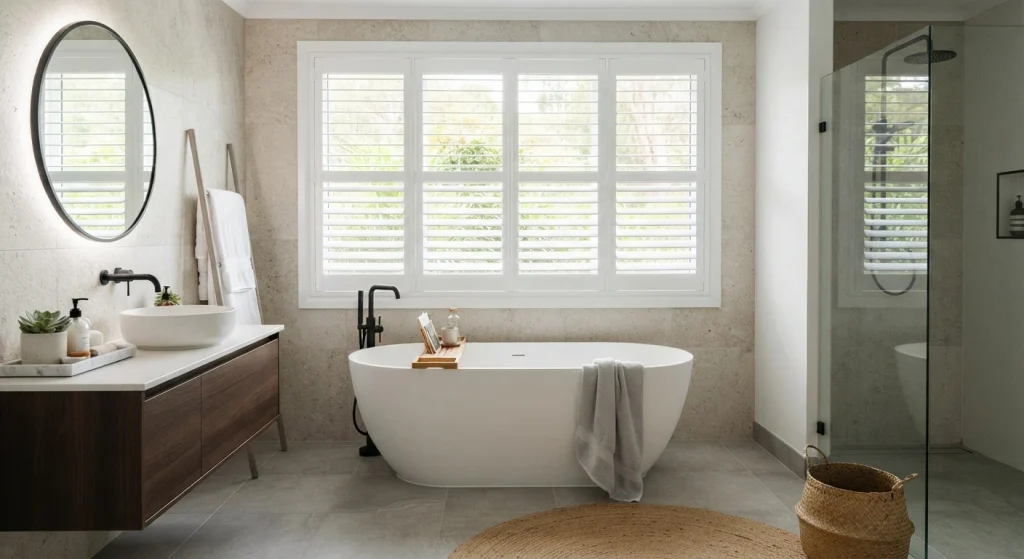
Bathroom shutters
Bathrooms are exposed to higher levels of moisture and humidity, making material selection an important consideration. Moisture resistant shutter options can be considered alongside factors such as privacy, ventilation and the size and position of the window.
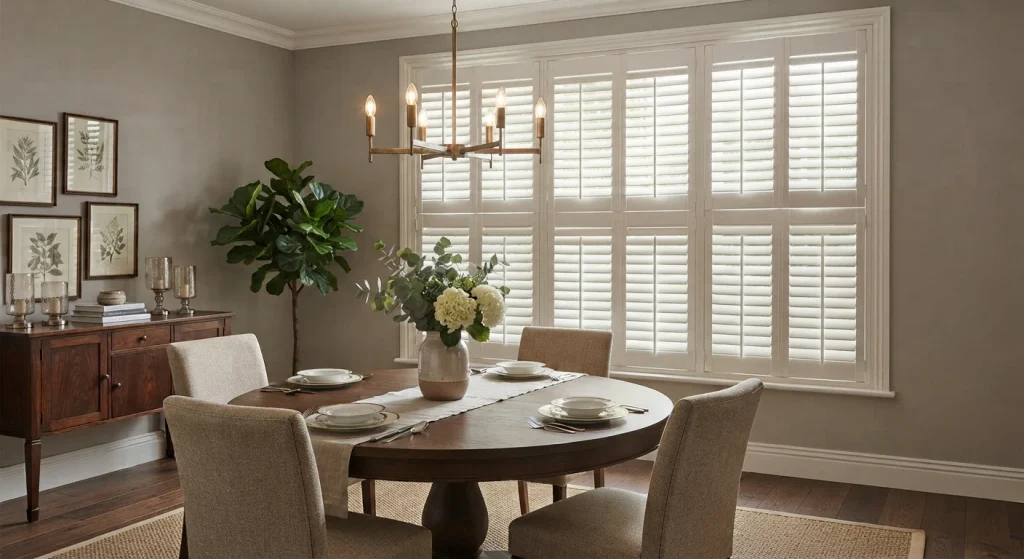
Dining room shutters
Dining rooms can suit a variety of shutter styles and configurations, depending on the size of the room, window and level of privacy required. Light control and the overall appearance of the shutters can also be considered alongside the existing interior.