
Bay Window Shutters
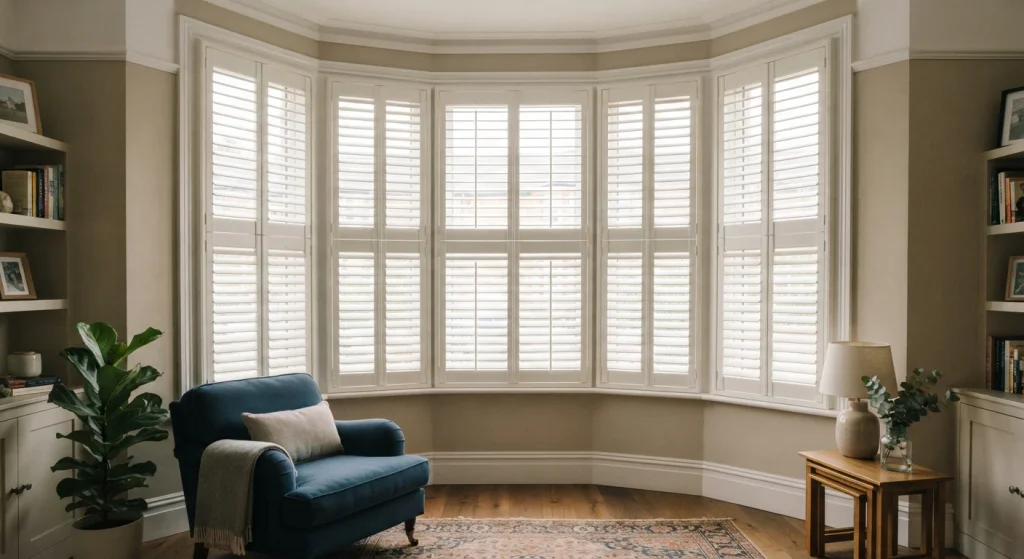
A beautiful fit from every angle
Bay window shutters offer a stylish, practical way to dress bay windows, creating a neat, fitted finish that complements the shape of your window. With a range of styles and configurations available, they can help you manage natural light, improve privacy and make a striking feature of your room.
A tailored fit for bay windows
Shutters can be configured to follow the angles of a bay window, creating a clean, built in appearance that works with its individual shape.
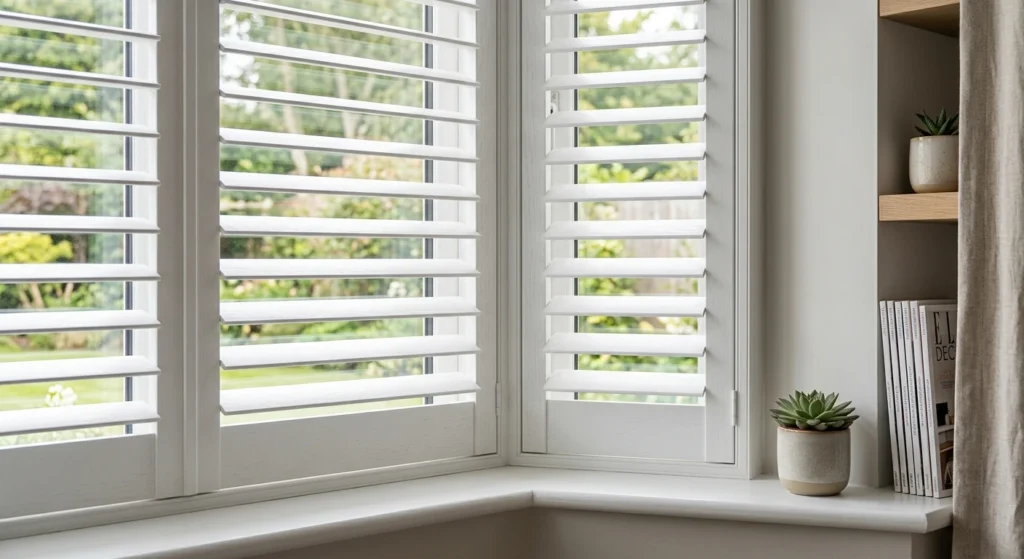
Control over light and privacy
Adjustable louvres allow you to manage incoming daylight and reduce direct views into your home, while still letting light filter through.
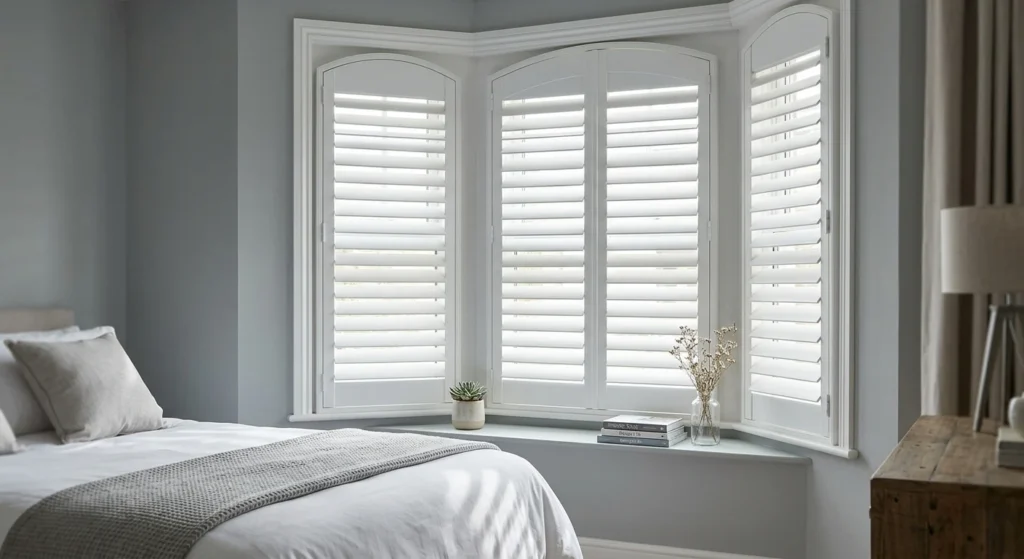
Enhance your window’s character
From period properties to contemporary homes, shutters can complement the architecture of a bay window and turn it into a standout feature.
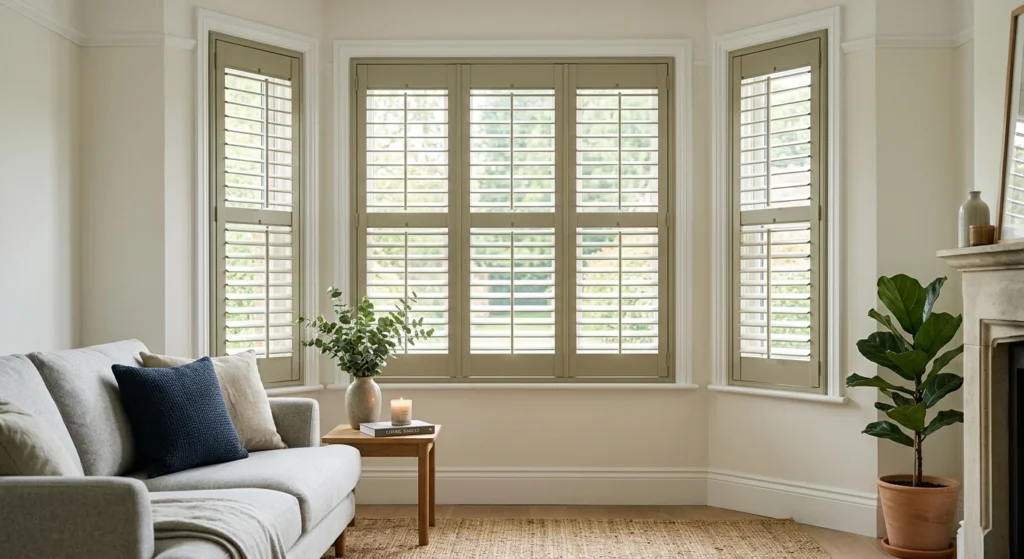
A practical everyday solution
Made to measure shutters provide a fitted window covering that can be opened, closed and adjusted to suit your room and daily routine.
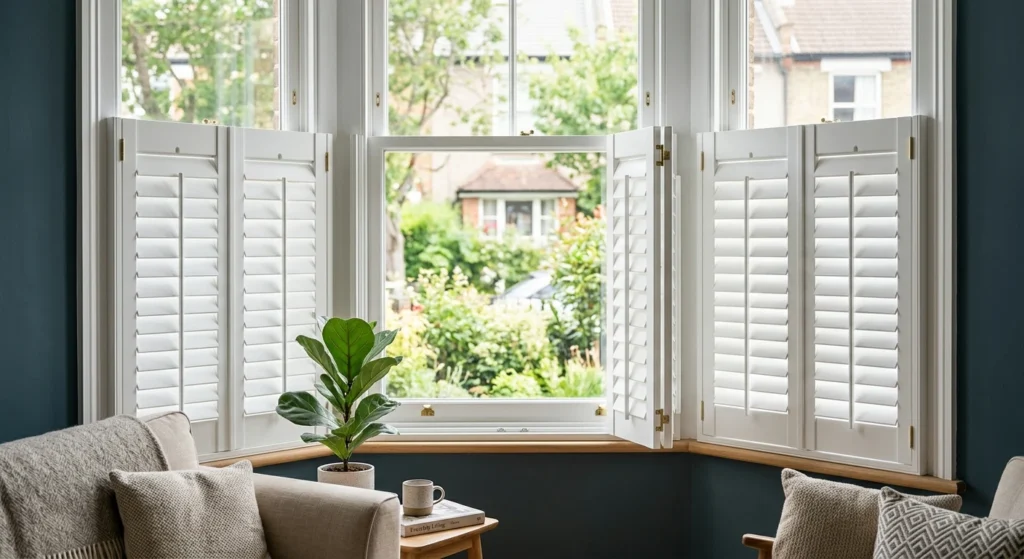
Bay window shutters, fully explained…
Plantation shutters are a popular choice for homeowners looking to make the most of their bay windows. By fitting neatly within the individual sections of the window, they create a coordinated finish that complements the shape of the bay while offering practical control over light and privacy. Available in a range of styles, materials and finishes, they can suit everything from traditional period properties to modern homes.
Unlike curtains or standard blinds, shutters can be fitted to follow the angles of a bay window, helping each section work together as part of a consistent design. However, bay windows vary considerably in shape and size, so choosing the right style and configuration is important for achieving a good fit and a finish that works well for everyday use.
Understanding bay window shutters
A bay window typically projects outwards from the main wall of a building, creating a window area made up of several sections. These may be arranged at different angles, depending on the design of the property. While this can bring additional daylight into a room and create a sense of space, it can also make choosing a suitable window covering more challenging.
Bay window shutters are designed to accommodate this arrangement, with panels fitted across the separate window sections. Each section can be configured to suit the shape and dimensions of the bay, creating a fitted appearance without relying on one continuous covering across the entire window.
The finished look depends on the design of the shutters, the number and arrangement of panels, and how the frames are fitted. When carefully planned and measured, shutters can complement the architecture of the bay rather than draw attention to its angles or irregularities.
Choosing the right shutter style for a bay window
There are several shutter styles to consider for a bay window, and the most suitable option will depend on the proportions of the window, the room and how you want to use the space. Both the design of the panels and the way they cover the window will influence the finished appearance and practicality.
Full height shutters cover the full height of the window and provide a consistent appearance across the bay. They are a versatile option for living rooms, dining rooms and bedrooms, offering a balance of privacy, light control and a clean, fitted finish.
Tier-on-tier shutters divide the panels horizontally into separate upper and lower sections. The two tiers can be operated independently, allowing you to open the top section to let in daylight while keeping the lower section closed for privacy. This can be particularly useful for bay windows that face a pavement or neighbouring property.
Café style shutters cover only the lower part of the window, leaving the upper portion uncovered. They can work well where privacy is needed at street level but maintaining an open view and allowing plenty of daylight into the room are priorities.
Solid shutters use solid panels rather than adjustable louvres, creating a more traditional appearance that can suit period properties and certain interior styles. Depending on their configuration, they can be opened to reveal the window or closed to provide privacy and reduce incoming light. They offer a different look and functionality from louvred shutters, so it is worth considering how much daylight and flexibility you want from your bay window covering.
These styles can sometimes be combined with different panel arrangements, depending on the window and the shutter design. The height and shape of the bay, the position of its divisions and the way the panels need to open will all influence the final choice. Looking at the window as a whole, rather than choosing a style in isolation, can help create a balanced and practical result.
How shutters fit around bay windows
One of the main considerations when choosing bay window shutters is how they will fit around the angles and individual sections of the window. Unlike a standard flat window, a bay requires the shutter panels and frames to work together across several planes, with the exact arrangement depending on the shape of the opening.
The angles between the window sections affect how the shutters are positioned and how their panels open. There also needs to be sufficient room for the panels to move without catching on adjacent frames, window handles, sills or nearby furniture. These details are particularly important in smaller bays, where the available space may be limited.
Accurate measuring and careful planning help ensure that the finished shutters follow the shape of the window and operate as intended. The frame design, panel sizes and opening arrangements should all be considered before installation, rather than treated as separate decisions.
Because bay windows vary so much, there is no single configuration that works for every property. A solution that suits a wide, shallow bay may not be appropriate for a narrower bay with sharper angles. Taking the individual dimensions and layout into account is essential to achieving a neat, practical finish.
Light, privacy and everyday use
Bay windows can bring considerable natural light into a room, but their position and multiple angles can also create challenges when it comes to privacy. Windows that face a road, footpath or neighbouring home may need a more flexible covering than those overlooking a private garden.
Plantation shutters, which use adjustable horizontal louvres, allow you to alter the direction of incoming light and reduce direct views into the room. The panels across a bay can be adjusted to suit different conditions throughout the day, helping you balance daylight with privacy. Depending on the position of the sun and the surrounding buildings, you may also find that different sections of the bay need different adjustments.
Shutters can be opened fully when you want an unobstructed view or closed when greater privacy is needed. Tier-on-tier and café style designs offer additional options by allowing some parts of the window to remain covered while others are left open.
Choosing materials and finishes
The material and finish you choose will play an important part in the overall look of your bay window shutters, helping you create a style that complements your home and suits the room. With several window sections to cover, it is worth considering how the shutters will look across the entire bay, as well as how they will complement the rest of the room.
Painted finishes, particularly white and other light neutral shades, can create a bright, understated look that works well with many interior styles. Wood effect and natural wood stains offer a different character, bringing warmth and texture to the window. The right choice will depend on your existing décor, the architectural style of your home and the effect you want to achieve.
Practical requirements matter too. The room’s moisture levels, exposure to sunlight and everyday use can all influence which material is appropriate. A material that performs well in a living room may not necessarily be the best choice for a bathroom or another space with higher humidity.
It is also worth considering the finish in relation to the size and shape of the bay. A consistent colour across all the panels can help create a unified appearance, while the choice of frame and panel design can influence how prominent the shutters look within the room.
The long term value of bay window shutters
Bay window shutters can offer a combination of visual appeal and everyday practicality. Their fitted appearance can make a bay window feel like a considered part of the room’s design, while the ability to open, close and adjust the panels gives you flexibility over light, privacy and views.
They can also provide a long term alternative to conventional blinds or curtains. Rather than relying on a covering that hangs across the front of the window, shutters are fitted to the individual sections of the bay, creating a more integrated finish. Their appearance can work with a variety of interior styles, which may make them easier to accommodate if you redecorate in the future.
However, bay window shutters often involve a greater initial investment than simpler window coverings. The shape of the bay, the number of panels required, the chosen material and the complexity of the installation can all affect the overall cost. It is therefore worth weighing the initial expense against the appearance, functionality and expected lifespan you want from your window covering.
The quality of the materials, construction, measuring and installation will all influence how well the shutters perform over time. Choosing a style that suits both the window and the way you use the room is just as important as its appearance.
Measuring and installing bay window shutters
Measuring for bay window shutters requires particular care because each section of the window needs to be considered in relation to the others. Even small inaccuracies can affect how the frames align, how the panels meet and whether the shutters open and close freely.
The angles between the windows, the depth of the recess, the position of the sill and any protruding handles or other obstructions should all be taken into account. The available fixing space can also influence whether the shutters are fitted within the recess or positioned outside it. The most appropriate arrangement will depend on the window’s construction and the space available.
Installation needs to account for the same details. The frames must be positioned correctly across the different sections of the bay, with enough clearance for the panels to operate as intended. Careful fitting helps maintain a consistent appearance and reduces the risk of panels catching against neighbouring sections or other parts of the window.
Some homeowners may choose to measure and install their shutters themselves, particularly if they have experience with similar projects. However, the multiple angles and individual sections of a bay window can make the process more challenging than fitting shutters to a standard window. Professional measuring and installation can help ensure the shutters fit correctly, align neatly and operate smoothly, making it a worthwhile consideration for more complex bay window designs.