
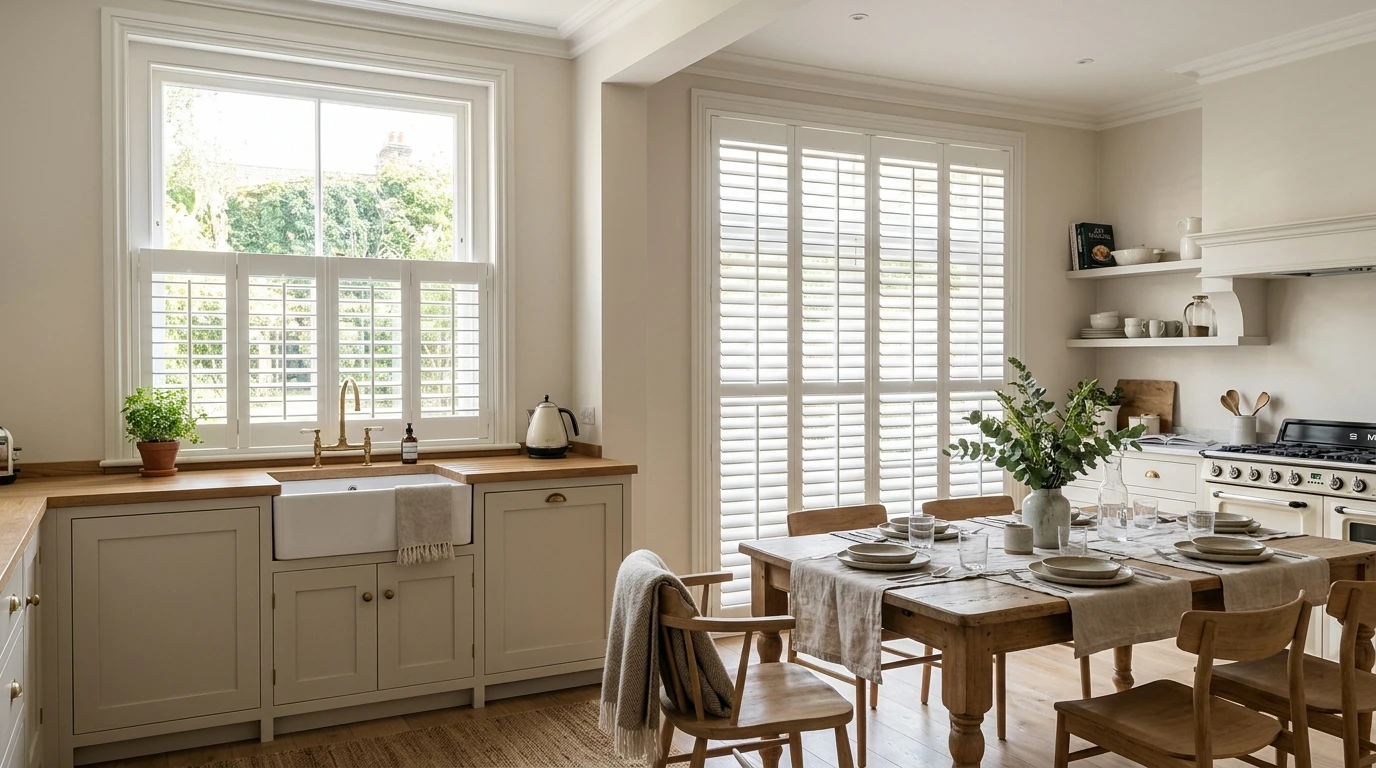
When choosing plantation shutters, it can be tempting to select the same style, colour and finish for every window in your home. Matching shutters can create a beautifully consistent look, helping rooms feel connected and giving your interiors a sense of continuity.
But do all your shutters really need to match?
Not at all. While some homeowners love the simplicity of a matching look, others prefer to choose shutters according to the needs, character and style of each room and there are plenty of practical reasons why different windows might benefit from different shutter designs.
From a bathroom that needs extra privacy to a living room that would benefit from more natural light, the best choice isn’t necessarily the one that matches the rest of your home. It’s the one that works for you.
The appeal of matching shutters
There’s no denying that matching shutters can look fantastic. Using the same colour and finish throughout your home can create a sense of flow, particularly if you have an open plan layout or several rooms that are visible from one another.
White shutters, for example, offer a timeless, versatile look that works with a wide range of interior styles. Repeating the same finish across different windows can make a home feel calm, coordinated and considered.
Matching shutters can also simplify the decision making process. Once you’ve found a style you love, carrying it through the house creates a consistent backdrop for your furniture, flooring and accessories.
However, matching doesn’t have to mean making every window identical. You can keep the same colour and finish while choosing different shutter configurations to suit the shape of each window or the way you use the room and if you would prefer a little more variety, there’s no reason not to explore it.
Why different rooms may need different shutters
Every room has its own purpose, and the windows within it can present very different challenges. Privacy, natural light, moisture and the way a space is used can all influence which shutters are most suitable.
Bathrooms: privacy and moisture resistance
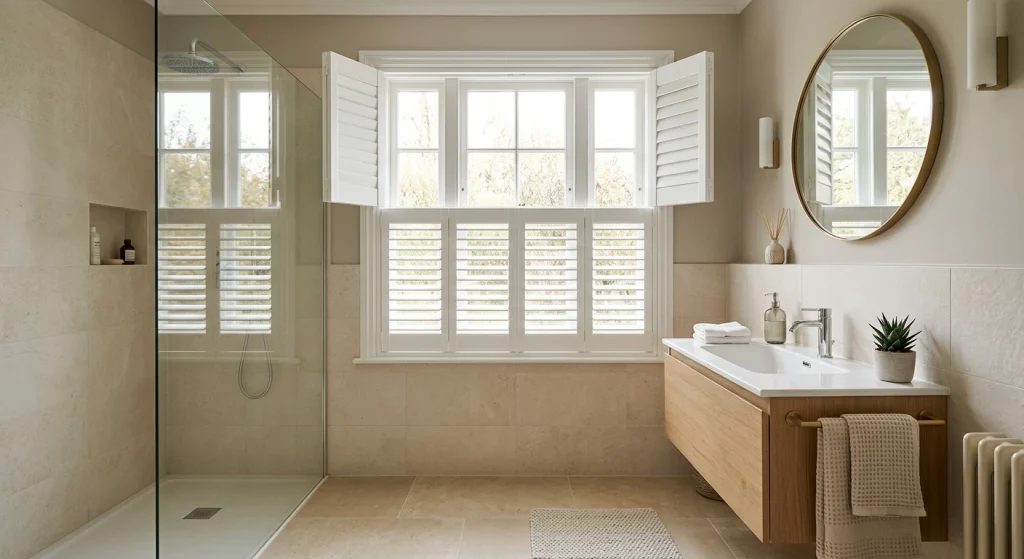
A bathroom window overlooking neighbouring houses, a garden shared with other properties or a public footpath may need a different solution from a bedroom or living room.
Plantation shutters allow you to adjust the louvres to manage privacy while still letting daylight into the room. Depending on the window’s position and the level of overlooking, you may prefer a configuration that provides greater coverage where it’s needed most.
Material choice is also important. Bathrooms experience higher levels of humidity than many other rooms, so it’s worth looking at shutter materials specifically designed to cope with moisture. Always check that the product is suitable for the conditions in your bathroom.
Choosing a practical, moisture resistant option for the bathroom doesn’t mean you have to use the same material or finish throughout the rest of your home.
Living rooms overlooking streets or pathways
Imagine a living room at the front of a house, with people regularly walking past the window. You want to enjoy the daylight and the view, but you may not want passers-by looking directly into your home.
Plantation shutters can offer a useful balance between privacy and natural light. By adjusting the louvres, you can limit direct views into the room without necessarily closing off the entire window with curtains or blinds.
The right arrangement will depend on the height of the window, the surrounding buildings and how exposed the room feels. In some homes, full height shutters may be ideal. In others, a café style design may be worth considering.
This is a good example of why choosing shutters room by room can make sense. The living room’s privacy requirements may be completely different from those of a bedroom at the back of the house.
Rooms that need more natural light: consider café style shutters
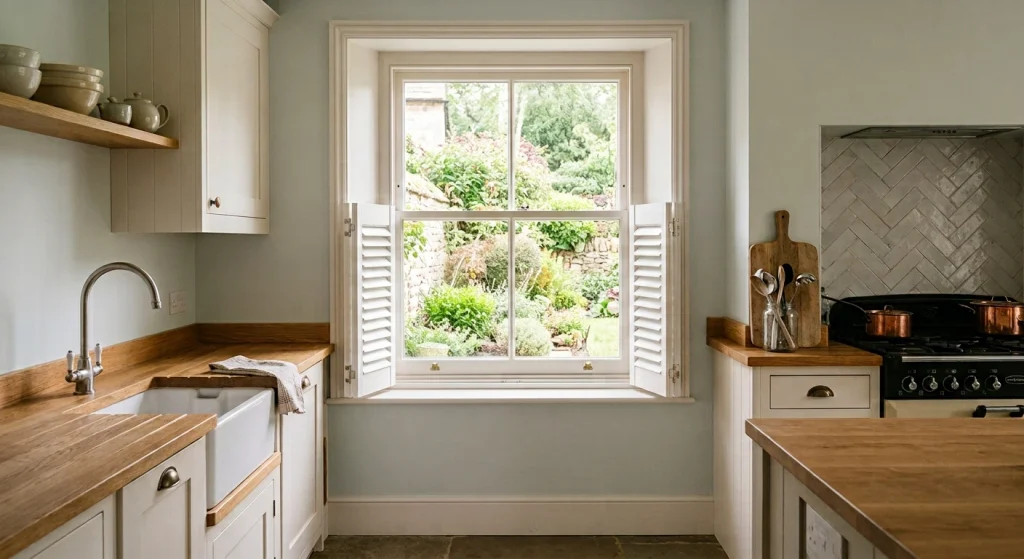
Some rooms simply don’t receive as much natural light as we’d like. Perhaps a window faces a narrow street, sits close to a neighbouring property or is partly shaded by trees or nearby buildings.
In these situations, café style shutters can be an option worth exploring.
Café style shutters typically cover the lower portion of a window, leaving the upper glass uncovered. This can provide privacy at eye level while allowing daylight to enter through the top of the window.
They’re particularly popular for street facing ground floor windows, where privacy is important but covering the entire window may feel unnecessary.
Of course, café style shutters won’t increase the amount of daylight available outside, and their suitability depends on the window and its surroundings. But they can be a useful way to make the most of the light a room receives.
There’s no need to use café style shutters throughout your home just because they work well in one room. You can combine them with full height shutters elsewhere.
Children’s bedrooms: an opportunity to have fun with colour
Children’s rooms are often where homeowners feel more comfortable experimenting with colour and personality.
While white shutters can work beautifully in a nursery or child’s bedroom, they’re certainly not the only option. Soft greens, pale blues, warm yellows and playful pinks can all help create a room that feels individual and welcoming.
You might choose a subtle colour that complements the walls and bedding, or make the shutters a feature in their own right. A brighter shade can add character without requiring you to decorate the entire room in a bold colour.
And if you prefer neutral shutters elsewhere in the home, a child’s bedroom can be an opportunity to do something a little different.
The same principle applies to playrooms, home offices and other spaces where a more individual look might suit the room.
Shutters don’t have to be white
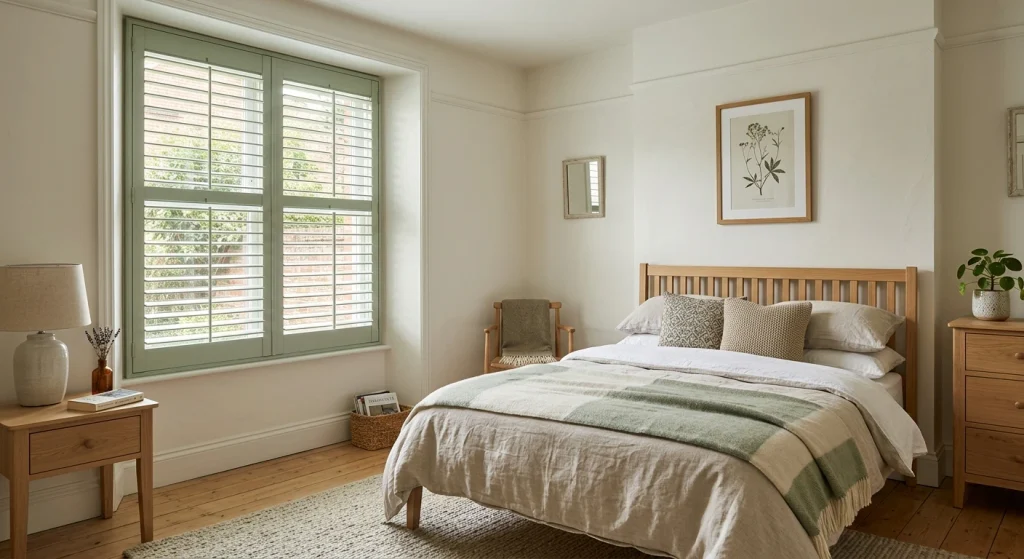
White remains a popular shutter colour for good reason. It’s versatile, timeless and works well with many different interior styles.
But if you’re choosing shutters for your home, it’s worth looking beyond white before making your final decision.
Depending on the available finishes, coloured shutters can complement your existing décor or create an interesting contrast. Consider some of these approaches:
- Soft, natural shades: Sage green, warm grey and muted neutrals can work well in relaxed, understated interiors.
- Darker colours: Deep blues and other richer tones can make a window a more distinctive feature.
- Natural wood finishes: These can introduce warmth and texture, particularly in rooms with timber furniture or natural materials.
- Playful colours: Children’s bedrooms, playrooms and other personal spaces can be ideal places to experiment with a more expressive finish.
You could also use different colours in different rooms while keeping a common thread throughout the house. For example, you might choose a neutral finish in the main living areas, a moisture suitable option for the bathroom and a softer colour in a child’s bedroom.
The aim is not to follow a strict formula, but to find combinations that work with your home and your personal taste.
Should you choose the same material throughout your home?
Not necessarily. As with colour and style, the most suitable material may depend on the room.
In a bathroom, moisture resistance may be a priority. In a busy family living room, durability and ease of cleaning might be more important. In a bedroom or formal sitting room, you may have more freedom to prioritise the appearance and finish you prefer.
Different shutter materials can have different characteristics, so it’s worth checking the product specifications and considering the conditions in which each shutter will be used.
You don’t have to choose one material simply because you’ve selected it for another room. If a different option better suits a particular window, it may be the more practical choice.
How to mix shutter styles without losing a cohesive look
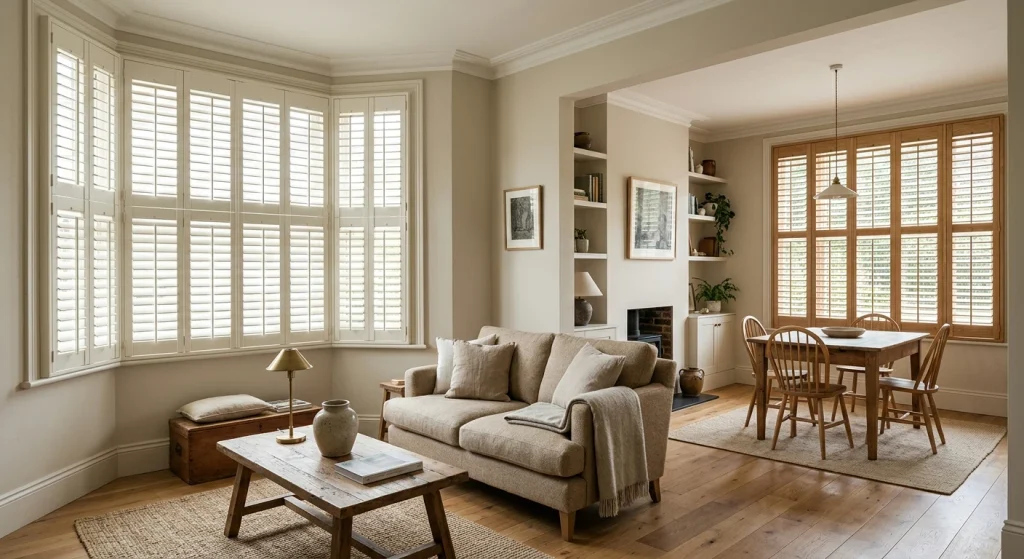
If you like the idea of choosing different shutters for different rooms but worry that your home might look mismatched, there are a few simple ways to create a sense of continuity.
Repeat colours or finishes where it makes sense. You don’t need to use one finish everywhere, but repeating a colour in several rooms can help connect the overall scheme.
Consider the view between rooms. In open plan spaces, or where several windows can be seen together, it may help to keep the shutters visually related. In rooms that are more separate, you have greater freedom to experiment.
Let the window guide the design. Different window shapes and positions may suit different shutter configurations. A consistent colour can help tie these together without requiring every shutter to have the same layout.
Balance appearance with practical needs. Privacy, light and moisture resistance are all legitimate reasons to make a different choice. A cohesive home doesn’t need to sacrifice practicality.
Most importantly, don’t feel that you have to make every room follow the same rules. A thoughtful mix can look just as intentional as a completely matching scheme.
So, should all the shutters in your home match?
Ultimately, that’s entirely up to you.
Matching shutters can create a classic, coordinated look, and if that’s what you love, there’s every reason to choose them throughout your home.
But different shutters can also make sense. A bathroom may need a moisture resistant material, a street-facing living room may benefit from a privacy focused design, a darker room may suit café style shutters, and a child’s bedroom might be the perfect place to introduce colour.
You can keep things consistent with similar finishes while making practical changes from room to room. Or you can embrace a more varied approach if that better reflects your style.
There is no single right answer. The best shutters are the ones that suit your windows, your home and the way you live.
If you’re planning to install shutters in several rooms, take the time to consider each space individually. Think about the amount of natural light, how much privacy you need, the conditions in the room and the look you want to achieve.
Once you understand what each room needs, you’ll be in a much better position to choose shutters you’ll enjoy for years to come.