
Tier-on-Tier Shutters
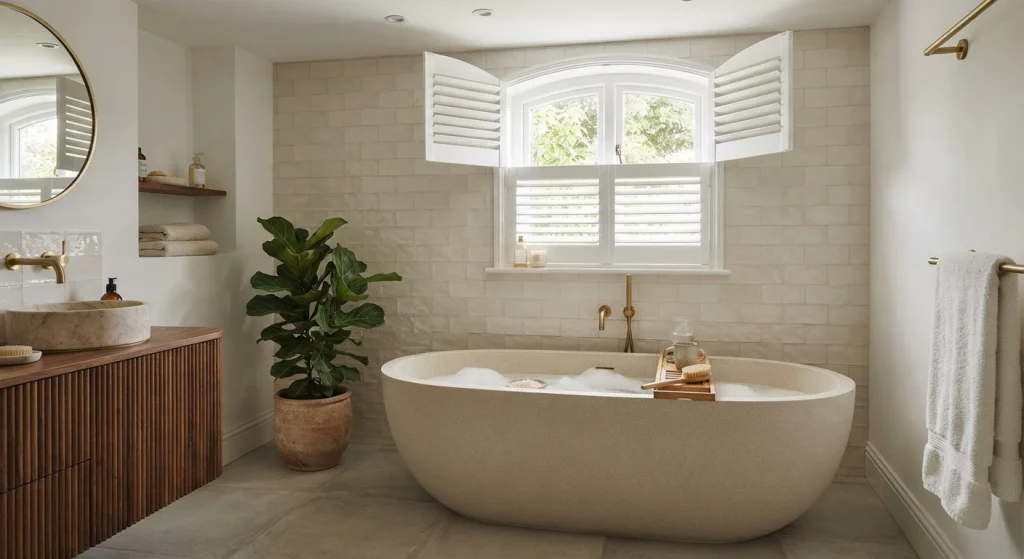
Flexible style for complete control
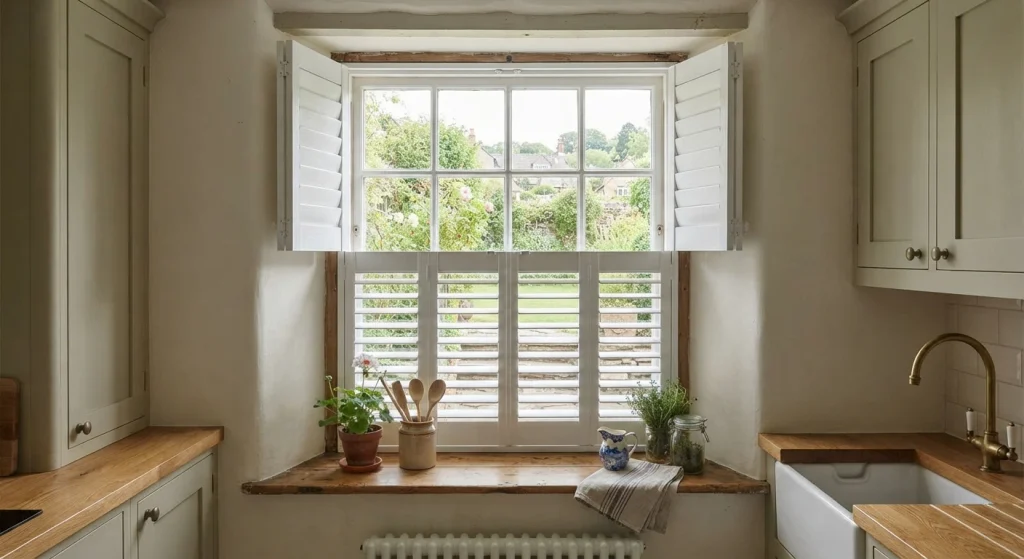
Tier-on-tier shutters combine two independently opening sections to give you greater control over light, privacy and ventilation. The upper and lower panels can be opened or closed separately, while the louvres on each section can also be adjusted independently. This makes them particularly useful for windows where you want privacy at the lower level while still allowing natural light into the room.
Tier-on-tier finishes
Choose from a wide range of colours and finishes to suit your interior. From traditional whites and neutrals to contemporary colours and natural wood finishes, tier-on-tier shutters can be tailored to complement both classic and modern homes.
Tier-on-tier materials
Available in a range of materials, from hardwood and engineered materials to moisture resistant options. The most suitable choice depends on the room, window size, desired appearance and budget, with each material offering different advantages in terms of weight, durability and moisture resistance.
Rooms
Tier-on-tier shutters can work particularly well in rooms where privacy and light levels need to change throughout the day. They are commonly used in living rooms, bedrooms, dining rooms and hallways, while suitable moisture resistant materials can also be considered for kitchens and bathrooms.
Independent light control
One of the main advantages of tier-on-tier shutters is the ability to control the upper and lower sections independently. You can open the top panels to bring in daylight while keeping the lower panels closed, or adjust the louvres on each section to find the right balance of light and shade.
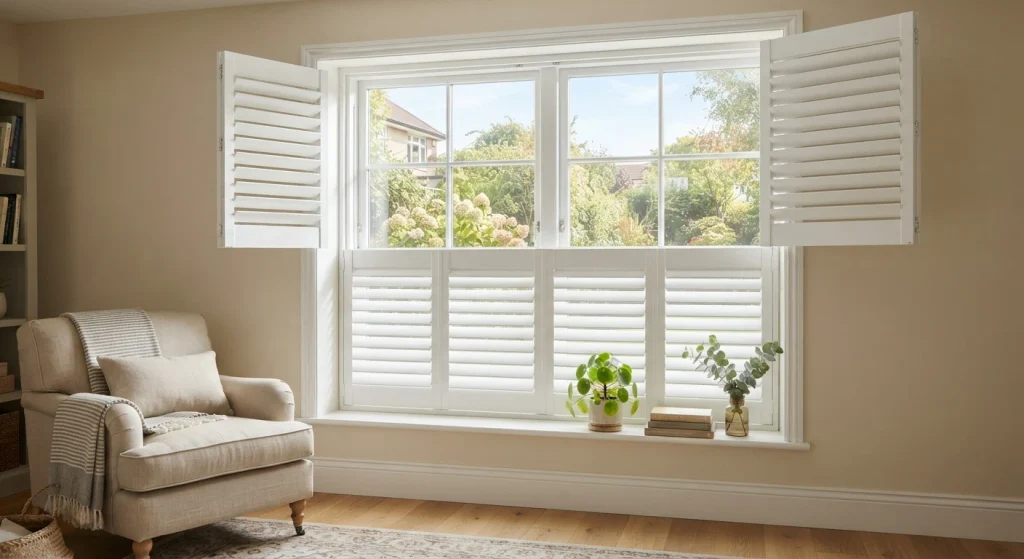
Privacy without losing daylight
Tier-on-tier shutters can be particularly useful for windows that face roads, pavements or neighbouring properties. Keep the lower section closed for privacy while opening the upper section to allow natural light into the room.
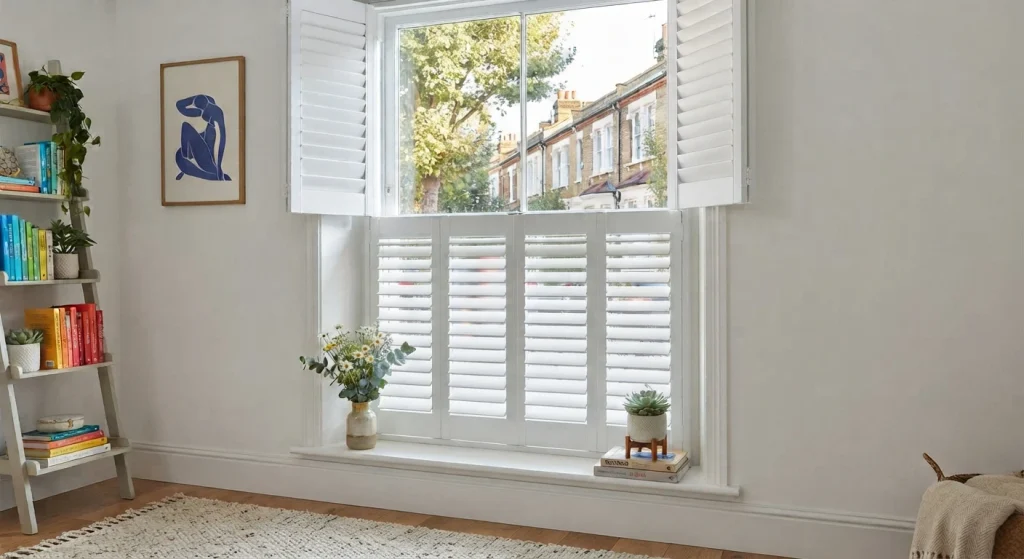
Flexible opening options
Both sections can be opened independently, giving you more options than a single full-height panel. You can open the whole shutter, just the top or bottom section, or leave both closed and adjust the louvres instead.
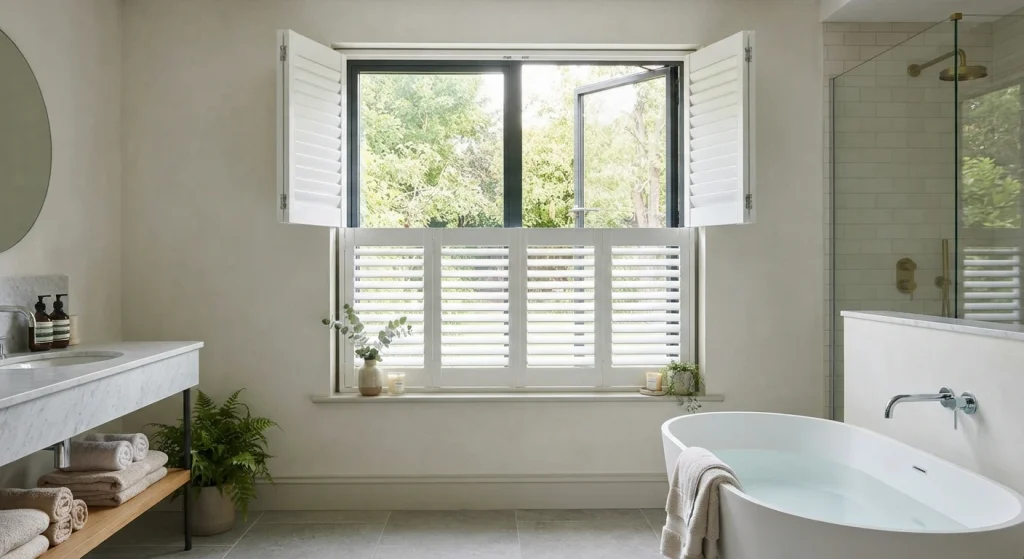
A traditional, adaptable look
The horizontal division between the two shutter sections creates a traditional appearance that works well in many styles of home. The position of the split can also be considered when designing the shutters, allowing it to suit the proportions of the window and your preferred level of privacy.
✓ Tier-on-tier pros
- Excellent privacy control – Keep the lower panels closed while opening the upper panels, making them particularly useful for street-facing windows.
- Highly flexible light control – The upper and lower sections can be opened independently, while the louvres on each section can also be adjusted.
- Good for changing light throughout the day – The different sections can be used in different ways as the position of the sun changes.
- Works well on many window types – Tier-on-tier shutters can be used across a wide range of window sizes and styles, subject to the suitability of the individual window and installation.
- Flexible panel split – The division between the upper and lower panels can often be positioned to suit the window and the level of privacy required.
✕ Tier-on-tier cons
- More moving parts – Having two independently opening sections gives greater flexibility, but also means more panels, hinges and components than a straightforward full-height configuration.
- The split is always visible – The horizontal division between the two sections is part of the design and may not suit someone looking for a completely uninterrupted appearance.
- Can be more expensive – The additional panels and hardware can make tier-on-tier shutters more expensive than some simpler shutter configurations.
- More panel movement to consider – With multiple sections opening independently, you need to consider furniture, handles, radiators and the available space around the window.
- Not necessarily the best choice for every window – Very small, very large or unusually shaped windows may be better suited to another configuration.
Tier-on-tier shutters, fully explained…
Tier-on-tier shutters are made up of two separate panels, or tiers, that can be opened independently. Each section also allows the louvres to be adjusted separately, giving you a high level of control over light, privacy and ventilation.
Independent control over each section
The main attraction of tier-on-tier shutters is their flexibility. The lower section can remain closed for privacy while the upper section is opened to allow natural light into the room. Alternatively, both sections can be opened, closed or adjusted at different angles depending on the conditions outside and how you want the room to feel.
Choosing the position of the split
The position of the split between the two tiers can also be considered when the shutters are designed. A central split is common, but the division can be positioned higher or lower depending on the window and how much privacy you need. This can make tier-on-tier shutters particularly useful for front facing windows overlooking roads, pavements or neighbouring properties.
Adjusting the louvres
The louvres can be operated using a traditional tilt rod or, where available, a hidden tilt rod system that allows them to be adjusted by touch. Because the two tiers can operate independently, you have more options for managing light and privacy than you would with a single full height panel.
An additional layer at the window
Like other shutter styles, tier-on-tier shutters can also provide an additional layer between the window and the room. When closed, the shutter panels may help reduce heat transfer through the window, although the amount of insulation provided will depend on factors such as the shutter material, construction and the window itself. During warmer weather, opening the panels and louvres can allow air to circulate through the room while still giving you control over privacy.
Materials, finishes and rooms
Tier-on-tier shutters can be used in many areas of the home and are available in different materials, colours and finishes. Their combination of independently opening panels and adjustable louvres makes them particularly useful where privacy and natural light need to be balanced throughout the day.
Overall, tier-on-tier shutters are a versatile option for homeowners who want more control over their windows. They offer the appearance of a traditional shutter while providing several different ways to open, close and adjust the individual sections.