
DIY Shutter Installation
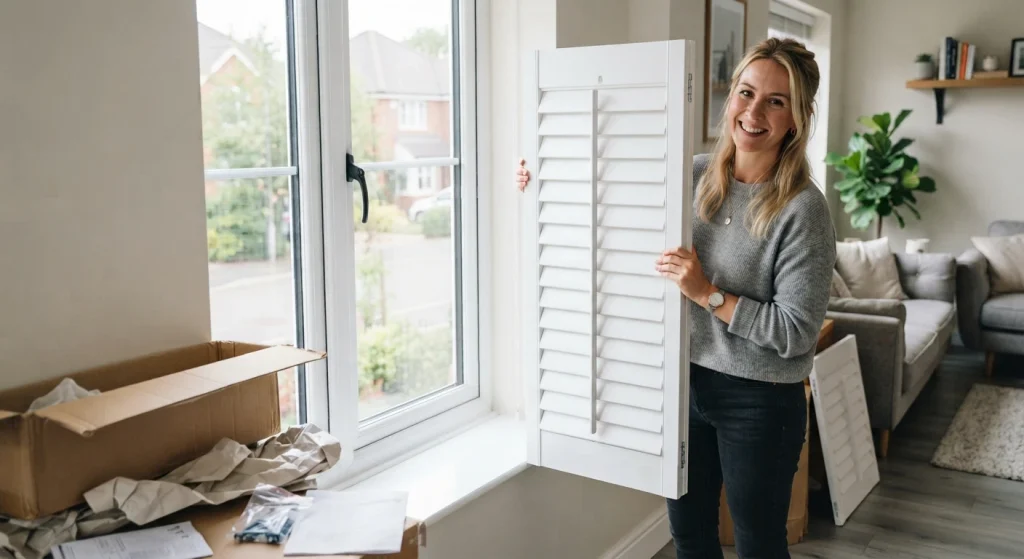
A more hands on approach to fitting your shutters
DIY shutter installation means buying your shutters as a supply only product and taking responsibility for measuring, ordering and fitting them yourself. It can reduce the overall cost by removing the professional measuring and installation service, but it also means you take on the practical work involved in getting the shutters fitted correctly.
The process can vary between suppliers, particularly in how measurements are taken, how the shutters are supplied and how they are designed to be fitted. It is therefore worth understanding what is involved before ordering, especially if you have large, unusual or complicated windows.
✓ DIY Installation pros
- Lower overall cost – Removing professional measuring and installation can significantly reduce the price.
- You control the process – You can measure, order and fit the shutters around your own schedule.
- No installation appointment – You do not need to arrange for an installer to visit your home.
- A wider choice of suppliers – Supply only shutters can be bought from companies that specialise in DIY orders.
- Suitable for confident DIYers – If you are comfortable measuring and fitting window coverings, the process may be relatively straightforward.
✕ DIY Installation cons
- You are responsible for measuring – Incorrect measurements can result in shutters that do not fit correctly.
- You have to install them yourself – The fitting process is your responsibility rather than the supplier’s.
- Less support during the installation – The level of guidance available will vary between suppliers.
- More responsibility if something goes wrong – You may need to identify and resolve fitting problems yourself.
- You need the right tools and skills – Conventional DIY shutters may require drilling, fixing brackets and accurate alignment.
DIY Shutter Installation, fully explained…
DIY shutter installation is a supply only approach where you take responsibility for the practical stages of having the shutters fitted. Rather than a company surveying the windows and installing the finished shutters for you, you provide the measurements, place the order and carry out the installation yourself.
The exact process varies between suppliers, so it is important to understand what you are actually buying before placing an order. Some companies provide detailed measuring instructions and fitting guides, while others may offer additional support if you need help during the process.
Measuring your windows
Accurate measuring is one of the most important parts of a DIY shutter order. The supplier will normally provide specific instructions explaining which dimensions you need to take and where to measure from.
The measurements required can vary depending on the shutter and frame design. You may need to measure the width and height of the window opening at several points, particularly where the opening may not be perfectly square. The position of handles, window frames, sills and other obstructions can also affect how the shutters need to be specified.
It is worth taking your time with this stage rather than relying on a single measurement. If the supplier provides a measuring guide, follow it closely and check whether they recommend taking additional measurements or photographs before placing the order.
Choosing the shutters
Once you know the measurements, you can choose the shutter specification. This can include the style, material, colour, finish, louvre size, frame and how the panels will open.
The supplier may provide advice on the available options, but the responsibility for making sure the specification is suitable will generally sit with you. This is particularly important where the window has unusual dimensions, limited clearance or an opening mechanism that could affect the shutters.
If you are unsure whether a particular configuration will work, it is worth checking with the supplier before ordering rather than trying to resolve the issue once the shutters have been manufactured.
Ordering your shutters
Once the measurements and specification have been confirmed, the shutters can be ordered. Because made to measure shutters are produced to order, there will be a waiting period before they are delivered.
In many cases, you should be prepared to wait several weeks for the shutters to be manufactured and delivered. The exact lead time can vary depending on the product, where it is manufactured, the supplier’s workload and the delivery arrangements.
Before ordering, check what is included in the quoted price. The frame, hinges and other hardware may be included, while delivery or particular specification options may be charged separately.
What happens when they arrive?
When the shutters are delivered, it is worth checking the order before starting the installation. Make sure the number of panels and frames is correct and check for any obvious damage.
You should also compare the shutters with the measurements and specification you ordered. If something appears incorrect, contact the supplier before attempting to modify or install the shutters.
Fitting the shutters
The fitting method depends on the shutter and frame system. Conventional DIY shutters will generally involve fixing the frame to the window reveal or surrounding surface using brackets and screws, followed by attaching the shutter panels and adjusting the hardware.
The frame needs to be positioned accurately so that the panels open and close correctly. You will normally need to make small adjustments during fitting to ensure the panels are level, aligned and operating properly.
The amount of work involved can vary considerably. A straightforward rectangular window may be relatively manageable, while bays, doors, large windows and unusual shapes can require more careful fitting.
Some DIY shutter systems are designed specifically to make installation simpler. No Drill Shutters, for example, use a different fixing method and are designed for compatible windows where conventional drilling is not required. They should not be confused with DIY shutters in general, as most supply-only shutters still use conventional fixing methods.
What happens if something goes wrong?
With DIY installation, you take on more responsibility if there is a problem with the measurements, specification or fitting.
If the shutters have been manufactured to the measurements you supplied, the supplier may not accept responsibility for an incorrect measurement. This makes it particularly important to understand the supplier’s measuring instructions, fitting guidance and terms before placing the order. Check what support is available if you have a problem and what happens if a component arrives damaged or does not match your order.
Similarly, a fitting error will need to be identified and corrected by the person carrying out the DIY installation.
Is DIY installation difficult?
There is no single answer because the difficulty depends heavily on the window and the shutter system. A standard rectangular window with a straightforward frame may be relatively simple for someone who is comfortable with basic DIY. Larger windows, bays, doors and unusual shapes can require considerably more care.
You should also consider whether you have the tools needed for the particular fixing method. Conventional shutters may require a drill, suitable fixings, a spirit level and other basic tools, while the exact requirements will depend on the product and the surface being fixed to.
The main challenge is not necessarily the physical act of attaching the shutters. Accurate measuring, understanding the fixing method and getting the frame correctly positioned are all important to the finished result.
What are you saving money on?
The lower price of DIY shutters comes largely from removing services that would otherwise be included in a professional installation. You are taking responsibility for measuring the windows, placing the order, receiving the shutters and carrying out the installation yourself.
This does not necessarily mean the shutters themselves are made differently. Depending on the supplier, you may be buying a very similar made to measure product but without the professional survey and fitting service.
The saving therefore needs to be considered alongside the time, tools and responsibility involved. Someone who is confident with DIY may consider this a worthwhile trade off, while another homeowner may prefer to pay more to have the process managed for them.
Ultimately, DIY installation is about deciding whether you are comfortable taking responsibility for the practical side of the project. If you have straightforward windows, are confident with measuring and DIY fitting, and want to reduce the overall cost, supply only shutters can be an option worth considering. For more complicated windows or if you would rather avoid the practical work, professional installation may be the more suitable route.