
Shutter Panels
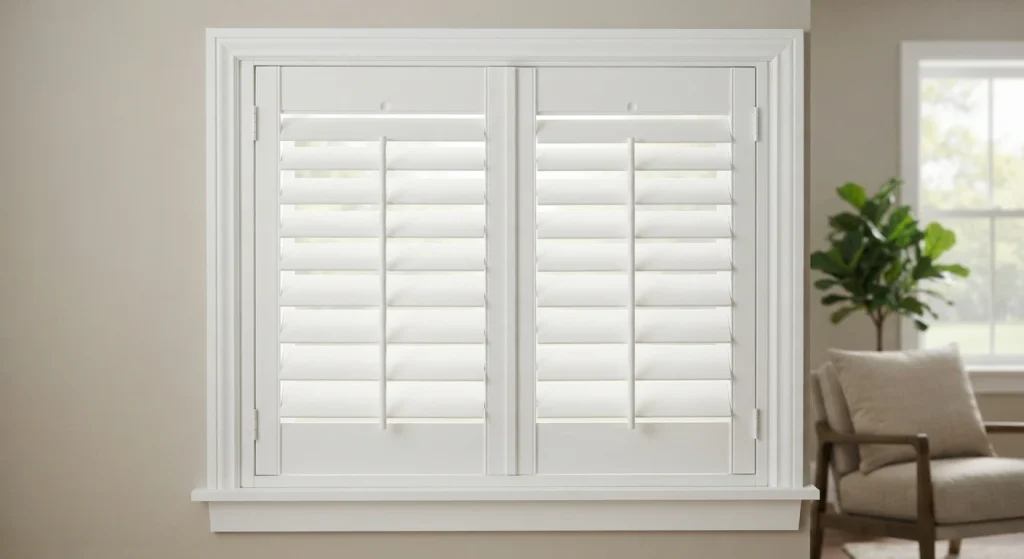
Choosing the right panels for your windows
Shutter panels influence the appearance, light control and practicality of your window shutters. From classic louvred designs to solid panels, and from full height coverage to café style arrangements, there are several options to consider when choosing a style that suits your home.
Louvred panels
Louvred panels feature horizontal slats that can be tilted to adjust incoming light and privacy. They are a popular choice for living rooms, bedrooms and other spaces where you want flexibility throughout the day, while maintaining the classic plantation shutter appearance.
Solid panels
Solid panels have a continuous surface rather than adjustable louvres, creating a more traditional, substantial appearance. They can provide greater light blockage when closed and suit period inspired interiors, bedrooms and homes where a simpler, more enclosed look is preferred.
Full height shutters
Full height panels cover the window from top to bottom, creating a clean, consistent appearance. They are a versatile choice for many rooms, offering privacy and light control across the full window.
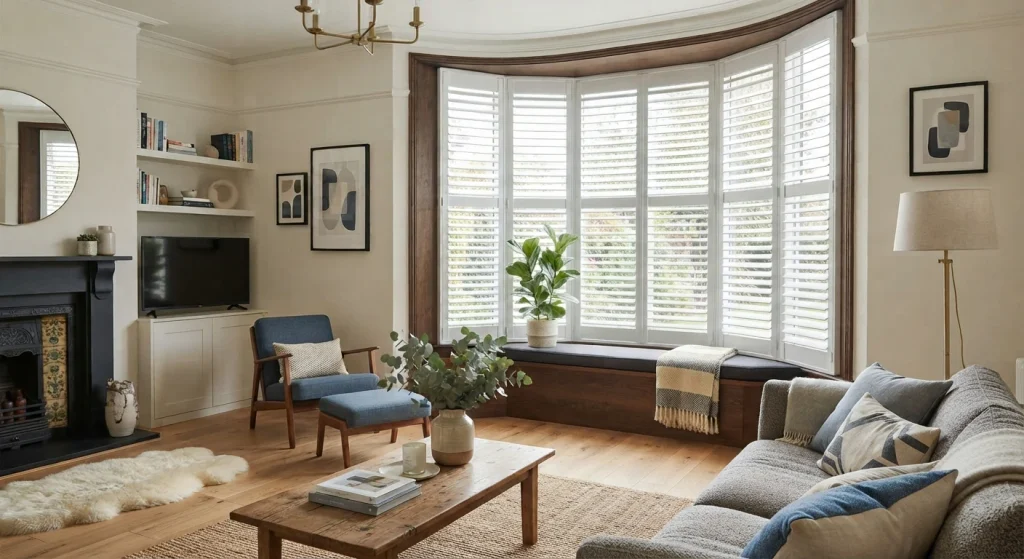
Tier-on-tier shutters
Tier-on-tier panels feature separate upper and lower sections that can be opened independently. This provides flexibility over privacy and natural light, allowing you to adjust each part of the window to suit your needs.
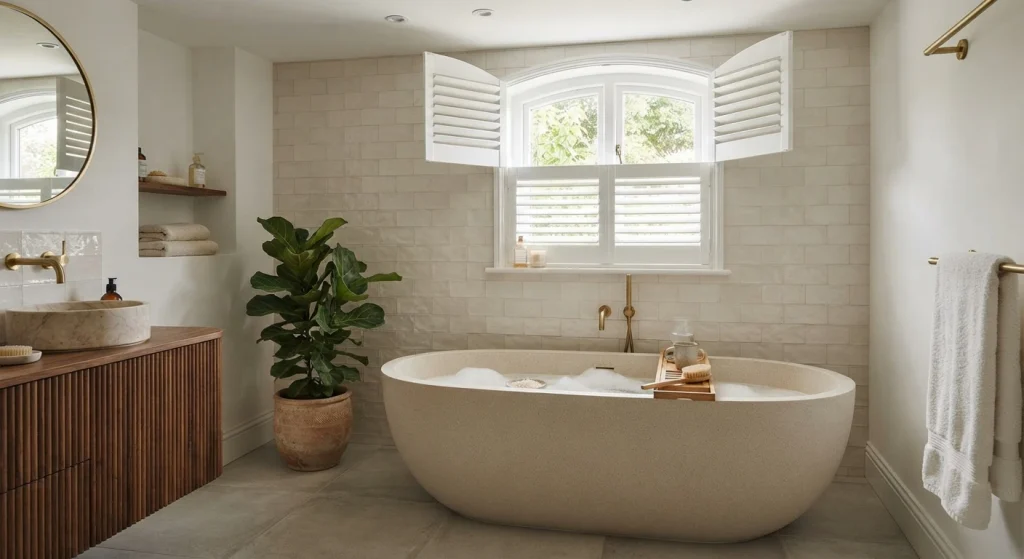
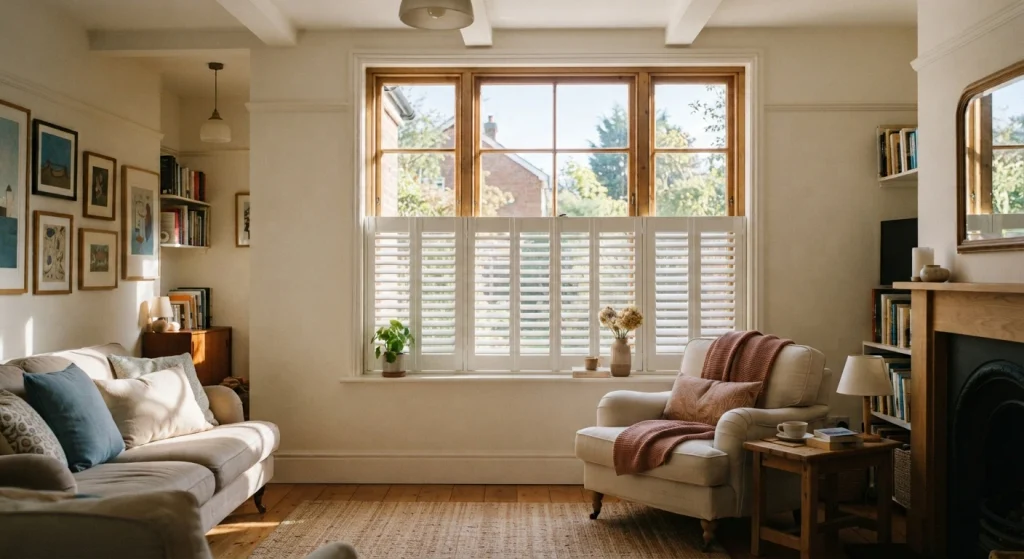
Café style shutters
Café style panels cover only the lower part of the window, leaving the upper section uncovered to let in natural light. They are particularly useful where privacy is important at street level.
Solid shutters
Solid panels provide a more traditional alternative to louvred designs, with a continuous surface that offers privacy and helps block incoming light when closed. They can be used in a range of styles and configurations.
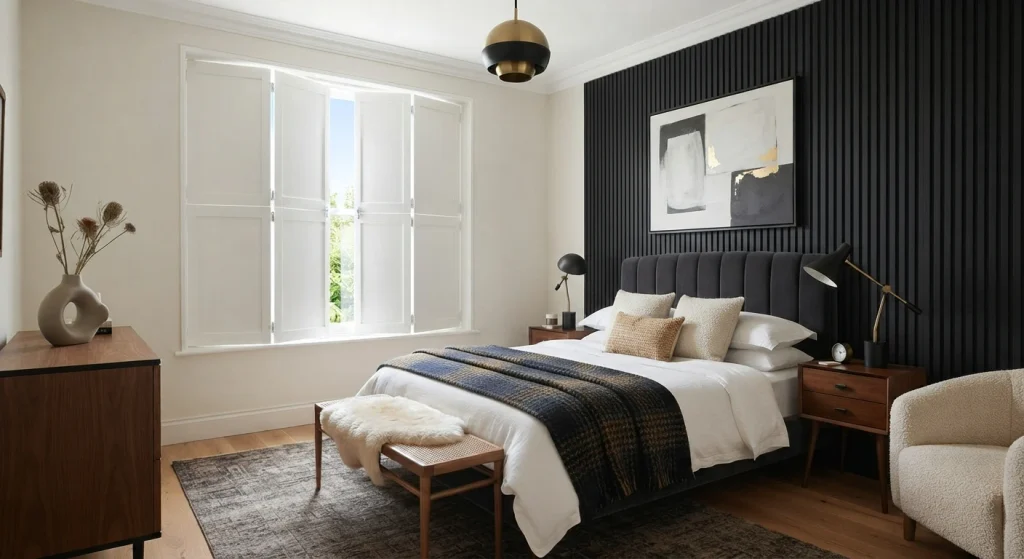
Shutter panels, fully explained…
Shutter panels are the sections that open and close to cover your windows. Depending on the style, they may feature adjustable louvres or solid panels and can be arranged in different configurations to suit the window and your preferences. The design and layout you choose will influence the overall appearance of the shutters, how they operate and the balance of natural light and privacy they provide.
Understanding the available panel types and configurations will help you choose shutters that complement your home and meet your practical needs.
Louvred or solid shutter panels?
One of the first decisions is whether to choose louvred panels or a solid design.
Louvred panels are popular because their slats can usually be tilted to regulate the amount of light entering a room while maintaining a degree of privacy. The position of the louvres can be adjusted throughout the day, making them a versatile choice for living rooms, bedrooms and many other spaces. Different louvre sizes are available, affecting both the appearance of the shutters and the view through them when open.
Solid panels have a continuous surface instead of louvres. They create a more traditional appearance and can provide greater light blockage when closed, although the result depends on the fit of the panels and the installation. Solid designs may be particularly appealing in period properties or interiors where a more substantial, classic look is desired.
Neither option is right for every situation. Consider the appearance you prefer, how much natural light you want to retain and whether flexible light control is important in the room.
Understanding full height, tier-on-tier and café style configurations
As well as choosing the panel type, you can decide how the panels are arranged across the window. Full height, tier-on-tier and café style shutters describe different ways of covering the window rather than the type of panel used.
Full height shutter panels extend across the window from top to bottom. They create a unified appearance and provide privacy across the full opening, with the option of adjusting louvres where the design includes them.
Tier-on-tier shutters have separate upper and lower panels that can operate independently. This provides greater flexibility, allowing one section to remain closed for privacy while the other is opened or adjusted to admit light.
Café style shutter panels cover only the lower portion of the window. By leaving the upper glazing uncovered, they allow daylight to enter while helping to screen the room from passers-by. They are often suited to ground floor windows facing streets or neighbouring properties.
The way the panels are arranged across the window is a separate consideration from whether they feature louvres or have a solid design. For example, you could choose solid tier-on-tier shutters, combining the traditional appearance of solid panels with the flexibility of independently opening the upper and lower sections.
Choosing the right panel design for each room
The best panel choice depends on how you use the room and the balance you want between privacy, natural light and appearance.
In living rooms and dining rooms, louvred panels can provide flexible light control throughout the day. Bedrooms may benefit from full height or tier-on-tier arrangements, depending on whether you want coverage across the whole window or more flexibility between the upper and lower sections. Solid panels may appeal where a traditional look and greater light blockage are priorities.
For street facing windows, café style panels can provide privacy across the lower section without covering the entire window. In kitchens and bathrooms, the material and finish are also important considerations because moisture and condensation can affect some shutter products. Always check that the chosen material is suitable for the conditions in the room.
Panel sizes, louvres and proportions
The proportions of the panels and the size of the louvres can make a noticeable difference to the finished appearance. Larger louvres create a more open, contemporary look and can provide a wider view when tilted, while smaller louvres offer a more traditional appearance.
Panel dimensions also matter, particularly for tall or wide windows. The number and size of the panels need to suit the window and the shutter system so that the installation operates properly and looks balanced. Very wide or tall openings may require several panels or a different configuration to ensure they are practical to open and close.
The most suitable arrangement will depend on the dimensions of the window, the available fixing space and the manufacturer’s specifications.
Panel materials and finishes
Shutter panels are available in different materials, including hardwood, MDF and various synthetic or composite options. Each has different characteristics in terms of appearance, weight, durability and suitability for different environments.
The finish also influences the overall look. White and off-white remain versatile choices, while painted colours and natural wood finishes can help complement existing furniture, flooring and architectural details. Consider how the shutters will look alongside the rest of the room, as well as how easy the chosen finish will be to maintain.
Measuring and fitting shutter panels
Accurate measuring and suitable installation are important for all shutter styles. The size and arrangement of the panels need to account for the window opening, frame depth, handles, window boards and any other obstructions that could affect how the shutters operate.
For unusual windows or larger openings, the design may require additional planning to achieve a neat fit and ensure that panels open and close as intended. Made to measure shutters can accommodate a wide range of window dimensions, but the available designs and configurations will depend on the product and manufacturer.
If you are unsure which panel arrangement is suitable for your windows, a professional installer can assess the opening and explain the available options before you make a decision.
Finding the right shutter panels
Choosing shutter panels involves more than deciding which design looks best. Consider whether you prefer louvred or solid panels, how much of the window you want to cover and how you want the shutters to function in everyday use.
By weighing up the appearance, light control, privacy, materials and practical requirements of your windows, you can choose a panel design and configuration that suits both your home and your needs.